Blog Archives

Linda Lombardi
Fireworks and other loud noises are a common cause of fear and anxiety in dogs. A recent study provides some insight into the progression of this fear over time and provides evidence of the effectiveness of training and the importance of preventive training before fear develops.

“Not a one-way road—Severity, progression and prevention of firework fears in dogs” by Stefanie Riemer, published in PLoS ONE in September, analyzes the results of an online survey of dog owners who answered questions about the severity and development of fear, demographic factors, other behavior issues, and efforts made to address the problem. Out of 1,225 responses analyzed, 52 percent of dogs were affected by this fear to some extent. The severity of the fear was assigned a “Welfare-impaired score” based on the question “Please rate your level of agreement with the following statement: The overall welfare of my dog is strongly compromised by fireworks,” answered on a five-point scale from “disagree strongly” to “agree strongly.”

This fear often showed up early: in 45 percent of cases, at under one year. However, it also developed later, although in almost all cases before six years of age. Responses also showed that this fear can change considerably over time, both for the worse and the better, even if nothing is done to address it. Great improvement was reported for 10 percent of dogs and almost one-third of dogs tended to improve; just under one-fifth reported the fear had gotten worse, and 8.5 percent, much worse. One-third of dogs were reported to have shown no change.

Improvement was not always due to training or medication. For the subset of dogs whose owners had not sought advice for the problem and were not professionals such as trainers or veterinarians themselves, there was slightly less improvement, but also less deterioration – about half reported no change.

Owners of 530 dogs (43.3 percent) reported doing some training to prevent or treat firework fears. Preventive training was most effective: the median Welfare-Impaired score was 1 (lowest possible) in dogs trained in puppyhood and 2 in dogs trained as adults, compared to a median score of 4 for dogs with no training before the onset of fear. Statistical testing showed no significant difference between preventive training as a puppy and as an adult. However, there was a significant difference between having preventive training and having training only after fears had developed.

Training after fears developed was nevertheless shown to be worth doing, as those dogs were significantly more likely to show improvement. The effect of training was independent of whether the dog was treated with medication, as there was no difference in the proportion of dogs in groups that did and did not receive training.

The importance of some other factors investigated, including potential correlations with health problems and other behavior problems, were unclear, but one finding was that certain breed groups were more likely to suffer from this fear, including herding dogs. At the same time, one of the two most significant risk factors was being a mixed-breed. These results may seem contradictory, but they suggest that both genetics and upbringing are relevant. “Mixed-breed dogs originated from shelters or from the street more often so, on average, mixed-breed dogs probably had less positive socialization experiences,” says author Stefanie Riemer.

The other significant risk factor was older age. Again, at first glance this might seem to contradict the finding that fears develop at an earlier age, but fears are not static with aging. “While in over 70 percent, firework fear was noticeable before the age of two years, firework fear often does not disappear on its own, even though it may be improved, as I found in my study,” says Riemer. “Therefore, the longer the dog has been in the world, the more likely it is to have developed a fear of firework at some point in its life. Moreover, often the fear gets worse over time, which may lead to higher average fear scores in older dogs.”

The high number of owners who sought help for the problem (45 percent overall and 70 percent of owners of fearful dogs) was large compared with what has been found in other research. Riemer says, “I am sure the owners in the sample were above-average motivated to work with their dog. I don’t think this invalidates the finding regarding the effectiveness of training but of course a higher level of experience might make them more effective trainers.”

The results suggest that because preventive training is most effective, it’s a good idea to do some training with dogs who are not showing fear, but even after fear develops, it’s not too late. “This study shows that if your dog is afraid of fireworks or other loud noises, it’s important to do something about it, because it can make a difference,” says Zazie Todd, PhD, author of the blog Companion Animal Psychology. “There are several ways to help dogs who are afraid of fireworks, including gradual desensitization and counter-conditioning using a recording of the sound.”

Todd notes that Riemer’s recently published followup study on the effectiveness of various training methods found that owners reported that both ad-hoc counterconditioning and relaxation training helped.

She also observes that while some dogs’ response to noise is too obvious to miss, owners may need to be educated to notice it in others: “Other research has shown that sometimes people miss the signs their dog is afraid of fireworks, so it’s important to be aware and look for them.”

This article was reviewed/edited by board-certified veterinary behaviorist Dr. Kenneth Martin and/or veterinary technician specialist in behavior Debbie Martin, LVT.

Linda Lombardi writes about the animals that share our planet and our homes for magazines including The Bark, websites including National Geographic and Mongabay.com, and for the Associated Press. Her most recent book, co-authored with Deirdre Franklin, is The Pit Bull Life: A Dog Lover’s Companion.



Training as Enrichment: Your Questions Answered

You asked, and we will answer! Fear Free Head Trainer Mikkel Becker and Education Manager Lori Chamberland will discuss some of the most common questions we’ve received from previous Fear Free training webinars. We’ll talk about leash reactivity/pulling on leash, teaching dogs and cats to live in harmony, counter surfing, and more! We will leave time at the end for you to ask questions in real time, as well. Join us – your dog or cat will thank you!

Tony Johnson, DVM, DACVECC
It is a frustrating condition with many names: Feline Lower Urinary Tract Disease, Feline Urologic Syndrome, Feline Interstitial Cystitis, even the rather whimsical Pandora Syndrome. Anyone who has treated it knows the stress and anxiety it can induce in those treating the disease, as well as in patients suffering from it, not to mention their anxious owners.

That same stress and anxiety also contribute to the disease process itself. As an ER vet, I know the plumbing aspect of the disease very well and can usually get them unblocked and on more stable footing in short order. What I don’t usually have to deal with are the softer aspects of the disease – softer, but no less important. That usually falls to general practice veterinarians, who have to take the reins from ER vets like me and manage their patients long-term.

In the spirit of adhering to the Veterinarian’s Oath and reducing animal pain and suffering, I’d like to offer up some points to consider when either treating a cat with a urinary obstruction or managing a non-obstructed cat with signs of lower urinary tract disease.

  1. Are you incorporating appropriate analgesia and sedation in your treatment protocol?

This is a painful condition. Pain causes stress, which can exacerbate the disease – and make future trips to the vet even more stressful. Making sure you have incorporated appropriate analgesia when unblocking a cat, and when managing a catheterized cat in the hospital, is a vital part of treatment – and one that is often overlooked. Proper (and safely chosen) sedation, and incorporation of a sacrococcygeal block while unblocking, good pain control with buprenorphine or a full-mu opioid agonist, and home analgesia for three to five days after discharge will help to minimize the pain and anxiety of an episode of urethral obstruction. Owners will appreciate advanced pain control protocols and knowing that you are taking their pet’s emotional wellbeing into consideration. It also makes cats easier to handle in the hospital and more likely to come back for future visits – everybody wins!

Suggested Protocols

Sacrococcygeal block:

  • Use 0.1 mL/kg of either lidocaine or bupivacaine
  • Unless the cat is very sick and moribund, this is typically done under heavy sedation or anesthesia
  • Move the tail up and down in a “pumping” motion, palpating the sacrococcygeal region.
  • The first movable space at the caudal end of the sacrum is either the sacrococcygeal or intercoccygeal space. Either site is okay and there’s no need to differentiate which site you are in.
  • Insert a 25-ga needle through the skin on midline at a ~45° angle.
  • If bone is encountered, withdraw the needle a few mm, redirect slightly at a steeper or flatter angle and reinsert. This is known as “walking” off the bone.
  • Repeat this process until the needle is in intervertebral space. A “pop” may be felt and there should be no resistance to injection.

Buprenorphine – while in hospital:

  • 24 mg/kg Simbadol® SC q 24 hr up to 3 d
  • 01–0.02 mg/kg IM, IV, SC q 4–8 hr

Buprenorphine – sublingual/outpatient: 0.01–0.02 mg/kg transmucosal q 4–12 hr

Fentanyl CRI – 1-5 ug/kg/hr IV

Note: Since many cats who are blocked may also have some degree of acute kidney injury, NSAIDs should be used cautiously or not at all in acute obstructions. They may be helpful in cats with normal renal function for non-obstructive episodes.

  1. Are you reducing stress in the household? In your hospital?

Imagine you are a hospitalized blocked cat: fluorescent lights, a painful catheter, Elizabethan collar, barking dogs – sounds awful, right?

Do everything you can to reduce the stress of hospitalized cats. Put yourself in the patient’s position and imagine what their existence in your hospital is like. If you don’t have a “cat room,” try and keep cats in the quietest part of the hospital, out of sight and sound of dogs. Allow time for rest and a break from medical procedures and provide a box or other structure in the kennel where the cat can hide.

Both at home and in the hospital, use of feline facial pheromones (Feliway®) may help alleviate stress and anxiety. Consider installing one in your ICU and changing it regularly. A few sprays of Feliway® on your patient’s bedding may also help. The Feliway® diffuser can be particularly helpful at home.

Make sure cats at home have distractions and safe spaces to hide from dogs, children, and other cats. During stressful times (moving, boarding, redecorating, addition of new pets or children to the home) consider advising clients to spend extra time with their cats or discuss safe sedation  and anti-anxiety protocols and environmental enrichment to reduce fear, anxiety, and stress.

Stress can bring on this condition, and the things we have to do to treat it are often stressful and uncomfortable, creating a continuous positive feedback loop. Owners are stressed, vets are stressed, and (most of all) patients are stressed. Do everything you can to reduce the anxiety and discomfort of feline urologic conditions and you will not only be keeping up your part of the Veterinarian’s Oath, you’ll be practicing better medicine as well.

This article was reviewed/edited by board-certified veterinary behaviorist Dr. Kenneth Martin and/or veterinary technician specialist in behavior Debbie Martin, LVT.

Dr. Tony Johnson, DVM, DACVECC, is a 1996 Washington State University grad and obtained board certification in emergency medicine and critical care in 2003. He is currently Minister of Happiness for VIN, the Veterinary Information Network, an online community of 75,000 worldwide veterinarians, and is a former clinical assistant professor at Purdue University School of Veterinary Medicine in Indiana. He has lectured for several international veterinary conferences (winning the small animal speaker of the year award for the Western Veterinary Conference in 2010) and is an active blogger and writer.


Training as Enrichment: Basic Skills

Reward-based training improves the lives of dogs and their human families. You might not be able to attend group class right now, but you can “home school” your dog during this time and improve their behavior by fitting some simple training exercises into your everyday interactions with your dog. Fear Free Head Trainer Mikkel Becker will give you the basics and answer some questions, as well!

Fear Free Home Spaw Days

While your favorite groomer is temporarily closed, you may need to do some basic grooming on your dog yourself. Dogs can develop problems related to brushing, mat removal, nail trims, hair in the eyes, and eye discharges in just a few weeks.

Presented by Fear Free Certified trainer and groomer Daniel Josselyn-Creighton, KPA CTP, this webinar will help you to:

  • Introduce new pieces of equipment (brushes, clippers, etc.) and procedures (baths, brushing, and nail trims) to your dog in a safe, fear-free manner.
  • Teach your dog impulse control games to help them be more comfortable sitting still for simple procedures.
  • Perform basic grooming tasks: brushing, bathing, trimming hair, and nails.
  • Use the FAS scale to know when you can continue with a procedure, when you need to proceed with caution, and when you need to stop and give your dog a break.
Rachel Lees, RVT, KPA CTP, VTS (Behavior)Cats are often considered a more independent, self-sufficient species compared to dogs, largely because they do not need humans to take them outside to eliminate. Most cats successfully learn to eliminate in the home by going to a litter box.

Nonetheless, feline elimination issues are one of the biggest behavioral problems clients bring to veterinarians. Often, the problem develops because human preferences regarding litter box location and type don’t match up with the desires of their feline companions.

As veterinary professionals, we must feel comfortable teaching clients what their cat wants from an elimination station. This article will review cat preferences regarding desirable locations, litter box styles, litter types, and more. This information can not only help the cat who is eliminating outside the box but can also help new kitten owners be successful from the start in setting up their new cat’s environment.

Litter Box Design and Location

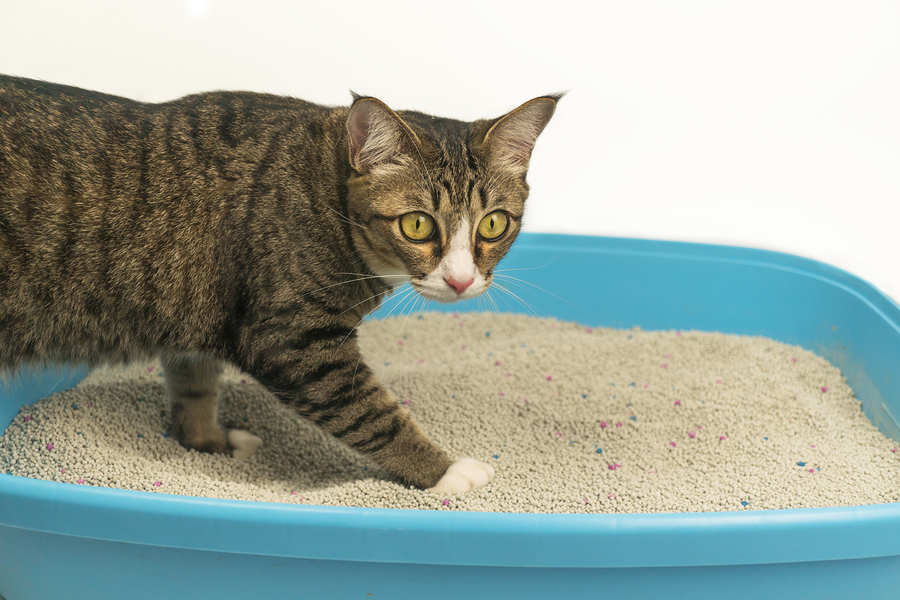
Place litter boxes in safe, low-traffic areas but right off a high traffic area, so it is easily accessible. Keep them away from loud appliances such as washers and dryers, furnaces, dishwashers, air conditioners, or toilets. All these items have the potential to frighten the cat with unexpected sounds, interrupting the normal elimination pattern.  An example of a safe, quiet location is a spare bedroom or bathroom that is rarely entered.

Many commercial products also offer “hidden” locations where cats can eliminate, disguised as planters or side tables, for instance. Although this hides the litter box from the human, it may also place it in a higher traffic location. Keep this in mind when giving recommendations on litter box placement.  Everyone prefers privacy for elimination, even cats.

Litter box design preferences differ from cat to cat and human to human. Most cats prefer an open litter box. Most cat owners prefer a covered litter box. Covered litter boxes may trap odors and make the human environment smell better but for those reasons they may not be as desirable for the cat. If boxes are not cleaned regularly, the odor may be aversive to them.

Most commercial open litter boxes are too small for the average cat. The size of the litter box should be one and a half times the length of the cat’s body. Most veterinary behavior teams recommend using storage containers, Tupperware bins, dog litter boxes, or cement mixing pans.  It is also important to find out if litter box sides are low enough for the cat to jump in without injury or pain. Using a litter box that cleans itself is typically not recommended as the sounds and machinery can scare the cat.

Litter Preferences

Many different types of litters are on the market: scented, unscented, clumping, non-clumping, wheat, newspaper, sawdust, pine, and more. A study by veterinary behaviorist Jacqueline C. Neilson DVM, DACVB, found that cats generally prefer unscented clumping litter beneath their paws. And although scented litters may be more desirable to humans, cats often disdain them.  Cats are far more sensitive to odors than humans. Keep in mind as well that crystal-like litter can feel unpleasant to sensitive paws. When the cat eliminates the crystals can “pop,” causing a startling sound. Recommend giving cats the most preferable substrate—a plain, unscented litter—to set them up for success.

Since Flushing Isn’t an Option: Cleaning Tips

Litter boxes should be scooped once or twice daily. Cats prefer a clean location to eliminate.  When boxes are not cleaned at least once daily, this can cause an aversion as the cat may not want to step and eliminate in a litter box filled with yesterday’s urine clumps and stool piles.  Most humans would not desire this either.

To make boxes as attractive as possible, they should be emptied, cleaned with a mild, unscented detergent, and refilled with fresh litter at least once a month. Avoid cleaning the box with strongly scented cleanser.

Recommendations for Multi-Cat Homes

Design, location, cleaning, and substrate preferences are identical, but in homes with more than one cat, owners should provide one box for each cat, plus one extra. Place boxes on separate floors and rooms of the home to prevent one cat from blocking access to a box.

Keep in mind as well that using covered boxes in multi-cat homes can create increased anxiety if one cat is a stalker. If victim cats venture into the box to eliminate, they cannot see if the stalker cat is creeping up on them. If there is low-level aggression between the cats, and the victim cat is attacked when coming out of the box, the experience can create litter box aversion. For this reason, open litter boxes should be recommended in multi-cat homes.

Remember: It’s a cat’s world. We just live in it!

Author’s Note:  Elimination out of the box is not always a behavioral concern and can very well be a medical cry for help. It is always important to rule out a medical condition before blaming behavior. Every patient who eliminates out of the box should be examined by a veterinarian and medically worked up (CBC/Chem/UA) before specific recommendations are made. 

This article was reviewed/edited by board-certified veterinary behaviorist Dr. Kenneth Martin and/or veterinary technician specialist in behavior Debbie Martin, LVT.

Rachel Lees, a Level 3 Fear Free Certified Professional, is a veterinary technician specialist in behavior, a KPA certified training partner, and lead veterinary behavior technician at The Behavior Clinic in Olmsted Falls, Ohio. She loves helping people create and maintain a strong human-animal bond.
Rachel Lees, RVT, KPA CTP, VTS (Behavior)Consent skills, voluntary behaviors, cooperative care. Using these techniques would be a veterinary professional’s dream come true. Wouldn’t it be great if you had some hints to begin teaching these behaviors with your own patients and pets?

We want to get you started with this brief summary of how to begin to teach stationary behaviors as well as the beginning steps of teaching consent to animals. (See Part One for a full introduction to Stationary and Consent Behaviors) It’s a good idea to practice these behaviors at home with your own pets until you are comfortable and confident with the skills and techniques.

Shaping a Stationary Behavior

In part one of this blog post, it was stated that marker training and shaping techniques are the best methods to create a strong and fluent stationary behavior. When using marker training, we are allowing patients to make their own choices and learn through shaping.

Shaping is the process of “building” a behavior by successively reinforcing bits or “criteria” of the behavior that are approximations of the final behavior. The behavior is molded into the end goal by the communication the trainer gives the pet. In this situation, the communication is the marker. When the marker (tongue click, clicker, or word “click”) is audible, treats should follow. The pet learns that the last behavior performed during the marker signal earns reinforcement.

When using this technique, we must break down the behavior into achievable steps for the patient. That means having a complete picture of what the end goal behavior will look like. An example is teaching an animal to place all four feet on a mat. The moment the mat is placed on the ground, the trainer must be aware of what behaviors need to be reinforced. Listed below are steps and criteria to teach three different behaviors. Videos will accompany the criteria to demonstrate the breakdown of each step and how the learner will achieve the final goal.

Be sure you have a good understanding of the shaping plan so you can increase or decrease criteria as needed. For instance, you may need to vary criteria based on the rate at which clicking and treating occurs. Varying criteria while adding duration to behaviors is also a good idea. It gives the learner smaller points of achievement and can be gradually increased for a greater challenge. Making duration variable is more helpful than making duration progressively more difficult.

Shaping Four Paws to a Mat

The training session begins the moment the mat is placed on the ground. The trainer should observe and begin to reinforce for the following behaviors:

  • Click and Treat for head turning toward the mat
  • Click and Treat for looking in the direction of the mat
  • Click and Treat for looking directly at the mat
  • Click and Treat for weight shifting toward the mat
  • Click and Treat for moving in the direction of the mat
  • Click and Treat for placing one paw on the mat
  • Click and Treat for placing two paws on the mat
  • Click and Treat for placing three or four paws on the mat
  • Click and Treat for keeping all four feet on the mat for 1 to 2 seconds
  • Click and Treat for duration on the mat for up to 10 seconds
  • Click and Treat for duration on the mat for 20 to 30 seconds

Shaping Nose to Target Stick

Present the nose target a few inches from the animal’s nose and observe for any nose touching or interacting with the target stick. Reinforce the following pieces of behavior:

  • Click and Treat for head turning in the direction of the target stick
  • Click and Treat for looking in the direction of the target stick
  • Click and Treat for looking directly at the target stick
  • Click and Treat for weight shifting in the direction of the target stick
  • Click and Treat for moving in the direction of the target stick
  • Click and Treat for sniffing or interacting with the target stick
  • Click and Treat for consistently nose touching to the target stick
  • Click and Treat for holding the nose at the target stick for 1 second
  • Click and Treat for holding the nose at the target stick for 2-3 seconds in duration
  • Click and Treat for holding the nose at the target stick for 5-10 seconds in duration
  • Click and Treat for holding the nose at the target for 10-25 seconds in duration

Shaping Chin Rest

Begin the training session by placing a towel on the area where the animal will be resting the chin (owner’s lap, chair, stool). The trainer then observes and begins to reinforce for the following behaviors:

  • Click and Treat for head turning toward the towel location
  • Click and Treat for looking in the direction of the towel location
  • Click and Treat for looking directly at the towel location
  • Click and Treat for weight shifting toward the towel location
  • Click and Treat for moving and walking in the direction of the towel location
  • Click and Treat for sniffing or interacting with the towel location
  • Click and Treat for head movement over the towel location
  • Click and Treat for head movement down (moving head down toward the towel location)
  • Click and Treat for chin touching the towel location
  • Click and Treat for consistently chin touching to the towel location
  • Click and treat for holding duration of the chin touching behavior for 1 to 2 seconds (at the towel location)
  • Click and Treat for duration of the chin rest behavior at the towel location for 2 to 5 seconds
  • Click and Treat for duration of the chin rest behavior at the towel location for 5 to 10 seconds
  • Click and Treat for duration of the chin rest behavior at the towel location for 10 to 30 seconds

Teaching and Understanding Consent

Consent is taught by giving the patient specific criteria when they are in their stationed behavior.  When the animal steps into the stationary behavior, the veterinary team member will begin the training session using forms of desensitization and classical counterconditioning for touching parts of the patient’s body. If the patient moves out of the stationary behavior in any way, shape, or form, the training session will be discontinued. When the patient makes the choice to move back into the stationary behavior, the training session can begin.

**Video Demonstration:  Connor and Consent Mat**

Author’s Note:  A veterinary team member should be well educated in canine and feline body language before working on these procedures. The best resource for fully training these behaviors is the text “Cooperative Veterinary Care” by Alicea Howell and Monique Feyrecilde that is published by Wiley Blackwell. 

This article was reviewed/edited by board-certified veterinary behaviorist Dr. Kenneth Martin and/or veterinary technician specialist in behavior Debbie Martin, LVT.

Rachel Lees, a Level 3 Fear Free Certified Professional, is a veterinary technician specialist in behavior, a KPA certified training partner, and lead veterinary behavior technician at The Behavior Clinic in Olmsted Falls, Ohio. She loves helping people create and maintain a strong human-animal bond.
Kim Campbell Thornton
It’s not just dogs and cats who benefit from Fear Free techniques at the veterinary clinic. Humans often find that they are calmer and happier as well.

Fear Freed

My sister has a beautiful kitty named Sushi whom she adopted about eight years ago. Her veterinarian, Dianicia Kirton, DVM, whose Hopkinton, Massachusetts, practice is Fear Free certified, has been recommending that Sushi get her teeth cleaned but my sister was hesitant. The veterinarian addressed each of her concerns until eventually she was ready to move forward. A few weeks later, Sushi’s mom brought her in for the teeth cleaning, although she was still nervous and reluctant. The veterinarian and staff were very calming and worked on Sushi quickly. Everything went well, and Sushi was her normal, happy self afterward. My sister told the vet that she felt like she had been “Fear Freed,” and Dr. Kirton responded, “Yes, it’s as much for the people as it is for the animals.” My sister was happy with the whole experience and thankful to have found a practice that uses these methods!

Kay Henze

Penny-Wise Visits

Pennie, a 7-year-old 78-pound Chesapeake Bay Retriever, had never had a full veterinary exam after her puppy vaccines because she bared her teeth and growled at veterinary team members at every clinic she was taken to. When she was brought to us, we implemented several Fear Free strategies, spending 45 minutes building her trust both outside the clinic and in the exam room. We were able to get her to stand on the lift table and receive vaccinations without being muzzled. On her third visit, we were able to lift her lips and examine her teeth. Now she boards with us routinely and is a big part of our veterinary practice family. Implementing these Fear Free tools has changed Pennie’s life and her owner is now able to better understand and relate to her dog, making it much safer to take her for walks and be groomed.

Dr. Sarah Lavelle, Ark Veterinary Practice, Belgrade, Montana

Happy Cats and People

We love our Fear Free veterinary hospital. At TLC, there are separate areas for cats and dogs. We took our two cats in last week, and the exam room was comfortable, with shelves for the cats to explore. A board listed the names of the technician and veterinarian who would be seeing the cats, so we knew who would be treating them. The technician who went over the intake information was sweet and tender with Lucy and Lilu. An email ahead of time alerted us that a new veterinarian would be seeing the cats. She was calm and handled the cats gently. Both cats were calm throughout the visit—although Lucy didn’t much like having her teeth examined—and when they got home they came out of their carriers calmly and went about their day. Lilu was her regular self and didn’t hide away as she has on some prior visits to other clinics. The clinic called the next day to see how the cats reacted to their vaccines and visit. We feel we have found our new clinic!
Katherine and Brent Williams, Albuquerque, New Mexico

Zola’s Optimism

Zola has been to a number of veterinary clinics before and has always been nervous and reactive. During her first appointment she was quite nervous, but with the help of some peanut butter as a distraction she allowed us to pet her. We decided that that was a win and that Zola would benefit from coming back another time after having gabapentin to help calm her. At her next visit, Zola was visibly more relaxed, and we had a Kong full of peanut butter ready for her. Knowing that Zola did better with minimal restraint we kept her focused on the Kong and were able to do a full exam, vaccinations and a blood draw. Zola’s owners had never seen her so relaxed at the vet and she has since come back willing and happy to see us.

Anne McClanahan, DVM, Four Lakes Veterinary Clinic, Madison, Wisconsin

Want to be featured? Submit your success story here!

This article was reviewed/edited by board-certified veterinary behaviorist Dr. Kenneth Martin and/or veterinary technician specialist in behavior Debbie Martin, LVT.

Kim Campbell Thornton is content manager for Fear Free Pets and is a Level 3 Fear Free Certified Professional. She has been writing about dogs, cats, wildlife, and marine life since 1985.
By Linda Lombardi

Mild cases of noise reactivity in dogs are often not considered problematic enough to treat. Research found that even mild noise sensitivity was associated with lower performance on a puzzle test. This suggests that these dogs have impaired functioning even when noise is not present and that more screening and treatment is called for.Researchers analyzed three types of data collected as part of a larger study of pet dogs. Dogs were evaluated for noise sensitivity via a questionnaire and a score was calculated based on the number of categories of noise that caused a reaction, the behaviors indicative of fear and anxiety that were exhibited, and the intensity of the reaction. Dogs were also tested for noise sensitivity using a custom noise recording that was played starting at a low volume and gradually turned up.

Learning Affected

Dogs were then evaluated for their performance on a puzzle-box test. The clear plastic puzzle box had nine holes on top and one at the end. A tennis ball was rolled into the box and dogs were given five minutes to try to get it out. If they succeeded in under two minutes, they repeated the test, up to three times in total. While attempting the puzzle, the dogs were wearing a device that recorded their movements.

Comparing data from 17 noise-reactive dogs and 11 non-noise-reactive dogs, those who were sensitive to noise performed worse on the puzzle box. Movement recordings also showed a difference, says lead author Karen Overall. “The ones who did the best moved very efficiently and very quickly. Their movements counted. The dogs who reacted to noise and who did more poorly, or could not solve the test, had very jagged and inconsistent movements.”

These dogs did not seem to be able to move in a deliberate, coordinated manner in response to how the ball acted when they tried to manipulate it. “They have to correct their behavior according to the movement of the object that they see,” she says. “These dogs couldn’t do that.”

Some of the noise-reactive dogs did not perform well enough to repeat the test, but when they did, they also differed. “Unlike the dogs who didn’t react to noise, the dogs who did react to noise couldn’t learn from their previous tests and didn’t improve their scores,” she says.

Sound Effects

While it’s understood that being in a state of anxiety interferes with functioning, the results show that being noise-sensitive has more wide-reaching effects. Even in a relatively low-stress situation where noise was not an issue, these dogs showed impaired performance: “The room is quiet, they’re getting food treats, their people are there, but they still can’t learn.”

Overall says it’s important to understand that this was not a clinical population of noise-fearful dogs. “Largely they were fairly mild, and yet they still couldn’t do this,” she says.

They also were not generally fearful, which was screened for. “The dog who was the worst in the test, the only dog for whom we had to turn off the recording, she was the meet-and-greet queen of the universe,” she says. “She was charming and social and lovely until you played noise, and then she was broken.”

“Moderate to severe noise sensitivity in dogs is a well-known behavior problem. A connection between separation anxiety and noise sensitivity has also been recognized before. What has not been appreciated until Dr. Overall and her colleagues published this research is the impact that noise sensitivity has on the general anxiety levels and learning ability of affected dogs,” says Bonnie Beaver, DVM, DACVB, of Texas A&M University. “These changes exist even in mildly affected dogs, impacting their daily lives with ever-present stress.”

Screening and Treatment

Overall concludes that even mild fear of noises needs to be aggressively screened for and treated.

“I think we don’t realize how much these dogs are suffering,” she says. “This shows that you’ve got dogs who are afraid of noises and it’s impairing other parts of their life that people haven’t looked at. It’s impairing their ability to get information from the environment and their ability to problem solve.” This has a broad impact on their social functioning and their fundamental ability to enjoy life.

Overall now believes dogs should be screened for noise reactivity on every vet visit and that it’s particularly critical to screen young dogs. “I want vets to see dogs three or four times a year in the first two years of life, when their brains are developing, and subject them to standard screening tests,” she says.

This is important because early diagnosis and treatment can make a huge difference. “The rodent literature has shown that if you’re anxious and fearful and from a genetically fearful line, and they treat you as a baby, your brain develops normally,” she says. “And what wouldn’t we give for that? There’s too much suffering; I want these dogs to have joy.”

This article was reviewed/edited by board-certified veterinary behaviorist Dr. Kenneth Martin and/or veterinary technician specialist in behavior Debbie Martin, LVT.

Linda Lombardi writes about the animals that share our planet and our homes for magazines including The Bark, websites including National Geographic and Mongabay.com, and for the Associated Press. She co-authored The Pit Bull Life: A Dog Lover’s Companion with Deirdre Franklin.


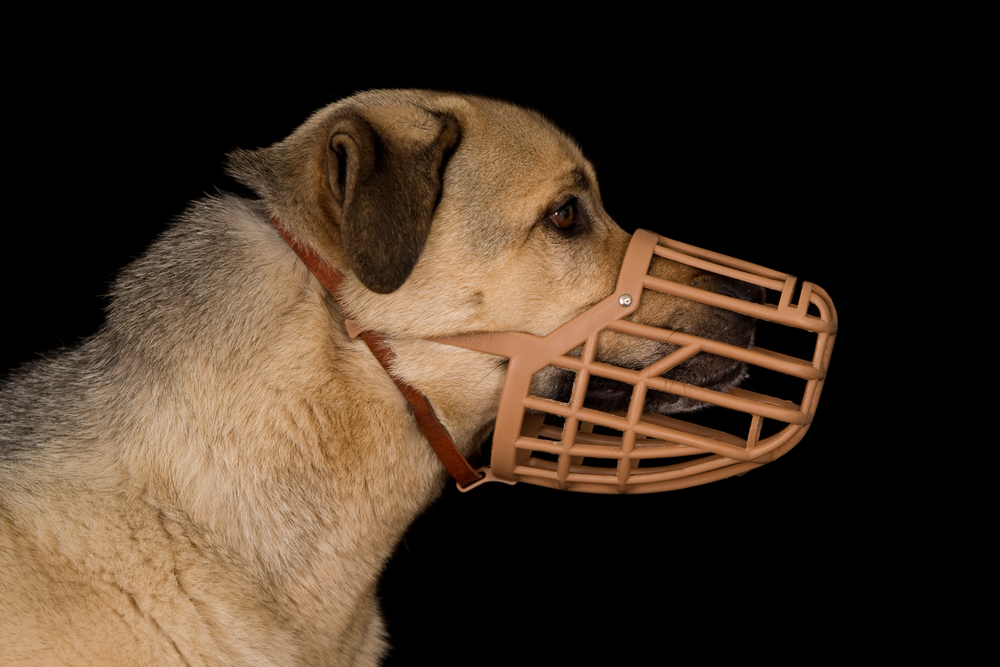
Rachel Lees RVT, KPA CTP, VTS (Behavior)Muzzle training is an important skill for every dog to have.  Not only can muzzle training help keep veterinary teams safe during examinations and procedures, it can also provide opportunities for person and pet long term.

As humans, we may get stressed, fearful, anxious, or concerned about a situation and lash out aggressively. For us, that situation, if not escalated, may lead to an apology or resolution. But if a dog makes this choice, it can mean a bite, lawsuits, and potentially euthanasia. As veterinary professionals, our job is to enhance the human-animal bond and keep our patients safe, happy, and healthy.  Using and recommending muzzle training can help prevent a bite on your patient’s record and potentially save a dog’s life.

The bad news is that dogs wearing muzzles are viewed as scary. This stigma needs to go because we never know when a pet will be in a situation where a muzzle may be beneficial. Those situations include emergencies such as being hit by a car as well as introductions to new challenges. Muzzles keep dogs safe when in public or around unfamiliar people, animals, and situations.

Using Marker Training and Positive Reinforcement

The best way to teach a patient to enjoy wearing a muzzle is through positive reinforcement:   adding something to the situation to strengthen the likelihood of a behavior. Using this technique, we can teach dogs that muzzles are treat dispensers that make fantastic things happen.

For instance, muzzle training can be taught by using a luring technique in which treats are placed into the back of the muzzle to create a positive experience. This can be helpful, but moving from one step to the other too quickly risks pushing the pet too far and putting on the muzzle before training is complete. This can create fear, stress, and anxiety. Dogs may choose to place their head inside the muzzle for the peanut butter but may not truly understand the behavior they are being reinforced for. The result is that when we begin to place the strap over their head, they may display stress, fear, and panic.

Using marker training allows dogs to make their own choices and learn through shaping.  Shaping is the process of “building” a behavior by successively reinforcing bits or “criteria’ of the behavior that are approximations of the final behavior. The behavior is molded by the communication the trainer gives the pet. In this situation, the communication is the marker.  When the marker (tongue click, clicker, or word “click”) is audible, treats should follow. The pet learns that the last behavior performed during the marker signal earns reinforcement.

This video demonstrates the beginning steps of muzzle training using the shaping technique as described above.  This patient does not have any learning history with a muzzle.

Breaking Down the Criteria of the Muzzle

When using the shaping technique, we must be able to break down the behavior into achievable steps for the patient.  In the demonstration above, if the technician had expected the pet to place his nose inside the basket on the first try, it would have set the dog up for failure and frustration as he might not have received enough communication to learn the end-goal behavior. I typically break muzzle training into three different stages with initial goals to achieve and then break down those steps further.  Here are the broken-down stages and criteria for each:

**The abbreviation C/T = Click then Treat**

  • Stage One: Nose into the Basket with Consistency
    • C/T for pet looking at the muzzle
    • C/T for weight shifting toward the muzzle
    • C/T for nose touching the muzzle
    • C/T for nose touching the opening of the basket of the muzzle
    • C/T for nose touching the inside of the basket
    • C/T for nose placement ½ way into the basket of the muzzle
    • C/T for nose placement into the basket of the muzzle

Video Demonstration:  FF Stage One Muzzle

  • Stage Two: Duration and Strap Introduction
    • C/T for pet holding their nose in the basket for 1 second
    • C/T for pet holding their nose in the basket for 2-3 seconds
    • C/T for pet holding their nose in the basket for 5 seconds
    • Raise strap and C/T for any attempt at nose into the basket (with the strap raised)
    • Raise strap and C/T for holding nose inside of the basket with 3-5 seconds duration (with the strap raised)

Video Demonstration

  • Stage Three: Strap Behavioral Therapy and Wearing the Muzzle
    • C/T for moving the strap ¼ of the way behind the pet’s head (without movement or shying away)
    • C/T for moving the strap 1/2 of the way behind the pet’s head (without movement or shying away)
    • C/T for moving the strap 3/4 of the way behind the pet’s head (without movement or shying away)
    • C/T for moving the strap all the way behind the pet’s head (without movement or shying away)

**Depending on the pet, the strap may need to be tightened to make the fit tight.  Once the pet is comfortable with the strap movement at the largest setting, begin to make the strap hole smaller and smaller over time**

  • C/T for wearing and responding to cued behaviors

Video Demonstration:  FF Stage Three Muzzle & FF FINAL Muzzle Outcome

Utilizing Technicians

It takes time, coaching, and guidance to appropriately teach muzzle training. It’s best to utilize a veterinary technician who has an interest in training. Not only can this create a connection between client, pet, and practice, it can also increase revenue through technician muzzle-training appointments and product sales. The technician can teach this behavior to pets in private appointments or coach and demonstrate the behavior so owners can work with the dog at home.  Regardless, scheduling appointments to check progress is crucial to making the end goal a reality.

Final Thoughts

Muzzle training using a marker gives the patient a choice to engage at their own comfort level.  This also allows us to reinforce behavior at smaller criteria increases and change the way the pet feels about each step along the way. Muzzle training can be a life-saving behavioral investment for your client. They just need to have the right support and recommendations from staff like you!

This article was reviewed/edited by board-certified veterinary behaviorist Dr. Kenneth Martin and/or veterinary technician specialist in behavior Debbie Martin, LVT.

Rachel Lees, a Level 3 Fear Free Certified Professional, is a veterinary technician specialist in behavior, a KPA certified training partner, and lead veterinary behavior technician at The Behavior Clinic in Olmsted Falls, Ohio. She loves helping people create and maintain a strong human-animal bond.