As the final piece of our pain management series, our experts each take a moment to let us know their most important pieces of information and expertise that they hope every veterinary professional can take to heart.
As the final piece of our pain management series, our experts each take a moment to let us know their most important pieces of information and expertise that they hope every veterinary professional can take to heart.
The management of patient pain can often fail when the onus is put onto the owner to properly medicate their pet. Our experts discuss best practices on managing pain at home with clients, particularly with feline patients who can often be difficult to manage. There is also a discussion of what acute pain does to the body of our patients.
One of the most overlooked tenets of Fear Free is the hospital environment and how it can affect your patients’ fear, anxiety, and stress. Our roundtable of experts discuss how you can create a welcoming environment for your patients, clients, and team members.
The roundtable of experts discuss how the implementation of Fear Free in hospitals can help reduce the stress of all members of the veterinary team and owners—and thus the FAS of the clients and patients. There is also a discussion on how to handle referral clients, especially those who may not be able to come back for repeated visits and how putting yourself in the place of the animal can help you to understand how to manage the hospital environment for them.
Blood draws are an essential part of practicing veterinary medicine, but they can be stressful for the professional, let alone the patient. Veterinary nurse/animal trainer Laura Ryder, CPDT-KA, KPA-CTP, shows you how you can get a canine blood draw done the Fear Free way.
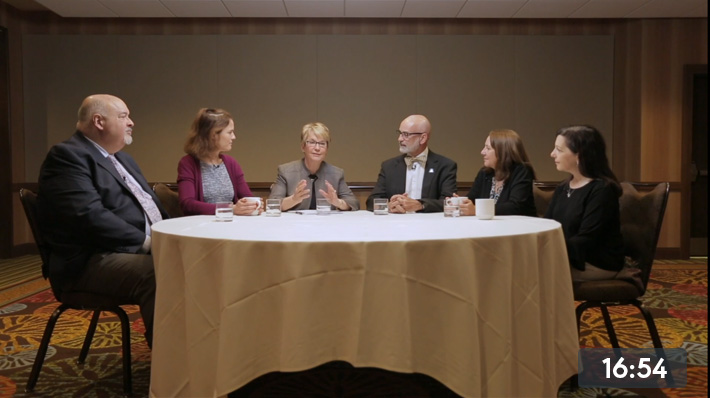
Join a star-studded roundtable of Fear Free experts discussing the interaction of pain and fear, how the variability between specific patients and species can affect pain, and how management of fear can help to alleviate pain.
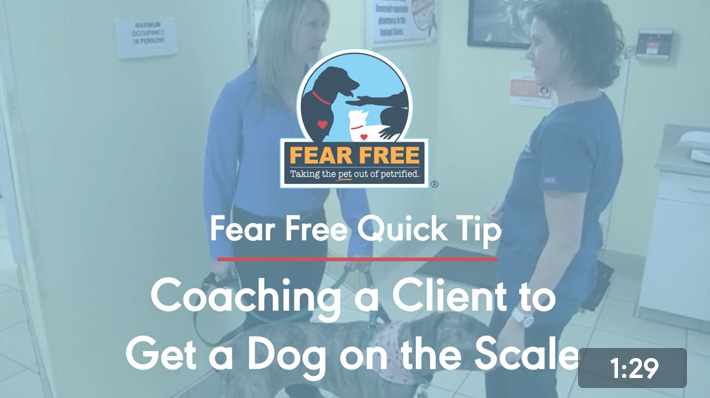
Debbie Martin, RVT, CPDT-KA, KPA CTP, VTS (Behavior), demonstrates how you can help coach your clients to get their dogs on the scale easily and without stress.
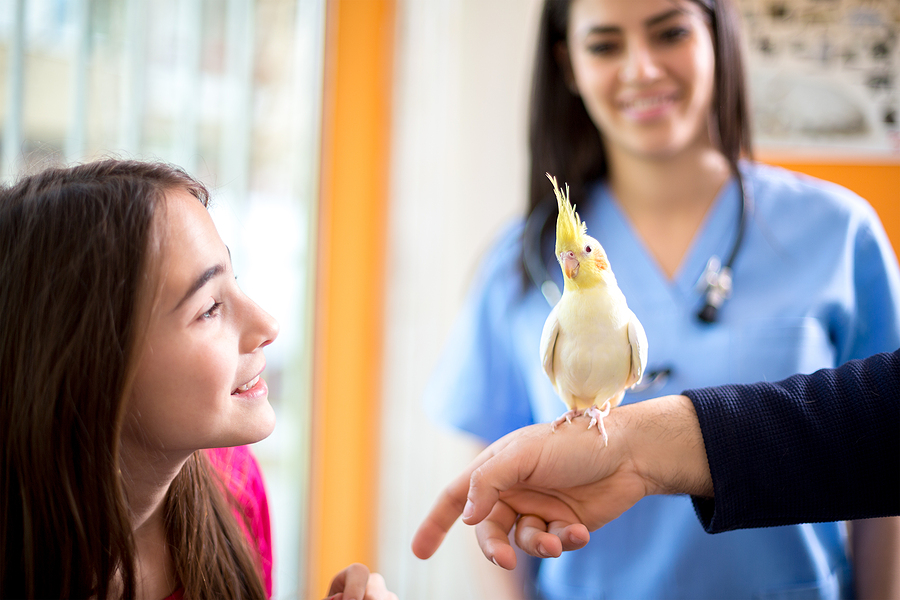
But what happens when things do not go as planned? What if expectations are too high and the pet obtained is unable to live up to the client’s expectations? Biting, screaming, and feather picking are parrot behaviors that many new owners are not prepared for when they acquire their pet. In the avian world, euthanasia is much less likely as most veterinarians are hesitant to end a bird’s life due to the client’s convenience, but this makes it more likely that the bird will be rehomed multiple times.
What if we were able to prepare our avian clients for behavioral problems before they start? What if avian rescues could work to teach birds specific cued behaviors to help eliminate aggression in some of these pets?
Psittacine preparatory programs or avian prep programs can be life-changing for birds and a great resource for owners to understand normal bird behavior, create realistic long-term expectations, and work toward creating an environment that is mentally and behaviorally enriching. They also help teach cued foundation behaviors used to eliminate and replace unwanted behaviors (just as we do with dogs and cats). Avian prep programs can help to strengthen the human-animal bond, keep birds in a home long-term, and increase the bond between client, bird, and clinic. Bonus: offering such programs also increases revenue through fees and the sale of products and treats.
Who will teach the courses? What are the most important topics to teach? What foundation behaviors are most important and why? These are all great questions and we will break them down below:
Educator/Instructor: An avian veterinarian or veterinary technician with a special interest in birds should instruct this course. The individual should be knowledgeable in avian communication, body language, forms of enrichment, and use of positive reinforcement for training. An exotic-animal trainer may be an ideal instructor if one is in your area. This trainer should use and recommend positive reinforcement. Avoid use of aversive training techniques, which can increase fear, stress, and anxiety in all species.
I recommend creating a four-week course. The first two weeks can be taught virtually or in person without the client’s bird present. The goal in the first two weeks will be to review the basics of avian communication, enrichment and environmental set up, learning theory and use of positive reinforcement (with a marker), and answer client questions. The third and fourth classes will focus on teaching cued behaviors with the birds present in the hospital. (See the chart below)
To prevent potential disease transmission or other risks for birds brought to class, take the following measures:
| Class | Topic and Discussion Points |
| Class One (Humans Only) | · Introduction and Client Problem Behavior Discussion (Why are they here and what are they seeing at home?)· Avian Communication
· Environmental Enrichment/Management |
| Class Two (Humans Only) | · Environmental Enrichment/Management (cont.)· Learning Theory and Using Marker Training
· Marker Mechanics and Preparing for Birds in Class |
| Class Three (Humans and Birds) | Break down into 5- to 10-minute training sessions with short breaks in between.· Name Orientation
· Target · Step to Me · Off · Station Training |
| Class Four (Humans and Birds) | Break down into 5- to 10-minute training sessions with short breaks in between.· Name Orientation
· Target · Step to Me · Off · Station Training |
The following behaviors can be useful to have trained and generalized prior to problem behaviors starting. Response Substitution is a term used when we want to replace an unwanted behavior with a new behavior. Teaching and creating strong cued behaviors can help to eliminate and give alternative responses in situations involving attention-seeking or aggression.
Name Orientation: Teaching birds their name can help with obtaining their attention to interrupt unwanted behaviors and ask them to offer a different behavior.
Target Training: This behavior can be used to teach the bird to move from one place to another by teaching them to place their beak near the target.
Step to Me: Cue a bird to move to handler’s arm or hand to be transported from one place to another.
Off: Cue bird to move off of handler during periods where conflict may occur.
Station Training: Teach bird to go to a specific location on cue. This can be used as an alternative behavior.
Avian prep programs and training classes are currently scarce but ideally courses like this will become as routine as dog training classes. Pet birds deserve just as much of a chance to be successful in the home environment as dogs or cats. If you or others you know are teaching a course like this, please update us on the Fear Free for Professionals Facebook Group. We would love to see your photos and ideas for these courses as well as your feedback!
Resources
Luescher, Andrew. Manual of Parrot Behavior. Blackwell Publishing. 2006
Shaw, Julie K. and Martin, Debbie. Canine and Feline Behavior for Veterinary Technicians and Nurses. Wiley & Sons, Inc. 2015.
This article was reviewed/edited by board-certified veterinary behaviorist Dr. Kenneth Martin and/or veterinary technician specialist in behavior Debbie Martin, LVT.
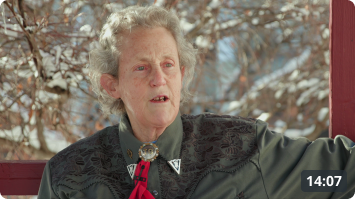
Join world-renowned animal behaviorist, award-winning author, and subject of an Emmy-award winning film Temple Grandin, Ph.D., as she takes a tour of a veterinary hospital with Fear Free founder Dr. Marty Becker and describes what she sees, hears, and experiences. Learn through Dr. Grandin’s first-hand observations how we can better “see” things from animals’ perspectives and how even small improvements, exactly like the ones taught in Fear Free’s Veterinary Certification Program, can make a world of difference for cats and dogs.