By Deb M. Eldredge, DVMSometime when it is fairly busy, take a few minutes and go out to sit in your clinic waiting room. Sit down, close your eyes and just listen. Listen carefully for little noises as well as the loud and obvious noises.
After a minute, the sounds may seem a bit overwhelming to you. Think of how much more cats and dogs hear than we do and how they don’t understand what many of the noises are. For our pets, the veterinary hospital may be a horror house of sound.
How can we help pets with sound issues to feel more comfortable at the clinic? Carpet is often used to mute sounds, but it doesn’t really make sense in a clinic where cleanliness is important. Barriers can help to block sounds, and soundproofing exams rooms is not a bad idea, although it can be expensive.
Playing background music may help some pets, but an individual pet may not like your music choices. That sounds silly but anyone who has done musical freestyle with a dog can tell you that dogs have definite opinions on music. Luckily, there are some research-backed CDs of soothing music composed specifically for dogs and/or cats. Through A Dog’s Ear, for instance, has pioneered soothing music for anxious pets. These CDs are excellent for waiting rooms, exam rooms, and kennel areas.
To really help your patients prepare for a veterinary visit or hospital stay, consider making a CD of the sounds at your clinic. Start by doing a walking tour of the clinic with one of your own pets. Begin with the sound of the door opening and closing and the sound of toenails on the floor. If the scale squeaks, catch that. Try to record the voices of all of your receptionists as well as the ringtone of your phones and your computer and printer beeps and squeaks.
Move on to the noises heard in a waiting room: doors opening and closing, laboratory equipment dinging off, refrigerator and cupboard doors opening and closing. Record the voices of your veterinary technicians, assistants and kennel help. Record some barking dogs, cage doors opening and closing, and cats meowing (or even screaming or hissing). Note any noises that your own pet reacts to. Washing machines, dryers, blow dryers, vacuums, furnaces, and air conditioners can all make noises that startle or panic an already anxious pet.
The goal is to create a CD of sounds that pet owners can take home to play for pets to accustom them to the sounds they will hear at your hospital. These are not CDs to play at your clinic but rather CDs to loan out to clients. Have them start by playing the sounds very quietly and try to pair the CD with positive things such as meals or belly rubs. If you have any clients who are breeders, loan them a copy of the CD to play for their litters so the puppies and kittens are familiar with the sounds right from the start.
Some pets will never smile about their veterinary visits. But if you can at least make the noises a pet will encounter seem routine, you will have helped reduce the pet’s fear of the veterinary clinic.

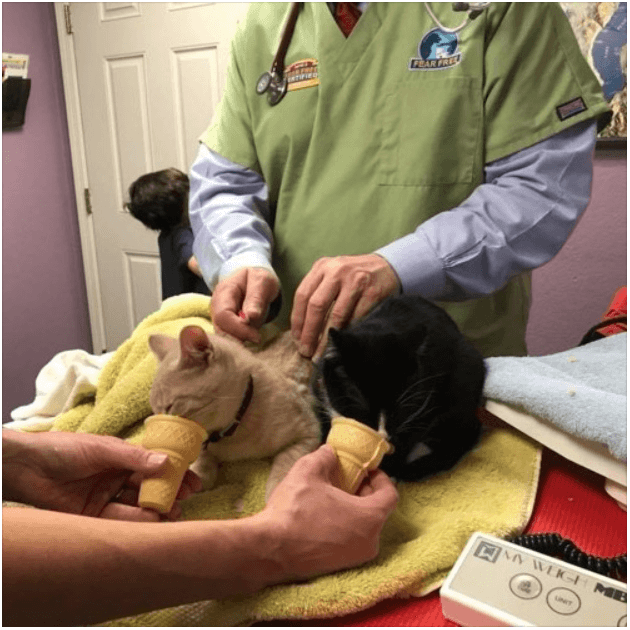




 After becoming certified, it’s not just about the how you implement the Fear Free strategies you have learned, but also how you market your newly earned certification. Being certified not only helps you practice better medicine, but it tells your clients and potential clients that you’re a step above the competition. In this podcast, we talk about how to use social media, video, email, and more to market your certification and communicate with clients.