Blog Archives

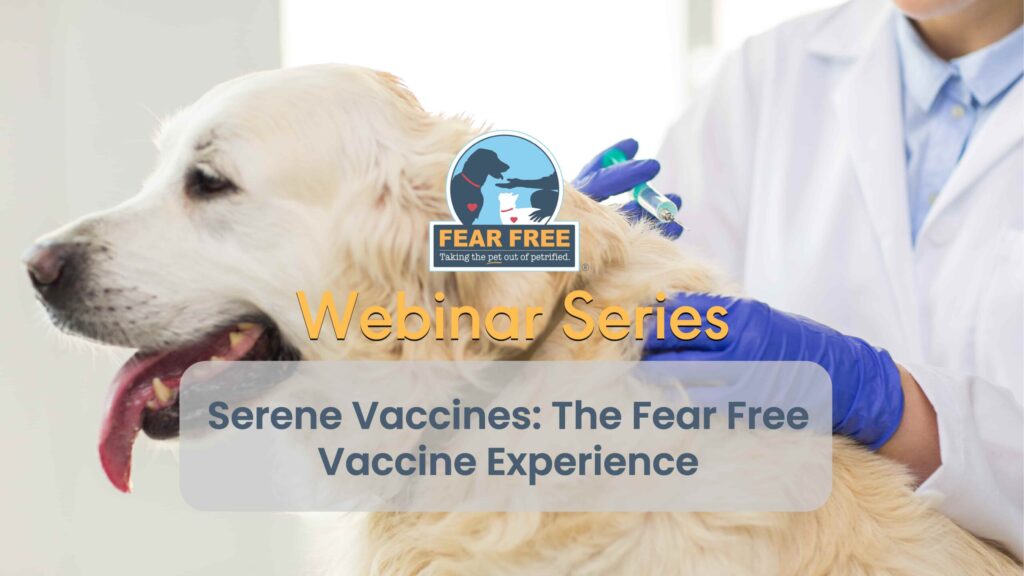
Serene Vaccines: The Fear Free Vaccine Experience

There are many lifestyle factors that influence the decision to vaccinate or not, and we must learn to be proactive in addressing potential concerns that may arise for pet parents. Brought to you by our friends at Elanco.

Fear Free Spaces: Designing your Fear Free Environment

Do you want to create a space that better reduces fear, anxiety, and stress (FAS) in pets? Join us as Roger Layman, Elite FFCP, AIA, NCARB, discusses how Fear Free can enhance your clinic or shelter design, whether you are rearranging, remodeling, or building a brand new space. A new building or remodel provides the perfect opportunity to interweave FAS-reducing design into your plans, but your current space can also be reimagined to reduce FAS. Register now to learn how to create a safe and serene space for pets, pet parents, and your team!

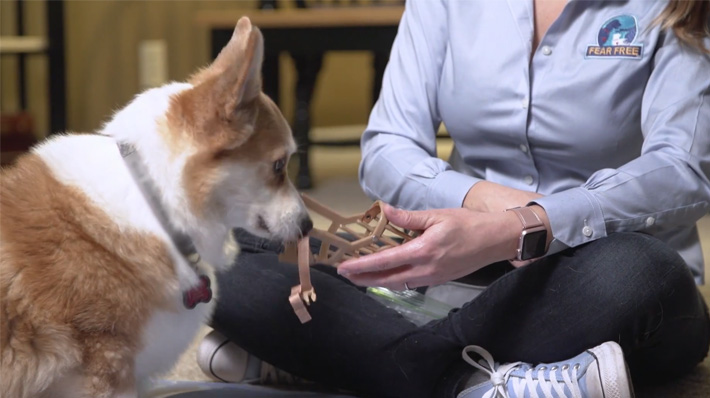
Muzzle training is essential training for a new dog. Creating comfort and ease with wearing a muzzle can help build confidence and make treatments easier for both you and the dog. Mikkel Becker, CBCC-KA, KPA CTP, CDBC, CPDT-KA, CTC, and Debbie Martin RVT, CPDT-KA, KPA CTP, VTS (Behavior), will show you how to safely and effectively muzzle train.

You must be a Fear Free member and logged in to view this webinar

Increase Team Efficiency: Workflow Tips & Technology Integrations

Life in pet professional settings has had challenges over the last few years, including adapting to no contact orders, parking lot check in, new technology processes, and even Telehealth. During this presentation, we will explore ways to use technology to help alleviate some of this stress for both pet parents and their pets. Because animals are so in tune with human feelings, anything we can do to help the parent benefits the pet. Using Fear Free techniques along with new technology supports in increasing our overall client satisfaction and the pet experience.

By Kim Campbell ThorntonWhen clients think about vaccinations for their pets, they often associate them with their own feelings about needle-sticks. And most people don’t have positive associations with vaccinations or blood draws. As a veterinary professional, though, you know that vaccinations are essential to your patients’ good health. The conversation you have with clients can not only address the importance of protecting dogs and cats against disease, but also explain why vaccinations don’t have to be the painful experience that they think it will be for their pets.

Here are four conversation starters to help clients see the benefits of vaccinations, not only for their pets’ good health, but also how vaccinations can contribute to a positive and Fear Free experience in the clinic.

The risk of contagious diseases hasn’t gone away.

Canine parvovirus, canine distemper, and infectious canine hepatitis are highly contagious and frequently life-threatening.1 In cats, herpesvirus, calicivirus, panleukopenia, chlamydia, and feline leukemia are all widely distributed diseases that cause significant morbidity and mortality.2 Rabies is fatal in both species. Young animals are at highest risk, but any unvaccinated pet can acquire them. All of these diseases are preventable with vaccinations, and multiple combination vaccines are available for any protocol.

Combinations Are Key to Comfort

To prevent anxiety, reduce stress, and keep visits Fear Free for patients and clients, you can offer combination vaccines that contain only half the volume of most vaccines. That means not only fewer needle sticks but also shorter duration of the injection. For clients who are familiar with Fear Free techniques, those things are important.

Disease risks are changing.

Bacterial diseases such as Lyme disease and leptospirosis are increasingly seen in urban and suburban dogs and in areas where the infections were previously not considered to be a problem specific to leptospirosis.3 The Companion Animal Parasite Council reports that tick-borne diseases4 such as Lyme are spreading across much of the United States, in particular to the South and West, carried by deer, rodents, and migratory birds. A warmer climate, contributing to longer periods for tick reproduction, is also a factor. Adult ticks are active year-round any time the temperature is above freezing.

Climate change and increasing human and domestic animal contact with carrier wildlife have contributed as well to a greater incidence of leptospirosis. Dogs who previously were considered to be at low risk for these diseases, in particular city dogs and dogs weighing 15 pounds or less, are now the ones more likely to be exposed to them.

Lyme disease is spreading rapidly, and leptospirosis is now found in most areas.5 A combination Lyme and lepto vaccine provides protection with a single injection and less vaccine volume.

In addition to vaccinations, be sure to provide client education about vector control and exposure risk reduction through topical or systemic insecticides.

Clients with indoor cats may believe their pets don’t need vaccination for feline leukemia virus, but a single unsupervised escape outdoors can lead to exposure to the disease. All kittens should receive vaccination(s) for FeLV, followed by a booster when they are one year old.6 They can receive a lower volume 1/2mL FVRCP-FeLV combination for a more comfortable vaccination experience.

Vaccinating cats against FeLV has contributed to a decrease in the prevalence of the disease. Test for FeLV prior to vaccination so that cats who test positive aren’t vaccinated unnecessarily.

Technology designed to reduce the likelihood of vaccine reactions.

Unwanted proteins are associated with injection-site pain and swelling. Highly purified 1/2mL Ultra vaccines, using Purefil Technology, are designed to decrease vaccination reactions associated with unwanted protein and debris, reducing proteins by up to 75%. Their efficacy and safety have been demonstrated extensively in real-world studies.

This article was reviewed/edited by board-certified veterinary behaviorist Dr. Kenneth Martin and/or veterinary technician specialist in behavior Debbie Martin, LVT.

Kim Campbell Thornton is content manager for Fear Free Pets and is an Elite Fear Free Certified Professional. She has been writing about dogs, cats, wildlife, and marine life since 1985 and is a recipient of multiple awards from the Cat Writers Association, Dog Writers Association of America, and American Society of Journalists and Authors. When she’s not writing or editing, she’s snuggling with Sparkles, her Cavalier King Charles Spaniel.

TruCan, TruFel, Elanco and the diagonal bar logo are trademarks of Elanco or its affiliates.  Other company and product names are trademarks of their respective owners. ©2023 Elanco or its affiliates. PM-US-22-2260

References

1 2022 AAHA Canine Vaccination Guidelines. https://www.aaha.org/globalassets/02-guidelines/2022-aaha-canine-vaccination-guidelines/resources/2022-aaha-canine-vaccinations-guidelines.pdf Accessed on December 13, 2022.

2 2020 AAHA/AAFP Feline Vaccination Guidelines. https://www.aaha.org/globalassets/02-guidelines/feline-vaccination-guidlines/resource-center/2020-aahaa-afp-feline-vaccination-guidelines.pdf Accessed on December 13, 2022.

3 White, A., et. al. “Hotspots of canine leptospirosis in the United States of America.” The Veterinary Journal, 222 (2017), 29-35. https://www.sciencedirect.com/science/article/pii/S109002331730059X Accessed on December 13, 2022.

4 Companion Animal Parasite Council (CAPC) 2022 Pet Parasite Forecast. https://capcvet.org/about-capc/news-events/companion-animal-parasite-council-releases-2022-annual-pet-parasite-forecast/ Accessed on December 13, 2022.

5  Smith, Amanda M., et. al. “Potential Drivers for the Re-Emergence of Canine Leptospirosis in the United States and Canada.” Tropical Medicine and Infectious Disease (2022).  https://www.mdpi.com/2414-6366/7/11/377/htm Accessed December 13, 2022.

6 Little, Susan, et. al. “2020 AAFP Feline Retrovirus Testing and Management Guidelines.” Journal of Feline Medicine and Surgery, Vol. 22, Issue 1 (2020). https://journals.sagepub.com/doi/full/10.1177/1098612X19895940 Accessed December 13, 2022.

This post is brought to you by our sponsor, Elanco, the maker of TruFel Ultra Vaccines.

Sandra Toney

When she was 12 years old, Karina Salvo, DVM, CTPEP, CVFT, CVMMP, volunteered to work for a one-doctor practice. Cleaning cages, doing laundry, and walking dogs led to watching her first surgeries. From that point, she knew that her career path would lead to veterinary school.

But one thing she and the veterinarians she grew up working for—and later, with—didn’t learn was how to make exams easier on pets. When she became aware of Fear Free®, though, it made sense to her that veterinary visits should be less frightening and more fun for patients.—not to mention for veterinarians and technicians themselves.

“The one thing that I noticed in each and every practice was the frequency in using force to hold a patient,” says Salvo, now an Elite Fear Free Certified® DVM who also has certifications as a palliative and end-of-life practitioner (CTPEP) and in branches of Traditional Chinese Medicine (CVFT and CVMMP). “Some of the staff wrestled what I thought were highly aggressive dogs down to the ground in order to give a single vaccine or draw blood. The end result was someone got hurt, scratched, urine and feces everywhere, and a dog that was left splayed out and panting on the floor in exhaustion or cowering in the corner. This was the ambience of the veterinary field I grew up in.”

As she learned more from Fear Free, she found that in-clinic exams became easier.

Now she owns her own practice, AcuVetDoc Veterinary Reproduction & Animal Care Wellness Clinic, in Royal Palm Beach, Florida, where she treats not only pets but also wildlife. That allows her to see only one patient at a time.

“I can practice 100 percent the way I choose to. I intentionally do not have a receptionist or a technician,” Salvo says. “Patients are scheduled on the hour instead of every 15 minutes. This allows me to work one on one with the patient and the owner. My ‘team’ in my practice is the owner, myself, and the patient. By working together, all of us can better understand the patient and the medicine. Practicing this way has allowed me to build trust in my patients as well as owners because both are comfortable.”

Salvo greets clients and patients at the door so she can watch how the animal walks into the building. If owners have given permission beforehand, treats are on the carpeted floor as they enter.

Animals who have previously had poor experiences at veterinary clinics may be directed into an exam room that resembles a living room—with carpet, a bookcase, leather sofa, chair, and hidden treats. While Salvo sits on the floor, pockets filled with treats, and talks to the owner, patients can explore, approaching when they’re comfortable. If they need more time, Salvo may simply hand out treats during the visit, holding off on an exam. She discusses this possibility with clients beforehand so that they’re aware the first interaction may be a “meet-and-greet,” with the exam portion on a subsequent visit.

Many of her patients enjoy “playtime,” a rewarding exam in which Salvo uses tasty treats to get patients to move on their own but in a fashion that allows her to examine them. For instance, she might get them to sit or turn their head so she can look inside ears or examine the mouth.

One patient who stands out in her memory was a 12-week-old Cockapoo puppy whose first experience at a veterinary clinic had involved being held on an exam table while he screamed, attempted to bite, and urinated and defecated. The veterinarian told the owners that their puppy had mental health issues and should be returned to the breeder. This time they were hoping for a better experience.

Salvo met the owners outdoors, where she had set up chairs and some treats. They sat down, talked about how the puppy was doing at home, and handed out treats to the puppy. Salvo assigned homework: to find tasty, high-value treats that could be dropped on the floor any time visitors came to the home and to be used as rewards during training. She suggested walking the puppy in areas far enough away from people that strangers wouldn’t want to pet the dog but close enough that he could see people, other dogs, and vehicles such as carts. Offering high-value treats during these walks would contribute to forming a positive association with the experience and a connection with the owners.

At the second visit a few days later, Salvo again met the owners outside and had tasty treats already on the ground for her new friend to gobble up. Eventually, the puppy approached her and she was able to perform an exam and give an oral vaccine as the puppy sat next to the clients and received treats.

“On subsequent visits, we sat next to each other outside, and he came and laid on my lap and became more interactive with me and less afraid of the environment,” says Salvo. “With a cheese and Cheerio trail to lead him inside, we made it to the scale and an exam room!”

Three months after that first visit, the puppy frequents farm fairs, Home Depot, and PetSmart, and comes running into the clinic to greet Salvo.

“This is an amazing story with very patient owners who were willing to take their time to understand and provide their dog with what he specifically needed when he needed it, redirection to something positive, protection from being thrown into the middle of a chaotic situation, and to slow introduction to the world around him,” she says.

Fear Free continues to make a difference in her practice. “The best feeling is when the owners are ready to leave and the patient stays behind and makes eye contact with me waiting for another fun treat,” Salvo says, “or when they return and they are pulling their owner into the building.”

This article was reviewed/edited by board-certified veterinary behaviorist Dr. Kenneth Martin and/or veterinary technician specialist in behavior Debbie Martin, LVT.

Sandra Toney has been writing about cats for over 25 years and is an award-winning member of Cat Writers Association and Dog Writers Association of America. She has written for many print and online magazines about cat health and behavior as well as authoring eight books. She lives in northern Indiana with her cat, Angel.

Want to learn more about Fear Free? Sign up for our newsletter to stay in the loop on upcoming events, specials, courses, and more by clicking here.

 
|

The FAS Scale Deconstructed: The Importance of Addressing Stress Early On

In this recorded webinar, Fear Free’s Education Manager Lori Chamberland takes a closer look at each level of the FAS scale to empower you to score pets with greater confidence. You’ll see video examples of pets at each level of the scale and understand why it’s important to address stress early, rather than waiting until FAS 3 or higher to intervene.

You must be a Fear Free member and logged in to view this webinar.

|

Successful Medication Strategies in a Fear Free World

In this recorded webinar, Sharon Minninger, DVM, discusses how we can modify our thoughts and actions to improve the “just medicate my pet” problem. She also addresses what other medication forms can be considered and how to develop strategies to train your team and your clients for success.

Brought to you by our friends at Covetrus

Happier Cats and Happier Clients: Diagnosing and Treating Feline OA

In this recorded webinar, Michael Petty, DVM, CVPP, CVMA, CCRT, CAAPM, covers how fear, anxiety, and stress can impact pain and vice versa, along with a team- and case-based approach to diagnosing and treating feline OA. A new treatment option, recently approved for controlling the pain associated with feline OA, is also discussed.
Brought to you by our friends at Zoetis

Hospital visits can be a scary experience for people and pets. Learn ways to reduce fear, anxiety, and stress (FAS) that will improve the safety of staff members and help bond clients to your practice for life. Join Heidi Reuss-Lamky, LVT, VTS (Anesthesia/Analgesia), (Surgery), Elite FFCP (Veterinary), CFVP, as she discusses how to implement Fear Free concepts into companion animal anesthesia.

Attendees will learn how to:
• Minimize fear, anxiety, and stress (FAS) in hospital environments
• Utilize Fear Free handling and physical exam tips
• Consult emotional medical records (EMR)
• Properly care for pets post-op