Blog Archives

By Deb M. Eldredge, DVMWe have all been there. The embarrassed client who pokes her head in the door and asks if we have a hose to clean her dog off. The carrier with the yowling cat and the fetid odor with an owner who is embarrassed and says her cat “might need a little cleaning and could the carrier be cleaned too?”

Plan Ahead

Even before you work on the stress aspects, think about how to physically minimize chances of stress diarrhea. Ideally these pets are scheduled early in the day for their office appointments. That way the owners can skip the pet’s morning meal – and maybe even the evening meal of the night before if need be. Less in means less out. Obviously doing this depends on the health of the pet and how the owner manages feedings but it might be a solution.
There may be dietary changes that help with a specific pet. Think plain canned pumpkin for fiber to help keep stools firm. Advise owners to avoid any special or extra treats for a day or two before the appointment.

Travel Trauma

A careful history can enlighten you about the cause. Is it the car travel? Some pets just don’t handle car rides well. Or is it only when the pet actually senses and anticipates a veterinary visit? Sometimes it is both factors. The important thing to realize is that Fear Free procedures must be instituted ahead of the veterinary visit to help these animals.

If it is the car travel, consider dispensing anti-nausea medications ahead of the visit (yes, vomiting often accompanies stress diarrhea). Look at calming combos that help with travel anxiety such as Travel Calm, an essential oil combo for dogs who get carsick. Send clients home with canine or feline pheromone products—wipes or sprays—that the owner can use in the carrier and car to and from the clinic. For patients who have a history of travel-related diarrhea, offer to prescribe PVPs—pre-visit pharmaceuticals—such as gabapentin or trazodone to help them relax.

Encourage families to give the nervous dog an extra-long walk and possibly some playtime early on the morning of the appointment to try and stimulate bowel emptying before the dog gets in the car or enters the clinic. Playtime at home for a cat might help as well.

Counterconditioning

Long term, especially if the diarrhea is specifically associated with arriving at the veterinary clinic, you can try some counterconditioning techniques to help put a stop to loose stools. Encourage owners to take their pet for short trips ending up in the parking lot of the veterinary clinic. Then dogs can get out and get some special treats or, even better, some playtime with a favorite toy such as a tug. Cats can get favorite treats. Then happily turn around and take them home. Pets will come to associate trips, even trips that end up at the dreaded vet clinic, with some good things.

As pets deal with a clinic utilizing Fear Free practices, the fear and panic they previously showed when traveling to or arriving at the clinic should subside. As fear and anxiety decrease, so should episodes of stress diarrhea. Everyone will be happier!

This article was reviewed/edited by board-certified veterinary behaviorist Dr. Kenneth Martin and/or veterinary technician specialist in behavior Debbie Martin, LVT.

|

From Pit Bulls To Pugs: State Farm Is A Good Neighbor

Learn now to educate adults and children about responsible pet ownership, the importance of being kind to animals, the benefits of volunteerism, why State Farm doesn’t judge dogs on the basis of breed when issuing its policies, and the 25-year history of the State Farm Arson Dog Program, one of the only accelerant detection canine training programs in North America. Sponsored by State Farm.

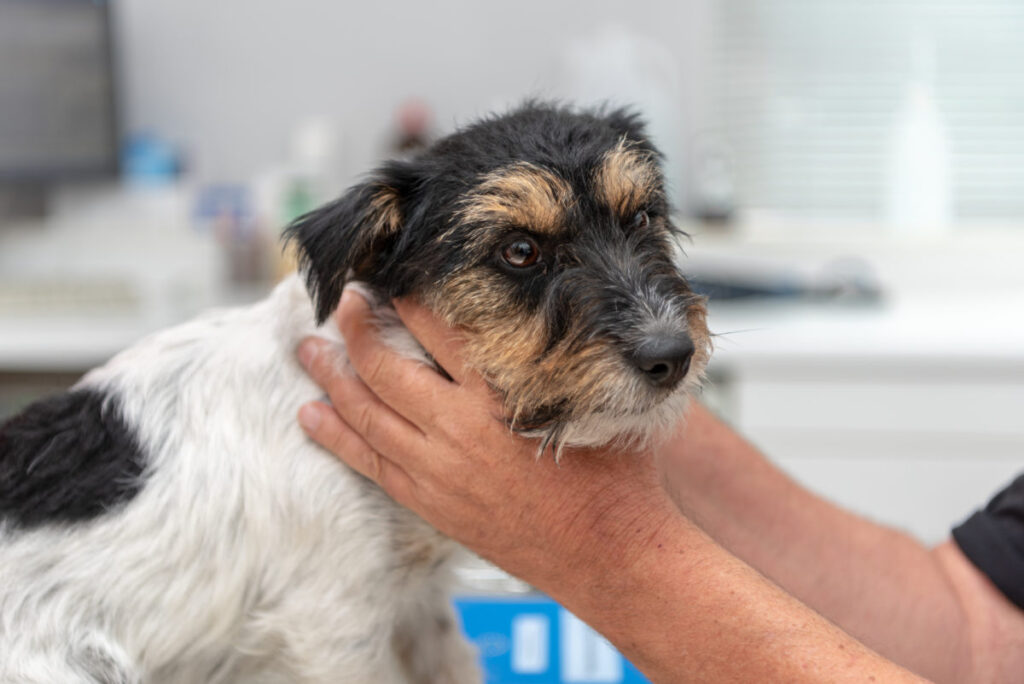
dog being examined by vet
By Deb M. Eldredge, DVMOne of the tenets of Fear Free is that pets should also be as pain free as possible. A pet in pain will be fearful, potentially defensively aggressive, and clearly not happy. Before pain can be treated, however, it must be identified and, to a certain extent, quantified.

It would be wonderful if there were easy and objective parameters to identify pain. For example, heart rate above a certain increase would equal a certain pain level. That would make pain assessments black and white and simple. Unfortunately, as with so many areas of veterinary medicine, pain is not black and white or simple. Pets with chronic pain may not show any physiological changes such as an increase in heart or respiratory rates. Some of those physiological changes we associate with pain may also be reflective of fear. So while physiological parameters can help in pain assessments, they are not the mainstay.

In veterinary medicine we rely mainly on behavioral parameters to score pain. Reading behaviors is always a bit subjective, and individual pets can muddy the waters even more. Conscious pets (as opposed to pets under anesthesia) may be stoic or may be overly sensitive to touch due to fear resulting in the “drama queen.” Owners may be adept at observing behavioral changes or somewhat oblivious.

Scales To Consider

Colorado State University has pain scales set up for acute pain assessments in dogs and cats. Their system looks at behavior, response to palpation of or around a surgical site, and body tension. A non-painful dog is clearly comfortable resting in his cage, doesn’t mind any palpation, and is relaxed. At the opposite end of the scale, the very painful dog may be moaning, licking or chewing at his surgical site, fairly unresponsive to his surroundings, cries or acts aggressive if palpation is attempted, and stays rigid to protect the painful area.  Cats show somewhat similar signs, although very painful cats may allow more handling than they did previously as they concentrate on their pain.

With the Glasgow Composite Pain Scale, the University of Glasgow looks at a variety of behaviors and watches for changes over time. For dogs there are 30 descriptor options within six behavioral categories, including mobility. People evaluate resting behaviors of the dog, reactions to any action around the injured area, changes in the dog when out of the cage and moving, and  the dog’s overall attitude. Dogs receive a numerical score for each area, which are then added to aid in a treatment plan. For cats there are 28 descriptor options within seven behavioral categories. The short form allows for periodic re-evaluations of the pet.

AAHA has a set of three criteria that work well for both acute and chronic pain assessments but are quite general. Maintenance of normal behaviors, loss of normal behaviors, and development of new behaviors are indicative of a problem the pet is dealing with. At the veterinary hospital, an astute veterinary technician can pick up on changes a pet shows from pre-surgery to post-surgery for example. That can help staff determine the pet’s level of pain and what type of pain modification to try. One pet may need medications while another pet may be comfortable with a padded bed to lie on.

Types Of Pain

Most of the developed pain scales look at pets with acute injuries. Pain is sharp then, and behaviors most likely to be changed and easy to interpret. Chronic pain can be trickier to evaluate. Many pets “cover up” chronic pain or develop ways to adapt to minimize any pain by the way they move or other changes in habit.

For chronic pain, the input of owners is almost always necessary. An owner may comment that the cat no longer hops up on the counter or that the dog wants to turn around after only going a half mile on his daily walk instead of the usual mile. Sometimes an owner may not bring up these observations, but a skillful history taking will elicit changes that indicate pain. Careful observation by clinic staff may also lead to notes such as “less weight bearing on right hind when walks or trots.” Those subtleties may not be noticed by the owner due to gradual changes over time.

As with so much of veterinary medicine, pain assessments will vary with each individual animal. Sharpen your observation skills so you can pick up the tiny changes that indicate a pet in discomfort. Pain scoring systems will help to organize your thoughts but your own skills are the most helpful to the pet you evaluate.

This article was reviewed/edited by board-certified veterinary behaviorist Dr. Kenneth Martin and/or veterinary technician specialist in behavior Debbie Martin, LVT.
||
By Kim Campbell ThorntonDo you talk to your clients about whether their pets are in pain? It can be a difficult subject to discuss, in many instances because it just doesn’t come up. Sometimes pet owners overlook subtle changes in behavior that can indicate pain or assume that those changes are a normal by-product of aging. You may need to bring up the subject yourself, especially if you are seeing a senior pet or one who resists examination.

“I wish we would talk more about it,” says Joyce A. Login, DVM, Zoetis senior manager of veterinary specialty operations. “Sometimes I think we don’t bring it up in the room as much as we could. It’s a challenge.”

As a veterinarian you are trained to see and feel changes in pets that owners might not, such as abnormal postural displays or heat on a specific joint, but listening to what people say about their pets’ behavior and drawing out details with questions is an important part of the exam process.

“We can help the owner when we’re asking history and possibly pull out some information in how we ask our questions,” Dr. Login says.

Some of the following obvious and not-so-obvious statements you might hear from owners can open up a discussion:

–He doesn’t like it when I touch him there.

–She doesn’t always use her litter box anymore.

–He used to enjoy being picked up but now he squirms away.

–She’s started pooping inside the house even though she has a dog door.

–We used to go on long walks, but now he conks out after a mile.

–She’s reluctant to go up or down the stairs.

–He doesn’t jump on the bed or sofa anymore

–She used to love the kids and now she walks away when they want to pet her.

–He doesn’t groom himself very well anymore.

–She sleeps in the closet instead of hanging out with us while we watch TV.

Changes in litter pan behavior are much more likely to indicate that a cat has pain issues rather than a urinary tract infection. Dogs who defecate outdoors and then defecate again in the house may be doing so because it’s painful for them to squat for very long so they don’t complete the act outdoors. Animals who potty inside the home even though they have a pet door may find it painful to go through the door because it whacks them on an already aching hind end as they exit.

The real red flag is resistance to touch, says Robin Downing, DVM, DAAPM, DACVSMR, at Downing Center for Animal Pain Management in Windsor, Colorado.

“While animals cannot and do not anticipate or fear their own death, they very much anticipate and fear pain,” she says. “As a consequence, when we as veterinarians meet and interact with dogs, and particularly cats, who are reluctant for us to handle them, the most likely explanation is that those animals are painful and they know that when a human touches them it hurts, so they are anticipating and fearing that pain and doing everything they can to prevent being handled.”

Before performing a pain palpation, she demonstrates the amount of pressure she’ll be using on an owner’s forearm, so the person recognizes that it’s not a painful level of touch.

Finding that what they thought were breaks in normal behavior—not socializing, not wanting to be touched or picked up, losing housetraining or litter box training—signal that an animal is in pain can be an eye-opener for owners. Some break down in tears when they realize their pet has been hurting.

“We have a clientele who believe it’s a normal thing for their dog or cat to become less active as they age because they’re getting old, and what we need to do now is really shift our attention to educating our clients to understand that old age is not a disease and that there are things we can do to prevent these negative consequences from happening in the first place and specific things we can do to intervene on a dog or cat’s behalf if they are in pain.”

This article was reviewed/edited by board-certified veterinary behaviorist Dr. Kenneth Martin and/or veterinary technician specialist in behavior Debbie Martin, LVT.

|

Vaccinations for the Mind: Positive Puppy Socialization

Monique Feyrecilde, CVT, VTS (Behavior)

Puppies should explore the world and the people with whom they share it. When clients bring home a puppy, they have a golden opportunity to protect their newest family member from fear and anxiety later in life. By making a positive puppy transition and socialization plan, owners can help puppies have a smooth and happy puppyhood, adolescence, and adulthood. In this Fear Free webinar, sponsored by Ceva, Monique Feyrecilde, CVT, VTS (Behavior) covers techniques, products, and client education to get puppies started off on the right paw; how early detection and intervention can help shy puppies blossom; and more. Sponsored by Ceva.

||||||

In this one-hour module, client service representatives will learn how to quickly assist pets entering with FAS, educate clients about Fear Free in person and on the phone, guide them in preparing their pets for future visits, provide resources and referrals, organize community outreach activities, and create protocols for the whole team to follow.

This module is open to all professionals that are already signed up for the certification program.

The Vital Role of Client Service Representatives is divided into five lessons:

  • Lesson 1: Communicating with Clients
  • Lesson 2: Creating a Welcoming Experience
  • Lesson 3: Advising Clients on Transporting Pets
  • Lesson 4: Reducing FAS in Other Pet Activities
  • Lesson 5: Getting Involved in Community Outreach

This course is approved for 1 hour of CVPM CE

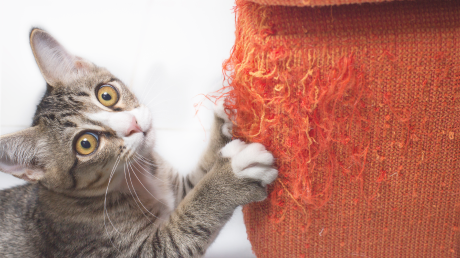
In this one-hour module, you will learn what natural functions scratching serves for cats; common owner responses to scratching and the problems associated with them; and the potential fallout from declawing cats. Most importantly, you’ll come away with several safe and effective alternative solutions to the problem of unwanted scratching, and a made-for-owners handout to help guide them in the right direction.

This module is open to all professionals that are already signed up for the certification program, and is RACE approved for 1 hours in the category of Scientific.

    Feline Destructive Scratching is divided into five lessons:

  • Lesson 1: Feline Scratching Defined (The Good)
  • Lesson 2: Scratching as a Problem for Owners (The Bad)
  • Lesson 3: Common Responses (The Ugly)
  • Lesson 4: Why Not Surgically Declaw Cats?
  • Lesson 5: Safe, Effective Alternatives to Declawing
While Fear Free can often seem as though it’s only about animals’ emotional wellbeing, Fear Free is passionate about the science of animal care as well. Gary Landsberg, DVM, DACVB, DECAWBM (CA), Head of Research at Fear Free, brings you behind the scenes to tell you how Fear Free is advancing research in the field of veterinary medicine.

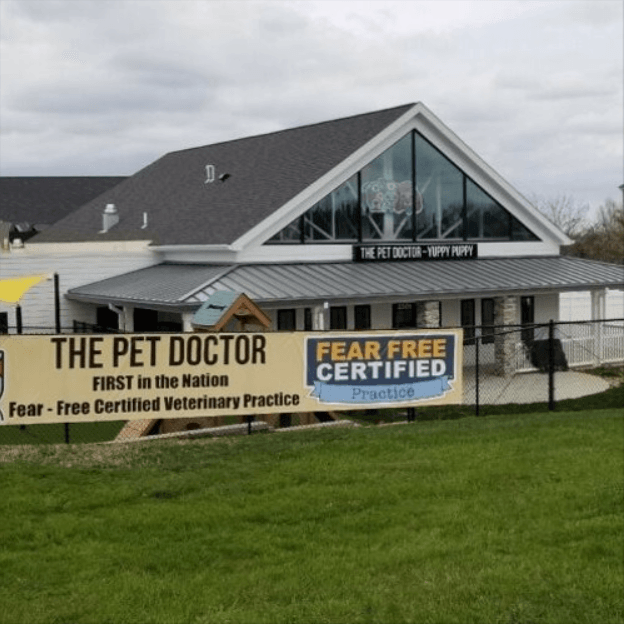
Achieving a Fear Free Practice Certification might seem like a daunting task, but with a little planning and a strong will to implement, your hospital can make it happen! Marcy Hammerle, DVM, owner of the world’s first Fear Free Certified Practice, shares her journey from Fear Free implementation to Practice Certification, with tips for setting yourself and your staff up for success.

Many of those not familiar with Fear Free think it’s all about the treats. Rachel Abrams, DVM (Practice Certification Manager, Fear Free), shows us that while treats are an effective tool for veterinary professionals, they’re just the beginning of ways that Fear Free can help improve your treatment of patients.