Blog Archives

||
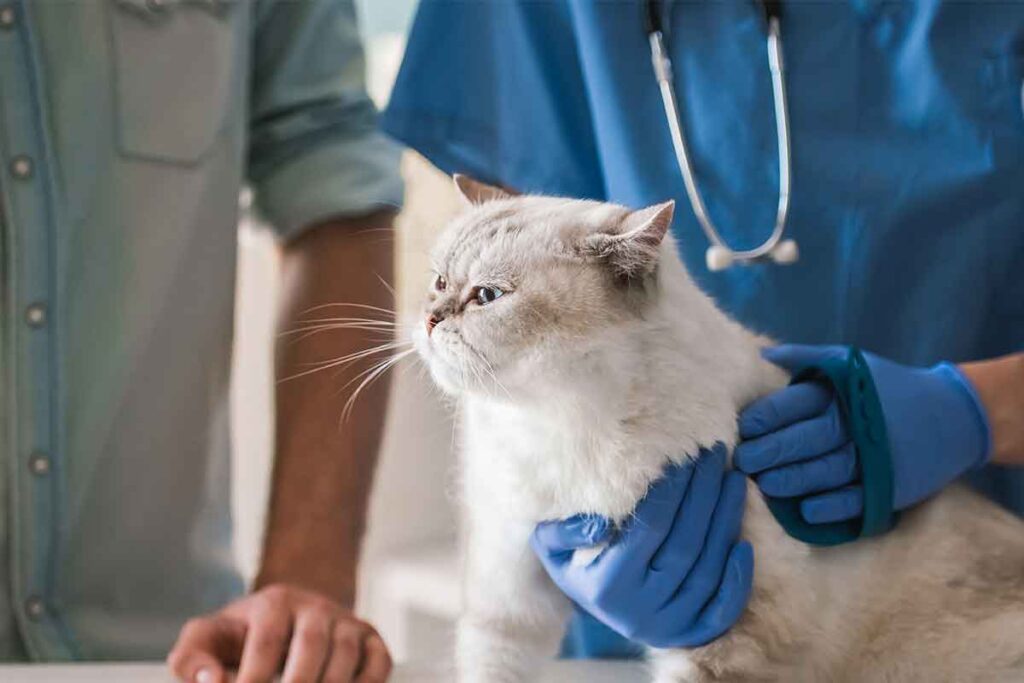
By Kim Campbell ThorntonDo you talk to your clients about whether their pets are in pain? It can be a difficult subject to discuss, in many instances because it just doesn’t come up. Sometimes pet owners overlook subtle changes in behavior that can indicate pain or assume that those changes are a normal by-product of aging. You may need to bring up the subject yourself, especially if you are seeing a senior pet or one who resists examination.

“I wish we would talk more about it,” says Joyce A. Login, DVM, Zoetis senior manager of veterinary specialty operations. “Sometimes I think we don’t bring it up in the room as much as we could. It’s a challenge.”

As a veterinarian you are trained to see and feel changes in pets that owners might not, such as abnormal postural displays or heat on a specific joint, but listening to what people say about their pets’ behavior and drawing out details with questions is an important part of the exam process.

“We can help the owner when we’re asking history and possibly pull out some information in how we ask our questions,” Dr. Login says.

Some of the following obvious and not-so-obvious statements you might hear from owners can open up a discussion:

–He doesn’t like it when I touch him there.

–She doesn’t always use her litter box anymore.

–He used to enjoy being picked up but now he squirms away.

–She’s started pooping inside the house even though she has a dog door.

–We used to go on long walks, but now he conks out after a mile.

–She’s reluctant to go up or down the stairs.

–He doesn’t jump on the bed or sofa anymore

–She used to love the kids and now she walks away when they want to pet her.

–He doesn’t groom himself very well anymore.

–She sleeps in the closet instead of hanging out with us while we watch TV.

Changes in litter pan behavior are much more likely to indicate that a cat has pain issues rather than a urinary tract infection. Dogs who defecate outdoors and then defecate again in the house may be doing so because it’s painful for them to squat for very long so they don’t complete the act outdoors. Animals who potty inside the home even though they have a pet door may find it painful to go through the door because it whacks them on an already aching hind end as they exit.

The real red flag is resistance to touch, says Robin Downing, DVM, DAAPM, DACVSMR, at Downing Center for Animal Pain Management in Windsor, Colorado.

“While animals cannot and do not anticipate or fear their own death, they very much anticipate and fear pain,” she says. “As a consequence, when we as veterinarians meet and interact with dogs, and particularly cats, who are reluctant for us to handle them, the most likely explanation is that those animals are painful and they know that when a human touches them it hurts, so they are anticipating and fearing that pain and doing everything they can to prevent being handled.”

Before performing a pain palpation, she demonstrates the amount of pressure she’ll be using on an owner’s forearm, so the person recognizes that it’s not a painful level of touch.

Finding that what they thought were breaks in normal behavior—not socializing, not wanting to be touched or picked up, losing housetraining or litter box training—signal that an animal is in pain can be an eye-opener for owners. Some break down in tears when they realize their pet has been hurting.

“We have a clientele who believe it’s a normal thing for their dog or cat to become less active as they age because they’re getting old, and what we need to do now is really shift our attention to educating our clients to understand that old age is not a disease and that there are things we can do to prevent these negative consequences from happening in the first place and specific things we can do to intervene on a dog or cat’s behalf if they are in pain.”

This article was reviewed/edited by board-certified veterinary behaviorist Dr. Kenneth Martin and/or veterinary technician specialist in behavior Debbie Martin, LVT.

|

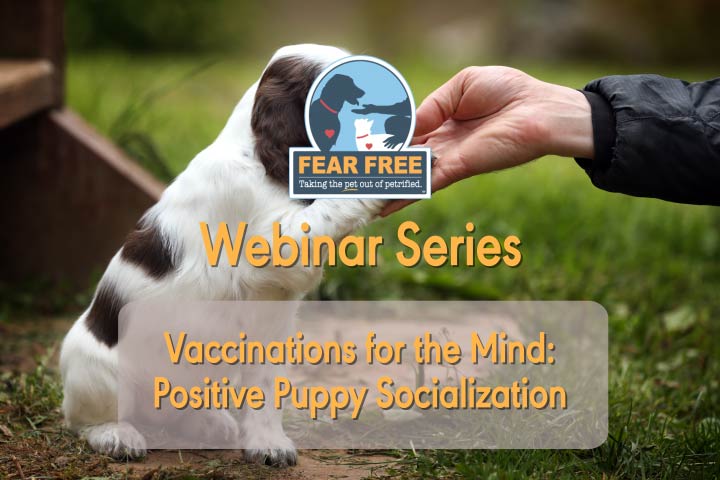
Vaccinations for the Mind: Positive Puppy Socialization

Monique Feyrecilde, CVT, VTS (Behavior)

Puppies should explore the world and the people with whom they share it. When clients bring home a puppy, they have a golden opportunity to protect their newest family member from fear and anxiety later in life. By making a positive puppy transition and socialization plan, owners can help puppies have a smooth and happy puppyhood, adolescence, and adulthood. In this Fear Free webinar, sponsored by Ceva, Monique Feyrecilde, CVT, VTS (Behavior) covers techniques, products, and client education to get puppies started off on the right paw; how early detection and intervention can help shy puppies blossom; and more. Sponsored by Ceva.

||||||

In this one-hour module, client service representatives will learn how to quickly assist pets entering with FAS, educate clients about Fear Free in person and on the phone, guide them in preparing their pets for future visits, provide resources and referrals, organize community outreach activities, and create protocols for the whole team to follow.

This module is open to all professionals that are already signed up for the certification program.

The Vital Role of Client Service Representatives is divided into five lessons:

  • Lesson 1: Communicating with Clients
  • Lesson 2: Creating a Welcoming Experience
  • Lesson 3: Advising Clients on Transporting Pets
  • Lesson 4: Reducing FAS in Other Pet Activities
  • Lesson 5: Getting Involved in Community Outreach

This course is approved for 1 hour of CVPM CE

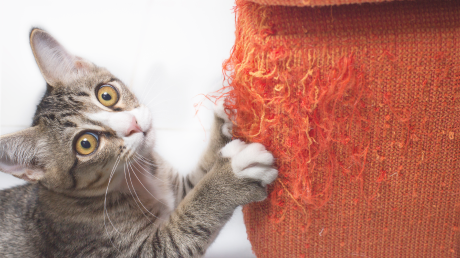
In this one-hour module, you will learn what natural functions scratching serves for cats; common owner responses to scratching and the problems associated with them; and the potential fallout from declawing cats. Most importantly, you’ll come away with several safe and effective alternative solutions to the problem of unwanted scratching, and a made-for-owners handout to help guide them in the right direction.

This module is open to all professionals that are already signed up for the certification program, and is RACE approved for 1 hours in the category of Scientific.

    Feline Destructive Scratching is divided into five lessons:

  • Lesson 1: Feline Scratching Defined (The Good)
  • Lesson 2: Scratching as a Problem for Owners (The Bad)
  • Lesson 3: Common Responses (The Ugly)
  • Lesson 4: Why Not Surgically Declaw Cats?
  • Lesson 5: Safe, Effective Alternatives to Declawing
While Fear Free can often seem as though it’s only about animals’ emotional wellbeing, Fear Free is passionate about the science of animal care as well. Gary Landsberg, DVM, DACVB, DECAWBM (CA), Head of Research at Fear Free, brings you behind the scenes to tell you how Fear Free is advancing research in the field of veterinary medicine.

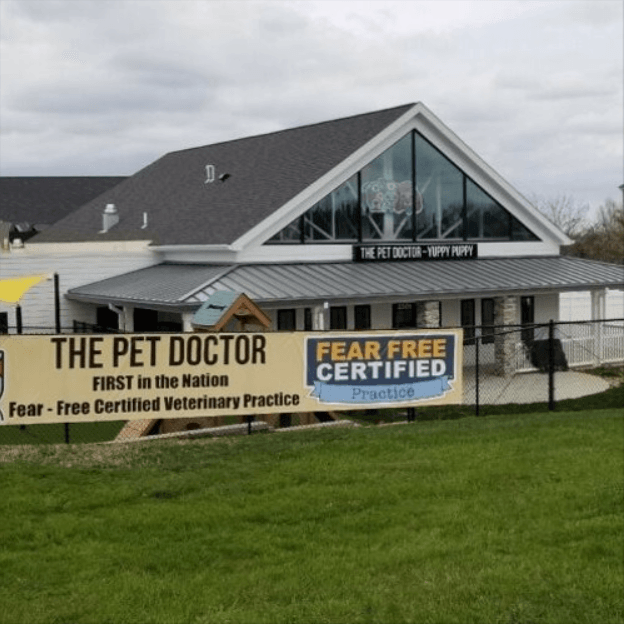
Achieving a Fear Free Practice Certification might seem like a daunting task, but with a little planning and a strong will to implement, your hospital can make it happen! Marcy Hammerle, DVM, owner of the world’s first Fear Free Certified Practice, shares her journey from Fear Free implementation to Practice Certification, with tips for setting yourself and your staff up for success.

Many of those not familiar with Fear Free think it’s all about the treats. Rachel Abrams, DVM (Practice Certification Manager, Fear Free), shows us that while treats are an effective tool for veterinary professionals, they’re just the beginning of ways that Fear Free can help improve your treatment of patients.

By Deb M. Eldredge, DVMSometime when it is fairly busy, take a few minutes and go out to sit in your clinic waiting room. Sit down, close your eyes and just listen. Listen carefully for little noises as well as the loud and obvious noises.

After a minute, the sounds may seem a bit overwhelming to you. Think of how much more cats and dogs hear than we do and how they don’t understand what many of the noises are. For our pets, the veterinary hospital may be a horror house of sound.

How can we help pets with sound issues to feel more comfortable at the clinic? Carpet is often used to mute sounds, but it doesn’t really make sense in a clinic where cleanliness is important. Barriers can help to block sounds, and soundproofing exams rooms is not a bad idea, although it can be expensive.

Playing background music may help some pets, but an individual pet may not like your music choices. That sounds silly but anyone who has done musical freestyle with a dog can tell you that dogs have definite opinions on music. Luckily, there are some research-backed CDs of soothing music composed specifically for dogs and/or cats. Through A Dog’s Ear, for instance, has pioneered soothing music for anxious pets. These CDs are excellent for waiting rooms, exam rooms, and kennel areas.

To really help your patients prepare for a veterinary visit or hospital stay, consider making a CD of the sounds at your clinic. Start by doing a walking tour of the clinic with one of your own pets. Begin with the sound of the door opening and closing and the sound of toenails on the floor. If the scale squeaks, catch that. Try to record the voices of all of your receptionists as well as the ringtone of your phones and your computer and printer beeps and squeaks.

Move on to the noises heard in a waiting room: doors opening and closing, laboratory equipment dinging off, refrigerator and cupboard doors opening and closing. Record the voices of your veterinary technicians, assistants and kennel help. Record some barking dogs, cage doors opening and closing, and cats meowing (or even screaming or hissing). Note any noises that your own pet reacts to. Washing machines, dryers, blow dryers, vacuums, furnaces, and air conditioners can all make noises that startle or panic an already anxious pet.

The goal is to create a CD of sounds that pet owners can take home to play for pets to accustom them to the sounds they will hear at your hospital. These are not CDs to play at your clinic but rather CDs to loan out to clients. Have them start by playing the sounds very quietly and try to pair the CD with positive things such as meals or belly rubs. If you have any clients who are breeders, loan them a copy of the CD to play for their litters so the puppies and kittens are familiar with the sounds right from the start.

Some pets will never smile about their veterinary visits. But if you can at least make the noises a pet will encounter seem routine, you will have helped reduce the pet’s fear of the veterinary clinic.

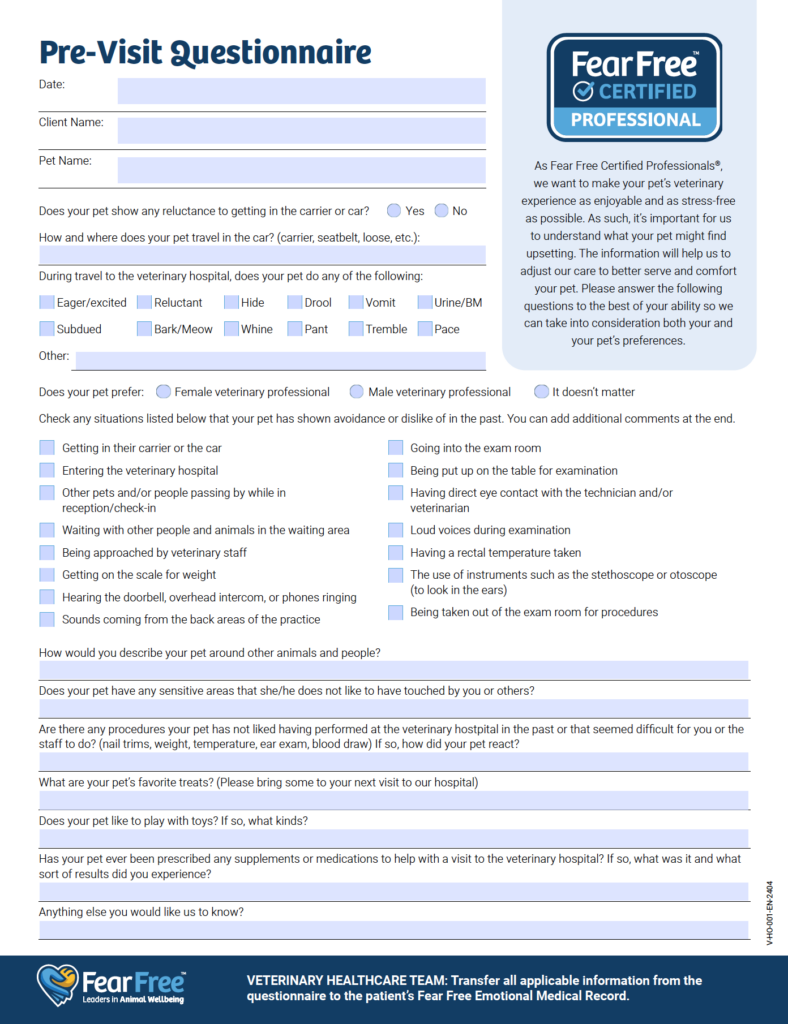
Pre-Visit Questionnaire

Administrators are some of the busiest people in the hospital and can use all the help they can get. Have your clients fill out this Pre-Visit Questionnaire to learn more about their pet and his or her needs. Fillable & Print-Ready PDF – Companion Animal.

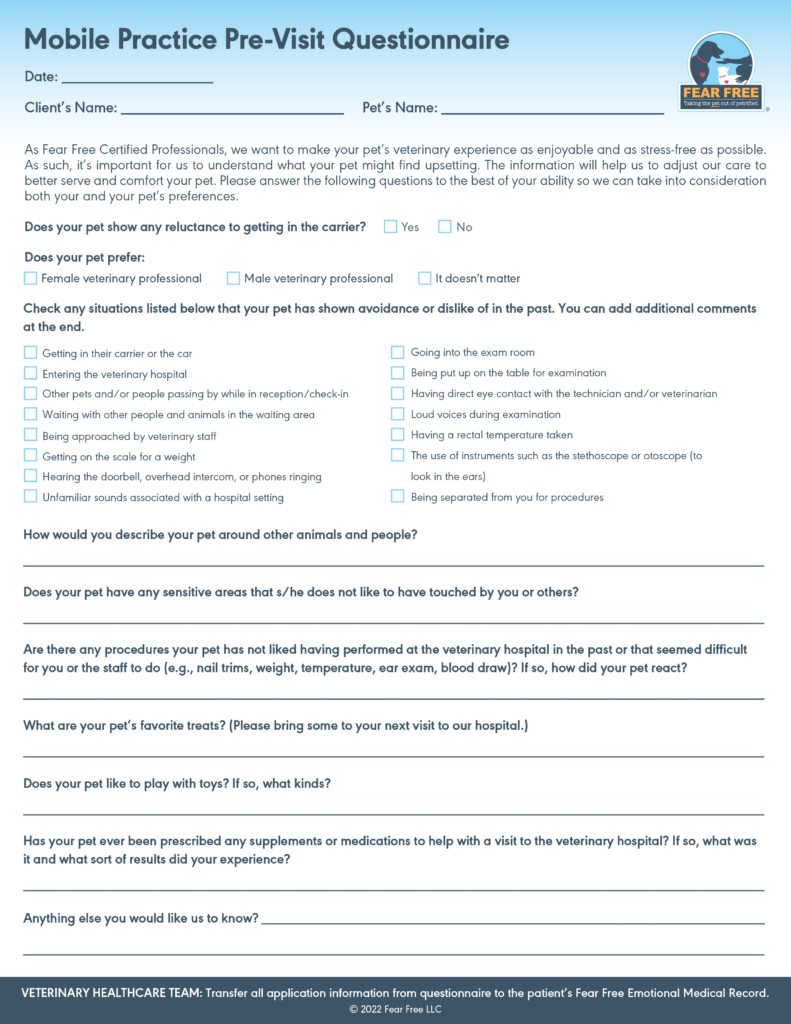
Mobile Practice Pre-Visit Questionnaire

Mobile practices present unique challenges and opportunities to provide Fear Free care to  your clients. Have your clients fill out this Pre-Visit Questionnaire to learn more about their pet and his or her needs. Fillable & Print-Ready PDF – Companion Animal

Avian Pre-Visit Questionnaire


Avian Pre-Visit Questionnaire

Avian patients have unique needs and concerns. Have your clients fill out this Pre-Visit Questionnaire to learn more about their bird and his or her needs. Fillable & Print-Ready PDF – Avian

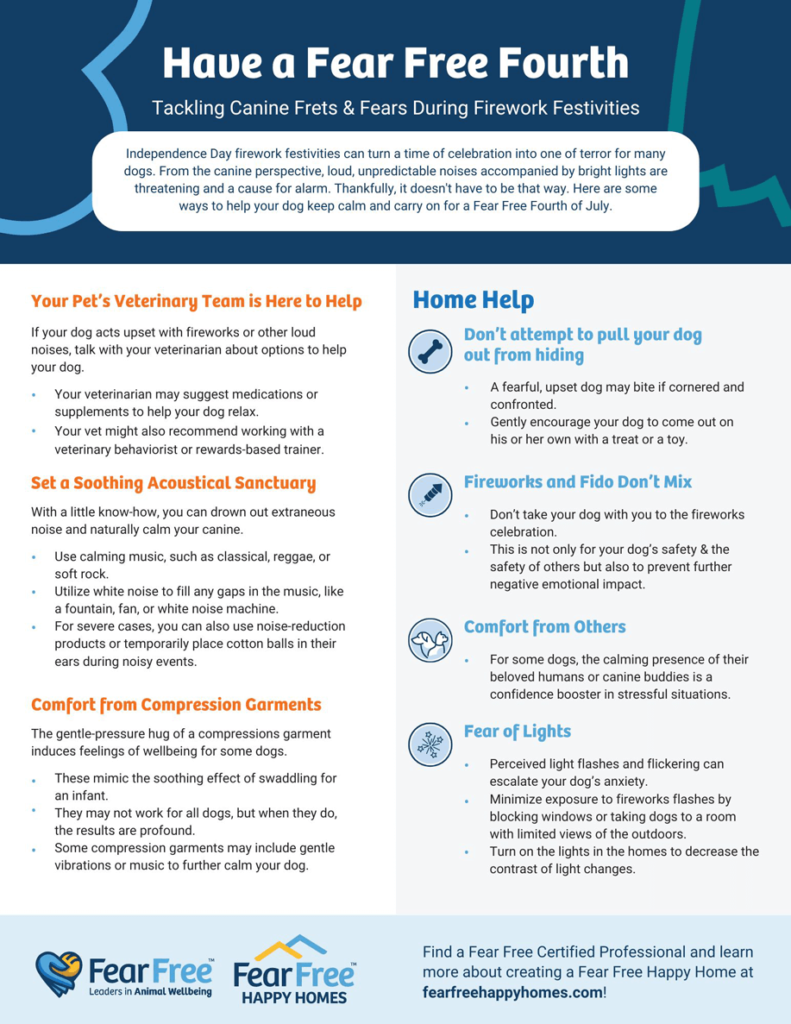
Fourth of July Pet Safety Infographic

Educate your clients on Fourth of July safety with this infographic

Image format: .pdf(Better for printing)

Image format: .jpg (Better for social media)

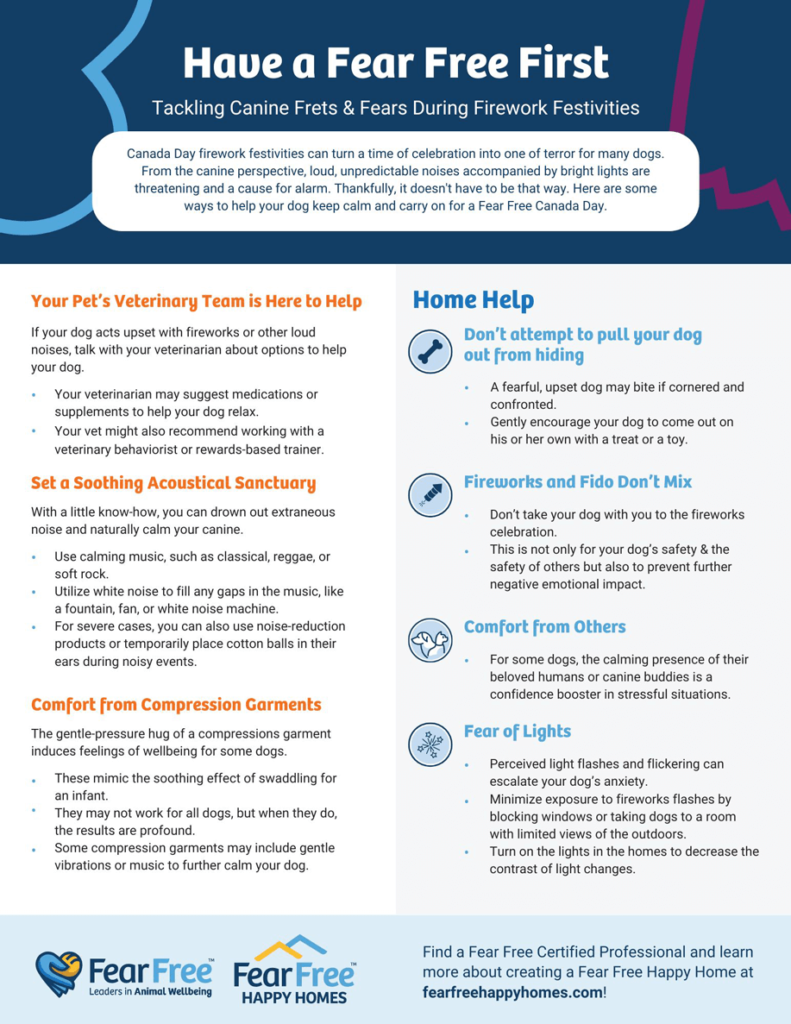
Canada Day Pet Safety Infographic

Educate your clients on Canada Day safety with this infographic

Image format: .pdf(Better for printing)

Image format: .jpg (Better for social media)

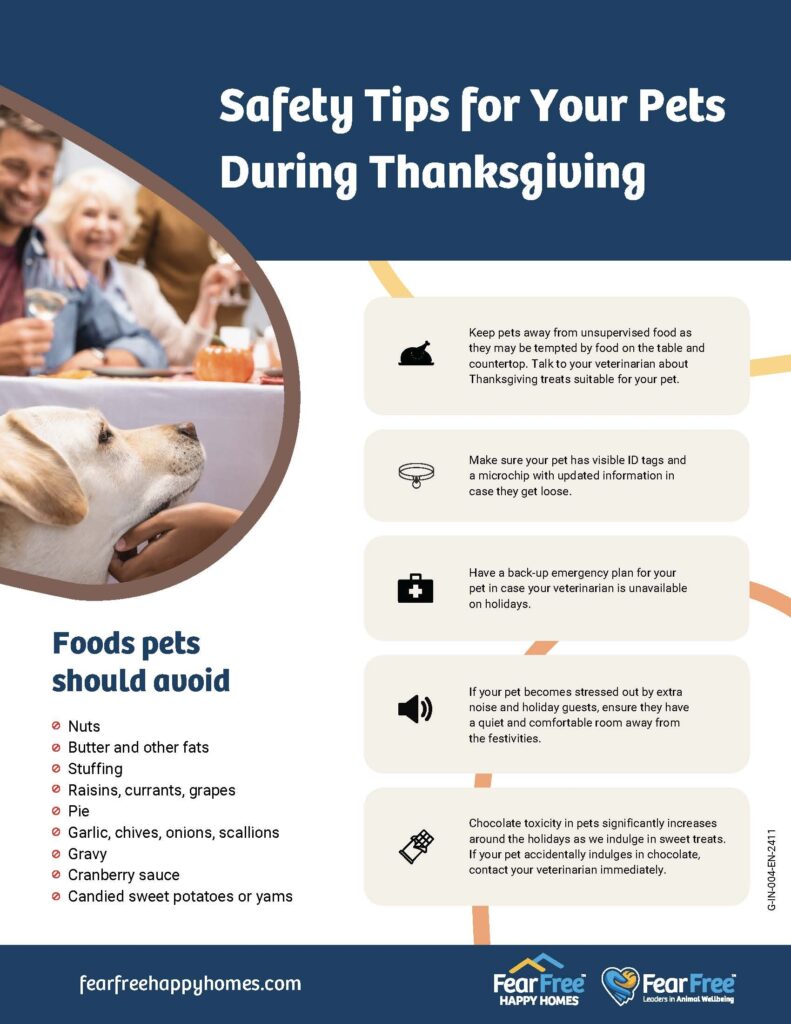
Thanksgiving Pet Safety Tips

Use this infographic courtesy of Trupanion™ to educate your clients on safety during Thanksgiving.

Image format: .pdf(Better for printing)

Image format: .jpg (Better for social media)

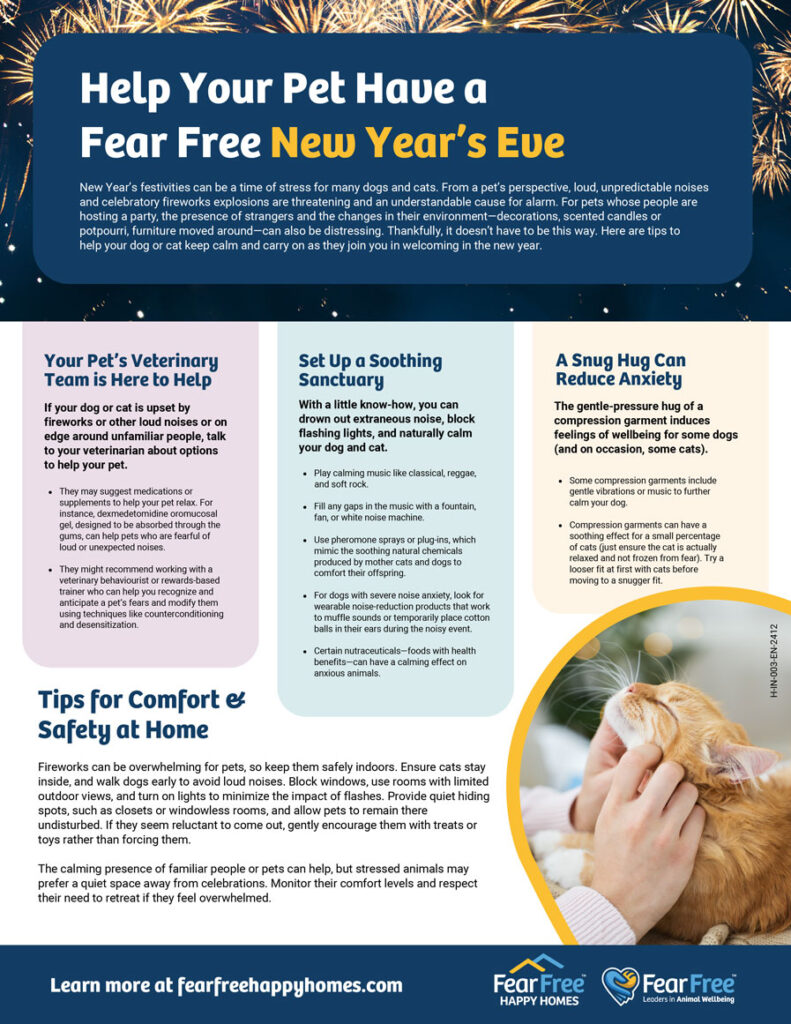
New Year’s Pet Safety Infographic

Use this infographic to educate your clients about the dangers of New Year’s celebrations and pets.

Image format: .pdf(Better for printing)

Image format: .jpg (Better for social media)

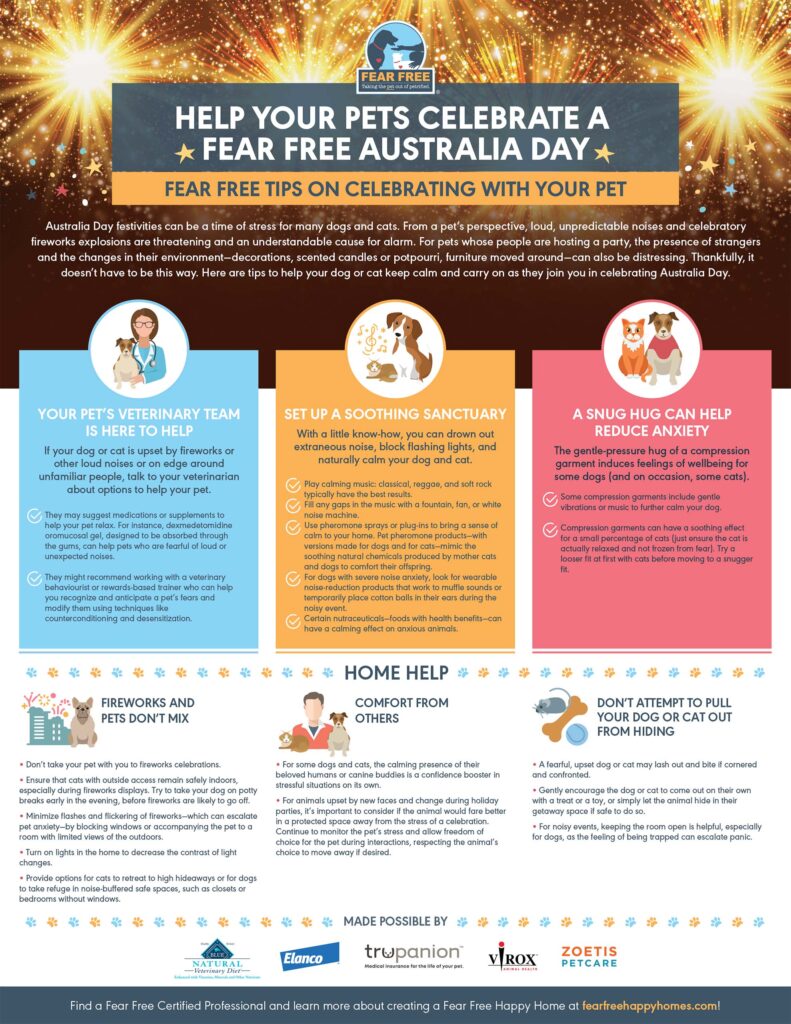
Australia Day Pet Safety Infographic

Educate your clients on Australia Day safety with this infographic

Image format: .pdf(Better for printing)

Image format: .jpg (Better for social media)

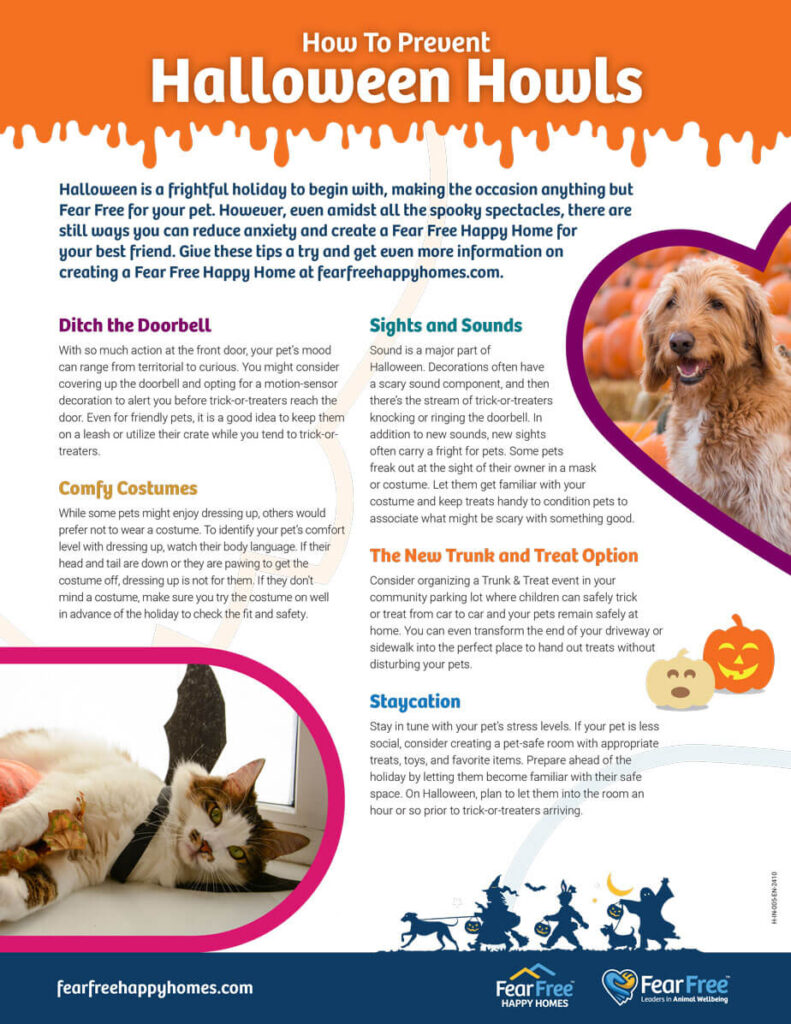
Halloween Pet Safety Infographic

Educate your clients on Halloween safety with this infographic

Image format: .pdf(Better for printing)

Image format: .jpg (Better for social media)