Blog Archives

Susan M. Ewing

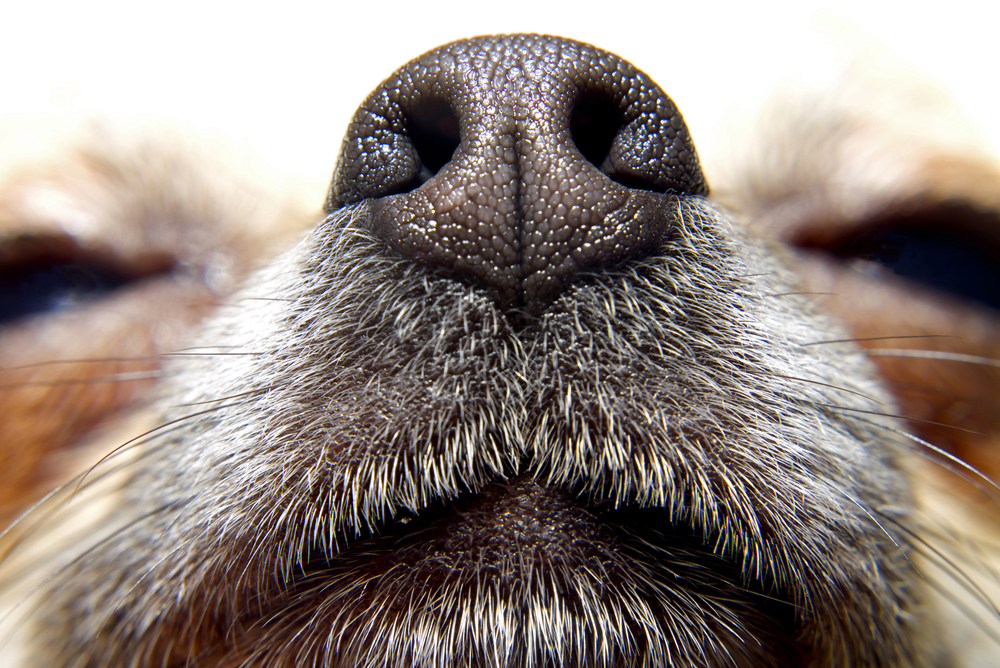
Both dogs and cats rely heavily on scent to interpret their surroundings while humans rely more on sight. Blindfold a human just before a visit to a doctor or emergency room, and the stress level would be higher than if the person could see, but most people would at least be able to hear and understand what was happening in the way of treatment. We can’t explain to our pets what is happening, or why they are in a hospital. Take away their sense of smell and you’ve taken away their ability to interpret their world, adding more stress to an already stressful situation. By understanding the effects of scents, you can help them stay calm.

Ban Bleach

No one intentionally stops a dog or cat from smelling, but disinfectants can do just that. Bleach and other disinfectants with a harsh odor can make a pet “nose blind,” creating stress when they try, and fail, to learn about their environment. In one study, “Minimising Stress for Patients in the Veterinary Hospital: Why It Is Important and What Can be Done About It” (published online in Veterinary Sciences, April 13, 2017), lead author Janice K.F. Lloyd cites Karen L. Overall, VMD, in the Manual of Behavioral Medicine for Dogs and Cats: “A solution of bleach, even as low as 1 percent, can destroy olfactory neurones, resulting in a loss of information and heightening anxiety.”

While disinfecting is essential, using one that doesn’t have a harsh odor may help to lessen the negative effect on a pet’s nose. At Applebrook Animal Hospital in Ooltewah, Tennessee, Kathryn Primm, DVM, uses Rescue disinfectant, a hydrogen peroxide product with little odor, which also dries quickly.

Scents From Other Animals

When pets are able to smell, identifying stress in other animals can increase their own level of stress. Secondarily, humans may also experience some stress when smelling clinic odors. Most pets are quick to respond to their owners’ emotions, and if that emotion is stress, it’s going to affect the pet.

“When we have bad odors suddenly, like anal glands,” says Dr. Primm, “it is critical that they be cleaned and deodorized completely, or they will cause fear in all the pets that perceive them.” For those kinds of odors, Primm uses K.O.E. (Kennel Odor Eliminator) by Thornell, a product that quickly eliminates odors and comes in a concentrate, a spray, and individual wipes.

Sometimes, when possible, opening a window can help. Many pets will become distracted from their environment as they process scents from outdoors. Synthetic pheromones may also help to calm a dog or cat. Plug-in pheromone diffusers may reduce stress in a waiting room, and doctors or technicians can spray their clothes with the pheromones. Use diffusers or sprays with caution around birds and fish.

Many people appreciate the calming effects of lavender and chamomile, and both of these scents seem to calm pets, too. Be careful how you use them, though. Certain diffused essential oils can cause some respiratory distress in cats so use them with caution, and alert clients to the risks of active diffusers in the home to pets.

With so many pets depending on their noses for information, it makes sense to pay attention to scents.

This article was reviewed/edited by board-certified veterinary behaviorist Dr. Kenneth Martin and/or veterinary technician specialist in behavior Debbie Martin, LVT.

|
By Linda Lombardi
Introducing Fear Free techniques to colleagues who aren’t familiar with them or who may be resistant to change can be daunting, but Fear Free principles apply to people as well as pets. Here’s how they can help.

Tabitha Kucera, a veterinary technician, has learned a lot from her experiences teaching Fear Free to other veterinary professionals, and maybe the biggest lesson is the importance of using the same principles on people as you do on animals.

“Positive reinforcement encourages initiative and creativity, it forgives mistakes, it creates enthusiastic learners and accelerates learning,” she says. “It’s the same for people.”

Build a Constructive Culture

The benefits should seem obvious once you’ve worked with animals that way. But applying these methods doesn’t always come naturally, she says. She recalls a class she attended at the Karen Pryor Academy. Most of the students were trainers, along with Kucera and two other vet techs. At one point, each person did an exercise in front of the class and then fellow students were asked to talk about what they thought had been done well.

“For the techs it was harder than for the dog trainers, and that was an epiphany for us,” she said. “We talked about it later—it’s that we’re not used to getting constructive feedback.”

Not only was it more difficult to give positive comments, it was also frustrating at first to get them.

“We were like, why don’t you tell me what I did wrong? Just tell me what I did wrong so I can fix it.”

But if you’ve studied behavior, you know all the reasons why “Just tell them when they’re wrong” is a bad way to train. One is that just saying “no” to the wrong behavior doesn’t tell the learner what the right behavior is. If you want staff to use less stressful techniques, saying “Don’t do this,” while well-meaning, doesn’t communicate the desired alternative.

“If you’re used to scruffing, I can’t just tell you not to scruff, which is what I see a lot of,” she says. “I hear a lot of ‘less is more,’ but what does that mean? You need to define the behavior you want.”

Say No to No

Maybe even more important is the effect of all those “nos” on the recipient.

“With positive reinforcement, the biggest difference is we focus on the good,” she says. “The way some other training techniques work—and the way people often work with each other—is we focus on the negative: I’m going to tell you what you did wrong and completely ignore all the good stuff you did. That creates an environment where people are afraid to make mistakes and afraid to ask questions.”

Being told that you’re wrong is essentially a form of punishment, and learners who are afraid to make mistakes because of repeated punishment soon shut down and are afraid to try anything. That makes it impossible to learn something new. And imagine the frustration of doing the same thing for years and then being told it’s wrong. We wouldn’t do that to an animal, but we often don’t realize we’re doing exactly that to our fellow humans.

“You can’t punish them when this is how they were taught,” she says. “I say, ‘You’re not wrong in what you’re doing, but fortunately medicine progresses, and we’ve learned a lot of great new ways to handle animals that make it easier for us and for them.’”

Be careful, too, of how interactions can convey the message “You’re wrong” without saying exactly that out loud. “You can’t run over and say, ‘Let me take over,’ because then you just insulted that person,” she says. “When I see things that are concerning, I’d just say, ‘Hey, you guys need some help?’”

Show, Don’t Tell

Simply using the techniques and letting people see what happens can be the best way to start. “First thing first, wherever I am, I use these skills, and people notice,” Kucera says. “Soon they’re coming to me and asking if they can learn this.”

It’s important to remember that trying something new can be anxiety-provoking, especially if you’re invested in and comfortable with techniques you’ve been using for years. Make it clear that it’s okay to try and fail. “I also don’t say ‘It’s do this or die,’” she says. “Try it one time, and if it doesn’t work, we’ll do it the way that you’re comfortable.”

Another thing that we know for our animals but often forget for our fellow humans is that different reinforcers work for different individuals. When she’s trying to persuade people of the benefits of Fear Free, Kucera says, everyone cares about decreasing fear and stress in the animals, but other motivators can differ by role. For a practice owner, she’ll talk about the business advantages, while for a tech who restrains animals, she’ll say, “You’re in your 30s; you need to go home and not be in pain every day.”

Set Realistic Goals

When Kucera talks to people who are excited by her presentations, she often has to talk them down a bit. “I say, ‘I love your enthusiasm, but I don’t want you to go back to your shelter or hospital and say we have to do all this right now,’” she says. “Because I did that in the past, and it shuts people down.”

Remember that new skills need practice. “I set realistic expectations for people: I don’t expect you to do this perfectly tomorrow,” she says. And start slow, just like you would with a pet. “Pick one or two things for your practice or shelter and start there, because from there it’s going to spread like wildfire but not if you don’t set your staff up for success.”

This article was reviewed/edited by board-certified veterinary behaviorist Dr. Kenneth Martin and/or veterinary technician specialist in behavior Debbie Martin, LVT.

When dogs with sociable natures are not able to interact with other dogs or people as freely as they wish, they can feel frustrated. Use this handout to help educate your clients on ways to alleviate leash reactivity.

Body Language and Signs of FAS in Dogs & Cats

Understanding and assessing your patients’ body language is an essential part of Fear Free. It also plays an important role in client education for a client to understand and buy into Fear Free and your recommendations. Print out the two pages of body language slides, laminate them, and place them into each exam room. You could also place them into your waiting area, and into your staff common areas to serve as an educational tool.

FAS Spectrum Handouts

The bulk of communication between humans is through body language and the same goes for animals. It’s important for both your team and your customers to understand the often subtle signs of fear, anxiety, and stress that their pet is expressing. Use these FAS Spectrum sheets to visually explain the different signs of FAS and the corresponding levels of arousal. Handouts available for dogs, cats, horses, birds, and rats.