Blog Archives

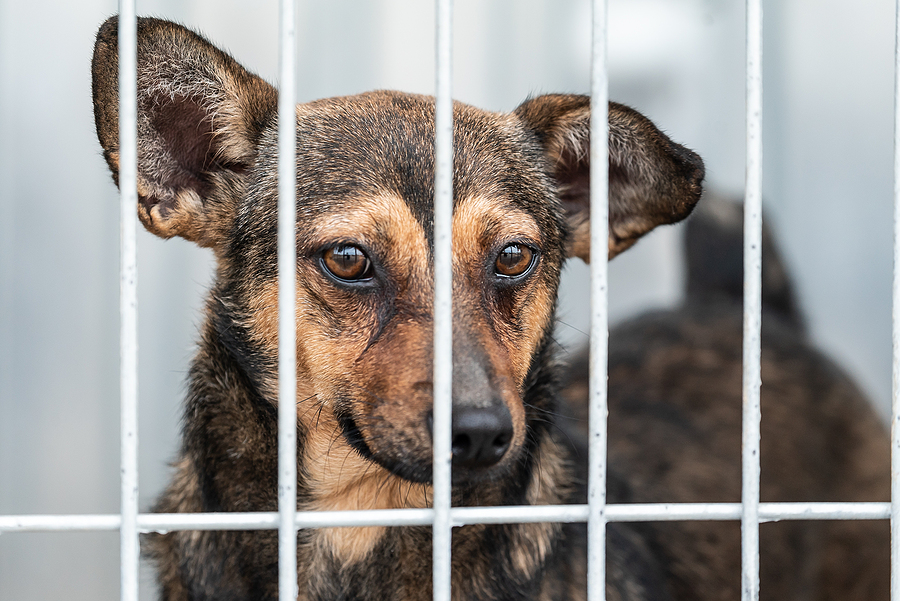
Heather E. LewisAnyone who works in a shelter can agree that it is difficult to create an environment for dogs that helps them relax! Dogs want to be in homes, not in the shelter, so it can be a tricky problem.

What can we do with housing to create the best possible Fear Free temporary home? Here are some tried-and-true dog housing basics for a Fear Free shelter experience.

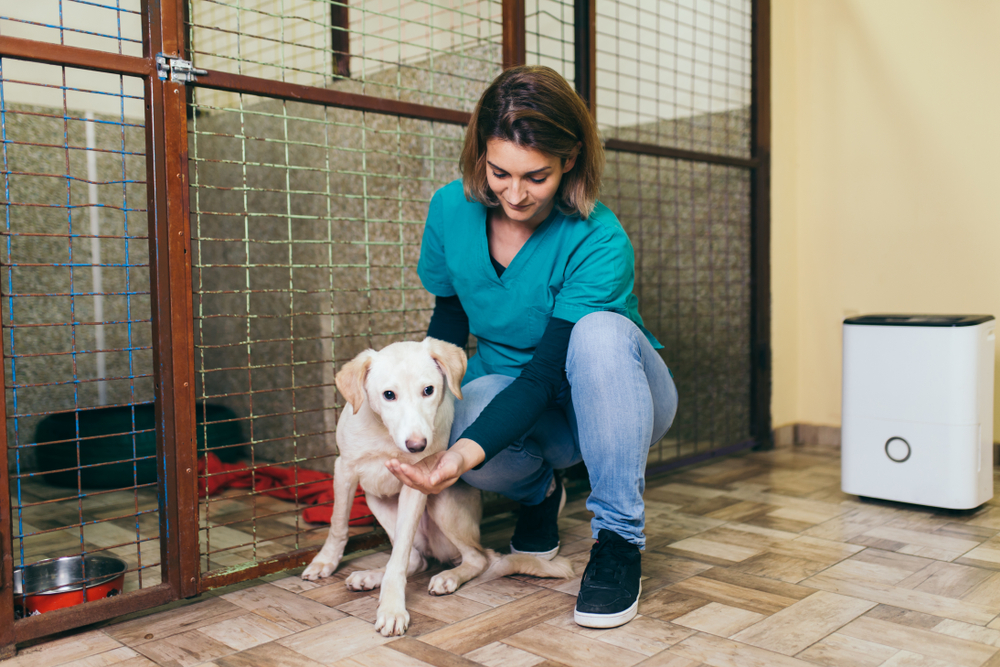
Double-Sided Housing

This gives dogs access to two different compartments, usually separated by a small door. This arrangement is useful for three reasons:

  • It is easier to clean the run. While it is important to get the dogs out for exercise, a minor spot clean can be easily accomplished with the dog in the other compartment, which leaves more hours available for meaningful enrichment time. (Note: be cautious of major hose cleaning while a dog is on the other side of a guillotine door as the sound of the hose can be stressful for some dogs.)
  • The dog has a separate clean side and bathroom side. While it is best to take dogs outside for potty breaks, some dogs cannot make it for long hours without a bathroom break and it is extremely stressful for many dogs to have to soil their living areas. If given the chance, most dogs will choose to eliminate away from where they sleep and eat.
  • The dog has more space. In shelters, we are often guilty of providing dogs far too little space. Some shelters have double-compartment housing, but they drop their guillotine doors to house more dogs. Unfortunately, this creates more stress for each individual dog, and works against positive outcomes.

Right Size the Housing

What is the right amount of space? It is hard to tell because many dog housing minimum requirements contradict each other. Here are the rules of thumb we follow:

  • The dog should not touch the sides of the enclosure when moving normally. Happy tail is not happy at all! A dog should wag his tail without hitting it against the run walls. Many runs are too narrow. A five-foot minimum works much better than a typical four-foot-wide run.
  • The enclosure should allow for choices. If a bed takes up too much room in the run,  the dog will not have a choice about whether to lie on the bed or the floor. This is not a good situation, as dogs prefer to have options. Thus, the run should be large enough to allow for a bed, food, water, and an open, unrestricted floor space.
  • A variety of housing sizes is desirable. Very large dogs and bonded pairs will benefit from oversize or double runs. You can retrofit existing runs with side-to-side openings to allow for this possibility, or simply remove a run panel or two to allow for a few extra-large runs. On the other hand, very small dogs can feel vulnerable and frightened when housed in very large runs. Create a few smaller double-compartment runs or cages with puppy portals for very small dogs who prefer a smaller space, away from the big dogs.

Inside/Outside Is Best

Inside/outside housing has gone in and out of vogue, but it is now considered to be the preferred standard. When given the choice, dogs will appreciate the fresh air and will spend time outside whenever the weather is nice. If you use indoor/outdoor housing, remember these tips:

  • Upsize the inside portion of the run so the dog is still in a humanely sized space when the guillotine is closed, such as overnight.
  • Consider local weather when orienting the outside portion. East and south are some of our favorite orientations, while north is often too cold or windy and west is often too hot.
  • Weatherproof the guillotine door opening with a second weather door such as a saloon-style door.

Properly designed basic dog housing can help support your behavior, health, and adoption programs. It reduces fear, anxiety, and stress, thereby assisting dogs in finding their forever homes.

This article was reviewed/edited by board-certified veterinary behaviorist Dr. Kenneth Martin and/or veterinary technician specialist in behavior Debbie Martin, LVT.

Heather E. Lewis, AIA, NCARB, is a principal of Animal Arts, an architectural firm that has exclusively designed animal care facilities, including veterinary hospitals and animal shelters, for more than three decades.  She has worked on dozens of projects across the country, both large and small in her 19 years with the firm.  Heather is a member of the Fear Free℠ Advisory Board and assisted in creating the Fear Free facility standards for veterinary hospitals.  Heather is a regular contributor to various veterinary industry magazines.  She has spoken on the design of facilities for the care of animals at dozens of national and regional conferences including Fetch Hospital Design Conferences, the UC Davis Low Stress Animal Handling Conference, and the Humane Society of the United States Animal Care Expo.
 
Heather E. LewisAs we have learned this year during the pandemic, outdoor spaces are healthier for people than indoor spaces. It isn’t just ventilation that is better outside; daylight provides physiological benefits for people and animals that artificial lighting will never replace.

For dogs in shelters, the best you can do for their welfare is to get them outside for enrichment. This must be emphasized before we talk about improving indoor spaces, as even the best indoor space cannot replace outdoor time. Nevertheless, bringing natural daylight into the shelter has benefits for all animals, including homo sapiens.

Reinforcing Circadian Rhythms

Circadian rhythms are the hormonal and physiological cycles our bodies go through, day and night. They tie to our general health, our quality of sleep, and our patterns of eating and resting. Circadian rhythms are also important for reinforcing seasonal patterns such as the growth of winter haircoats.

    • Bringing daylight into shelters and allowing dogs and cats indoor/outdoor spaces helps them maintain crucial biological cycles throughout their stay. Circadian rhythm regulation is particularly important for animals who must stay longer in care; for example, dogs with medical conditions requiring continued care.
    • As one example of the importance of circadian rhythms, human hospital patients with disrupted day/night cycles suffered poorer cognitive functions, had delirium in greater frequency, and recovered more slowly than they would have without these disruptions.

Boosting Morale for Staff

Animals in the shelter pick up on the morale of staff and volunteers. Sheltered animals are often fearful, and one way we can reduce fear is to provide compassionate and gentle care. Lack of natural daylight in human workplaces contributes to stress, fatigue, anxiety, and depression-related illnesses such as SAD (Seasonal Affective Disorder) and makes compassionate care more challenging. Bringing daylight into the building counteracts these effects and helps support a healthier, more upbeat work environment, which is better for the well-being of all.

Unfortunately, many shelters, especially older ones, are constructed with few windows and little natural daylight. However, there are ways to add natural lighting without huge expense. Here are a few tips:

  • Construct inexpensive outdoor spaces such as catios, dog exercise yards, and a covered patio or pretty garden pergola where staff can relax and take their lunch or breaks. These are easy to get donations for (relatively speaking), or they can be built on weekends by handy volunteers.
  • Consider adding “Solatubes,” which are tubular skylights. These introduce daylight from roofs down to the ceiling, and work even in structures that are high overhead. They are relatively easy to install, and they are not as prone to leaking as traditional skylights.
  • Speaking of which, we have been to several shelters that used to have skylights but covered them when they leaked. Uncover your old skylights and put the effort into fixing them – it is worth it!
  • Swap out solid doors for glass doors. Adding a glass door adds daylight with very little effort. If you’re worried about security, put an alarm on the door and frost the glass – the soft daylight coming in will be worth the risk of the glass, in most cases.
  • Add windows. Windows can be harder to add because this involves cutting holes in an outside wall, so add them where they would provide the most benefit. For example, if you have a cat isolation room on a blank outside wall, adding a window will vastly improve the wellbeing of the cats housed in that room while being treated. If you do go to the trouble of adding a window, put a heavy-duty screen on it and design the window to be operable. That way it can be open in nice weather, which provides even more benefit.

Don’t settle for a lightless bunker. It’s not good for you and it’s not good for the animals. As we head into the dark of winter, look for fundable opportunities to get animals and staff outside, as well as for ways to bring daylight in. Everyone will be happier and healthier!

This article was reviewed/edited by board-certified veterinary behaviorist Dr. Kenneth Martin and/or veterinary technician specialist in behavior Debbie Martin, LVT.
Heather E. Lewis, AIA, NCARB, is a principal of Animal Arts, an architectural firm that has exclusively designed animal care facilities, including veterinary hospitals and animal shelters, for more than three decades.  She has worked on dozens of projects across the country, both large and small in her 19 years with the firm.  Heather is a member of the Fear Free℠ Advisory Board and assisted in creating the Fear Free facility standards for veterinary hospitals.  Heather is a regular contributor to various veterinary industry magazines.  She has spoken on the design of facilities for the care of animals at dozens of national and regional conferences including Fetch Hospital Design Conferences, the UC Davis Low Stress Animal Handling Conference, and the Humane Society of the United States Animal Care Expo.
 
Heather E. LewisHealthy play is necessary for the wellbeing of all animals, including humans! For sheltered dogs, play has become increasingly important for many reasons:

  • We are more aware of the need to provide quality enrichment to sheltered animals.
  • Shelters are providing more behavioral care for dogs.
  • Play reduces fear, anxiety, and stress.
  • Play helps dogs feel more comfortable in the shelter environment.

We love designing for play. There are many small design nuances but here are some basic highlights:

  • Play Group Space. Play groups must be set up with the support of staff and volunteers, with proper training, as well as within the proper environment. Ideally, play groups will have the following:
    • A series of interconnected yards (rather than one large yard) to customize play groups based on dogs’ sizes and size needs.
    • Visual barriers between yards and kennels.
    • Double-gated entrances for safety.
    • Access to water via kiddie pools for the dogs to cool off and to provide a large water source that is less likely to be guarded.
    • Shading and reasonable surfaces are important as well. K9Grass (a brand of faux grass) is our favorite, but only if it is installed correctly so that it drains and does not collect water. It also needs to be shaded or it can get too hot for paws.
    • Safe fencing that keeps dogs contained without risk of escape.
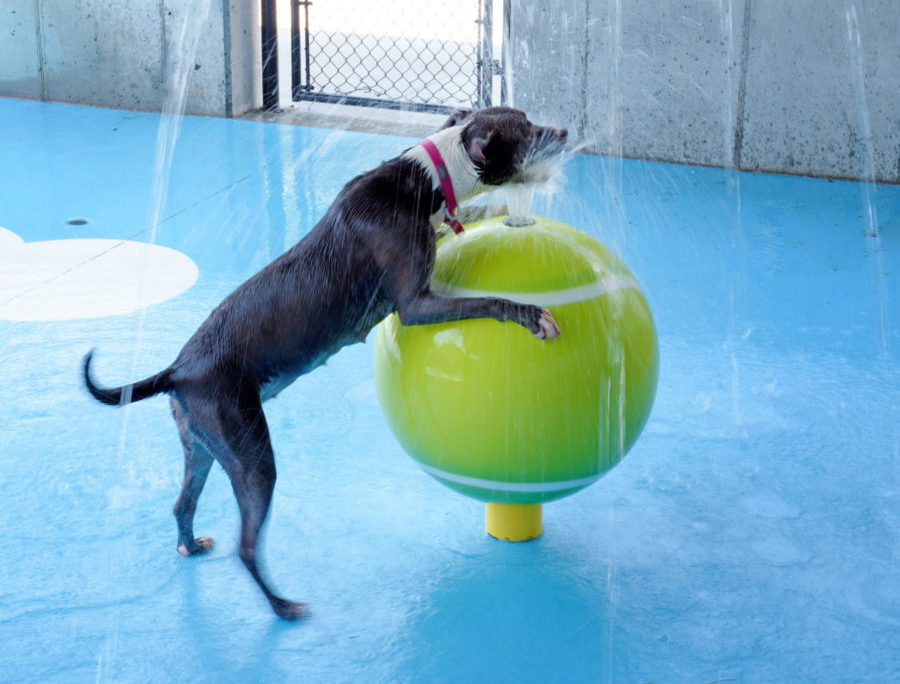
  • Water Play. Water play works well for dogs who enjoy play groups and for those who do not. We have started incorporating splash parks for sheltered dogs (see photo). It is spectacular to witness a formerly fearful sheltered dog interacting playfully with water. Splash park plans must be created by people who know how to design for dogs, as they have different types of plumbing, surfacing, and play structures than those designed for children. When we design a splash park, we consider the following:
    • Incorporate additional space around the water feature so the dogs can go in and out of the water. This enhances choice.
    • Safe surfacing is critical. Our favorite is a soft, grip-textured surface designed for dogs.
    • The water itself should be safe. It is not recirculated, so it is best to have the water provide watering to landscaping once it has been used in park fountains.
  • Individual Play Spaces. We know that some dogs do better with one-on-one time than they do in groups, and we know that water features cannot be used during cold winters. Therefore, do not forget to provide these spaces for your sheltered dogs:
    • Walking Paths. These should be loop type with multiple forks along the loop, so that dogs do not have to pass each other side to side. Good walks provide exercise, connection, and some Fear Free training opportunities.
    • Ball Throwing Areas. We like to provide a larger yard (60’ long minimum) for flying disc or ball throwing.
    • Small (20×20, for example), more fully enclosed yards. These are great for gentle socializing with fearful dogs who may retreat in large yards, or for adoption meet and greet.

As we continue to improve the Fear Free shelter, dedicated play areas are a critical part of the design. It is best to designate outdoor areas for play so everyone gets fresh air, but if your shelter is land constrained, or in an urban location, playrooms can be indoor if necessary.

Regardless of your resources, find ways to incorporate play. For a dog, and especially one who is fearful, play is an important and often shorter path to happiness and comfort, as well as to finding the right forever home.

This article was reviewed/edited by board-certified veterinary behaviorist Dr. Kenneth Martin and/or veterinary technician specialist in behavior Debbie Martin, LVT.

Heather E. Lewis, AIA, NCARB, is a principal of Animal Arts, an architectural firm that has exclusively designed animal care facilities, including veterinary hospitals and animal shelters, for more than three decades.  She has worked on dozens of projects across the country, both large and small in her 19 years with the firm.  Heather is a member of the Fear Free℠ Advisory Board and assisted in creating the Fear Free facility standards for veterinary hospitals.  Heather is a regular contributor to various veterinary industry magazines.  She has spoken on the design of facilities for the care of animals at dozens of national and regional conferences including Fetch Hospital Design Conferences, the UC Davis Low Stress Animal Handling Conference, and the Humane Society of the United States Animal Care Expo.
Photo courtesy Humane Society of Southwest Missouri

Course Overview

True enrichment goes way beyond simply providing dogs with food puzzles each day. For instance, a comprehensive enrichment strategy incorporates all types of enrichment: social, occupational, physical, nutritional, and sensory. This course will show you how to engage all the senses, as well as how to thoughtfully determine which enrichment activities are most appropriate for individual dogs, how to enrich the lives of dogs in a veterinary clinic, and those who are recovering from an injury and on restricted exercise.

This course, approved for 1 RACE-approved CE hour, was written by Laura Ryder, CPDT-KA, KPA CTP, IMDT.

This course consists of four lessons:

  • Lesson 1: Exploring enrichment using all the senses
  • Lesson 2: Identifying the right balance
  • Lesson 3: Enrichment for dogs in the vet clinic
  • Lesson 4: Enrichment for dogs on restricted exercise or cage rest

Course Overview

Are you the only person in your clinic who has a passion for Fear Free? It’s easy to get discouraged and frustrated when we are surrounded by obstacles. This course provides tools to achieve your Fear Free goals even when you feel like you are all alone in your work. Learn how to get buy-in, implement strategies from the ground up, and encourage your colleagues to join your heart’s work of protecting the emotional welfare of our treasured animal patients.

This course, approved for 1 RACE CE hour, was written by Monique Feyrecilde BA, LVT, VTS (Behavior).

This course consists of five lessons:

  • Lesson 1: The essence and importance of Fear Free Practice
  • Lesson 2: Understanding the dynamics of change
  • Lesson 3: Implementing change within your practice
  • Lesson 4: Addressing common push-back topics
  • Lesson 5: Thrive where you’re planted, or transplant to a new garden

Training as Enrichment: Your Questions Answered

You asked, and we will answer! Fear Free Head Trainer Mikkel Becker and Education Manager Lori Chamberland will discuss some of the most common questions we’ve received from previous Fear Free training webinars. We’ll talk about leash reactivity/pulling on leash, teaching dogs and cats to live in harmony, counter surfing, and more! We will leave time at the end for you to ask questions in real time, as well. Join us – your dog or cat will thank you!

Steve Dale, CABC
Just as we have our own individual taste preferences, so do dogs and cats. And food can be the way to their hearts. Many Fear Free Certified veterinary practices and Fear Free veterinarians even offer “menus” and keep track in pets’ records of personal preferences.

Of course, many cats will do anything for tuna. And dogs love those hot dogs. Those statements won’t stop the pet press.

However, veterinarians and veterinary technicians can also think outside the treat box. Sometimes, just because it’s novel, a treat may be more enticing. Also, at home these items might be used for training or for animals needing a bit of an appetite boost (always only with veterinary approval).

Who knew, for example, that many cats have a thing for olives (no pits please) or marshmallows. Or that dogs, and not necessarily Australian Cattle Dogs, love Vegemite, an Australian food spread made from leftover brewers’ yeast extract with various vegetables and spices. Most Americans disdain Vegemite, but many dogs love the stuff.

With Fear Free founder Dr. Marty Becker contributing, here’s a list of 20 surprising treats:

  • Anchovy paste
  • Apple
  • Baby food (without onion)
  • Bananas
  • Blueberries
  • Bonito fish flakes (known as katsuobushi in Japanese cuisine)
  • Braunschweiger
  • Cheerios
  • Cheez Whiz/Easy Cheese
  • Churros (fried-dough pastry)—hold the chocolate sauce
  • Green beans
  • Liverwurst
  • Marshmallow cream
  • Mini marshmallows
  • Olives (no pits)
  • Peas
  • Peanut Butter (avoid sugar-free peanut butters containing the artificial sweetener Xylitol, which is toxic to pets)
  • Rice cakes (plain)
  • Sardines (in pesto, in olive oil or in water)
  • Vegemite

Remember to keep portion sizes small, appropriate for the size of the pet. You don’t want to send him home with a tummy ache!

This article was reviewed/edited by board-certified veterinary behaviorist Dr. Kenneth Martin and/or veterinary technician specialist in behavior Debbie Martin, LVT.

Steve Dale, CABC (certified animal behavior consultant), hosts two national pet radio shows and is on WGN Radio, Chicago. He’s a regular contributor/columnist for many publications, including CATSTER, Veterinary Practice News, and the Journal of the National Association of Veterinary Technicians in America. He’s appeared on dozens of TV shows, including Oprah, many Animal Planet Programs, and National Geographic Explorer. He has contributed to or authored many pet books and veterinary textbooks such as “The Cat: Clinical Medicine and Management” and co-edited Decoding Your Dog, by the American College of Veterinary Behaviorists. He speaks at conferences around the world. www.stevedale.tv.

Rachel Lees RVT, KPA CTP, VTS (Behavior)

A variety of animal training programs appear on cable and streaming networks. Some of the concepts depicted in these programs are appropriate for veterinary behavior cases and some are questionable. This article is not written to insult any of these programs, trainers, or networks but instead to discuss the learning theory and training philosophies demonstrated and review why veterinary behavior professionals are using alternative protocols.

Whether you are a veterinary team member working in general practice or are interested in behavior, it is important to recommend the most Fear Free and up-to-date information for patients and clients. Giving outdated information can potentially damage the human-animal bond between client and patient, potentially ending with the patient being rehomed or in some cases euthanized.

Punishment: May the Odds Be in Your Favor

Punishment is a technique used to weaken a behavior. For a stimulus to be “punishing,” the learner must find that stimulus aversive or undesirable enough to eliminate the behavior.  Punishment is difficult to use properly and does not teach the learner to perform the correct behavior. Most important, using punishment can be a liability for veterinary professionals recommending this technique because it can put the safety of the owners and pets at risk.

The American Veterinary Society of Animal Behavior’s position statement on punishment reviews the many side effects of using this training method. Using remote punishment collars as well as choke and prong collars can cause physical damage such as damage to the skin, neck, and trachea area, an increase in intraocular pressure, upper airway obstruction, and nerve damage. For punishment to be effective, it must provoke a fear response from the learner, which can unfortunately be generalized to other stimuli in the learning environment.  Consequently, this can make the animal become more fearful, anxious, and stressed in these contexts and situations.

Take the owner who is walking down the street with a 7-month-old Labrador Retriever puppy. The puppy shows a loose posture, wide tail wag, and becomes excitable on seeing people, sometimes jumping. For the owner, the dog’s jumping is undesirable. The trainer suggests using a remote “shock” collar for this issue. The owner is coached to shock the puppy for any jumping when interacting with people. The handler may be specifically punishing the pet for one behavior (jumping), but the puppy may begin to be concerned when people approach him because when this occurs, he receives a shock.

In the above example, the puppy may begin to show fear, anxiety, or stress with the approach of unfamiliar people. Using punishment, there is a risk that the learner (puppy) will associate the punishment (shock) with people approaching instead of the punishment (shock) being associated with the unwanted behavior (jumping on people).

Punishment needs to occur within 0.5 seconds of the start of the undesirable behavior. Therefore, the puppy would have to be shocked the moment his shoulders start to lower in anticipation of jumping to associate the punishment with the jumping behavior. Even with perfect timing, there is still a risk that the puppy may not associate the punishment with jumping.

Punishment Fails

Punishment can work to eliminate unwanted behaviors. The challenge is that it does not eliminate the motivation or give the learner a more appropriate behavior to perform.

In another instance, an owner was coached to use a remote collar to eliminate growling and aggression toward family members. If a family member approached the dog while he was eating a coveted bone and the dog growled, the family member was to correct the dog immediately with a shock. The growling behavior may be reduced, but it does not change the anxiety and concern related to the bone. The owners have now given the dog information that the approach of the owner is associated with a shock, which can increase the pet’s anxiety, fear, and stress. Long term, the pet may suddenly display with aggression but give only limited warning signs because the signals were suppressed with the remote collar. The animal was, in effect, told not to give this information. This makes this specific patient more dangerous and could put the family at greater risk.

In the above situation, the growling behavior is not a desirable response, but to the dog it was probably completely appropriate; he communicated his anxiety regarding the owner’s approach.  Using punishment made that specific pet more dangerous. Avoiding these situations and confrontations are the first step in addressing this issue. A veterinary behaviorist may recommend specific behavior modification to change the way the pet feels during this interaction.

Veterinary behaviorists recommend that animal training should focus on setting up the environment, so the pet is more likely to perform desired behaviors, reinforcing desired behaviors, removing the reinforcer for undesirable behaviors, and addressing the emotional state of the learner. The use of punishment can slow learning, suppress behavior, increase fear and fear-based aggression, create damaging and unintended associations with owners and other environmental stimuli, and damage the human-animal bond.

Even though these techniques may be seen on TV, remember that you are the veterinary professional and your clients value your opinion and recommendations. Giving them the most up-to-date information regarding behavioral training can be lifesaving. Observe training classes that you may recommend to confirm that they use recommended Fear Free techniques. For more information, see resources from AVSAB on “Finding a Trainer” as well as the “Position Statement on Use of Punishment.” The Fear Free Level 3 course for professionals provides the tools to address typical dog and cat behaviors using Fear Free methods.

This article was reviewed/edited by board-certified veterinary behaviorist Dr. Kenneth Martin and/or veterinary technician specialist in behavior Debbie Martin, LVT.
Rachel Lees, a Level 3 Fear Free Certified Professional, is a veterinary technician specialist in behavior, a KPA certified training partner, and lead veterinary behavior technician at The Behavior Clinic in Olmsted Falls, Ohio. She loves helping people create and maintain a strong human-animal bond.

How Fear Free and Best Practices Go Hand in Hand in Shelters


Implementing best practices in shelters means less animals enter the shelter and if they do, the shelter operates within their capacity for care. In this webinar, Dr. Sara Pizano, Fear Free Certified Professional and animal welfare strategist, discusses how a Fear Free experience in the shelter must be top priority and can only be achieved when the shelter is operating efficiently and all resources used strategically. Tune in to learn how Fear Free and best practices are intricately woven together.

Sponsored by Virox.

Linda Lombardi

There was a time when formal shelter behavior evaluations for dogs seemed like an important breakthrough. But while an objective way to assess behavior seems like a great idea, it’s increasingly clear that these batteries of tests aren’t doing the job it was hoped they’d do.

In 2016, Gary Patronek, DVM, and Janis Bradley published a paper analyzing the literature on canine behavior evaluations, concluding that they were “no better than flipping a coin.”

This did not prompt immediate abandonment of these tests and there were some understandable questions about their conclusion. How was it possible for their review of the literature to conclude that these tests were not valid and predictive, when individual papers said that they were?

In a new paper they address those questions, delving into statistical issues, the difference between colloquial and technical uses of words like “valid,” “predictive,” and “reliable,” and the kind of evidence needed to justify using a test for real life–and sometimes life and death–decisions.

Testing the Tests

Standards exist for judging whether a test has real-world applicability. “This is not something we need to reinvent,” Bradley says. “There is robust human diagnostic test literature that tells us how to do this and what acceptable standards are, and behavior evaluations in dogs–at least the ones that we looked at, that were intended to have application to dogs in shelters–simply don’t meet any reasonable standard.”

One problem with research on predictive ability of behavior evaluations is that most of it has been done on owned dogs, not dogs in shelters.

“Epidemiologists will tell you there’s no such thing as saying a test is valid,” Bradley says. “All you can ever say is that we’ve demonstrated validity with this population, in this context, with this exact instrument. If you change any of those things–and likely all of those things are going to change in any application in a shelter–any claims you make for validity go completely out the window.”

Many shelters modify protocols, and it’s impossible to perform a test as consistently in the shelter environment as in a lab. Tiny details can change results. One study showed that factors like the evaluator’s height and how much they leaned over changed the outcome. “Try to imagine the world where you’d have the kind of consistency that would eliminate confounds like that in a shelter environment,” Bradley says. “It could never happen.”

The context is also different, and in an important way. The ability to identify aggression is of greatest concern in these evaluations, and results can vary by environment.

“The most common underlying motivations for aggression are fear and anxiety because aggression is distance-increasing behavior,” says veterinary behaviorist Wailani Sung, DVM, of the San Francisco SPCA. “Dogs in the shelter are already lower in tolerance because their overall stress level is so high. So they could test more negatively in a shelter environment versus in a home where they have more stable relationships and a more consistent environment.”

Another problem is that serious aggression is rare in dogs, and those dogs probably don’t get evaluated at shelters. “Most shelters eliminate the tail end of the bell curve without ever subjecting them to a behavior evaluation,” says Bradley. “If everyone’s afraid to go into the kennel with the dog, they’re not going to take it out and do a behavior evaluation.” For statistical reasons, it’s more difficult to design a reliable test for a rare behavior if there’s a concern about false positives. In this instance, false positives–a result that claims to show a dog is aggressive when he isn’t really–can result in unnecessary euthanasia.

“This entire enterprise to a certain extent appears to be based on an idea that there’s some elevated risk with regard to shelter dogs,” Bradley says. “There’s no evidence that this is the case.” Shelter dogs are no more or less likely to someday show aggression.

What’s the Alternative?

Although there’s a considerable body of research questioning the validity of behavior assessments, it takes time for that to trickle down to the real world. “There’s a huge discrepancy between the academic world that has been studying these things versus the practical world that’s out there on a day-to-day basis that still has the pressure of putting safe animals out into the world,” says Jeannine Berger, DVM, vice president of rescue and welfare at the San Francisco SPCA.

Change is hard, and this is a hard kind of change. “Sometimes you don’t want to be shown that what you’re doing is not helpful and may be harmful. That’s a bitter pill to swallow,” says Dr. Sung.

Dr. Berger says discussion about behavior assessments has increased since the ASPCA came out with a position statement last year referring to this literature. “People actually in the field are now starting to question if this is the right approach to making those decisions,” she says.

Amy Marder, VMD, who spent much of her career working on these types of assessments, now believes the best approach is for staff to observe dogs in day-to-day interactions and keep good records. This doesn’t have to involve more work or resources, since it happens during physical exams and walks, which need to be done anyway. “You can get a lot of information from doing routine procedures rather than a formal evaluation,” she says.

This is what San Francisco SPCA does. “We use the five freedoms model to assess welfare, and everyone is trained on that,” Berger says. “We are looking at, are they eating, are they drinking, are they comfortable in their environment, are they fear free and distress free, are they performing normal behaviors, are they free of illness and disease,” she says. “We use that to assess each animal every day, and anything out of the norm is reported and is addressed.”

This article was reviewed/edited by board-certified veterinary behaviorist Dr. Kenneth Martin and/or veterinary technician specialist in behavior Debbie Martin, LVT.

Linda Lombardi writes about the animals who share our planet and our homes for magazines including The Bark, websites including National Geographic and Mongabay.com, and for the Associated Press. Her most recent book, co-authored with Deirdre Franklin, is The Pit Bull Life: A Dog Lover’s Companion.