Blog Archives

||
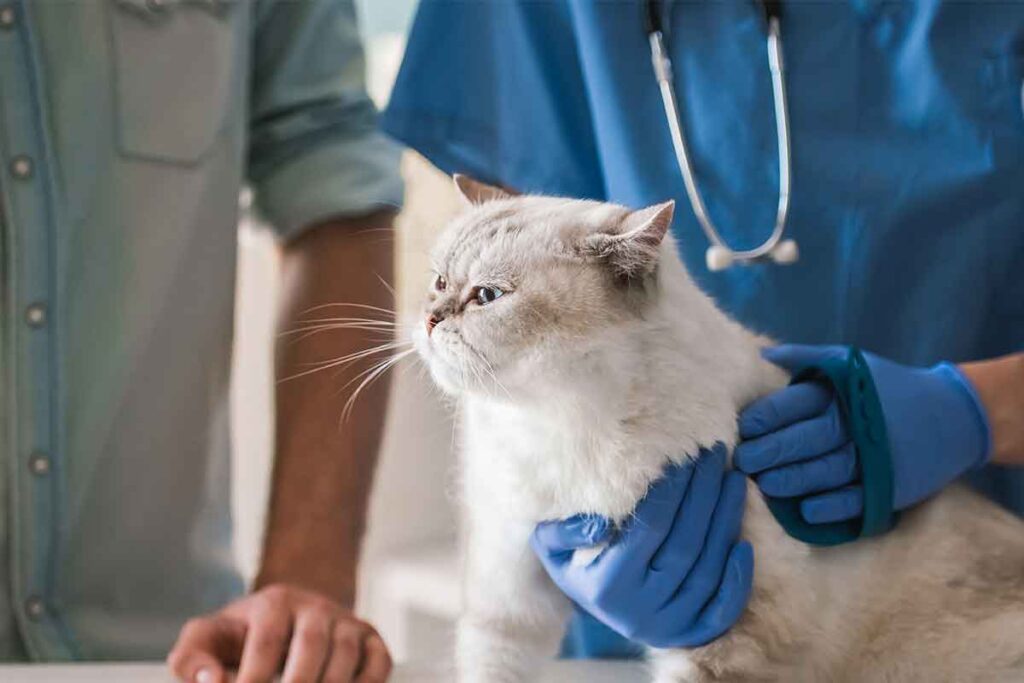
By Kim Campbell ThorntonDo you talk to your clients about whether their pets are in pain? It can be a difficult subject to discuss, in many instances because it just doesn’t come up. Sometimes pet owners overlook subtle changes in behavior that can indicate pain or assume that those changes are a normal by-product of aging. You may need to bring up the subject yourself, especially if you are seeing a senior pet or one who resists examination.

“I wish we would talk more about it,” says Joyce A. Login, DVM, Zoetis senior manager of veterinary specialty operations. “Sometimes I think we don’t bring it up in the room as much as we could. It’s a challenge.”

As a veterinarian you are trained to see and feel changes in pets that owners might not, such as abnormal postural displays or heat on a specific joint, but listening to what people say about their pets’ behavior and drawing out details with questions is an important part of the exam process.

“We can help the owner when we’re asking history and possibly pull out some information in how we ask our questions,” Dr. Login says.

Some of the following obvious and not-so-obvious statements you might hear from owners can open up a discussion:

–He doesn’t like it when I touch him there.

–She doesn’t always use her litter box anymore.

–He used to enjoy being picked up but now he squirms away.

–She’s started pooping inside the house even though she has a dog door.

–We used to go on long walks, but now he conks out after a mile.

–She’s reluctant to go up or down the stairs.

–He doesn’t jump on the bed or sofa anymore

–She used to love the kids and now she walks away when they want to pet her.

–He doesn’t groom himself very well anymore.

–She sleeps in the closet instead of hanging out with us while we watch TV.

Changes in litter pan behavior are much more likely to indicate that a cat has pain issues rather than a urinary tract infection. Dogs who defecate outdoors and then defecate again in the house may be doing so because it’s painful for them to squat for very long so they don’t complete the act outdoors. Animals who potty inside the home even though they have a pet door may find it painful to go through the door because it whacks them on an already aching hind end as they exit.

The real red flag is resistance to touch, says Robin Downing, DVM, DAAPM, DACVSMR, at Downing Center for Animal Pain Management in Windsor, Colorado.

“While animals cannot and do not anticipate or fear their own death, they very much anticipate and fear pain,” she says. “As a consequence, when we as veterinarians meet and interact with dogs, and particularly cats, who are reluctant for us to handle them, the most likely explanation is that those animals are painful and they know that when a human touches them it hurts, so they are anticipating and fearing that pain and doing everything they can to prevent being handled.”

Before performing a pain palpation, she demonstrates the amount of pressure she’ll be using on an owner’s forearm, so the person recognizes that it’s not a painful level of touch.

Finding that what they thought were breaks in normal behavior—not socializing, not wanting to be touched or picked up, losing housetraining or litter box training—signal that an animal is in pain can be an eye-opener for owners. Some break down in tears when they realize their pet has been hurting.

“We have a clientele who believe it’s a normal thing for their dog or cat to become less active as they age because they’re getting old, and what we need to do now is really shift our attention to educating our clients to understand that old age is not a disease and that there are things we can do to prevent these negative consequences from happening in the first place and specific things we can do to intervene on a dog or cat’s behalf if they are in pain.”

This article was reviewed/edited by board-certified veterinary behaviorist Dr. Kenneth Martin and/or veterinary technician specialist in behavior Debbie Martin, LVT.

|
By Tamara Grubb, DVMIn human medicine, postoperative nausea and vomiting are among the most prevalent and concerning of all postanesthetic complications. The conditions are so common and have such an impact on human health care that they have earned their own acronym from the National Health Library, PONV.

A recent PubMed search of PONV garnered almost 10,000 hits. For the human patient, PONV is unpleasant and results in dissatisfaction with perioperative care (Gan et al. 2014). Humans would pay extra to prevent PONV (Gan et al. 2014). Unfortunately, PONV is more than just an annoying occurrence. Vomiting itself can cause other postoperative complications, and PONV has been called “distressing” by humans who experience it (Gan et al. 2014).

As all veterinarians and veterinary technicians can attest, PONV also occurs in veterinary patients, and we should ask ourselves this question: is PONV distressing to our patients? Could PONV lead to or add to fear, anxiety, and stress (FAS)?

The author of a recent review of nausea and vomiting in veterinary patients makes a strong argument that these conditions could cause or compound FAS and could be considered an animal welfare issue (Hay Kraus 2017). The point is made in the review that Brambell’s Five Freedoms of animal welfare include freedom from discomfort, pain, and distress. PONV likely causes discomfort, could contribute to pain, especially in patients with preexisting abdominal pain, and could potentially be distressing.

Maybe we can’t definitively know whether an animal experiencing PONV is “distressed” or not, but we can argue that reduction of PONV is medically beneficial to our patients. Potential adverse effects of PONV include dehydration, electrolyte imbalances, esophagitis, aspiration pneumonia, exacerbation of pain, and elevated intracranial and intraocular pressure. In addition, PONV is likely to cause anorexia and may even contribute to agitation in the recovery phase of anesthesia.

Fortunately, we have drugs, such as maropitant, that decrease the incidence of PONV and the associated adverse effects. Numerous studies describe the anti-nausea and anti-emetic effects of maropitant in both dogs and cats (Hay Kraus 2017). One study also showed that dogs receiving maropitant returned to normal food intake postoperatively more rapidly than dogs not receiving maropitant (Ramsey et al. 2014). At 20 hours post-anesthesia, 93 percent of the dogs receiving maropitant versus 46 percent of the control dogs had returned to normal feeding. This could aid in alleviating dehydration, electrolyte imbalances and any nutritional deficits that might affect healing.

In the same study, dogs receiving maropitant had a better quality of recovery than control dogs. This could be due to decreased PONV and could add support to the theory that PONV is distressing to veterinary patients. In human medicine, administering sedatives that also decrease the incidence of PONV is recommended for treating emergence delirium in children (Dahmani et al. 2014).

Finally, reduction of PONV is not only medically appropriate for the patient, it is also important for maintaining the human-animal bond and pet-owner satisfaction with perioperative care. Nausea, vomiting, and anorexia are major concerns for pet owners, and presence of any of these conditions generally leads to owners assuming that their pets are experiencing diminished quality of life. As in human medicine, pet owners are concerned enough about PONV to pay extra money for its prevention (Hay Kraus 2017).

The bottom line is that PONV can be a medical concern both on its own and through complications caused by the act of vomiting or the vomitus itself (i.e., aspiration). PONV can exacerbate pain. PONV may contribute to FAS. Owners are concerned about PONV. We have drugs with high safety margins that effectively alleviate or eliminate PONV, and one of those (maropitant) may even play a role in analgesia. So why wouldn’t we treat or prevent PONV, regardless of the motive?

This article was reviewed/edited by board-certified veterinary behaviorist Dr. Kenneth Martin and/or veterinary technician specialist in behavior Debbie Martin, LVT.

|
By Kim Campbell ThorntonRead part one of this series here.

We all know that cats are tough to decode. They hold their secrets tightly, refusing to share how they feel. Old cats are especially wily when it comes to concealing illness or pain. Being able to see through their camouflage is key to keeping them healthy and serene in their golden years.

In her lecture “It’s Not Just Old Age: Optimizing Health Care for Senior Cats,” presented earlier this year at the Western Veterinary Conference in Las Vegas, Susan Little, DVM, board-certified in feline practice, shared some of her secrets for questioning owners and examining cats to get at the truth within.

Get All The Info

Dig deep. Owners might not mention certain things because they assume changes they see are normal in an old cat instead of realizing that they could be related to disease or pain.

One study found that 55 percent of owners don’t know that cats can have kidney disease without appearing sick, and 38 percent don’t know that senior cats can develop osteoarthritis. Subtle signs of sickness that owners might attribute to old age or fail to connect to illness include not using the litter box, being less social or less active, eating or drinking poorly, weight loss, a change in sleeping habits, and bad breath.

We often hear that it’s important to ask open-ended questions to gather details, but Dr. Little recommends a combination of open- and closed-ended questions because so many variables influence the answers, including the cat’s age and the owner’s level of experience with cats. She likes to start with open-ended questions and then narrow her focus with closed-ended questions.

Phrase questions to elicit specifics

“I’m still learning to take a good medical history,” Dr. Little says. “It’s an art; it’s a real skill.”

For instance, instead of asking, “Have you noticed any changes in your cat’s litter box use,” say “Tell me about your cat’s litter box use.”

That’s a good way to get detailed comments about urine output, stool quality, and litter box behavior that owners might not think to mention. If the owner says, “He forgets where the litter box is,” maybe he didn’t forget, Dr. Little says. Maybe the litter box is downstairs in a dark basement and it hurts to go down the stairs or it’s too dark in the basement, and he can’t see very well anymore. These types of questions can give you a bigger, better picture of what’s going on with a senior cat.

Visual Aids And Other Feedback

It’s a cliché that a picture is worth a thousand words, but the fact remains that pictures help. Show owners a fecal score chart with actual pictures of poop, not just line drawings, and ask them to point to the one their cat’s poop resembles.

“Not all owners know what is normal, especially if the cat’s stool is like that all the time,” Dr. Little says.

Know how much the cat eats. Many owners don’t measure food; they just keep the bowl topped up. For free-feeding owners, ask them to weigh the bowl of food morning and evening for a few days or even a week. The difference tells you how much the cat actually eats.

Before owners come in, ask them to complete a questionnaire on their cat’s pain levels. This should be done at home so the answers can be thoughtful and not rushed. One to consider is the Feline Musculoskeletal Pain Index, available from North Carolina State University.

It’s also a good idea to ask owners to fill out a diet history form at home or ask them to use a smartphone to photograph the bags or cans for everything they give their cat.

“People always forget what they feed the minute they walk in the vet’s door,” Dr. Little says.

Other useful assessment tools to give owners, in advance if possible, are the free downloadable brochure How Do I Know If My Cat Is In Pain?, free nutritional and other health guidelines from World Small Animal Veterinary Association, and checklists from the Indoor Pet Initiative, including a health history questionnaire and environmental needs for senior pets.

In the next post, how Dr. Little conducts successful exams with senior cats.

This article was reviewed/edited by board-certified veterinary behaviorist Dr. Kenneth Martin and/or veterinary technician specialist in behavior Debbie Martin, LVT.
By Kim Campbell ThorntonPet owners, and people in general, tend to ignore problems until they become too troublesome to ignore. It’s human nature to put off dealing with things if we’re not sure how to proceed or think it will be too much work. If you live in an area that’s prone to thunderstorms, though, you can help clients stave off pet fears and phobias before they become serious.

“Veterinarians should routinely ask clients about their pets’ responses to storms,” says Pamela Perry, DVM, a behavior resident at Cornell University College of Medicine in Ithaca, New York.

Ask clients what happens during a thunderstorm. Does the cat hide? The dog tremble? Those mild fears can worsen over several thunderstorm seasons. Waiting to treat them can make the problem that much more difficult to manage. Be preemptive and recommend treatment promptly, while signs are still at the subtle stage.

“They might be coming in for something totally unrelated to storm phobia, but they mention that the dog is fearful during storms or that their other dog at home has storm phobia,” says veterinary behaviorist Lore Haug, who practices in Sugar Land, Texas. “I’m like, ‘You need to get on top of that right away.’”

Suggestions can be as simple as suggesting setting up a safe room or getting the pet a snug-fitting wearable that may have a calming effect.

Know how to advise clients on setting up a safe room. It can be a small guest bath or closet with no windows, a basement, or something as simple as a crate with a cover thrown over it. Their pet may choose his own safe space, such as inside the bathtub. Wherever it is, it should be ready and available at any time.

Clients should encourage pets to go there by placing a stuffed Kong or treat-filled puzzle toy in the room daily so the animal knows that good things happen in that room. Remind clients never to close the pet in the room or crate, which can create a feeling of being trapped. If owners know a storm is expected during a time they won’t be home, they should prepare the room by putting a long-lasting treat or favorite toy in it, turning on a white noise machine or other noise blocker, and plugging in a pheromone diffuser.

Be familiar with product options for pets fearful of storms. Calming clothing includes Thundershirts, Storm Defender Capes, Anxiety Wraps, Mutt Muffs, and Calming Caps. Depending on the product, they fit snugly on the body, providing soothing pressure; reduce storm-related static charges; or limit the pet’s exposure to scary storm-related sights and sounds such as lightning and thunder. Recommend drowning out storm sounds with white noise machines, the whirr of a box fan, or relaxing music such as Through A Dog’s Ear or Through A Cat’s Ear. Certain nutraceuticals and pet foods contain soothing ingredients such as l-theanine, caseins, L-tryptophan, and B vitamins and are marketed for pets with storm-related fears.

“Resources like that are easy for owners to implement and don’t require a huge behavior modification program,” Dr. Haug says.

Finally, be familiar with the client’s lifestyle and environment. If medication is needed, that information will help you determine the best choice for that particular animal.

“Make a choice about the effect you want to have happen, what medication fits with that, and how it can work in the owner’s lifestyle,” says veterinary behaviorist Lisa Radosta, who practices in West Palm Beach, Florida.

For instance, some owners are in and out but have a flexible schedule that allows them to premedicate a pet if a storm is in the forecast. For that owner, Radosta says, “I’m going to send her home with Sileo because that works fast and she’s generally going to be home to administer it.” For owners who are gone all day, she might suggest long-lasting clonazepam or gabapentin.

“Make a choice,” she says. “Don’t just throw a drug at it because you like it.”

This article was reviewed/edited by board-certified veterinary behaviorist Dr. Kenneth Martin and/or veterinary technician specialist in behavior Debbie Martin, LVT.
+

By Dr. Marty BeckerSince I published the story of my personal struggle with depression and a family history of suicide–including my father, who killed himself with a shotgun–in Veterinary Economics last year, I’ve heard from hundreds upon hundreds of my fellow veterinary professionals who have faced the same struggles.

As Thanksgiving and the holiday season draw near, I can’t help but think of all of us in veterinary medicine who are feeling anything but thankful, and are overwhelmed not with feelings of good cheer, but of darkest depression.

My personal journey to becoming a veterinarian began when I was 7 years old, growing up on a dairy farm. The family vet came out to treat a fallen cow who, after one injection, rose up.

Even though my desire to be a veterinarian was sparked by that happy recovery, that memory and many like it are frequently overwhelmed by memories of death, terrible suffering, and the mistakes that we see happen in our profession every single day, year-in, year-out.

My experience of practicing veterinary medicine ranged from getting the Twin Falls, Idaho, City Shelter to shut down their gas chamber by agreeing to euthanize the animals myself; fighting to keep some kind of barrier between me and the pain of seeing animals I cared about suffer, or die–and seeing the devastating grief of their human families at their loss; the steady drumbeat of “suck it up” and “don’t think about it” and “don’t focus on all this emotional stuff” I heard so often from my bosses and colleagues.

I got the message loud and clear: Unlike physical suffering and illness, their mental and emotional counterparts were shameful, trivial, and unworthy even of acknowledgement, let alone treatment.

It was the Thanksgiving season that followed the horror of 9/11 when I first became seriously depressed. I was in my late 40s, and had just finished working on my book The Healing Power of Pets. I was sad and wanted nothing more than to sleep all the time. I was in darkness that no amount of awareness of my family history, or will power, or stern self-lectures, or prayer could lighten. That took the care of a physician and the prescription of an anti-depressant. Five years later, I needed an additional medication to keep the darkness at bay.

While clearly my family background contributed to the likelihood I’d suffer from depression, so did my profession. A recent commentary in the Journal of the American Veterinary Medical Association (JAVMA) cited a CDC survey of more than 10,000 practicing veterinarians that found we are more likely to be depressed, to suffer serious mental illness, and to attempt suicide than the general public.

In fact, frighteningly, 14.4 percent of male and 19.1 percent of female veterinarians have considered suicide, nearly three times the national average for the general population. And these numbers are consistent with those in studies of veterinary professionals around the globe, not just in the United States.

I did not found Fear Free to address the epidemic of depression and suicide in our profession; I did it to help animals. But what I found is that it also has the power to help us.

Consider these words written by the authors of that same JAVMA article I mentioned above:

Some of the reasons for the high rates of mental disorders in veterinarians include work-related stress, a lack of early detection of mental problems, access to lethal drugs associated with euthanasia, and the adverse effects of performing euthanasia.

A qualitative, interview-based study of veterinarians who had attempted suicide revealed contributing factors to be adverse relationships at work, concerns about career, issues related to patients, long hours, and heavy work-load. A cross-sectional study of work conditions for veterinarians found that the number of hours worked and professional mistakes were the chief stressors that accounted for anxiety and depression.

How much of the soul-killing stress that afflicts veterinarians and veterinary nurses is caused by working all day on patients who fear us, even hate us? How much is the result of seeing the animals we love and feel such compassion for shiver, drool, even lose control of bladder and bowels, as we try to help and heal them?

I know I became a veterinarian because I felt so connected to the soul of animals. I thought I was doing what was best for them, and it was not until the fateful day when Dr. Karen Overall ripped the bandage off the wound of my compassion that I realized I was in fact harming all the animals I thought I was helping. That horrifying realization sharpened my senses, opened my heart, and inspired the creation of Fear Free.

And it was in hearing from so many of the almost 25,000 of you who have so far enrolled in certification that I realized it isn’t just our patients who need healing through the practice of Fear Free veterinary medicine; it’s us, too.

Of course, Fear Free is not a form of therapy or medical care. Depression and suicidal ideation are real medical issues and require the care of qualified professionals. But as the JAVMA article pointed out, work stress is a massive risk factor for mental health problems and suicide in veterinarians.

Look at it this way: If I think of myself as a cup, I’m half-full–maybe even three-quarters full in my case–of risk factors related to genetics and my upbringing.

Why fill that cup the rest of the way with insufficient sleep, a lack of connectedness to my family and community, guilt, unwillingness to face my problems, and stewing every day in the fear, anxiety, and stress of the pets, pet owners, and staff I interact with professionally? Why crank up the already dangerous pressure I feel by burying feelings of burnout, compassion fatigue, depression, or worse?

After almost 40 years of veterinary practice, I still feel blessed to be part of the greatest profession on earth. I am endlessly grateful for the opportunities I have to lecture to veterinarians, veterinary nurses, and veterinary students, and to speak on behalf of the veterinary profession through the media.

But this Thanksgiving, I also know tremendous gratitude that I’m able to share this gift with each of you: That the practice of the medicine we love on the animals we love can be a healing gift to us both, and not a source of fear or suffering. That we’re part of the largest transformational initiative in the history of companion animal practice, part of healing animals, the people who love them, and ourselves.

God bless you, and have a Happy Thanksgiving, my friends.

Author’s note: If you’re experiencing depression or are contemplating suicide, please call the National Suicide Prevention Lifeline (800-273-TALK; 800-273-8255; suicidepreventionlifeline.org). It’s available 24 hours a day, 7 days a week. Whatever darkness you are facing, the good people who staff these phone lines care and will help you.

By Deb M. Eldredge, DVMSometime when it is fairly busy, take a few minutes and go out to sit in your clinic waiting room. Sit down, close your eyes and just listen. Listen carefully for little noises as well as the loud and obvious noises.

After a minute, the sounds may seem a bit overwhelming to you. Think of how much more cats and dogs hear than we do and how they don’t understand what many of the noises are. For our pets, the veterinary hospital may be a horror house of sound.

How can we help pets with sound issues to feel more comfortable at the clinic? Carpet is often used to mute sounds, but it doesn’t really make sense in a clinic where cleanliness is important. Barriers can help to block sounds, and soundproofing exams rooms is not a bad idea, although it can be expensive.

Playing background music may help some pets, but an individual pet may not like your music choices. That sounds silly but anyone who has done musical freestyle with a dog can tell you that dogs have definite opinions on music. Luckily, there are some research-backed CDs of soothing music composed specifically for dogs and/or cats. Through A Dog’s Ear, for instance, has pioneered soothing music for anxious pets. These CDs are excellent for waiting rooms, exam rooms, and kennel areas.

To really help your patients prepare for a veterinary visit or hospital stay, consider making a CD of the sounds at your clinic. Start by doing a walking tour of the clinic with one of your own pets. Begin with the sound of the door opening and closing and the sound of toenails on the floor. If the scale squeaks, catch that. Try to record the voices of all of your receptionists as well as the ringtone of your phones and your computer and printer beeps and squeaks.

Move on to the noises heard in a waiting room: doors opening and closing, laboratory equipment dinging off, refrigerator and cupboard doors opening and closing. Record the voices of your veterinary technicians, assistants and kennel help. Record some barking dogs, cage doors opening and closing, and cats meowing (or even screaming or hissing). Note any noises that your own pet reacts to. Washing machines, dryers, blow dryers, vacuums, furnaces, and air conditioners can all make noises that startle or panic an already anxious pet.

The goal is to create a CD of sounds that pet owners can take home to play for pets to accustom them to the sounds they will hear at your hospital. These are not CDs to play at your clinic but rather CDs to loan out to clients. Have them start by playing the sounds very quietly and try to pair the CD with positive things such as meals or belly rubs. If you have any clients who are breeders, loan them a copy of the CD to play for their litters so the puppies and kittens are familiar with the sounds right from the start.

Some pets will never smile about their veterinary visits. But if you can at least make the noises a pet will encounter seem routine, you will have helped reduce the pet’s fear of the veterinary clinic.

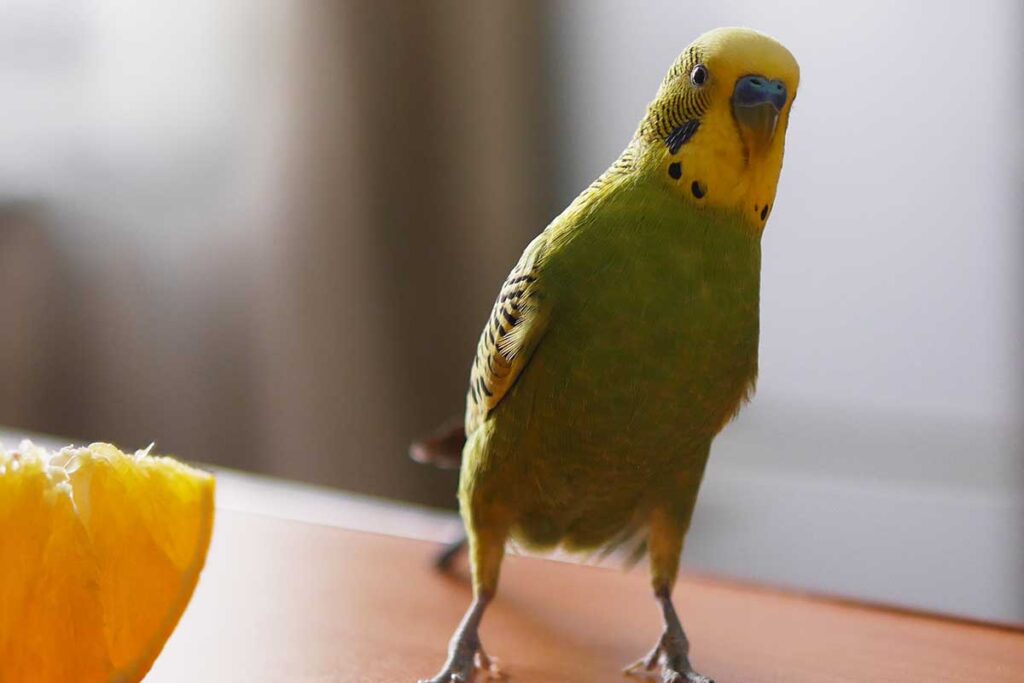
In a perfect world, Dr. Alicia McLaughlin would establish relationships with animals who have no experience with veterinary visits and thus no fears regarding them. But at the Center for Bird and Exotic Animal Medicine near Seattle, Washington, she is more likely to encounter animals who have already developed fear, anxiety, and stress (FAS) associated with the veterinary environment and physical care. Many of these animals are naturally frightened of new persons, places, and experiences, and limited socialization early in life makes it difficult for them to deal with changes that deviate from the narrow scope of what they’ve learned is normal and safe. Not surprisingly, many of the animals Dr. McLaughlin treats are already on edge before she walks into the exam room.When animals come in with preformed notions and established concerns, the opportunity to start with a clean slate and make the experience positive from the onset has already passed. Instead, with many of these animals McLaughlin is doing damage control, backtracking from previous negative experiences and recovering from a lack of ongoing positive experience and preparation.

“I’m often working up from a negative with my patients because they have such bad history,” says Dr. McLaughlin.

Sadly, common practice for handling birds in many pet care environments is to put the parrot on the ground and throw a towel on him. Such unsettling and scary experiences lead to increased angst for the animals.

“A lot of behavioral flooding happens with birds. It’s the status quo for most places. It’s not just vet hospitals. It happens at many pet stores when the parrot goes in for grooming, too,” says McLaughlin.

Alleviating and reducing FAS helps to bring the animal into a more neutral emotional state. Then he or she is more receptive to pleasant pairings that accompany the veterinary experience and positively affect the animal’s emotional outlook. This makes the situation less concerning for the animal and improves the ability to handle him and provide care.

A greater challenge in helping these patients is dealing with people who don’t understand the signs of FAS or the negative outcomes that can happen because of it.

“The hardest part is dealing with someone who has expectations in their head for how care should be or how it has always been. Or dealing with a person that’s driven by strict time constraints,” says Dr. McLaughlin.

The best approach McLaughlin has found to work gradually with these clients and build a rapport with them. Ultimately, this helps her to reach her goal of improving the lives of animal patients.

“I try to focus on one, two, or three things max they can do per visit to improve their bird’s quality of life. If I build enough rapport they’ll keep coming back and we can keep building,” says Dr. McLaughlin.

Putting the treat into treatment isn’t possible for all of McLaughlin’s patients, who sometimes don’t take food when they’re too upset. But just because the animal won’t take food doesn’t mean the visit can’t be Fear Free. There are numerous Fear Free-friendly tools McLaughlin uses to help.

“Some animals, like pigs, are easy to work with because they’re so food-motivated. Birds are more challenging because they are often already so far over the threshold it’s hard to reach them. Being sensitive to body language and taking things slow can help.”

Because many birds are already amped up and display signs of escalated FAS by the time they arrive for care, sedation is a tool that’s often utilized to deliver physical care in a manner that’s protective of emotional wellbeing.

“Using sedation on those birds that are already really stressed on arrival makes a big difference in how the visits go. It’s safer, the bird has a better quality of life, and it reduces negative experiences to help build for the future of that bird’s care going forward,” says Dr. McLaughlin.

“Emphasizing the need for minimal stress veterinary medicine has changed our approach to patients. Our staff tries to minimize coercion when possible, and sedation is seen as a way to help improve our patient’s veterinary experience when any potentially stressful medical procedures need to happen. There’s an increased urgency to try to quickly bring the stress levels down when they occur, along with more creative problem solving between staff members to either prevent or address stressful situations,” says McLaughlin.

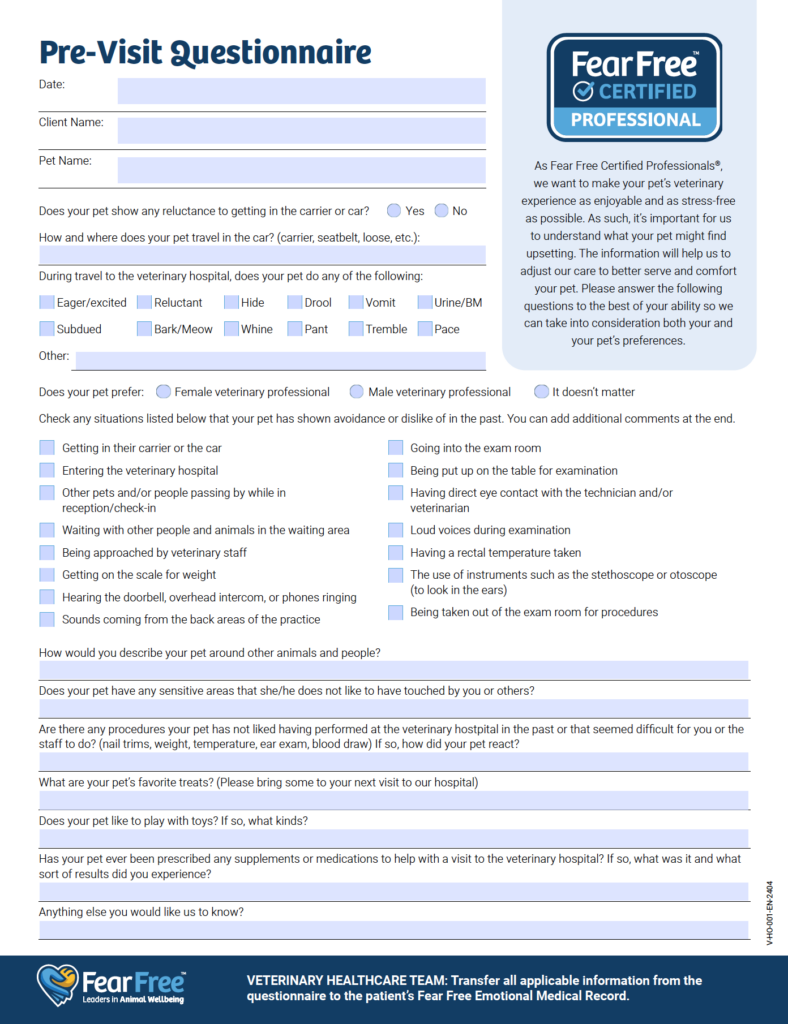
Pre-Visit Questionnaire

Administrators are some of the busiest people in the hospital and can use all the help they can get. Have your clients fill out this Pre-Visit Questionnaire to learn more about their pet and his or her needs. Fillable & Print-Ready PDF – Companion Animal.

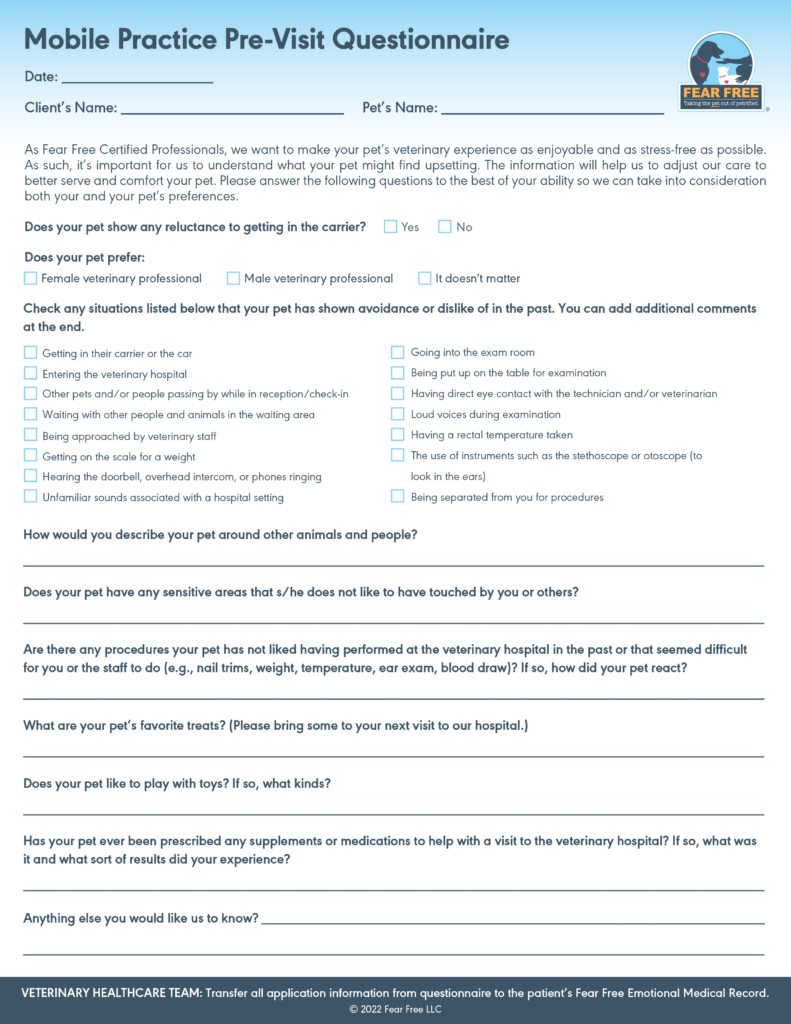
Mobile Practice Pre-Visit Questionnaire

Mobile practices present unique challenges and opportunities to provide Fear Free care to  your clients. Have your clients fill out this Pre-Visit Questionnaire to learn more about their pet and his or her needs. Fillable & Print-Ready PDF – Companion Animal

Avian Pre-Visit Questionnaire


Avian Pre-Visit Questionnaire

Avian patients have unique needs and concerns. Have your clients fill out this Pre-Visit Questionnaire to learn more about their bird and his or her needs. Fillable & Print-Ready PDF – Avian

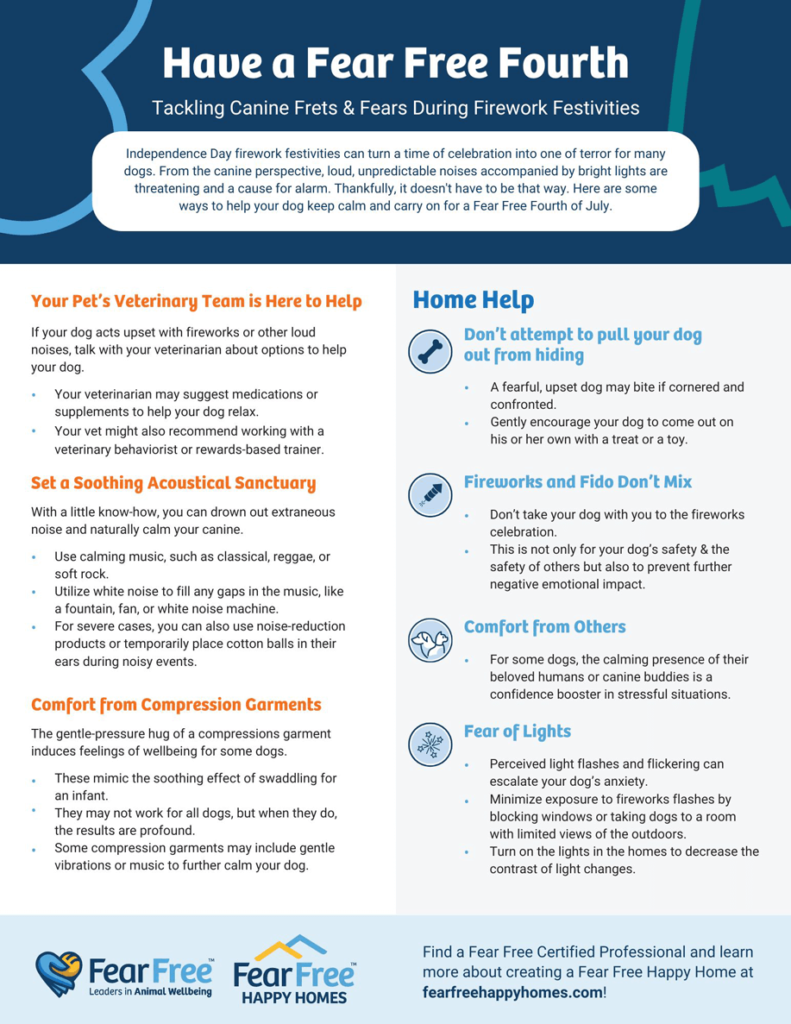
Fourth of July Pet Safety Infographic

Educate your clients on Fourth of July safety with this infographic

Image format: .pdf(Better for printing)

Image format: .jpg (Better for social media)

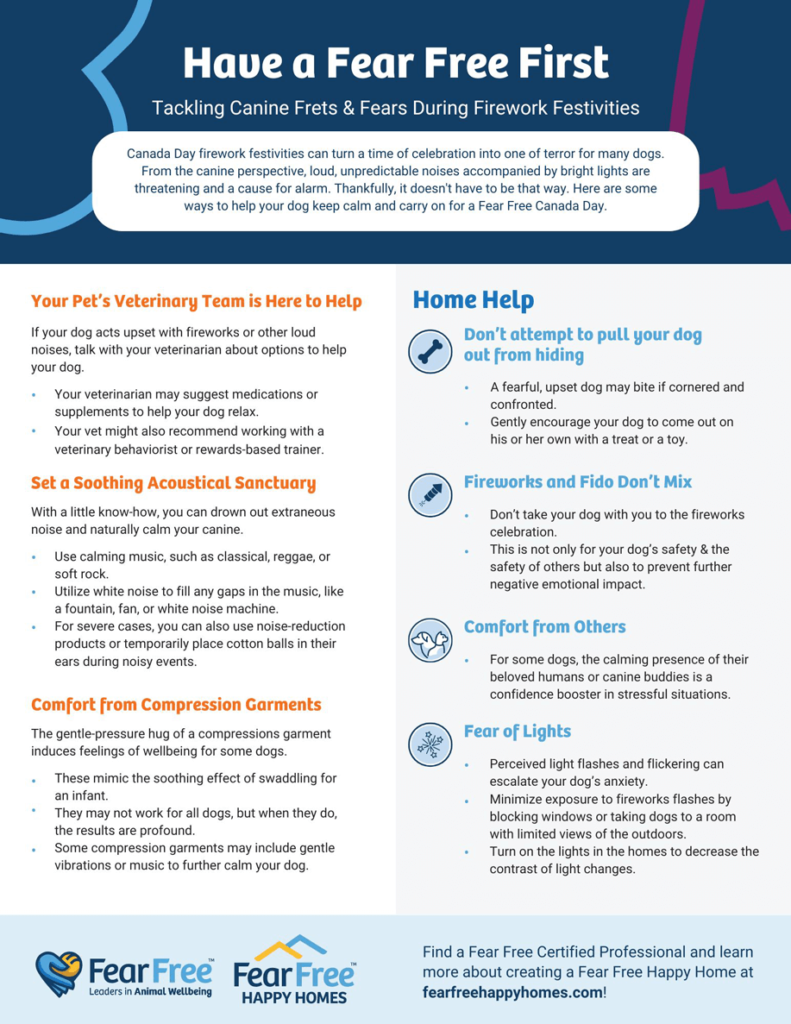
Canada Day Pet Safety Infographic

Educate your clients on Canada Day safety with this infographic

Image format: .pdf(Better for printing)

Image format: .jpg (Better for social media)

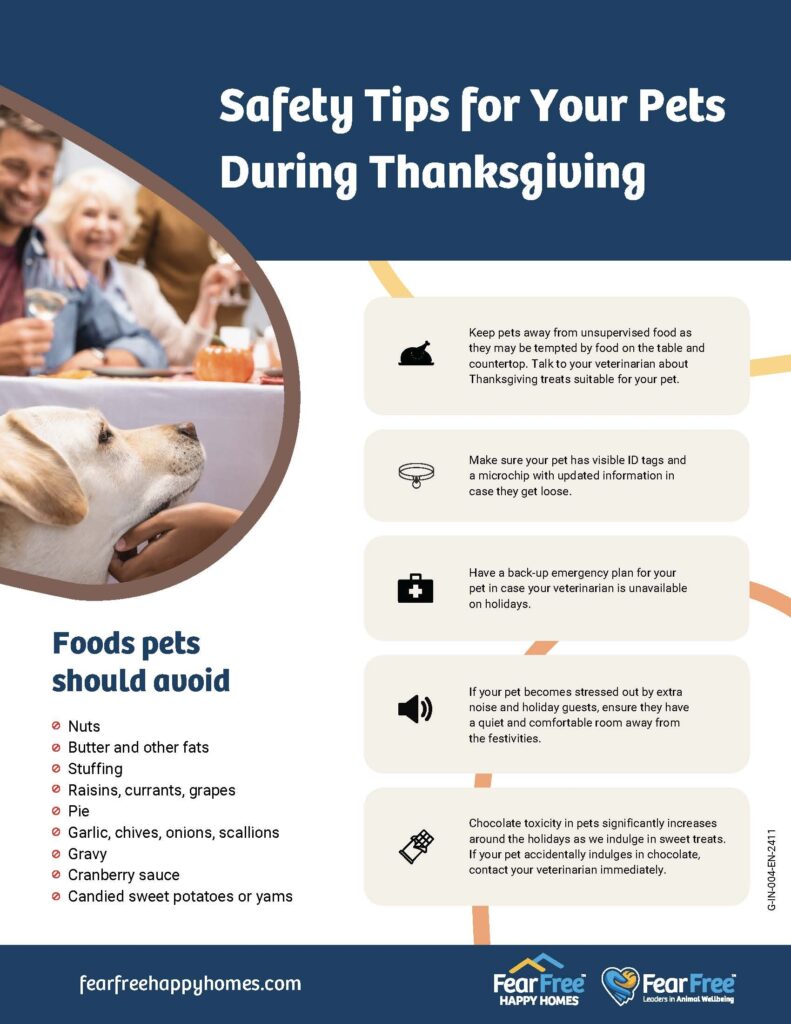
Thanksgiving Pet Safety Tips

Use this infographic courtesy of Trupanion™ to educate your clients on safety during Thanksgiving.

Image format: .pdf(Better for printing)

Image format: .jpg (Better for social media)

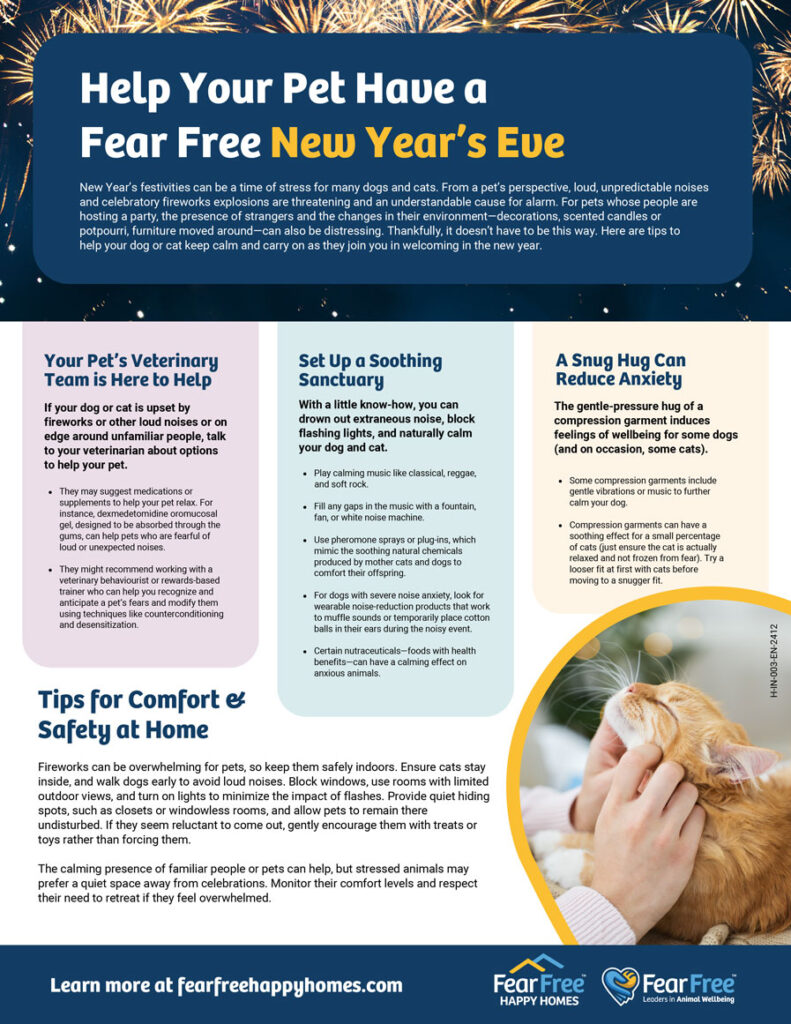
New Year’s Pet Safety Infographic

Use this infographic to educate your clients about the dangers of New Year’s celebrations and pets.

Image format: .pdf(Better for printing)

Image format: .jpg (Better for social media)

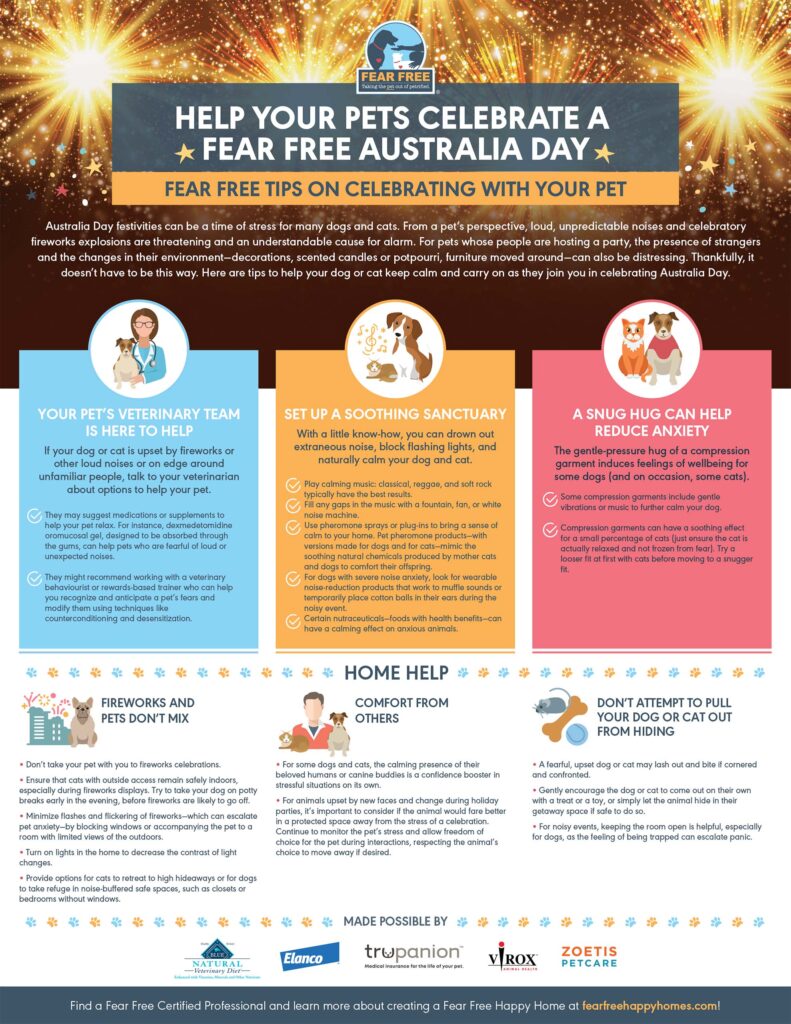
Australia Day Pet Safety Infographic

Educate your clients on Australia Day safety with this infographic

Image format: .pdf(Better for printing)

Image format: .jpg (Better for social media)

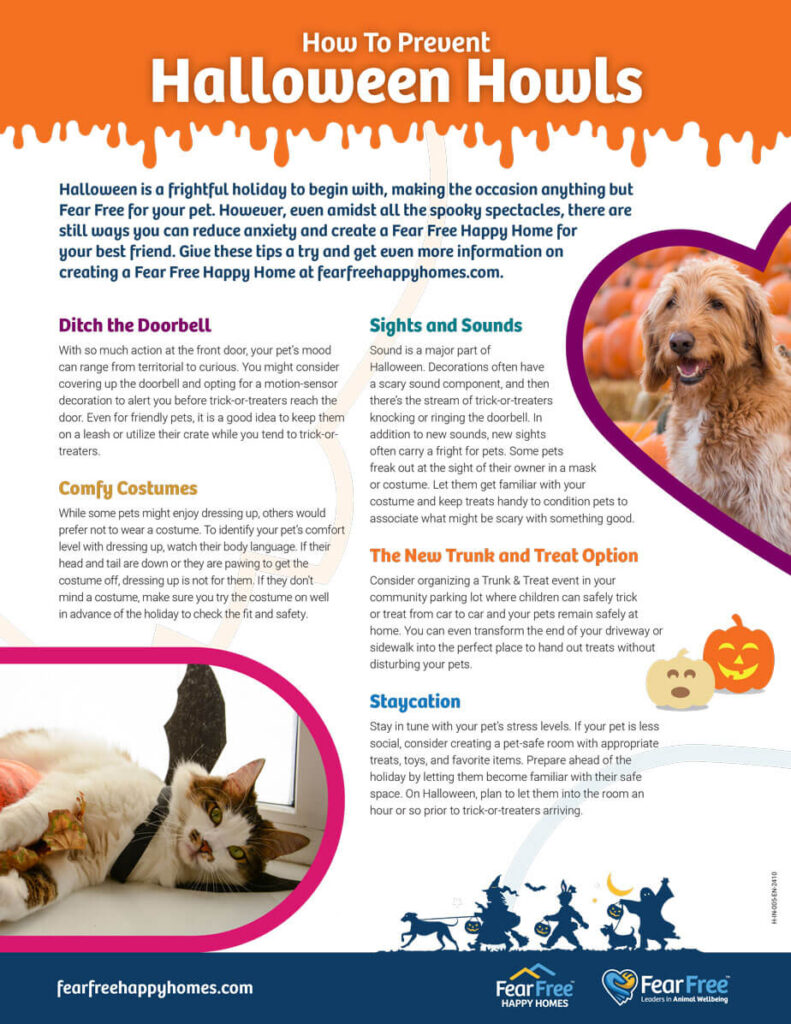
Halloween Pet Safety Infographic

Educate your clients on Halloween safety with this infographic

Image format: .pdf(Better for printing)

Image format: .jpg (Better for social media)

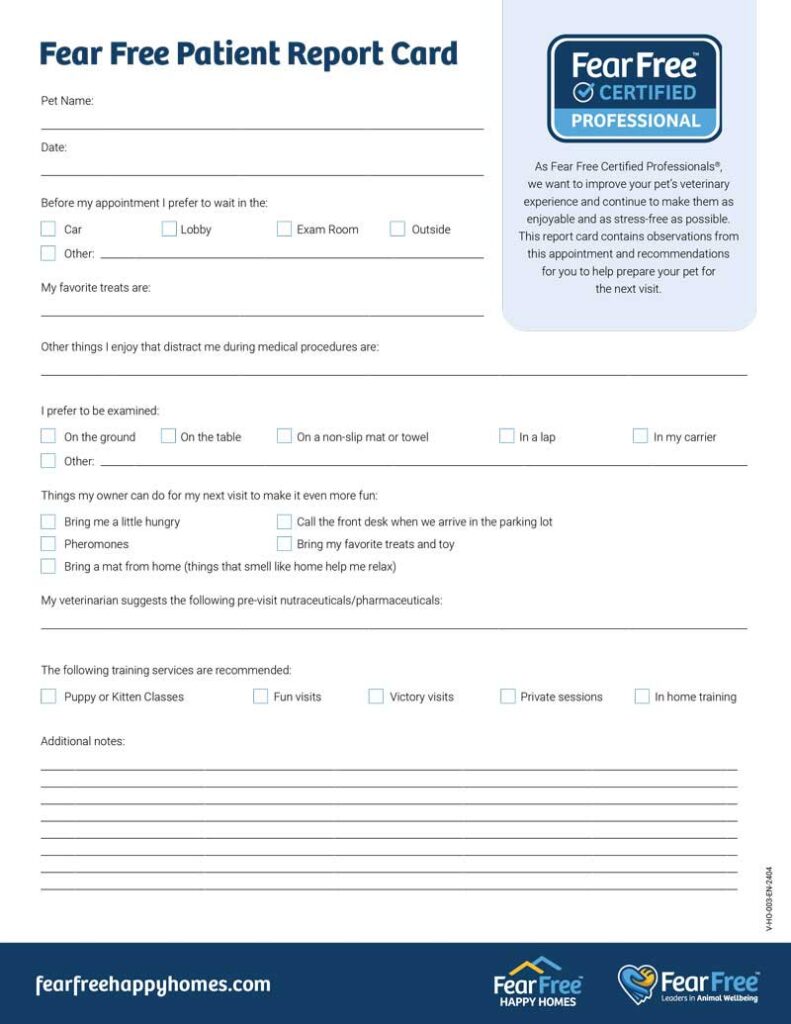
Fear Free Patient Report Card

When it comes to creating Fear Free veterinary visits, thinking about a patient’s individual needs is critical. Communicating those needs to the pet’s owner is also very important, as many of the pet’s preferences and behavioral tendencies carry over into other aspects of the pet’s life and future veterinary visits.
As somewhat of a client-friendly variation of a pet’s emotional record, use this digitally fillable or printable Fear Free Report Card to help connect with the client and ensure they go home with an understanding of their pet’s needs and emotional health while at the veterinarian.

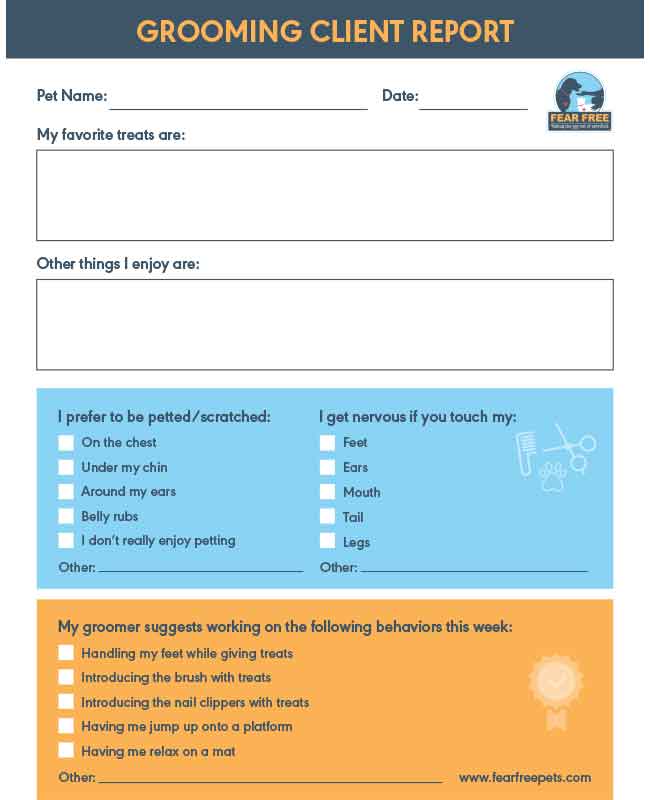
Fear Free Groomer Client Report Card

Use this report card to take your grooming service to the next level. This report card lets your clients know you value their pet and strive to give them the most Fear Free grooming experience possible. You can mark what their pet enjoyed, what treats you gave them, any sensitive areas they may have, and even additional behaviors owners can work on to make their next grooming experience even better.

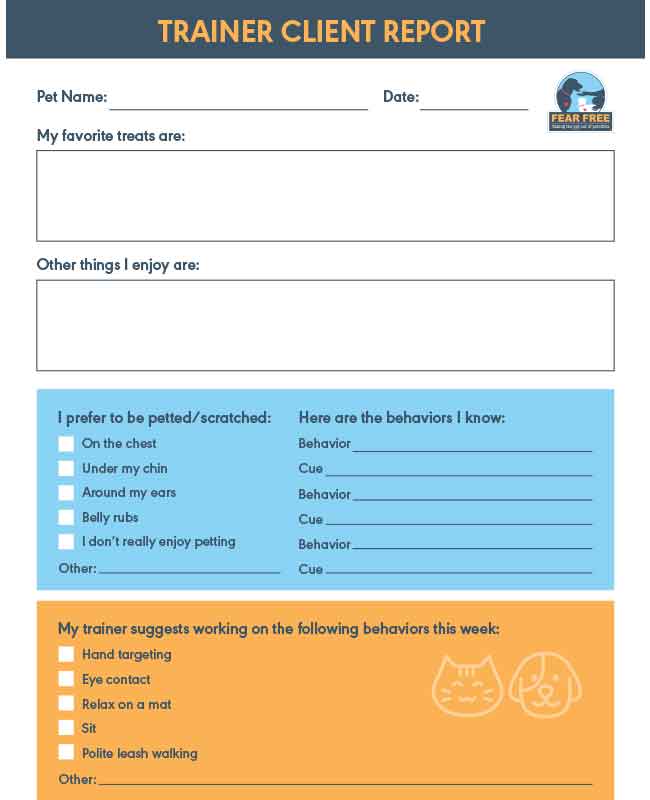
Fear Free Trainer Client Report Card

This report card can help you educate your training clients and help increase compliance. Mark what treats and activities their pet enjoys, what behaviors and ques they already know, and what behaviors they should work on.