The Elizabethan collar has long been the default tool for preventing patients from interfering with wounds and surgical sites. But clinicians are increasingly recognizing that the cone itself may be contributing to poor patient welfare during a critical phase of healing.

The Problem: The E-Collar’s Impact on Patient Welfare

Fear, anxiety, and stress (FAS) do not end when a patient leaves the operating room. For many animals, the post-operative period is among the most psychologically challenging they will experience, and the Elizabethan collar frequently compounds that distress.

A 2020 study by Shenoda et al., published in the journal Animals, found that 77.4% of pet owners observed negative welfare effects in dogs and cats wearing an Elizabethan collar. Reported issues included difficulty moving, eating, drinking, and engaging in normal social behavior, often resulting in frustration, disorientation, and heightened FAS.

From a clinical standpoint, the cone also offers incomplete protection. It does not shield surgical sites from environmental contaminants, contact with other animals, or physical impact, leaving wounds more vulnerable than its widespread use might suggest. Elevated FAS combined with compromised wound protection can contribute to slower healing, increased recheck appointments, and a more difficult recovery trajectory for patients.

The Solution: MPS Recovery Wear as a Fear Free-Aligned Alternative

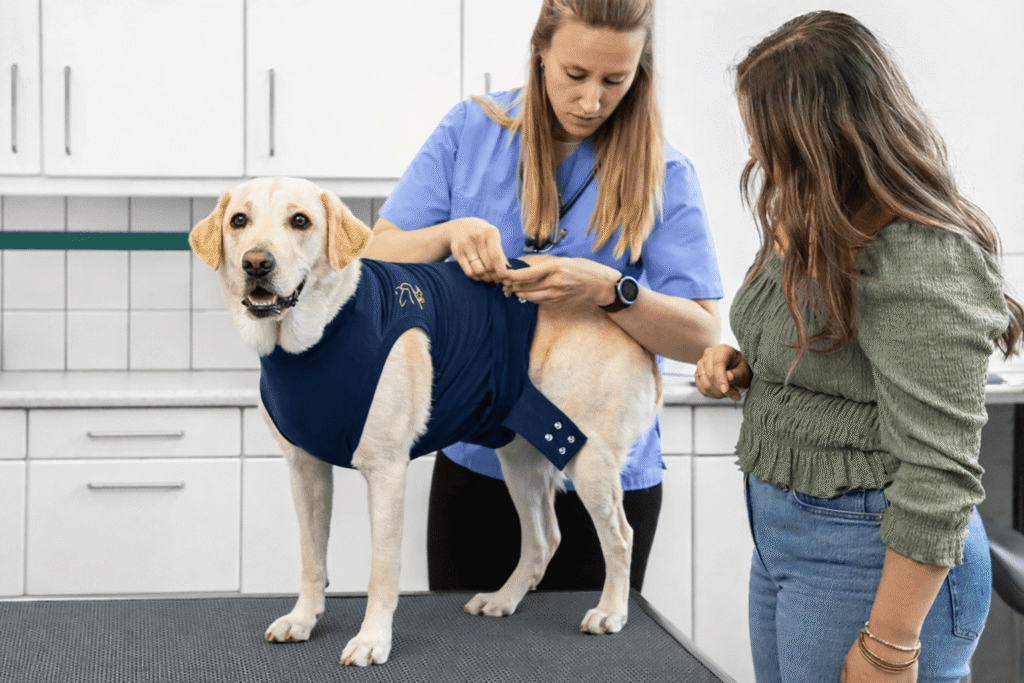
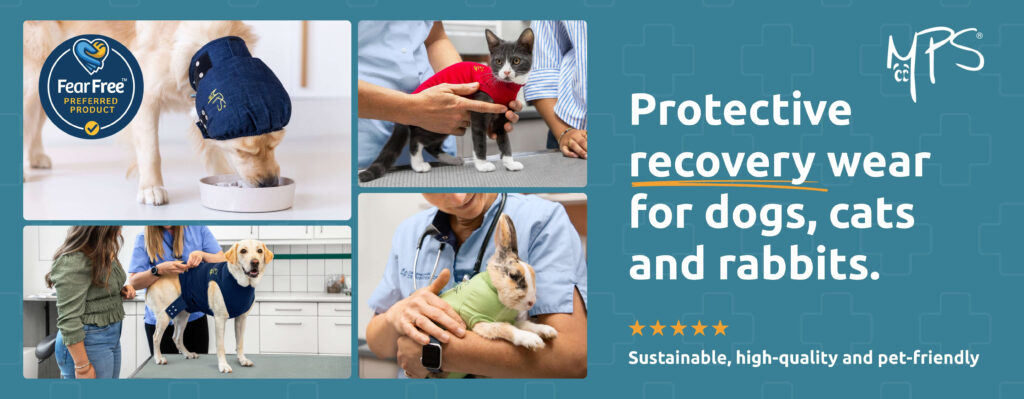
Protective recovery wear offers a clinically sound alternative that addresses both wound protection and patient wellbeing simultaneously. Rather than restricting a patient’s sensory environment and mobility, recovery garments allow animals to maintain natural posture, movement, and behavioral repertoire throughout the recovery period.

Patients who can eat, drink, rest, and move without restriction experience measurably lower FAS. Reduced emotional distress supports physiological recovery, promotes restorative sleep, and minimizes the behavioral complications that can follow difficult post-operative experiences.

Medical Pet Shirts (MPS) is the pioneer in developing protective recovery wear as an animal-friendly alternative to the traditional cone. Their products are designed to integrate seamlessly into daily life while supporting healing and emotional wellbeing during recovery. This aligns consistently with core Fear Free principles: emotional wellbeing is not a secondary consideration in recovery care. It is a clinical variable with direct implications for patient.

Clinical Application: What the Evidence Supports

Recovery wear is most effective when introduced at the point of care, ideally applied while the patient is still under anesthesia, and dispensed for continued use at home. Key clinical considerations include:

  • Early introduction reduces acclimation stress. Patients that recover from anesthesia already wearing the garment adapt more readily than those fitted during the post-anesthesia arousal period.
  • Home compliance improves significantly. E-collars are frequently removed by clients during feeding, sleeping, or in response to patient distress, creating unmonitored windows of wound exposure. Recovery wear remains in place across daily activities.
  • Breathable, four-way stretch construction of MPS Recovery Wear supports natural resting positions, which are essential for restorative sleep and a key factor in post-operative healing.
  • For behaviorally complex or FAS-prone patients, reducing post-operative distress can have a meaningful impact on recovery quality and long-term patient trust.

Extending Fear Free Care Beyond the Clinic

Fear Free Certified practices are well positioned to integrate recovery wear into standard post-operative protocols. Discharging patients in recovery wear allows the clinical team to extend evidence-based, low-stress care into the home environment, where veterinary oversight is limited and patient welfare depends heavily on client compliance.

Clients whose pets are discharged in recovery wear consistently report calmer animals, earlier return to normal eating, and faster behavioral recovery. For the practice, this translates to fewer urgent post-operative callbacks, reduced recheck volume driven by wound complications, and stronger client confidence in the discharge process.

When patients are more comfortable and compliant at home, post-operative recheck appointments are more productive, and the clinical team can be confident that the recovery protocol recommended at discharge is being followed.

Protectable recovery wear for dogs, cats and rabbits.
Sustainable, high-quality and pet-friendly

About Medical Pet Shirts (MPS)

Medical Pet Shirts (MPS) pioneered protective recovery wear for companion animals and has been trusted by veterinary professionals worldwide since 2007. Every MPS product is co-developed with veterinarians and manufactured using high-quality, breathable cotton combined with four-way stretch Invista Lycra®, free from lead, toxic chemicals, and harmful substances.

All products are washable, reusable, and designed with anatomy-specific tailoring for dogs, cats, and rabbits. Soft Velcro® and press stud closures ensure a secure, comfortable fit without skin irritation.

The MPS recovery wear range includes:

  • MPS Protective Pet Shirt — full-body torso protection for post-surgical recovery
  • Front Leg Sleeves (Single & Double) — targeted coverage for front leg wounds, hot spots, bandages, and IV line protection
  • MPS Top Shirt — multifunctional torso protection with light chest compression; accommodates monitoring devices
  • Hind Leg Sleeves — comfortable protection for hind leg surgeries and dermatological conditions; designed for use with the MPS Top Shirt
  • MPS Head Cover — gentle protection for ear surgery recovery and head or ear skin conditions

Explore the full MPS recovery wear range at www.medicalpetshirts.com.

Source
Shenoda, Y., Ward, M.P., McKeegan, D. & Fawcett, A. (2020). “The Cone of Shame”: Welfare Implications of Elizabethan Collar Use on Dogs and Cats as Reported by their Owners. Animals, 10(2), 333. https://dx.doi.org/10.3390%2Fani10020333

The Elizabethan collar has long been the default tool for preventing patients from interfering with wounds and surgical sites. But clinicians are increasingly recognizing that the cone itself may be contributing to poor patient welfare during a critical phase of healing.

The Problem: The E-Collar’s Impact on Patient Welfare

Fear, anxiety, and stress (FAS) do not end when a patient leaves the operating room. For many animals, the post-operative period is among the most psychologically challenging they will experience, and the Elizabethan collar frequently compounds that distress.

A 2020 study by Shenoda et al., published in the journal Animals, found that 77.4% of pet owners observed negative welfare effects in dogs and cats wearing an Elizabethan collar. Reported issues included difficulty moving, eating, drinking, and engaging in normal social behavior, often resulting in frustration, disorientation, and heightened FAS.

From a clinical standpoint, the cone also offers incomplete protection. It does not shield surgical sites from environmental contaminants, contact with other animals, or physical impact, leaving wounds more vulnerable than its widespread use might suggest. Elevated FAS combined with compromised wound protection can contribute to slower healing, increased recheck appointments, and a more difficult recovery trajectory for patients.

The Solution: MPS Recovery Wear as a Fear Free-Aligned Alternative

Protective recovery wear offers a clinically sound alternative that addresses both wound protection and patient wellbeing simultaneously. Rather than restricting a patient’s sensory environment and mobility, recovery garments allow animals to maintain natural posture, movement, and behavioral repertoire throughout the recovery period.

Patients who can eat, drink, rest, and move without restriction experience measurably lower FAS. Reduced emotional distress supports physiological recovery, promotes restorative sleep, and minimizes the behavioral complications that can follow difficult post-operative experiences.

Medical Pet Shirts (MPS) is the pioneer in developing protective recovery wear as an animal-friendly alternative to the traditional cone. Their products are designed to integrate seamlessly into daily life while supporting healing and emotional wellbeing during recovery. This aligns consistently with core Fear Free principles: emotional wellbeing is not a secondary consideration in recovery care. It is a clinical variable with direct implications for patient.

Clinical Application: What the Evidence Supports

Recovery wear is most effective when introduced at the point of care, ideally applied while the patient is still under anesthesia, and dispensed for continued use at home. Key clinical considerations include:

  • Early introduction reduces acclimation stress. Patients that recover from anesthesia already wearing the garment adapt more readily than those fitted during the post-anesthesia arousal period.
  • Home compliance improves significantly. E-collars are frequently removed by clients during feeding, sleeping, or in response to patient distress, creating unmonitored windows of wound exposure. Recovery wear remains in place across daily activities.
  • Breathable, four-way stretch construction of MPS Recovery Wear supports natural resting positions, which are essential for restorative sleep and a key factor in post-operative healing.
  • For behaviorally complex or FAS-prone patients, reducing post-operative distress can have a meaningful impact on recovery quality and long-term patient trust.

Extending Fear Free Care Beyond the Clinic

Fear Free Certified practices are well positioned to integrate recovery wear into standard post-operative protocols. Discharging patients in recovery wear allows the clinical team to extend evidence-based, low-stress care into the home environment, where veterinary oversight is limited and patient welfare depends heavily on client compliance.

Clients whose pets are discharged in recovery wear consistently report calmer animals, earlier return to normal eating, and faster behavioral recovery. For the practice, this translates to fewer urgent post-operative callbacks, reduced recheck volume driven by wound complications, and stronger client confidence in the discharge process.

When patients are more comfortable and compliant at home, post-operative recheck appointments are more productive, and the clinical team can be confident that the recovery protocol recommended at discharge is being followed.

Protectable recovery wear for dogs, cats and rabbits.
Sustainable, high-quality and pet-friendly

About Medical Pet Shirts (MPS)

Medical Pet Shirts (MPS) pioneered protective recovery wear for companion animals and has been trusted by veterinary professionals worldwide since 2007. Every MPS product is co-developed with veterinarians and manufactured using high-quality, breathable cotton combined with four-way stretch Invista Lycra®, free from lead, toxic chemicals, and harmful substances.

All products are washable, reusable, and designed with anatomy-specific tailoring for dogs, cats, and rabbits. Soft Velcro® and press stud closures ensure a secure, comfortable fit without skin irritation.

The MPS recovery wear range includes:

  • MPS Protective Pet Shirt — full-body torso protection for post-surgical recovery
  • Front Leg Sleeves (Single & Double) — targeted coverage for front leg wounds, hot spots, bandages, and IV line protection
  • MPS Top Shirt — multifunctional torso protection with light chest compression; accommodates monitoring devices
  • Hind Leg Sleeves — comfortable protection for hind leg surgeries and dermatological conditions; designed for use with the MPS Top Shirt
  • MPS Head Cover — gentle protection for ear surgery recovery and head or ear skin conditions

Explore the full MPS recovery wear range at www.medicalpetshirts.com.

Source
Shenoda, Y., Ward, M.P., McKeegan, D. & Fawcett, A. (2020). “The Cone of Shame”: Welfare Implications of Elizabethan Collar Use on Dogs and Cats as Reported by their Owners. Animals, 10(2), 333. https://dx.doi.org/10.3390%2Fani10020333

Preventive care is one of the most powerful ways we can support lifelong health in pets. From routine exams and diagnostics to dental care and parasite prevention, these proactive steps help us catch concerns early and improve outcomes.

But for many pets, “preventive care” does not feel preventive at all. It can feel stressful, unfamiliar, and even frightening.

What if we could change that?

At Fear Free, we believe prevention should not just protect physical health, it should also support emotional wellbeing. When done thoughtfully, preventive care can feel safe, positive, and even rewarding for pets, clients, and veterinary teams alike.
Start Before the Visit Even Begins

A Fear Free approach to prevention starts at home. Preparing pets before they ever enter the clinic can dramatically reduce fear, anxiety, and stress.

Encourage pet parents to:

  • Use positive reinforcement to build comfort with carriers, car rides, and handling
  • Practice gentle exam-like interactions, such as looking at ears, paws, and mouth
  • Consider pre-visit pharmaceuticals or calming aids when appropriate
  • Bring familiar items like blankets, toys, or treats to the appointment

When pets arrive already feeling more secure, the entire experience shifts

Create a Calm and Predictable Experience

Inside the clinic, small adjustments can make a big difference.

Preventive visits should prioritize:

  • Non-slip surfaces and comfortable positioning
  • Minimal restraint and gentle handling techniques
  • Quiet spaces and reduced wait times whenever possible
  • Reading body language and allowing breaks when needed

When pets feel a sense of control and safety, they are far more likely to cooperate and recover quickly from the experience.

Pair Care with Positive Experiences

Preventive care often includes procedures that can be uncomfortable or unfamiliar, such as blood draws, nail trims, or imaging.

A Fear Free approach means:

  • Breaking procedures into smaller, manageable steps
  • Using cooperative care techniques to build participation
  • Adjusting timing or approach based on the pet’s emotional state
  • Prioritizing emotional safety alongside medical goals and determining “needs” vs. “wants” – what must happen today for the health and safety of the pet compared to what we would like to accomplish (a diagnostic radiograph vs. a nail trim)

Sometimes, slowing down actually leads to better outcomes, both medically and behaviorally.

Support the Human-Animal Bond

When pets have positive preventive care experiences, it does more than reduce stress in the moment. It strengthens trust.

Pet parents feel more confident bringing their pets in for care. Veterinary teams can perform more thorough exams. And pets learn that handling and treatment do not have to be scary.

This creates a ripple effect that supports long-term health, compliance, and overall wellbeing.

Prevention, Reimagined

Preventive care is not just about avoiding disease, it is about creating a foundation for a lifetime of positive experiences.

By integrating Fear Free principles into every step of the process, we can transform prevention from something pets endure into something they can comfortably navigate.

Because when prevention feels like a treat, everyone benefits.

Why the behavioral changes clients observe at home can be the most important clues to feline pain.

The Gap Between Home and Clinic

Cats are naturally inclined to mask discomfort, and that tendency is often amplified in a clinical setting. Stress and hypervigilance can suppress behavioral pain cues entirely, which means the signs most likely to inform your assessment are often happening at home, not in the exam room.

An estimated 70% of cats do not receive regular veterinary care (CATalyst Council, Feline Market Insights Report Vol II, 2025), and chronic pain is a leading contributor to delayed diagnosis and reduced quality of life in feline patients. The behavioral shifts that signal something is wrong, including changes in appetite, grooming, mobility, mood, and vocalizations, are most observable in a familiar home environment.

What Clients Can Watch For

Helping clients know what to look for between visits is one of the most practical things a Fear Free practice can do. Common signs worth tracking include:

AppetiteChanges in how much is eaten or how often the food bowl is visited; eating on one side of the mouth, dropping food, drooling, or pawing at the mouth may signal oral or dental pain.
ThirstChanges in drinking behavior: visits to the water bowl and amount of water consumed may increase or decrease
TouchIncreased sensitivity to touch: either avoiding touch or becoming irritable or aggressive when touched
MobilityReluctance to move/jump: slow, hesitant, stiff and/or deliberate movements
GroomingLittle to no grooming: dull, greasy, matted and/or soiled coat; Overgrooming, especially if in a localized area.
EliminationLack of bladder/bowel control: increase in accidents outside the litterbox, especially if they are close to or near the box.
HidingIncrease in hiding and/or hiding in unusual places
EnergyChanges in energy level: less energy, lethargic
MoodChanges in mood: disoriented, confused, disinterested, or restless at night
VocalizationsChanges in vocalizations: meowing excessively, persistent crying, yowling, or totally silent. Note – purring isn’t always a sign of happiness.
PlayChanges in frequency and intensity of play: decrease in play and/or doesn’t respond to favorite toys
PostureChanges in posture: increased time crouching, hunching or lowering of head, sitting in an unusual way – sticking a leg out or favoring a side

If a client notices one or more of these signs, it is worth a conversation with your team.

A Note on Sylvester

Recognizing pain early is an important part of Fear Free care. When subtle changes are identified sooner, veterinary teams can intervene earlier, helping prevent discomfort from escalating and reducing the stress associated with delayed diagnosis or unrecognized pain.

Sylvester offers veterinary practices a purpose-built tool designed to support this goal. Using computer vision and established feline pain science, Sylvester helps identify subtle behavioral and facial changes that may indicate pain, providing clinicians with additional insight to guide proactive care. When used by pet parents at home, it may also capture behaviors that are easier to observe when cats are relaxed in their normal environment.

By supporting earlier conversations about health and wellbeing, tools like Sylvester can help veterinary teams strengthen relationships with clients while creating calmer, more compassionate clinical experiences for cats.

Click here to download a resource you can provide to your clients to help them spot the early signs of pain in cats.

To learn more about Sylvester, visit www.sylvester.ai
Fear Free Certified Practices can learn more about a special offer by logging into their account and visiting: https://www.fearfree.com/friend/sylvester-ai/


In veterinary medicine, we often focus on reducing fear, anxiety, and stress (FAS) for our patients. But there is another group experiencing significant anxiety during veterinary visits: clients. 

Worried about their pet’s comfort, fearful of bad news, concerned about cost, or carrying guilt about previous experiences, anxious clients walk through our doors every day. When their concerns are not acknowledged, trust erodes. When their emotions are recognized and supported, trust grows. 

A Fear Free approach does not just calm pets. It creates an environment where clients feel heard, respected, and confident in the care their pet receives. When we reduce fear for clients, we strengthen relationships, improve compliance, and build a healthier experience for the entire team. 

Here is how Fear Free principles help veterinary teams build trust with anxious clients. 

Recognize That Client Anxiety Is Real 

Client anxiety often shows up as hesitation, excessive questions, emotional reactions, or even frustration. These behaviors are not resistance. They are signs of concern and uncertainty. 

Fear Free teams approach these moments with curiosity rather than judgment. 

Instead of thinking, “This client is difficult,” consider, 
“This client is worried. What do they need to feel safe and confident right now?” 

Simple validation can make a powerful difference: 

  • “I know visits can be stressful for both pets and their families.” 
  • “You’re doing the right thing by bringing them in.” 
  • “Let’s talk through what today will look like so there are no surprises.” 

When clients feel understood, their emotional state shifts from defensive to collaborative. 

Create Predictability to Reduce Fear

Uncertainty increases anxiety for both pets and people. Fear Free practices reduce client stress by making the experience clear and predictable. 

Small steps that build trust include: 

  • Explaining what will happen before it happens 
  • Setting realistic expectations for wait times or procedures 
  • Walking clients through the plan of care step by step 
  • Preparing them for what their pet may experience 

For example: 
“First, we’ll let Bella settle in the room. Then we’ll do the exam slowly and watch her body language. If she shows signs of stress, we’ll pause and adjust.” 

When clients know their pet’s emotional experience matters, confidence in the team grows. 

Make the Client a Partner in Fear Free Care

Trust deepens when clients feel involved rather than sidelined. 

Fear Free practices invite participation by: 

  • Encouraging clients to bring favorite treats, toys, or bedding 
  • Teaching cooperative care techniques 
  • Demonstrating gentle handling and positive reinforcement 
  • Sharing ways to prepare for future visits 

These moments accomplish more than reducing FAS. They show clients that the team is invested in their pet’s long term emotional wellbeing, not just today’s appointment. 

Partnership builds ownership, and ownership builds loyalty. 

Communicate with Transparency and Empathy 

Anxious clients are highly sensitive to tone, body language, and word choice. Clear, compassionate communication strengthens trust, even when discussing difficult topics. 

Fear Free communication strategies include: 

  • Sitting at eye level when possible 
  • Using plain language instead of medical jargon 
  • Checking for understanding 
  • Acknowledging emotions before moving to solutions 

For example: 
“I can see how worried you are. Let’s talk through what this means and what our options are.” 

When empathy comes first, clients are more open to recommendations and decision making. 

Align the Entire Team Around the Experience

Trust is not built in a single interaction. It is built through consistency across the entire visit. 

From the front desk to the exam room to checkout, Fear Free teams work together to create a unified experience: 

  • Warm, calm greetings 
  • Awareness of client and pet stress levels 
  • Smooth handoffs between team members 
  • Reinforcement of the same message: your pet’s emotional wellbeing matters 

When clients see that every team member shares the same values, confidence in the practice strengthens. 

The Ripple Effect of Client Trust

When anxious clients feel safe and supported, the benefits extend beyond the appointment. 

Trusted clients are more likely to: 

  • Approve recommended care 
  • Follow treatment plans 
  • Return for preventive visits 
  • Prepare their pets for future appointments 
  • Refer friends and family 

Just as important, trust reduces emotional tension for the veterinary team. Conversations become easier, interactions more positive, and the work more rewarding. 

Building Trust One Moment at a Time

Trust is not built through one grand gesture. It grows through small, consistent Fear Free moments: 
A calm explanation 
A pause when a pet shows stress 
A reassuring word 
A team that listens 

When we reduce fear for pets and people, we create something powerful: confidence, partnership, and lasting relationships. 

Remember that every interaction is an opportunity. By applying Fear Free principles to the client experience, we do more than improve visits. We build the foundation for better care, stronger teams, and a practice clients trust with their most important companions. 

Because when clients feel safe, pets do too. 

Take the Next Step

Want to strengthen trust in everyday interactions? 

Our course, Micro Moments of Trust in the Clinic, helps veterinary teams identify the small, intentional actions that build confidence, reduce anxiety, and improve the experience for pets, clients, and team members. 

You will learn practical, immediately applicable strategies to turn routine interactions into meaningful trust-building moments throughout the veterinary visit. 

Explore the course and start building trust, one moment at a time. 

A Fear Free® Approach to Supporting Your Team, Your Patients, and Yourself 

A new year brings fresh opportunities to reset routines, strengthen your team culture, and make every patient visit a little calmer. Whether your goal is smoother appointments, a happier team, or simply fewer stressful moments in the day, small, consistent changes can make a big difference. Here are five simple, high-impact ways to reduce stress in your practice in 2026, grounded in Fear Free principles and real-world clinic workflows. 

1. Start Every Day with a Quick Team Reset 

Before the first appointment, take two minutes for a team check-in. 
This can be as simple as: 

  • Sharing the day’s patient list and identifying animals who may need extra support 
  • Making sure everyone knows their role for each appointment 
  • Calling out one positive thing from yesterday’s cases 

These micro-resets help everyone walk into the day aligned, calm, and ready to create low-stress experiences from the very beginning. 

2. Refresh Your Clinic’s Low-Stress Environment 

Environment sets the tone, for both pets and people. Choose one small upgrade this month, such as: 

  • Adding soft mats or nonslip surfaces in exam rooms 
  • Refreshing pheromone diffusers 
  • Creating a dedicated “quiet space” for sensitive patients 
  • Reducing clutter or noise in high-traffic areas 

Tiny improvements, especially when done consistently, can significantly decrease Fear, Anxiety, and Stress (FAS) for patients and help the team feel more in control. 

3. Choose One Handling Habit to Improve This Month 

Handling habits shape clinical flow more than we realize. In January, have the whole team pick one Fear Free handling habit to practice daily, such as: 

  • Using treats proactively, not reactively 
  • Letting pets approach on their own terms 
  • Practicing “touch gradients” to prepare for exam steps 
  • Choosing considerate positioning over forceful restraint 

A single consistent habit can make exams smoother, shorten appointment times, and reduce the need for escalated restraint or sedation. 

4. Implement a Stress-Light Triage in Your Workflow 

Adding a quick “stress check” at intake helps the whole day run better. Train front-desk and tech teams to note: 

  • Visible signs of FAS 
  • Patient history of fear or aggression 
  • Possible triggers (e.g., scale, other animals, car rides) 
  • Opportunities for support (pre-visit pharmaceuticals, treats, longer appointment time) 

This tiny step allows you to prepare thoughtfully before the pet enters the exam room, improving safety, efficiency, and emotional wellbeing. 

5. Commit to One Team Wellness Ritual 

A calmer clinic starts with a supported team. Choose one simple ritual to carry through 2026: 

  • A weekly 60-Second Stress Reset together 
  • Mid-day hydration reminders 
  • A “no lunch interruption” policy 
  • A rotating positivity board (gratitude, wins from the week, shout-outs) 

When team members feel cared for, they’re more present, more patient, and more equipped to provide Fear Free care. 

Start the Year Stress-Free, Stay the Course 

Reducing stress in practice doesn’t have to be overwhelming. By focusing on small, intentional changes, your clinic can build momentum and create a calmer, more supportive environment for everyone—pets, clients, and team members alike. 

If your practice is looking for more hands-on tools, tips, or training to support a Fear Free start to 2026, explore our upcoming webinars, microlearning sessions, and monthly resources. 

Ready to take stress reduction even further?  Check out our Fear Free for Humans course and gain practical tools for managing workplace stress, building resilience, and supporting your own wellbeing. 

Caring for young kittens in a shelter or foster setting means more than just meeting their physical needs—it’s about supporting their emotional wellbeing, socialization, and stress-free development.

This series of short, practical videos are designed to help shelter teams and foster caregivers create a healthy, low-stress environment for kittens in their care.

In this video series, you’ll learn:

  • How to create a calm, stress-free space for kittens
  • How to recognize and respond to early signs of fear, anxiety, and stress (FAS)
  • The importance of early socialization and how to set kittens up for a lifetime of confidence

Sponsored by our friends at Virox. Narration by Tabitha Kucera, CCBC, RVT, KPA-CTP, VTS (Behavior), Elite FFCP-V

Video #1 – Environment

Creating the right environment is the first step to helping kittens thrive. Watch this video to learn more about building the perfect environment for kittens to feel safe and ready for their forever homes.

Video #2 – Identifying FAS

Did you know kittens communicate through their behavior from birth? Recognizing fear, anxiety, and stress (FAS) early can make a world of difference in their development. Learn why identifying FAS can support kittens on their journey to adoption.

Video #3 – Socialization

The critical window for socializing kittens is between two and nine weeks. During this time, positive experiences with people, other animals, and new environments shape their ability to handle future stress. Discover how early socialization helps prepare kittens for their forever homes.

Natalie L. Marks, DVM, CVJ, CCFP, Elite FFCP-V

While our profession originated in preventive medicine, many veterinarians today spend most of their time on chronic disease detection and management. Some of this shift is due to cats living inside the home with longer lifespans. However, other significant factors include pet parents waiting longer to seek veterinary care due to myths about cat health and the rising costs of veterinary medicine.

As Fear Free Certified Professionals, we don’t just consider physical health but also the emotional health of the feline patient, pet parent, and our teams. When specifically thinking about how this applies to the diagnosis and management of our feline diabetic patients, there are two fundamental tenets for success: educating cat caregivers on signs of diabetes for earlier detection and offering alternative treatment options for qualifying patients to ensure complete health.

With a diagnosis of diabetes, some colleagues may question why we need another treatment besides insulin. For one, owner compliance with needles, insulin administration, and insulin overdosing are of concern. Also, we know that there is an increasing number of cats being diagnosed with diabetes. An estimated 600,000 cats in the U.S. are diagnosed with diabetes during their lifetime, with the prevalence of this devastating disease increasing over the past decade. However, the most crucial statistic from research shows that 125,000 cats go untreated1.

Early Detection

We must continue to educate pet parents about the more common signs of diabetes. Urban myths circulate with inaccurate information, such as the idea that indoor cats don’t need routine veterinary care and that these cats vocalize when they don’t feel well.

Instead of acquiescing, let’s provide simple early-detection guidelines. Here are the four most common signs of feline diabetics displayed through the mnemonic “MEOW:”

  • More eating and drinking
  • Excessive appetite
  • Overweight
  • Weight loss that occurs suddenly

This can be used in several social media posts—be sure to communicate this to pet parents where they can best receive information!

In addition to the most common signs, it’s also helpful to give pet parents an idea of other risks. Some of the increased risk factors for dogs hold for cats, like chronic pancreatitis, being middle age, and use of steroids, but there are definite differences

that your cat’s parents want to know! This is especially true with how much of a role obesity plays – cats with an obese body condition score are four times more likely to develop diabetes! Besides the other complications of obesity, this is a big reason to ALWAYS give our patients a body condition score and discuss appropriate weight management guidelines. Indoor cats, neutered males, chronic kidney cats, and hyperthyroid kitties are also at risk.

When pet parents call for an appointment based on the clinical signs observed at home, continuing the education process during the physical exam is essential. Cats are very similar in pathophysiology to overweight adults; 80% (or more)2 have Type 2 diabetes. This is due to either an insensitivity or resistance to insulin in tissues. Pancreatic beta cells don’t like a high glucose environment or being overtaxed. When that happens, we see the progressive loss of beta-cell insulin production and burnout.

Diagnosis of diabetes also requires diagnostics. Let’s recommend a foundational diagnostic workup instead of just a blood glucose spot check. This includes a full CBC (complete blood count), a chemistry panel with electrolytes, a concurrent urinalysis with culture (preferably low colony count), a UPC (urine protein: creatinine ratio), blood pressure, and a thyroid panel. While many of our patients develop their diabetic state secondary to adipocyte inflammation, we can see other associated disease states like chronic kidney disease, hypertension, hyperthyroidism, and acromegaly.

Fear Free Treatment Options

Insulin is a successful treatment option for many diabetic cats. However, a large population remains completely untreated, and for those yet to be diagnosed, insulin may not be a good fit for the family’s lifestyle. Veterinary teams must provide safe and effective treatment alternatives.

Bexacat™ (bexagliflozin tablets) is the first sodium-glucose cotransporter 2 (SGLT2) inhibitor approved by the FDA in any animal species. Bexacat™ introduces a mechanism of action for veterinarians and pet owners that offers a non-insulin, needle-free, once-daily oral medication specifically designed for cats with diabetes mellitus. This first-in-class therapeutic is indicated to improve glycemic control in otherwise healthy cats with diabetes mellitus NOT previously treated with insulin.

Let’s consider what’s different about the mechanism of Bexacat™ vs. traditional insulin. Insulin drives glucose into the cells, whereas Bexacat™ drops blood glucose levels by promoting urinary excretion or preventing renal glucose reabsorption.

Several differentiating features of Bexacat™ help promote physical and emotional health. First, unlike traditional insulin, Bexacat™ does not require dosing calculations or titration, measuring in syringes, or potential dosing errors. It’s one flavored tablet per cat daily and can be given in food. Not only does this streamline the process for clients, but it also helps them efficiently manage their schedules or travel demands by

having other caregivers participate. The tablet has been shown to have 96-97% palatability in studies3, which also encourages easing client compliance!

Another unique characteristic of Bexacat™ is that dosing is independent of our patient’s blood sugar or if the cat gains or loses weight. This is incredibly helpful in easing the minds of cat parents, especially as we start to talk about the possibility of remission monitoring. We need a minimum weight of 3kg for cats taking Bexacat™.

The essential piece of success is case selection. At this point, Type 1 Diabetics and feline patients who have been on traditional insulin are not candidates for Bexacat™ use. This is because when cats have been diabetics for a long time or are Type 1 (insulin-dependent), they don’t have enough healthy B-cells in their pancreas to produce insulin – an essential qualification to use Bexacat™. The longer a cat has diabetes mellitus, the higher the risk of amyloidosis and beta cell depletion. A newly diagnosed cat will likely have a larger beta cell mass and be more likely to be able to produce at least some insulin. Cats also need to be able to secrete endogenous insulin. However, no accurate test exists to determine this. Glucose toxicity from hyperglycemia is toxic to beta cells.

Finally, patients also need qualifying lab work. Any significant renal (Stage III IRIS or higher) or significant hepatic disease disqualifies the patient. We also need to rule out DKA (diabetic ketoacidosis). But, the final piece, and what may be very new to many of us, is a beta-hydroxbutyrate (BHBA) level of <37 mg/dL or 3.6 mmol/L and precaution of <25 mg.dl or 2.4 mmol/L if history of renal disease or metabolic acidosis. We can use a BHBA level of 2.4 mmol/L if using a handheld monitor. If ketones are in the urine, exclude the cat from being a good candidate.

References:

  1. https://www.businesswire.com/news/home/20221209005431/en/Elanco-Announces-FDA-Approval-of-Bexacat%E2%84%A2-bexagliflozin-tablets-%E2%80%93-the-First-of-its-Kind-Oral-Feline-Diabetes-Treatment-Option
  2. Chandler M, Cunningham S, Lund EM, Khanna C, Naramore R, Patel A, Day MJ. Obesity and Associated Comorbidities in People and Companion Animals: A One Health Perspective. J Comp Pathol. 2017 May;156(4):296-309.
  3. Elanco Animal Health. Data on File.

Important Safety Information:

Before using Bexacat, you must read the entire package insert, including the boxed warning. Cats treated with Bexacat may be at an increased risk for conditions called diabetic ketoacidosis or euglycemic diabetic ketoacidosis, both of which may result in death. It is critical that cats taking Bexacat be examined by a veterinarian promptly if sudden decreases in appetite or water consumption occur, or if weight loss, tiredness, vomiting, diarrhea, or weakness are seen. Discontinue Bexacat and call your veterinarian immediately if any of these occur as they could be signs of diabetic ketoacidosis or

euglycemic diabetic ketoacidosis. Before giving Bexacat, be sure to talk with your veterinarian about any past illnesses your cat has had including if your cat has ever been on insulin, as cats that have been treated with insulin should not receive Bexacat. Do not use Bexacat if your cat has experienced pancreatitis, liver disease or reduced kidney function as serious side effects may occur. Bexacat is available by veterinary prescription only. Not for human use. Keep out of reach of children. Contact a physician immediately if swallowed accidentally.

Bexacat, Elanco and the diagonal bar logo are trademarks of Elanco or its affiliates.

©2024 Elanco or its affiliates. PM-US-24-0954

This article was reviewed/edited by board-certified veterinary behaviorist Dr. Kenneth Martin and/or veterinary technician specialist in behavior Debbie Martin, LVT.

Want to learn more about Fear Free? Sign up for our newsletter to stay in the loop on upcoming events, specials, courses, and more by clicking here.

This is Part Three of a three-part series on effective parasite prevention and preserving the human-animal bond through the entire process.

Parasite infestations are more than a gross nuisance. In addition to increasing the risk of vector-borne diseases for pets and pet parents, the complications that come with fleas and ticks can potentially compromise the human-animal bond, significantly impacting the emotional wellbeing of both pets and owners.

Client education and empowerment can shine a much-needed light on this rising concern and ensure pet parents and their pets enjoy uninterrupted comfort, health, and companionship.

The emotional toll of parasite infestations

Flea and tick infestations can disrupt daily life and create significant fear and stress for pets and their owners. While health-related concerns such as vector-borne disease transmission, allergic reactions (such as flea allergy dermatitis), and pet discomfort are the priority, negative impacts on the pet and pet parent’s emotional wellbeing must also be considered and addressed. These include:

  • Behavior changes — Affected pets may be more irritable and restless or seek isolation. Such uncharacteristic changes can be frightening for the pet and stressful for the owner, especially when the underlying cause goes undiagnosed.
  • Altered routines — After an infestation is discovered, pet treatment and environmental eradication measures can disrupt the household routine.
  • Physical distance between pet and owner — Owners may change how they interact with their pet, including new sleeping arrangements or avoiding close contact. This can create apprehension and uncertainty for pets and decrease the sense of comfort and security previously provided by the human-animal bond.
  • Guilt and worry over the pet’s condition — Parasite infestations can cause pet parents to feel shame and guilt over their pet’s condition. Watching the pet struggle with discomfort or associated disease can lead to pronounced worry and fear, which can heighten the pet’s already stressful state.

Knowledge gap: Pet parents and parasiticide awareness

Despite the availability of numerous safe and effective parasiticide products, many pet parents remain unaware of how easy it is to protect their pets from flea and tick infestations and related diseases. To help pets and owners avoid unnecessary suffering, veterinary teams should address common knowledge gaps, such as:

  • Risk — Pet parents may not understand that a clean home or indoor-only living arrangement doesn’t preclude their pet from parasitic infestation. They also may not realize that it takes only one flea or tick to cause suffering, illness, infestation, or zoonotic risk.
  • Prevention—Pet parents may not know that year-round preventives don’t merely keep fleas and ticks away; they can also prevent harmful disease transmission from fleas and ticks.
  • Product efficacy and safety — Pet parents may not understand the significant differences between over-the-counter, “all-natural,” and prescription-only products. Educating pet parents on the value, safety, and quality of research-backed and FDA-approved products, including how they work and proper administration techniques, can ensure greater protection, health, and peace of mind.

Client education and creating a Fear Free experience

Educating the pet parent can alleviate parasite-related fears by raising awareness about parasitic diseases and prevention. By building trust and confidence, pet parents can take a more proactive role in their pet’s care, knowing how to identify, address, and prevent fleas and ticks. The veterinary team can further empower pet parents and drive parasiticide compliance by promoting a Fear Free approach to parasite prevention. This includes:

  • Determining product preferences — Matching the right preventive type to each patient and client can increase compliance by decreasing administration-related stress. For example, pets who are fearful about topical applications and associated handling and restraint may readily accept a chewable tablet.
  • Understanding product administration and use — Talking clients through the process and letting them see the preventive and how it is administered can increase confidence and comfort when they handle the product themselves.
  • Creating positive associations with parasite prevention tasks — Parasite-related pet care tasks such as medicating the pet, checking for fleas and ticks, and removing parasites from the skin or coat can trigger fear and anxiety and create barriers to compliance. Coach pet parents on how to pair these tasks with something the pet loves, such as a special treat, toy, or experience, through classical conditioning. Remind them that repetition and consistency are key to ensuring better cooperation and a positive, lifelong result.

Despite their tiny stature, fleas and ticks can have an enormous impact on the physical and emotional health of pets and owners, including the all-important human-animal bond. Comprehensive protection begins with effective client education and empowerment. This ensures that pet parents not only understand the need for appropriate preventive actions but know how to provide them in a way that strengthens their pet’s defenses as well as their shared love and trust.

PM-US-24-1348

This article was reviewed/edited by board-certified veterinary behaviorist Dr. Kenneth Martin and/or veterinary technician specialist in behavior Debbie Martin, LVT.

Continue learning through Part One & Part Two of this series.

Want to learn more about Fear Free? Sign up for our newsletter to stay in the loop on upcoming events, specials, courses, and more by clicking here.

This is Part Two of a three-part series on effective parasite prevention and preserving the human-animal bond through the entire process.

The prevalence of tick-borne diseases is increasing across the United States, endangering canine and human health and the dog-owner bond. While year-round use of tick protection products, diligent visual checks, and environmental management can reduce tick exposure, these methods may still leave pets and people vulnerable to tick attachment, disease transmission, and associated stress and anxiety.

Although isoxazoline-based products are generally considered effective against ticks, a head-to-head study revealed significant differences in two critical categories: speed of tick* kill and duration of efficacy.1 Understanding the differences, and why they matter, may help reduce tick-borne disease transmission in dogs while preserving the closeness of the human-animal bond.

Understanding isoxazolines

Four isoxazolines are currently approved to treat and control ticks in dogs, including lotilaner, afoxolaner, and sarolaner.1 Isoxazolines work by selectively binding to the calcium channels in muscles and nerves, blocking the transmission of neuronal signals, and causing tick paralysis and death. 2

Tough target: Tick* species

While multiple tick species carry concerning pathogens, the lone star tick is considered more difficult to kill because of its reduced sensitivity to isoxazoline treatment, making it an ideal subject for the comparison study.3

Speed matters: Speed of kill and disease transmission

Disease transmission time frames vary by pathogen and are influenced by a variety of factors, but may begin as early as 3 to 24 hours after tick attachment, emphasizing the necessity for a rapid speed of tick kill.4,5 In the study, 32 participant dogs were infested with 50 lone star ticks, which were allowed to attach and feed.1 At 48 hours after tick* application, dog groups were treated with either lotilaner, afoxolaner, or sarolaner.1 The control group received no

treatment.1 Credelio® (lotilaner) demonstrated the fastest speed of tick* kill among all three products and was twice as fast as the two competitive products.1

Duration of effect

Credelio also demonstrated a consistent and sustained effect, providing an initial significant reduction in live ticks* compared to the untreated control group at every 12-hour evaluation.1 At every 24-hour evaluation, only the Credelio-treated group achieved ≥90% efficacy. Credelio was also shown to have a longer half-life than its competitors, providing consistently high efficacy and a rapid speed of kill throughout the 30-day period to ensure protection against ticks* and tick* reinfestation.1

Impact for pet parents

Credelio’s fast, reliable, and effective tick control can provide far-reaching benefits for pets and owners alike, protecting the pet’s health and preserving the human-animal bond. Advantages include:

Reducing pathogen transmission — Rapid speed of kill may lessen the likelihood of tick-borne disease by eliminating ticks before they can feed, aiding in a better quality of life for the dog.

Controlling infestation-related discomfort and stress — Whether two ticks or two hundred, tick infestations create discomfort and anxiety for dogs and owners. Recognizing and reactively addressing a tick infestation requires thorough grooming, cleaning, treatment, and close observation, all of which can heighten stress for pets and create emotional or physical distance between a dog and their owner.

Providing peace of mind — Pet parents can feel confident that their dog’s effective tick control can provide comprehensive protection against ticks they may have overlooked while checking their pet. Additionally, because many tick-borne diseases present with subtle or intermittent changes, owners don’t have to fear that they are missing their pet’s early warning signs.

Promoting convenient, comfortable administration — Medicating pets is a common cause of fear, anxiety, and stress in dogs and their owners. The chewable formulation of Credelio (lotilaner) could potentially help minimize medication-related stress by making the process a mutually positive and rewarding experience.

Providing steady coverage — Consistent efficacy throughout the treatment period can provide greater peace of mind if clients forget to give their dog’s dose on time.

In the battle against tick-borne diseases, speed of tick kill and duration of effect play a critical role in providing steady protection and enhanced peace of mind. Credelio demonstrates key features that stop the clock on ticks* and their impact on the pet-owner bond.

*Lone Star Tick (Amblyomma americanum)

Sources:

  1. Elanco Animal Health. Data on file.
  2. Ramesh C., et al; Isoxazoline Toxicosis in Animals – Isoxazoline Toxicosis in Animals (2002). Merck Veterinary Manual.
  3. McTier, T. L., et al (2016). Determination of the effective dose of a novel oral formulation of sarolaner (Simparica™) for the treatment and month-long control of fleas and ticks on dogs. Veterinary Parasitology, 222, 12–17.
  4. Fernández-Ruiz, N., et al (2023). Passive collection of ticks in New Hampshire reveals species-specific patterns of distribution and activity. Journal of Medical Entomology, 60(3), 575–589.
  5. Kidd L., Breitschwerdt E.B (2003). Transmission times and prevention of tick-borne diseases in dogs. Compendium on Continuing Education for the Practicing Veterinarian, 25(10), 742-751.

CREDELIO INDICATIONS

Credelio kills adult fleas and is indicated for the treatment and prevention of flea infestations (Ctenocephalides felis) and the treatment and control of tick infestations [Amblyomma americanum (lone star tick), Dermacentor variabilis (American dog tick), Ixodes scapularis (black-legged tick) and Rhipicephalus sanguineus (brown dog tick)] for one month in dogs and puppies 8 weeks of age and older and weighing 4.4 pounds or greater.

CREDELIO IMPORTANT SAFETY INFORMATION

Lotilaner is a member of the isoxazoline class. This class has been associated with neurologic adverse reactions including tremors, ataxia, and seizures. Seizures have been reported in dogs receiving this class of drugs, even in dogs without a history of seizures. Use with caution in dogs with a history of seizures or neurologic disorders. The safe use of Credelio in breeding, pregnant or lactating dogs has not been evaluated. The most frequently reported adverse reactions are weight loss, elevated blood urea nitrogen, polyuria, and diarrhea. For full prescribing information see Credelio package insert.

Credelio, Elanco, and the diagonal bar logo are trademarks of Elanco or its affiliates. Other company and product names are trademarks of their respective owners.

©2024 Elanco or its affiliates. PM-US-24-1345

This article was reviewed/edited by board-certified veterinary behaviorist Dr. Kenneth Martin and/or veterinary technician specialist in behavior Debbie Martin, LVT.

Continue learning through Part One & Part Three of this series.

Want to learn more about Fear Free? Sign up for our newsletter to stay in the loop on upcoming events, specials, courses, and more by clicking here.

Creating a high-quality end-of-life period is a critical aspect of veterinary practice. Although we can’t prevent the inevitable passing of a beloved pet, we can advocate for patient comfort and support pet parents through end-of-life care decisions. Fear Free Certified® Professionals are uniquely qualified to help pets with terminal and progressive diseases overcome not only physical barriers to increased life quality but also emotional and behavioral impacts. Here, we discuss best practices to improve quality of life (QOL) during a pet’s last days.

Assessment and Planning

Effective end-of-life care begins with a thorough patient assessment and history to evaluate the pet’s current QOL, establish management goals, and develop a treatment plan in partnership with the pet owner. Many physical, emotional, and social factors contribute to patient comfort and wellbeing, with each weighted differently for individual pets. A professional QOL scale provides clients and the veterinary team with an objective measurement tool to track disease progression and QOL changes, facilitating discussions about palliative care or euthanasia.

Palliative and Hospice Care

Palliative and hospice care focus on reducing the impact of disease symptoms, improving comfort when a cure is unlikely, and supporting pet families during a pet’s final days. Many hospice caregivers provide in-home services, which can help reduce stress levels and give the family more time with the pet. Hospice care often culminates in euthanasia or a medically assisted natural death.

Supporting Quality of Life

End-of-life care should focus primarily on implementing strategies to manage pet comfort. Pet professionals should consider the following QOL assessment categories to develop effective interventions:

  • Happiness — Increase pet happiness by modifying activities they once enjoyed and continuing to provide enjoyable social interactions and play.
  • Mental state — Pets experiencing pain, cognitive decline, or other effects of chronic illness may also suffer from fear, anxiety, and stress that impacts life quality. Address behavioral changes with medications, supplements, training, calming aids, and household management.
  • Pain — Uncontrolled pain is the hallmark of reduced QOL. Address pain early and aggressively, emphasizing the importance of pain control to clients. Medications, rehabilitation, and alternative treatments are viable options.
  • Appetite — Consider appetite stimulants, antiemetics, and high-energy diets for pets dealing with anorexia or weight loss.
  • Hygiene — Pets unable to stay clean are uncomfortable and at risk for skin infections. Work with clients to find solutions that are not overly burdensome, such as bathing, diapers or belly bands, or medications to control urinary and GI conditions.
  • Hydration — At-home subcutaneous fluids are an excellent solution for keeping chronically ill pets hydrated when they are unable or unwilling to drink enough water.
  • Mobility — Poor mobility can limit a dog’s ability to interact with the world around them. Address mobility by selecting safe pain and anti-inflammatory medications and by modifying the home environment with rugs or runners to provide traction. Support harnesses and carts may also be appropriate.

Client Support

Open and empathetic communication with pet owners is essential during the end-of-life period. Veterinary professionals should provide education about the pet’s condition, prognosis, and care options and remain open-minded and non-judgemental during discussions. End-of-life care can take a physical, emotional, and financial toll on clients. Offering simple treatment regimens with the most bang for their buck can reduce the caregiving burden and prevent breakdowns in the human-animal bond.

With a compassionate approach, veterinary professionals can provide exceptional care and QOL during a pet’s final days. The Dechra Quality of Life Survey helps veterinary professionals and pet owners take a step back to objectively assess the pet’s current state and track changes over time. We encourage pet professionals to share the survey with clients and use their answers to discuss treatments and guide decision-making.

For pets facing a lymphoma diagnosis or relapse whose owners cannot or do not wish to pursue chemotherapy, consider Laverdia, an oral drug designed to target cancer cells and spare healthy ones to prolong time to progression (TTP) in canine lymphoma. Learn more about Laverdia here.

This article was reviewed/edited by board-certified veterinary behaviorist Dr. Kenneth Martin and/or veterinary technician specialist in behavior Debbie Martin, LVT.

Want to learn more about Fear Free? Sign up for our newsletter to stay in the loop on upcoming events, specials, courses, and more by clicking here.

Brought to you by our friends at Dechra.