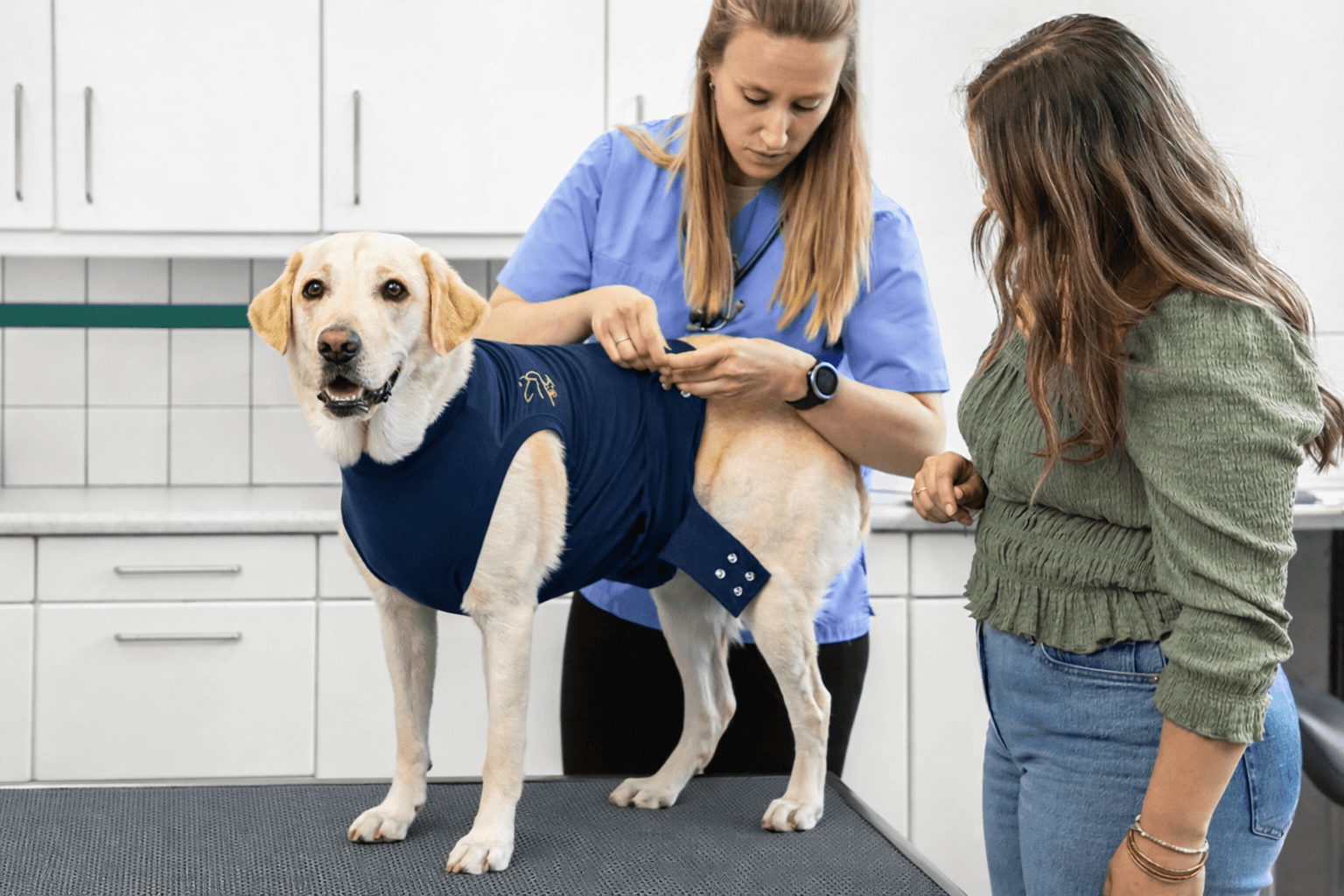
The Elizabethan collar has long been the default tool for preventing patients from interfering with wounds and surgical sites. But clinicians are increasingly recognizing that the cone itself may be contributing to poor patient welfare during a critical phase of healing.
The Problem: The E-Collar’s Impact on Patient Welfare
Fear, anxiety, and stress (FAS) do not end when a patient leaves the operating room. For many animals, the post-operative period is among the most psychologically challenging they will experience, and the Elizabethan collar frequently compounds that distress.
A 2020 study by Shenoda et al., published in the journal Animals, found that 77.4% of pet owners observed negative welfare effects in dogs and cats wearing an Elizabethan collar. Reported issues included difficulty moving, eating, drinking, and engaging in normal social behavior, often resulting in frustration, disorientation, and heightened FAS.
From a clinical standpoint, the cone also offers incomplete protection. It does not shield surgical sites from environmental contaminants, contact with other animals, or physical impact, leaving wounds more vulnerable than its widespread use might suggest. Elevated FAS combined with compromised wound protection can contribute to slower healing, increased recheck appointments, and a more difficult recovery trajectory for patients.
The Solution: MPS Recovery Wear as a Fear Free-Aligned Alternative
Protective recovery wear offers a clinically sound alternative that addresses both wound protection and patient wellbeing simultaneously. Rather than restricting a patient’s sensory environment and mobility, recovery garments allow animals to maintain natural posture, movement, and behavioral repertoire throughout the recovery period.
Patients who can eat, drink, rest, and move without restriction experience measurably lower FAS. Reduced emotional distress supports physiological recovery, promotes restorative sleep, and minimizes the behavioral complications that can follow difficult post-operative experiences.
Medical Pet Shirts (MPS) is the pioneer in developing protective recovery wear as an animal-friendly alternative to the traditional cone. Their products are designed to integrate seamlessly into daily life while supporting healing and emotional wellbeing during recovery. This aligns consistently with core Fear Free principles: emotional wellbeing is not a secondary consideration in recovery care. It is a clinical variable with direct implications for patient.
Clinical Application: What the Evidence Supports
Recovery wear is most effective when introduced at the point of care, ideally applied while the patient is still under anesthesia, and dispensed for continued use at home. Key clinical considerations include:
- Early introduction reduces acclimation stress. Patients that recover from anesthesia already wearing the garment adapt more readily than those fitted during the post-anesthesia arousal period.
- Home compliance improves significantly. E-collars are frequently removed by clients during feeding, sleeping, or in response to patient distress, creating unmonitored windows of wound exposure. Recovery wear remains in place across daily activities.
- Breathable, four-way stretch construction of MPS Recovery Wear supports natural resting positions, which are essential for restorative sleep and a key factor in post-operative healing.
- For behaviorally complex or FAS-prone patients, reducing post-operative distress can have a meaningful impact on recovery quality and long-term patient trust.
Extending Fear Free Care Beyond the Clinic
Fear Free Certified practices are well positioned to integrate recovery wear into standard post-operative protocols. Discharging patients in recovery wear allows the clinical team to extend evidence-based, low-stress care into the home environment, where veterinary oversight is limited and patient welfare depends heavily on client compliance.
Clients whose pets are discharged in recovery wear consistently report calmer animals, earlier return to normal eating, and faster behavioral recovery. For the practice, this translates to fewer urgent post-operative callbacks, reduced recheck volume driven by wound complications, and stronger client confidence in the discharge process.
When patients are more comfortable and compliant at home, post-operative recheck appointments are more productive, and the clinical team can be confident that the recovery protocol recommended at discharge is being followed.
About Medical Pet Shirts (MPS)
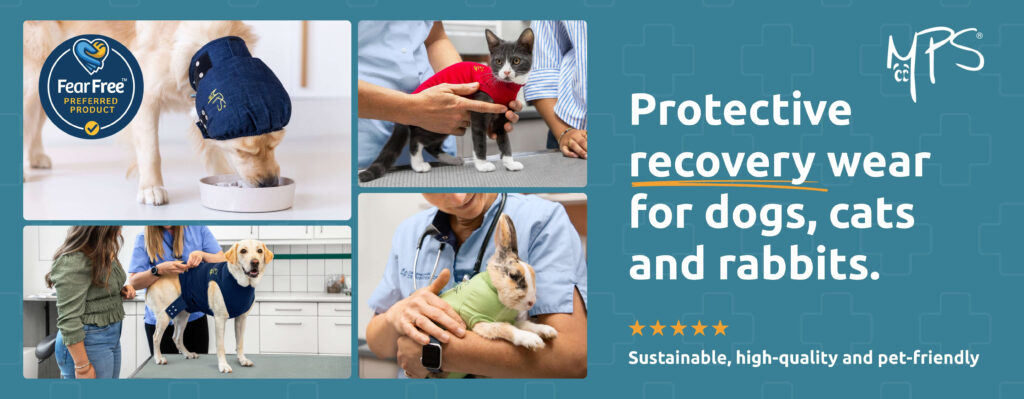
Medical Pet Shirts (MPS) pioneered protective recovery wear for companion animals and has been trusted by veterinary professionals worldwide since 2007. Every MPS product is co-developed with veterinarians and manufactured using high-quality, breathable cotton combined with four-way stretch Invista Lycra®, free from lead, toxic chemicals, and harmful substances.
All products are washable, reusable, and designed with anatomy-specific tailoring for dogs, cats, and rabbits. Soft Velcro® and press stud closures ensure a secure, comfortable fit without skin irritation.
The MPS recovery wear range includes:
- MPS Protective Pet Shirt — full-body torso protection for post-surgical recovery
- Front Leg Sleeves (Single & Double) — targeted coverage for front leg wounds, hot spots, bandages, and IV line protection
- MPS Top Shirt — multifunctional torso protection with light chest compression; accommodates monitoring devices
- Hind Leg Sleeves — comfortable protection for hind leg surgeries and dermatological conditions; designed for use with the MPS Top Shirt
- MPS Head Cover — gentle protection for ear surgery recovery and head or ear skin conditions
Explore the full MPS recovery wear range at www.medicalpetshirts.com.
Source
Shenoda, Y., Ward, M.P., McKeegan, D. & Fawcett, A. (2020). “The Cone of Shame”: Welfare Implications of Elizabethan Collar Use on Dogs and Cats as Reported by their Owners. Animals, 10(2), 333. https://dx.doi.org/10.3390%2Fani10020333