Blog Archives

Linda Lombardi

We know that music can affect human mood, but we don’t usually think about whether cats or dogs care if we play Mozart or Metallica. We probably should: Studies have shown that classical music reduces stress in dogs, and a study of cats under anesthesia showed differences in respiratory rate and pupillary diameter in response to classical, pop, and heavy metal music, with the lowest values for classical music and the highest for heavy metal.

Can we use these effects to our advantage? A recent study in the Journal of Feline Medicine and Surgery shows that music specially designed for cats has small but significant effects on cats undergoing a veterinary exam. It’s worth considering other aspects of the sound environment of your clinic as well.

Sounds Cats Like

Music for Cats by composer David Teie incorporates sounds intended to be familiar and comforting to cats, reminiscent of purring and suckling sounds, with frequencies similar to cat vocalization ranges. “However, he also layers in a melody of music that is pleasing to people as well,” says researcher Amanda Hampton of the School of Veterinary Medicine, Louisiana State University. “That part of the music, it seems that cats don’t really respond to, but that way we don’t get tired of it.”

Previous research in homes testing this music against silence and regular human classical music showed that cats seemed to prefer it. “They found that cats would approach the speakers playing cat music more, or go into postures that were more relaxed,” says Hampton.

Effects of Music

Building on this, Hampton and colleagues tested the effect of cat music during a veterinary exam. Twenty cats took part under all three conditions: cat music, classical music, and silence, with two weeks between tests. Cats were placed in an exam room for 10 minutes and then given a physical exam that included a blood draw. They were evaluated at three points with a standardized Cat Stress Score (CSS) based on body language and behavior–before the music began, during the exam, and after the exam–and with a Handling Score (HS) during the exam. Cats showed lower CSS and HS when listening to cat music compared to classical music and silence.

The blood drawn was also tested for neutrophil:lymphocyte ratio (NLR) as a measure of stress, but no differences were found. All cats had slightly elevated NLRs, which the authors suspect was an effect of the stress of travel to the clinic which had not had enough time to subside. “NLR goes up quickly but takes a little while to come back down, so what we could be seeing is the response they had to being put in the carrier or the car ride,” says Hampton.

How and When to Use Sound

Mikel Delgado, PhD, researcher at the School of Veterinary Medicine at UC Davis, thinks that this study shows that cat music might be a useful additional tool, but cautions against making too much of it.

“They found that the cats who were listening to cat music were easier to handle and had lower stress scores, but my caveat is that the differences between the groups were fairly small,” she says. “It wasn’t like this is a game changer, like if you play cat music everything else is going to be easy.”

Delgado says music is no substitute for making sure you’re doing everything else you can to reduce the stress of the veterinary experience for cats.

“If you’re not already using Fear Free or low-stress handling techniques, music is not going to fix your handling methods for cats,” she says. “If you don’t have your hospital set up for other aspects of reducing stress, like minimizing the time cats have to sit in the lobby, providing towels to cover carriers if owners don’t bring their own, making sure they have a non-slip surface to lay on while they’re being examined, music is not going to overcome those things.”

If you’re already doing all of that right, adding music might help, but also take the opportunity to think more broadly.

“The implications really have to do with what humans do when they are working with cats,” Delgado says. “People might not realize that what they’re doing and the kinds of noises they’re making might have implications for their patients.”

Consider the whole sound environment before you consider adding any kind of music.  “Here’s an experiment to do in your treatment room: they make all kinds of apps for your phone that tell you how loud your background noise is,” she says. “I think situational awareness could help a lot of practices improve their environment, because I think most of us are louder than we realize we are. People should consider, can they lower their voices? Can they do less banging and slamming?”

Shelters should think about these considerations as well. “Maybe people should use headphones if they want to listen to heavy metal music when they’re cleaning cages,” she says. If you have a loud PA system, think about whether you could use walkie-talkies or text messaging with phones on vibrate. “If you need Jim to come to the front desk, does everyone in the shelter need to hear that?” she says. “Try to refine your communication techniques to modify that ambient noise that animals that are already in a stressful environment are experiencing.”

If you’ve got all that under control and want to try cat music, some additional considerations are when and where to use it. The study had cats listen to the music for ten minutes before the exam, but further research is needed to know whether a shorter period will have the same effect. Be aware that there is as of yet no published research about how dogs react to it. And while the piece of cat music used in the study was specifically designed to be less repetitive and easier on human ears, like any music, not everyone will love it. “I actually find the music relaxing,” says Hampton. “But maybe you have it playing in a cat ward, or in the exam room while the cats are in there, but perhaps not throughout the whole hospital, so if you have a staff member who doesn’t like the music, they don’t have to listen to it all day.”

This article was reviewed/edited by board-certified veterinary behaviorist Dr. Kenneth Martin and/or veterinary technician specialist in behavior Debbie Martin, LVT.
Linda Lombardi writes about the animals that share our planet and our homes for magazines including The Bark, websites including National Geographic and Mongabay.com, and for the Associated Press. Her most recent book, co-authored with Deirdre Franklin, is The Pit Bull Life: A Dog Lover’s Companion.

Certified Practice Member Exclusive: Behavior Triage 101

Hear from one of the profession’s leading experts when it comes to delivering Fear Free care to even your most challenging patients! The higher the level of FAS a patient experiences, the more challenging it is to effectively and safely deliver veterinary care. With her years of experience practicing and teaching, Dr. Susan Barrett shares her unique perspectives on successfully managing these patients.

Taking the Stress Out of Veterinary Care for Clients & Patients Through Technology

Fear, anxiety, and stress should not be barriers for any pet or pet parent when they need care from their veterinary team or other care providers like groomers, walkers, trainers, or pet sitters. Technology is bringing the world as we know it closer and making our day to day lives easier and more convenient. BabelBark has new technology tools that make caring for our beloved pets easier and better. Tanya Cooper, the Director of Veterinary Sales at BabelBark and a Fear Free Certified Professional, explains how the veterinary care team can be unified with the care providers in a pet’s life for better sharing of information between visits and how BabelBark’s tools of remote patient monitoring and enhanced communications can allow you to provide high-quality care that considers the wellbeing of the pet’s body and mind.

Consider the Senses of the Fear Free Exam

Dr. Julie Reck explores the details involved in creating a Fear Free experience. She also discusses pre-appointment opportunities, easy-to-implement facility alterations, and exam room cleaning tips to make sure your patients have the best experience possible. Sponsored by Virox.

Fear Free

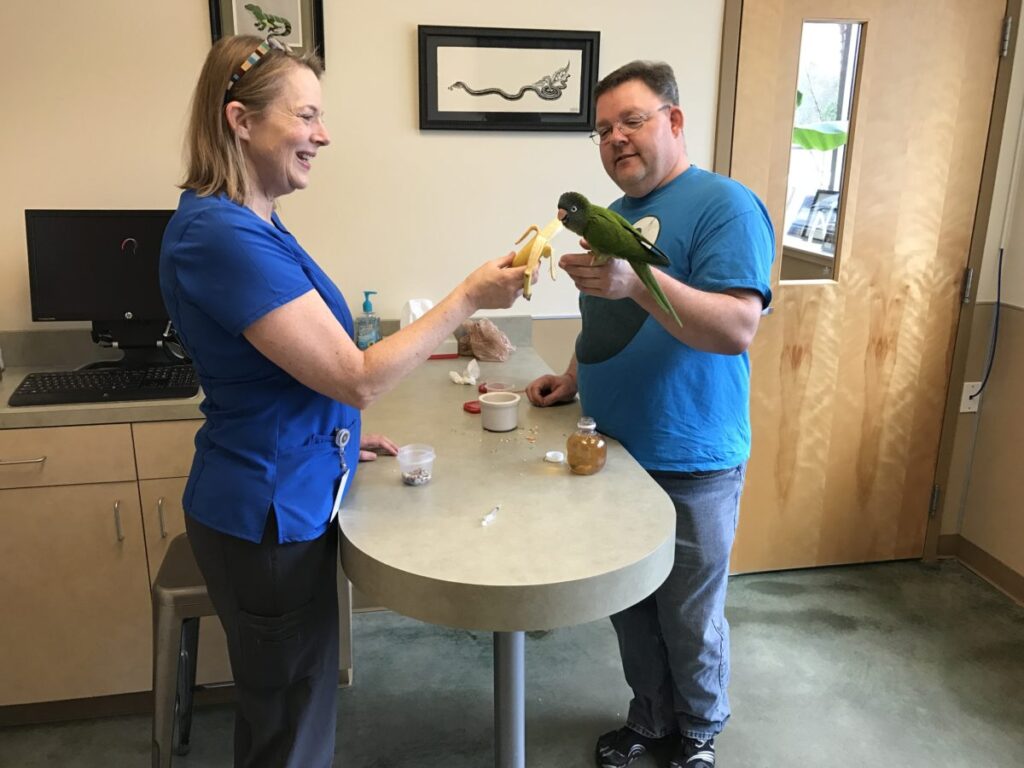
For Dr. Alicia McLaughlin, a key component of Fear Free success with her exotic-animal patients is to encourage clients to prioritize preparation for visits. She educates them on measures they can take at home to increase their pet’s comfort with care and encourages Fear Free fun visits to the hospital. In this way, she lays a calm, positive foundation for animals during care. Pets with mild concerns experience increased comfort and cooperation as trust is established.

In an ideal world, McLaughlin would provide a Fear Free foundation for her patients from the start. When she’s able to do so, Dr. Laughlin starts by accustoming the animal slowly to aspects of care, pairing these experiences with treats. At the same time, she teaches clients proper treat delivery and handling guidelines so they can practice at home and help prepare their pet for future care. Patients with already established FAS at the vet also benefit from conditioning to increase their comfort with handling at the veterinary clinic.

A major benefit for her patients on wellness plans is scheduling at least two Fear Free fun visits a year to positively condition the animal to care. During these practice visits, the animals come in for the equivalent of a treat party, taking treats from members of the staff to increase their tolerance to new people. Nothing stressful or coercive takes place. Instead, the animal is slowly desensitized to aspects of the clinic and the staff may work on developing some tricks to have a foundation for working with the pet during future visits.

The takeaway? Never underestimate the power of having a good time! Fun, positive experiences at home and at the hospital are a powerful force in helping to decrease the fear, anxiety, and stress animals experience during care and increase their happy participation.

This article was reviewed/edited by board-certified veterinary behaviorist Dr. Kenneth Martin and/or veterinary technician specialist in behavior Debbie Martin, LVT.
Linda Lombardi

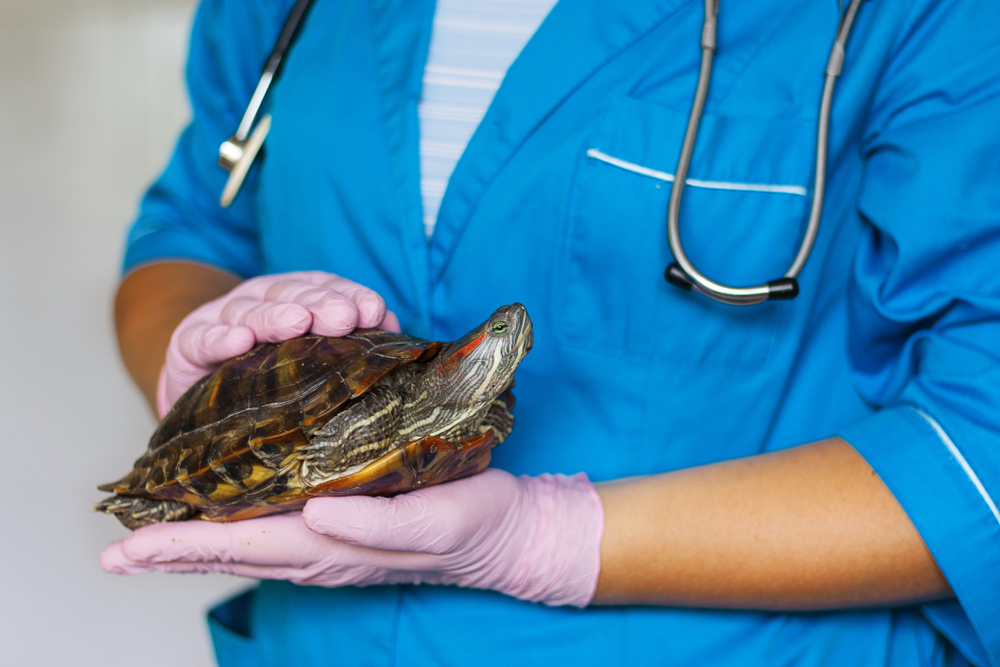
Low-stress handling techniques are better for all pets, but they’re particularly important for exotics.

“With exotics, you really want to minimize distress, because a lot of them when they’re sick are really prone to cardiovascular failure,” says Jörg Mayer, DVM, DABVP, associate professor of zoological medicine at the University of Georgia.

Exotics are more stressed by handling than domestic animals, and diagnostic imaging can present particular challenges since you need the animal to keep still. Anesthesia will do it, of course, but can present its own problems. Dr. Mayer uses a number of techniques that can eliminate the need for anesthesia in some cases while keeping animals calm and still.

Dark Means Calm

One simple trick is to take advantage of diurnal animals’ natural response to light and darkness, a technique Mayer often uses with birds.

“In the wild, you don’t see a goose flying at night,” he says, “To them, the moment the lights go off, that means ‘We should be resting.’”

Darkness, then, will calm waterfowl. The same is true for parrots.

“A lot of psittacines need a high intensity of light in order to see, so if you can just dim the room, they simmer right down,” he says. It doesn’t need to be pitch black, so you can get the benefit of this effect while still being able to see well enough to do the job.

With birds Mayer says often the image does not need to be perfect or detailed; for example, a scan to see if they’re eggbound or have swallowed something toxic such as a lead sinker. In this case, waterfowl may be laid on their backs in a darkened room and will hold still for long enough without distress. “It’s a very quick scan, so you don’t necessarily need the absolutely perfect position for them,” he says.

Parrots, on the other hand, would be extremely stressed by that position, but can often be scanned on a perch in a darkened room or, if they’re too sick to perch, in a box.

Benzodiazepines Have Multiple Benefits

For cases requiring more detailed imaging, Mayer says heavy sedation is often all that’s needed. Benzodiazepines have several beneficial effects. For an intelligent bird such as a parrot, it’s significant that these drugs suppress both anxiety and memory.

“With very smart birds like most of these psittacines, you do a couple of procedures and quickly they learn that the guy in the white coat is really bad news, because every time he comes he does something horrible to you,” he says. “So this is where these benzodiazepines, because they’re amnesic and anxiolytic, help significantly because there’s no learning effect, so this makes future exams less stressful.”

Small mammals such as rabbits may be too weak to move much when ill, but that doesn’t mean you should try to image them with no medication. “We don’t really want to handle them without any sedation, because that gets the blood pressure up and gets the heart rate up and that’s exactly what you don’t want,” Mayer says. “With a very sick or compromised patient, that can be enough to push them over the edge.”

Benzodiazepines are safe to use in the face of the possibility of cardiovascular complications. “The nice thing is that these have no real cardiovascular depressant effect, so we can use them in the most critically ill patients.”

Use Containers

Mayer has several strategies for containing different animals for imaging. Rabbits frequently need the head imaged to look for dental disease. He’ll contain the lightly sedated animal in a clear acrylic box surrounded and propped up by towels, which help them feel secure and calm.

“They like to feel like they can lean against something,” he says. “And in the clear acrylic box, it’s safe for the animal–even if they would want to walk off the table they can’t–and we can see the animal, so in case they are struggling we can intervene.”

Containers are also the best approach for aquatic animals, since imaging works through water. “Keeping the animal in the natural environment, like an amphibian or fish in water, is the least stressful, so you can do it and the animal doesn’t even know that something happened.”

Imaging a fish might not be an everyday event, but Mayer says he has done quite a few procedures on valuable fish like koi, such as radiographs to check the swim bladder or look for spine fractures.

“You can leave them in a container and shoot the x-rays through the water, or keep them in a plastic bag. That works really well and that means absolutely no restraint,” he says. “You just have to have a little bit of patience and use a smaller container so they don’t swim constantly left and right. Once they get used to it, you can just take a little time and take the radiograph once the fish is in the right position.”

Reptile Dos and Don’ts

With iguanas and other lizards, Mayer often takes advantage of a simple trick of physiology. “What you can do is put pressure on the eyeball, and that induces the vasovagal response,” he says. The heart rate and blood pressure come down and this calms them. “You don’t need to use drugs and they’re not stressing out because everything in their system is telling them to just relax.”

What you should not use, he says, is artificial cooling. “People say, ‘Just put them in the refrigerator and chill them down and they don’t move,” he says. “We don’t advocate this as an appropriate way to deal with these animals.”

It’s a misconception that that would be similar to what a reptile or amphibian would experience in nature. “Hibernation is a more complicated process,” he says. “The animal prepares for that–they stop eating, they empty the GI tract, it’s a gradual thing–they don’t suddenly find themselves in a refrigerator.”

Animals Hide Weakness

For any procedure, Mayer says, remember that all of these animals do feel pain and stress even if it’s not apparent. Not only are we less skilled at reading their signs, they are expert at concealing distress.

“That is hard-wired in them, so with exotics we have to be extra cautious,” he says. “The little dog has no problem limping into the vet clinic and showing that it’s lame, but the rabbit or bird know that if they do that, they’re going to be someone’s dinner.”

Mayer says that in a study testing effectiveness of a pain drug in iguanas, researchers found that behavior was different depending on whether someone was watching. “They noticed that when the iguana knows it’s being watched, it shows significantly less signs of pain, compared to when they used a camera to observe them,” he says. “That’s the prey animal’s instinct, to suppress any signs of weakness.”

This article was reviewed/edited by board-certified veterinary behaviorist Dr. Kenneth Martin and/or veterinary technician specialist in behavior Debbie Martin, LVT.
Susan M. Ewing

Both dogs and cats rely heavily on scent to interpret their surroundings while humans rely more on sight. Blindfold a human just before a visit to a doctor or emergency room, and the stress level would be higher than if the person could see, but most people would at least be able to hear and understand what was happening in the way of treatment. We can’t explain to our pets what is happening, or why they are in a hospital. Take away their sense of smell and you’ve taken away their ability to interpret their world, adding more stress to an already stressful situation. By understanding the effects of scents, you can help them stay calm.

Ban Bleach

No one intentionally stops a dog or cat from smelling, but disinfectants can do just that. Bleach and other disinfectants with a harsh odor can make a pet “nose blind,” creating stress when they try, and fail, to learn about their environment. In one study, “Minimising Stress for Patients in the Veterinary Hospital: Why It Is Important and What Can be Done About It” (published online in Veterinary Sciences, April 13, 2017), lead author Janice K.F. Lloyd cites Karen L. Overall, VMD, in the Manual of Behavioral Medicine for Dogs and Cats: “A solution of bleach, even as low as 1 percent, can destroy olfactory neurones, resulting in a loss of information and heightening anxiety.”

While disinfecting is essential, using one that doesn’t have a harsh odor may help to lessen the negative effect on a pet’s nose. At Applebrook Animal Hospital in Ooltewah, Tennessee, Kathryn Primm, DVM, uses Rescue disinfectant, a hydrogen peroxide product with little odor, which also dries quickly.

Scents From Other Animals

When pets are able to smell, identifying stress in other animals can increase their own level of stress. Secondarily, humans may also experience some stress when smelling clinic odors. Most pets are quick to respond to their owners’ emotions, and if that emotion is stress, it’s going to affect the pet.

“When we have bad odors suddenly, like anal glands,” says Dr. Primm, “it is critical that they be cleaned and deodorized completely, or they will cause fear in all the pets that perceive them.” For those kinds of odors, Primm uses K.O.E. (Kennel Odor Eliminator) by Thornell, a product that quickly eliminates odors and comes in a concentrate, a spray, and individual wipes.

Sometimes, when possible, opening a window can help. Many pets will become distracted from their environment as they process scents from outdoors. Synthetic pheromones may also help to calm a dog or cat. Plug-in pheromone diffusers may reduce stress in a waiting room, and doctors or technicians can spray their clothes with the pheromones. Use diffusers or sprays with caution around birds and fish.

Many people appreciate the calming effects of lavender and chamomile, and both of these scents seem to calm pets, too. Be careful how you use them, though. Certain diffused essential oils can cause some respiratory distress in cats so use them with caution, and alert clients to the risks of active diffusers in the home to pets.

With so many pets depending on their noses for information, it makes sense to pay attention to scents.

This article was reviewed/edited by board-certified veterinary behaviorist Dr. Kenneth Martin and/or veterinary technician specialist in behavior Debbie Martin, LVT.
Reducing Dog Bites by Understanding the Secret Language of Dogs

Dog bites and injury to veterinarians, staff, and pet professionals are often considered an occupational hazard. Many of the situations that may result in a dog bite can be prevented by understanding the language and emotions of dogs.

Celebrity dog trainer and author Victoria Stilwell discusses dog body language, behavior, and how to safely interact with dogs as part of National Dog Bite Prevention Week.

Stilwell is joined by State Farm Brand Specialist Heather Paul, who discusses dog bite insurance claims data for 2018, dog bite liability, and how the insurance company is working to reduce dog-related injuries as a member of the Dog Bite Prevention Coalition.

Sponsored by State Farm

By Amy Shojai, CABC, Fear Free Certified® Professional
Pet owners may object to having their animals “taken to the back.” Here’s what to consider when deciding whether it’s necessary.

Jill Breitner, a former vet tech and Fear Free certified professional and dog trainer, frequently writes about pet issues. She has also trained vet techs on low-stress handling techniques. When her 8.5-pound dog Timber recently ate a guest’s dark chocolate candy bar, they hurried to the emergency clinic.

As vitals were taken, Breitner used Fear Free techniques to restrain Timber and even talked with the veterinarian about the program. “I asked to be in the room for the injection to induce vomiting,” Breitner says. The vet pushed to take Timber “to the back” for immediate treatment instead, arguing that Breitner might have to wait an hour for treatment if she insisted on being present. “That made no sense to me,” Breitner says.

After she pressed for an explanation, the upset vet walked out. Anxious to get Timber the care she needed, Breitner threatened to write about her bad experience. “Within three minutes, the veterinarian and a tech were back in the exam room with the drug injection to induce vomiting,” Breitner says. Within two minutes, Timber brought up the chocolate, wrapper and all.

Why Pet Parents Object

There may be good reasons for treating patients “in the back” but many pet parents object and have valid concerns. For Fear Free practices, it is incumbent to acknowledge these concerns, provide explanations, and perhaps take a closer look at ways to reduce fear, anxiety, and stress in both pets and pet parents.

Pets are calmer. Many veterinarians believe pets act calmer without the owner present. In some instances, this is true. Yowling cats fall silent, and struggling pups go limp. Others argue, however, that certain pets seem calm only because they’ve shut down out of fear. Motionless doesn’t equal fear free.

At the same time, very protective or sensitive dogs may become more upset by their owner’s emotional state. Veterinarians must be able to evaluate each individual situation.

Restraint issues. It’s true that not all pet parents know how to safely and effectively restrain pets in a stress-free manner. There may also be liability issues if someone is bitten.

Breitner says, “It would be appropriate in an emergency, life or death situation needing immediate attention. Still parents can ask that the dog be sedated in their arms, before they bring them to the back, even at this time of emergency. Pets feel safer and less fearful with their parents.”

When concerned about proper restraint, pet parents can still be present perhaps by holding a lickable treat while the staff restrains and performs the treatment. Teach clients how to distract, gently restrain, and restrain animals for less stressful future visits for all involved.

Staff discomfort. Having the pet parent present may raise the practitioner’s FAS level. It may take longer to perform a blood draw, for example, when the owner inadvertently interferes. Maybe the vet worries about getting the perfect needle stick with a non-professional audience. As a former vet tech, I’ve assisted in many surgical procedures, but it’s different when the patient is your own animal. Very few clients have the temperament to witness surgery on their own pets, but may still be eager to be with them up until sedation takes effect.

Equipment access. The standard clinic design can make the back a much more convenient location for treatment. Staff has ready access to proper lighting, sinks, supplies, emergency equipment, and more.

Exam rooms that are tiny and awkward to maneuver in can make large dogs feel trapped. Open spaces of “the back” reduce this stress. There may also be insurance concerns that prevent non-clinic personnel from entering certain areas. Radiographs, for instance, require protective gear and exposure data records.

Habit. The trend to take pets to the back appears to be a uniquely American veterinary habit. If you’ve always done it that way, it’s time to explore other options. In fact, some pets do much better with their owners present. Cats and dogs may be given vaccines while on a pet parent’s lap as a treat is offered, or even in the waiting room in certain instances.

How to Make it Work

Communication is key, as is mutual respect. Pet parents have become more educated and are learning to be better advocates, Breitner says. Nobody wants to resort to threats to make themselves heard, and it’s unfortunate when veterinarians feel put on the defensive. Find out what clients want and expect.

Ask if a cat or dog does better or worse with them present. Is the client phobic about seeing needles or blood, or so upset they’re not helping the situation? Does someone have special skills—a dog trainer, perhaps? Are they familiar with low-stress handling?

Breitner agrees that communication goes both ways. She suggests that pet parents plan for time to wait or offer to reschedule during a less busy time to make it easier to stay in the room with the animal.

When your professional opinion means taking the pet “to the back” offers better treatment options and less stress, explain why. Think about offering the option to come to the back with the animal.

“When vets listen better, they can communicate better,” Breitner says. “This relationship of trust between parent, pet, and vet goes a long way toward ensuring that their patients and clients feel safe while in the clinic.”

Every pet parent and animal is different. Being inflexible about your procedures may actually increase FAS in the animal and the owners—and you. It may also hurt your practice when clients choose to stay with their animals and walk away from your practice.

This article was reviewed/edited by board-certified veterinary behaviorist Dr. Kenneth Martin and/or veterinary technician specialist in behavior Debbie Martin, LVT.