Blog Archives

We can’t be a Fear Free Certified Practice because…How many times have you thought this?

We don’t like to be negative, but, well, you’re wrong. Here are the top 10 myths about the difficulty of earning Fear Free Practice Certification and what you might be surprised to learn about getting your practice certified.

  1. We don’t have separate cat and dog entrances.

Species-specific entrances are not required. If you have them, that is great! There is an optional standard for which you will score points for having them, but they are not a requirement.

  1. We don’t have a designated cat room.

A designated cat room is a plus, but it’s not a must. You can earn points for having one, but you won’t lose points for not having one.

  1. We can’t afford to pay for everyone’s memberships on top of Practice Certification.

Once a practice is certified, you pay only the annual Practice Certification dues; you no longer pay for individual members.

  1. We have to repaint the practice in Fear Free colors.

We don’t expect you to! If you are already planning to refresh the practice, it makes sense to pick some Fear Free colors, but it’s not a requirement.

  1. We are a Fear Free Practice already; every team member is certified.

Congratulations on getting everyone certified! However, to be an official Fear Free Certified Practice, you must complete the Practice Certification process. Chances are you will save money!

  1. Not everyone in the practice is Fear Free Certified.

To be eligible for Practice Certification, only 25 percent of your staff must be Fear Free CertifiedÒ with an active membership.

  1. The standards aren’t available to review prior to applying.

Members can download and begin implementing the Standards and Supporting Examples at any time.

  1. We don’t have room for separate dog and cat waiting areas.

Separate waiting areas are not required, though visual blocks are encouraged if clients and patients are unable to wait outside or be moved straight into an exam room.

  1. Our scrubs aren’t in “Fear Free-approved” colors.

Team members of Fear Free Certified Practices are not required to wear any specific-colored scrubs or lab coats.

  1. The process is too difficult.

Practice Certification is a commitment, but it is worth it.

For more information, learn more at fearfreepets.com/practice-certification.

This article was reviewed/edited by board-certified veterinary behaviorist Dr. Kenneth Martin and/or veterinary technician specialist in behavior Debbie Martin, LVT.


 

Our Practice Became Fear Free Certified, So Can Yours!

In this webinar, Monique Feyrecilde, BA, LVT, VTS (Behavior), will tell the story of her hospital’s journey through Practice Certification from start to finish. Learn where to start, how to create an SOP and referral community, what to expect during your onsite visit, and more.

Sponsored by Virox.

Fear Free on a Budget

Listen to Practice Certification Manager Dr. Rachel Abrams for tips on how many Practice Certification standards can be met with little to no strain on your budget.

Valarie V. Tynes, DVM, DACVB, DACAW

Do you still believe that a puppy should have all her vaccinations before ever meeting another dog? Do you think the safest place for every new puppy is within his own home until after the last set of vaccinations? If so, you may be running the risk of the puppy’s early death due to behavior problems.

Studies have demonstrated that behavior problems likely result in more pet deaths than any other single cause.1, 2,3 A properly run puppy socialization class should not put your patients at any increased risk of communicable disease.4

If you do not have a reliable, safe place to refer your clients to for puppy classes, then consider offering them at your own clinic. Puppy classes are fun and, when held at your clinic, allow you and your staff to reap the benefits. Here are four reasons to consider adding puppy classes to your practice’s programs:

1. Proper socialization is critical to the puppy’s proper development and the window for this period of development is only open until about 14-16 weeks. After that time, puppies are not as able to learn to cope with novelty and develop new relationships with other individuals.

Your clinic is a safe place for this experience to happen because:

  • You can sanitize the surfaces puppies will contact.
  • You can be certain that all puppies who attend have had at least one vaccination several days prior to their visit.
  • You can give each puppy a brief exam and send puppies home if they appear to be sick.

2. Puppy classes help create more cooperative patients. When puppies come to your clinic once a week for a few weeks, and the only thing that happens there is they get to play with other puppies, meet some new people, see some strange things and get lots of treats, they learn that there is nothing scary about the vet clinic.

Part of at least one puppy class session should involve demonstrating to pet owners how to handle their new puppy’s ears, toes, tail, and other body parts in a way that mimic handling for veterinary and grooming procedures. When this is done while giving treats, puppies learn that this type of handling is routine and “no big deal.”

You can help set the puppy up for success in advance by recommending the owner use an Adaptil Junior collar. This is a collar impregnated with dog appeasing pheromone, the same pheromone that mother dogs release during the period of time when they are nursing puppies. Numerous placebo-controlled studies have demonstrated its ability to help decrease signs of fear and anxiety in many situations.5,6,7 When placed on puppies during their critical period for socialization, the collar has been proven to help with the socialization process.8 Puppies between 8 and 16 weeks of age who wore an Adaptil collar for just 30 days while attending a puppy class showed signs of being better socialized 1, 3, and 6 months later than puppies who wore a placebo collar.9

3. Puppy classes will bond clients to your practice. When clients see how much you care about their puppy’s healthy development and good behavior, they will appreciate your commitment to their puppy’s overall health.

When they see how happy their puppy is to return to your clinic time and time again because he only has good memories associated with the visit, they will have no reason to ever consider going to another practice.

4. Puppy classes provide an added revenue stream. They do not have to be managed by the veterinarian. It is very possible that you have a staff member who is interested in learning more about how to do this and would love the opportunity to take on such a valuable and rewarding project. There are several excellent resources available for learning how to teach a puppy class and with some training and practice most anyone can add puppy classes to their clinic’s list of services. One of the best is the Puppy Start Right for Instructors Course, which offers a discount to Fear Free Certified Professionals using code FEARFREEPSRI.

This article was reviewed/edited by board-certified veterinary behaviorist Dr. Kenneth Martin and/or veterinary technician specialist in behavior Debbie Martin, LVT.

References

This article was brought to you in collaboration with our friends at Ceva.
  1. Dolan ED, Scotto J, Slater M, et al. Risk factors for dog relinquishment to a Los Angeles municipal animal shelter. Animals (Basel) 2015; 5: 1311-1328.
  2. Dreschel NA. The effects of fear and anxiety on health and lifespan in pet dogs. Appl Anim Behav Sci 2010;125: 157- 162.
  3. Houpt KA, Honig SU, Reisner IR, Breaking the human-companion animal bond. J Am Vet Med Assoc 1996; 208: 1653-1659.
  4. Stepita ME, Bain MJ, Kass PH. Frequency of CPV Infection in Vaccinated Puppies that Attended Puppy Socialization Classes. J Am Anim Hosp Assoc 2013; 49:95-100.
  5. Pageat P, Gaultier E. Current research in canine and feline pheromones. Vet Clin North Am Small Anim Pract 2003: 33;187-211.
  6. Mills DS, Ramos D, Esteller MG, et al. A triple blind placebo controlled AABS investigation into the assessment of the effect of Dof Appeasing Pheromone (DAP) on anxiety related behaviour of problem dogs in the veterinary clinic. 2006;98:114-126.
  7. Gaultier E, Bonnafous L, Vienet-Lague, et al. Efficacy of dog-appeasing pheromones in reducing stress associated with social isolation in newly adopted puppies. Vet Rec 2008;163:73-80.
  8. Gaultier E, Bonnafous L, Vienet-Lague, et al. Efficacy of dog appeasing pheromones in reducing behavours associated with fear of unfamiliar people and new surroundings in newly adopted puppies. Vet Rec 2009;164:708-714.
  9. Effects of dog appeasing pheromone on anxiety and fear in puppies during training and on long term socialization: Denenberg S. & Landsberg G.M. JAVMA, (2008) 233;12
By David Hustead, DVM, M.P.H.Balancing the importance of necessary care with the emotional care of pets in the Fear Free clinic can be challenging. There are countless situations, from the dog hit by a car to an outbreak or emerging disease, where the timeliness of medical care seems to outweigh the need to take things slowly and minimize fear, anxiety, and stress (FAS) in the pet.

Consider Lyme disease. While we as well as our clients may be reluctant to add another injection to a dog’s prevention program, new information about Lyme disease’s risks, transmission, and prevalence provides a compelling reason to reconsider that reluctance. What information do we need to balance those risks with the benefit of prevention?

The risk of Lyme disease is increasing, changing, and spreading.

It’s important to understand that what we know about the risk of Lyme disease may be outdated. There is increasing evidence the risks of Lyme disease continue to expand for both people and dogs in the U.S. The CDC reports that vector-borne disease has more than doubled from 2004 to 2016. Of this, human Lyme disease accounts for 82 percent.  Additionally, during this period, nine new vector-borne diseases were first observed in the U.S.1

The risk to dogs is also increasing in areas not normally considered at-risk for Lyme disease. According to the Companion Animal Parasite Council (CAPC), while the Northeastern states, upper Midwest, and Pacific Northwest still have the majority of canine Lyme cases, dogs exposed to Borrelia burgdorferi continue to be discovered outside of those areas. Their biggest areas of concern for increases in canine Lyme disease in 2019 include eastern Pennsylvania, eastern Ohio and Kentucky, West Virginia, western Virginia and North Carolina. Northwestern Minnesota and some areas in Indiana are also expected to see higher than average seroprevalence in 2019.

Other longstanding beliefs about transmission may now be outdated. For instance, many of us think the risk of disease transmission from exposure to the Lyme disease tick vector I. scapularis is greatest in the spring, but the CDC says the risk of exposure to these ticks is really greatest throughout spring, summer, and fall. In addition, adult ticks can be active at any time of the year when the temperature is above freezing.3

Consider the critical role of the veterinarian.

It’s easy to see that Lyme disease prevention is a critical issue to raise with clients, and one that requires the expertise of a veterinarian. There is no replacing the combination of client education about the disease and exposure risk reduction and proper vector control, including systemic or topical insecticides and vaccination. But some Fear Free veterinarians are hesitant to add a Lyme vaccine to their protocols, thinking it means yet another needle stick and more vaccine volume administered. The good news for Fear Free Certified practitioners is that, for the majority of your patients, you can add a Lyme vaccine without adding needle sticks or more volume.

For example, dogs needing only a Lyme vaccine can receive Elanco’s TruCan™ Ultra Lyme. TruCan™ Ultra Lyme has only half the volume of most vaccines. While half the volume may not seem like a big deal to you, clients interested in Fear Free techniques will appreciate a reduced-volume vaccine. Let them know you have a Lyme vaccine that offers the same protection but with half the dose volume.

Elanco has options for dogs who need distemper and parvo protection as well as those at risk of Leptospiroris, another disease with changing risk. TruCan™ Lyme L-4 + TruCan™ DAPPi+Lyme L-4, and TruCan™ DAPPi+Lyme CL-4  all provide protection with one needle stick and the same vaccine volume as a 4-way Lepto-only vaccine.

TruCan, Elanco, and the diagonal bar logo are trademarks of Elanco or its affiliates.

©2023 Elanco or its affiliates. PM-US-23-0569

References

    1. 1 Rosenberg, R. Et al. Vital Signs: Trends in Reported Vector Borne Disease Cases US and Territories 2004-2016. MMR Weekly 67 (17) May 4 2018.
      2 Yabsley, M. Despite the Availability of Preventative Measures—the Risk of Vector-Borne Disease Remains High in 2019. CAPC website accessed on 16 May 2019 at  https://capcvet.org/articles/despite-the-availability-of-preventative-measures-the-risk-of-vector-borne-disease-remains-high./
    2. 3 CDC accessed Geographic distribution of ticks that bite humans. Accessed at:https://www.cdc.gov/ticks/geographic_distribution.html

This article is brought to you in collaboration with our friends at Elanco.

Making the Most Out of Your PVQ & EMR

If you have struggled to implement the Fear Free Pre-Visit Questionnaire and Emotional Medical Record, you are not alone! This webinar reviews the updated templates and provide implementation options to make the most out of these integral Fear Free tools.

Consider the Senses of the Fear Free Exam

Dr. Julie Reck explores the details involved in creating a Fear Free experience. She also discusses pre-appointment opportunities, easy-to-implement facility alterations, and exam room cleaning tips to make sure your patients have the best experience possible. Sponsored by Virox.

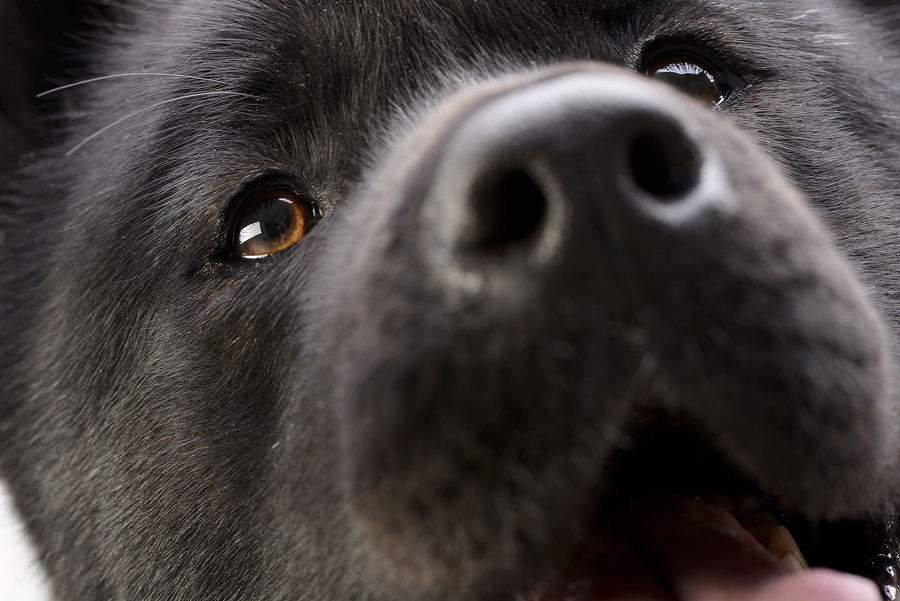
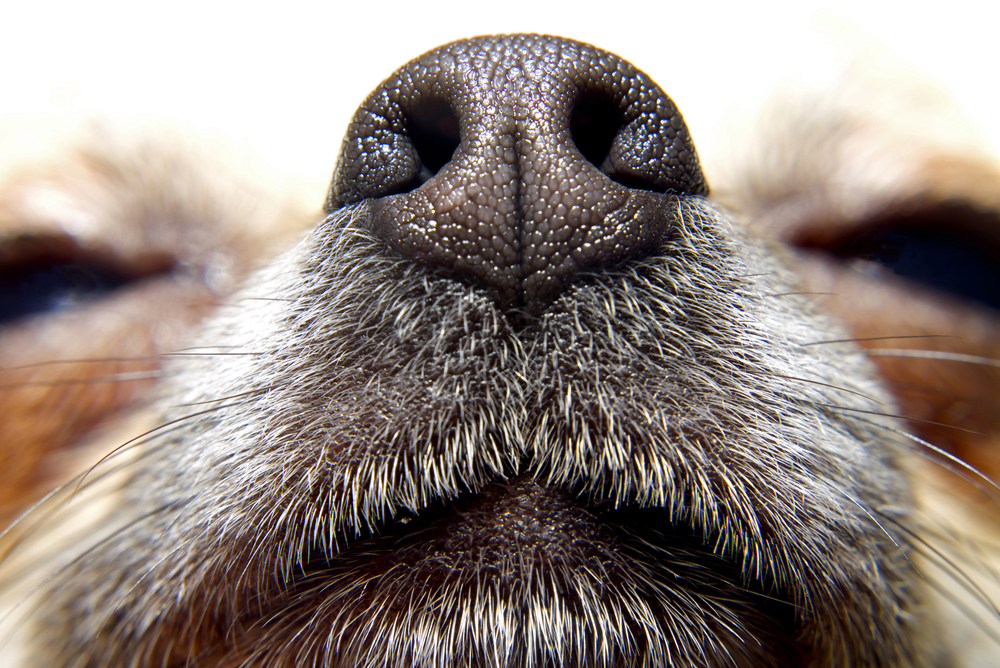
Akita nose|Akita nose
Until recently, disinfection was considered to be a necessary evil, killing infectious microbes at the cost of exposing pets and people to harsh chemical odors. Disinfectants with unpronounceable names, such as sodium hypochlorite (bleach), quaternary ammonium compounds (QUATs), and potassium peroxymonosulfate, may have been the industry standard for a long time, but just like any other aspect of animal health, we always strive to do better for our pets and create a more positive experience for them in and out of the vet clinic.Accelerated Hydrogen Peroxide® (AHP®) technology had been used extensively in human healthcare to kill some of the toughest pathogens while putting patient safety at the forefront. When Virox Animal Health saw the same need for veterinary care, they knew that AHP would be a perfect fit to help protect people and animals while reducing fear, stress, and anxiety in a veterinary hospital. That led to the creating of Rescue, a disinfectant specifically tailored to protect companion animals and the people who care for them.

While traditional disinfectants have been a trade-off between safety and efficacy, Rescue eliminates the need to make this choice. Rescue’s safety profile, coupled with the lack of harsh chemical odor, realistic contact times, and superior cleaning powers, can help your facility along its journey in becoming Fear Free.

Reducing FAS in the disinfection process doesn’t, however, mean a loss of efficacy. AHP disinfection covers all the bases in a Fear Free approach to animal health. These include:

1. Other chemicals like bleach and QUATs can be harsh. We all know that from experience, but we might not realize that bleach can cause serious skin and eye irritation and respiratory illness1. QUATs, although safer than bleach, have been associated with asthma and can also be irritating to the eyes and skin2. Rescue kills those tough-to-kill pathogens, but its gentle formulation is non-toxic and non-irritating for the safety of your patients, staff, and clients.

2. Bleach and QUATs can often take up to 10 minutes of contact time to kill pathogens, which can really slow down your practice. When was the last time you waited 10 minutes for a disinfectant to do its job before wiping it off? Not to mention the fact that these chemicals may not stay wet on the surface for long enough to meet this contact time. Rescue has realistic contact times, ranging from 30 seconds to 5 minutes. Furthermore, its wetting agents help make sure that it stays wet long enough to disinfect. This means less product used, less waiting between patients, and a more efficient practice overall.

3. Rescue has broad-spectrum bactericidal and viricidal claims against the vast majority of pathogens we encounter in the veterinary setting, so you can be confident that even the toughest pathogens don’t stand a chance. AHP also has none of the odors associated with chemical disinfection, preventing additional stress to our patients during their visit.

4. Cleaning power. Many older disinfectant chemistries have been poor cleaners and were only able to kill pathogens on surfaces that had been pre-cleaned with soap and water. AHP contains powerful detergents, which break down soil and allow it to work in the presence of organic material. This brings cleaning and disinfection into one easy step, saving valuable time and resources along the way. Rescue is also a natural odor eliminator, which may help get rid of some of the smells that can contribute to fear, stress, and anxiety within your clinic.

References

      1. 1. Acute Antimicrobial Pesticide-Related Illnesses Among Workers in Health Care Facilities – California, Louisiana, Michigan, and Texas, 2002-2007. CDC Morbidity and Mortality Weekly Report. May 14, 2010.
        2. Omidbakhsh N, Sattar SA. (2006). Broad-spectrum microbicidal activity, toxicologic assessment, and materials compatibility of a new generation of accelerated hydrogen peroxide-based environmental surface disinfectant. AJIC 34(5), 251-257.

This article is brought to you in collaboration with our friends at Virox.This article is brought to you in collaboration with our friends at Virox/Rescue Disinfectants.

Susan M. Ewing

Both dogs and cats rely heavily on scent to interpret their surroundings while humans rely more on sight. Blindfold a human just before a visit to a doctor or emergency room, and the stress level would be higher than if the person could see, but most people would at least be able to hear and understand what was happening in the way of treatment. We can’t explain to our pets what is happening, or why they are in a hospital. Take away their sense of smell and you’ve taken away their ability to interpret their world, adding more stress to an already stressful situation. By understanding the effects of scents, you can help them stay calm.

Ban Bleach

No one intentionally stops a dog or cat from smelling, but disinfectants can do just that. Bleach and other disinfectants with a harsh odor can make a pet “nose blind,” creating stress when they try, and fail, to learn about their environment. In one study, “Minimising Stress for Patients in the Veterinary Hospital: Why It Is Important and What Can be Done About It” (published online in Veterinary Sciences, April 13, 2017), lead author Janice K.F. Lloyd cites Karen L. Overall, VMD, in the Manual of Behavioral Medicine for Dogs and Cats: “A solution of bleach, even as low as 1 percent, can destroy olfactory neurones, resulting in a loss of information and heightening anxiety.”

While disinfecting is essential, using one that doesn’t have a harsh odor may help to lessen the negative effect on a pet’s nose. At Applebrook Animal Hospital in Ooltewah, Tennessee, Kathryn Primm, DVM, uses Rescue disinfectant, a hydrogen peroxide product with little odor, which also dries quickly.

Scents From Other Animals

When pets are able to smell, identifying stress in other animals can increase their own level of stress. Secondarily, humans may also experience some stress when smelling clinic odors. Most pets are quick to respond to their owners’ emotions, and if that emotion is stress, it’s going to affect the pet.

“When we have bad odors suddenly, like anal glands,” says Dr. Primm, “it is critical that they be cleaned and deodorized completely, or they will cause fear in all the pets that perceive them.” For those kinds of odors, Primm uses K.O.E. (Kennel Odor Eliminator) by Thornell, a product that quickly eliminates odors and comes in a concentrate, a spray, and individual wipes.

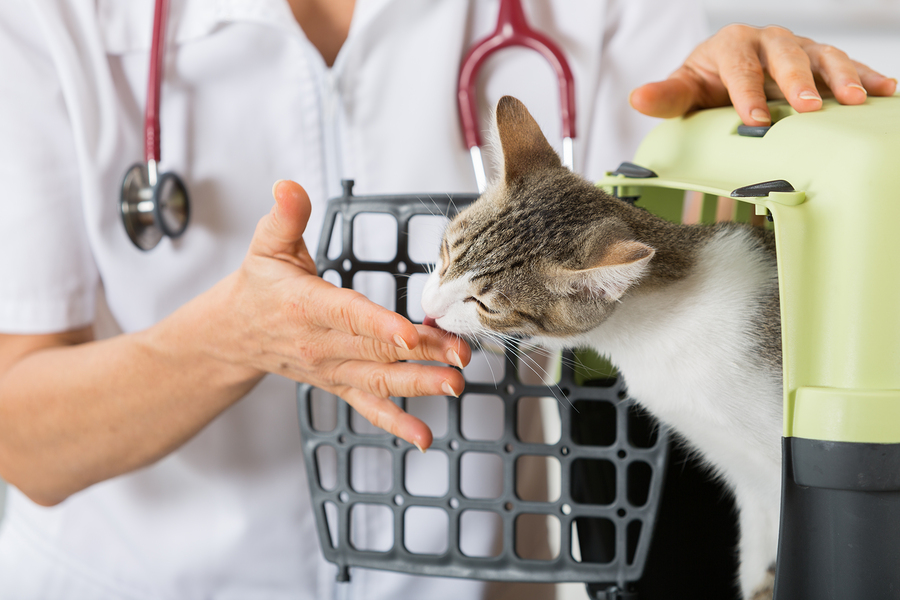
Sometimes, when possible, opening a window can help. Many pets will become distracted from their environment as they process scents from outdoors. Synthetic pheromones may also help to calm a dog or cat. Plug-in pheromone diffusers may reduce stress in a waiting room, and doctors or technicians can spray their clothes with the pheromones. Use diffusers or sprays with caution around birds and fish.

Many people appreciate the calming effects of lavender and chamomile, and both of these scents seem to calm pets, too. Be careful how you use them, though. Certain diffused essential oils can cause some respiratory distress in cats so use them with caution, and alert clients to the risks of active diffusers in the home to pets.

With so many pets depending on their noses for information, it makes sense to pay attention to scents.

This article was reviewed/edited by board-certified veterinary behaviorist Dr. Kenneth Martin and/or veterinary technician specialist in behavior Debbie Martin, LVT.