Blog Archives

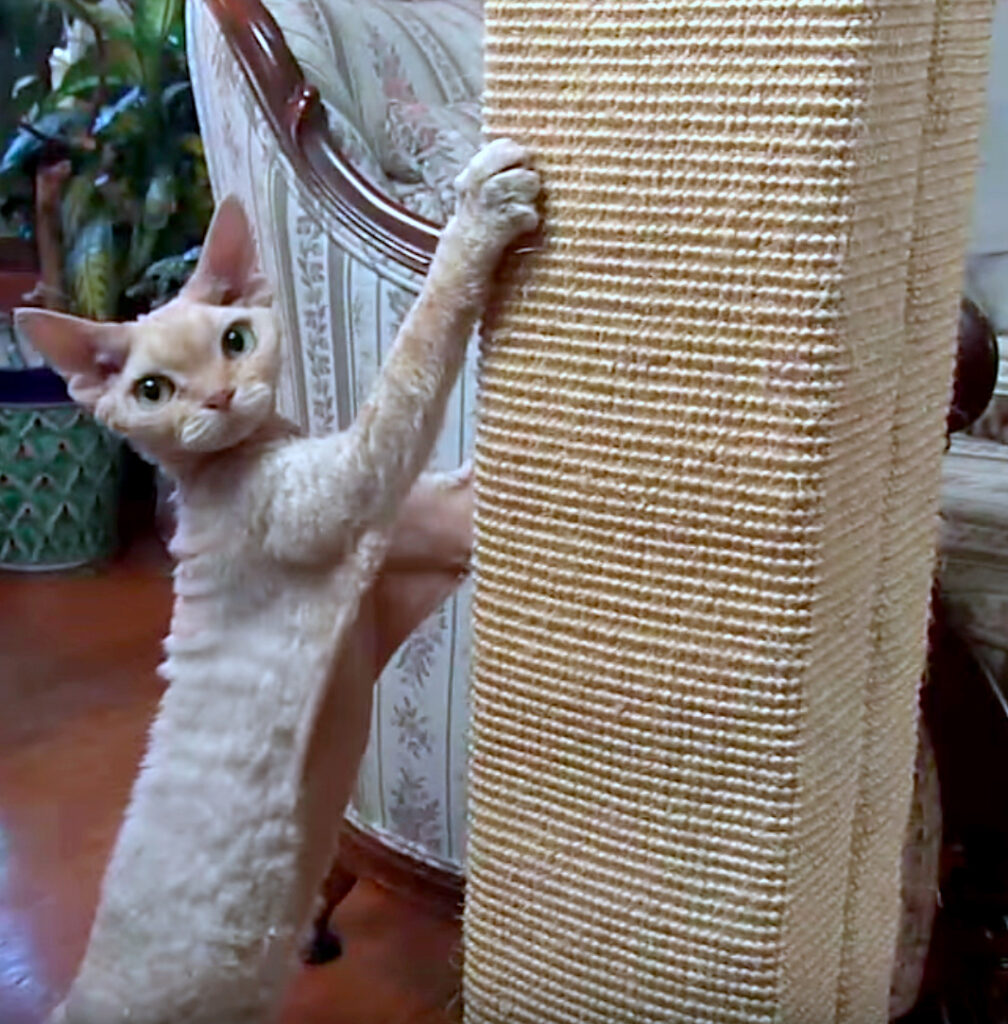
Steve DaleRoxy’s arthritis had worsened. Because of the 18.5-year-old Devon Rex cat’s history of gastrointestinal issues, her veterinarian and owners had few pharmaceutical options for managing her pain.

For clients, seeing a pet in pain is the worst. Cats are especially adept at masking pain, so when they actually show they are in pain, they are really hurting. That’s where we were with Roxy.

Gabapentin had been prescribed, but all it did was increase her catnap time. I consulted an expert. “Let me hold Roxy’s paw and we’ll slowly increase the dosage,” said Robin Downing, DVM, internationally renowned for her knowledge about pain in pets.

Dr. Downing consulted with my Chicago, Illinois-based primary care practitioner Natalie Marks, DVM, who welcomed Dr. Downing’s contribution.

Downing gradually upped the dose of the gabapentin, and her persistent yet measured effort appeared to bring results without an accompanying significant primary side effect of the drug: drowsiness.

“Multimodal is the best approach for osteoarthritis for nearly all cats,” Downing says. To that end, we began to employ a tool called an Assisi Loop, which uses targeted pulsed electromagnetic field technology to treat pain and decrease inflammation. That not only benefited Roxy’s osteoarthritis, but also had the potential to aid her GI issues. In addition, for arthritis I give her injections of Adequan.

That was in 2018 and Roxy clearly benefited from the collaboration between Drs. Downing and Marks and the multimodal approach. However, about a year ago, I noted that Roxy appeared to be struggling a tad more and asked Dr. Marks for further advice.

“The struggle we have as small-animal practitioners is that we only have certain pain medications that are safe and approved for cats as they age, and many are contraindicated for cats with other conditions,” Marks said. “Our goal for our patients is for them to have the best quality of life and to be as pain free as possible every day. The beauty of veterinary medicine today is that we have a variety of integrative therapies which are readily available, and I thought about medical massage therapy. And technology can deliver a way to demonstrate options as never before.”

She suggested I contact Rosemary LoGiudice, DVM, who is boarded in veterinary rehabilitation medicine and practices in Hanover Park, Illinois. She is at least an hour from my home, not to mention this was all happening at the height of the pandemic.

Marks said, “I think this may be the perfect use of telehealth. And I believe massage therapy may help.” Dr. LoGiudice agreed.

LoGiudice noted that ideally she would want to get her hands on Roxy to feel her flexibility and for heat in the joints. But she was able to communicate with Dr. Marks, who has known Roxy most of her life and had recently examined her.

Using my phone, I took video of Roxy moving in her own element from different angles as directed by LoGiudice, who says, “When I can see the dog, cat, or horse moving in a natural way, I can get a good feel for stride and how the joints are moving. Very few dogs and cats are going to show me in the exam room how they move at home.”

LoGiudice and I jumped on a Zoom show and tell call. Dr. LoGiudice held a plush dog in her lap. She showed me exactly what to do, where to do it and how much pressure to exert when offering massage therapy. Old-school written directions could never replicate Dr. LoGiudice demonstrating, and then watching me and directing me, “Move your hand slightly lower.”

I gradually spent more time every night massaging Roxy. Roxy not only didn’t fend off the nightly spa treatment, she began to request it. Even now, a year later, when I stop, she paws at my face demanding more.

That was no surprise to Downing. “If this was causing Roxy pain or discomfort, or Roxy didn’t enjoy it, she still moves well enough to walk away,” she says.

Watching video of Roxy two weeks after the start of the Dale Spa treatment, LoGiudice wasn’t surprised either by the effect of medical massage to slightly but noticeably increase Roxy’s mobility and interest in exploring or moving to whatever room my wife and I are in. Also, LoGiudice is now inspired by the idea of using video and video chat to support clients in a way she hadn’t previously considered.

Downing agreed. “There’s no substitute for being hands-on with our patients, and for office visits, but you can certainly observe more remotely than what is possible in an exam room. And to schedule time for a virtual lesson in medical massage therapy, acupressure techniques, or teaching animals how to stretch are only a few examples.”

From her perspective of having known Roxy for more than half her life, Dr. Marks says, “I absolutely saw a difference in Roxy. What I really loved about this collaboration isn’t only about considering integrative care, it’s about how veterinarians are being creative to help all involved, especially at this time. And right now, we do need to be creative. I hope this specific type of partnership and using technology in the way we did with Roxy becomes a model, sticking around long after the pandemic.”

This article was reviewed/edited by board-certified veterinary behaviorist Dr. Kenneth Martin and/or veterinary technician specialist in behavior Debbie Martin, LVT.
Steve Dale, CABC (certified animal behavior consultant), hosts two national pet radio shows and is on WGN Radio, Chicago. He’s a regular contributor/columnist for many publications, including CATSTER, Veterinary Practice News, and the Journal of the National Association of Veterinary Technicians in America. He’s appeared on dozens of TV shows, including Oprah, many Animal Planet Programs, and National Geographic Explorer. He has contributed to or authored many pet books and veterinary textbooks such as “The Cat: Clinical Medicine and Management” and co-edited Decoding Your Dog, by the American College of Veterinary Behaviorists. He speaks at conferences around the world. www.stevedale.tv.
|

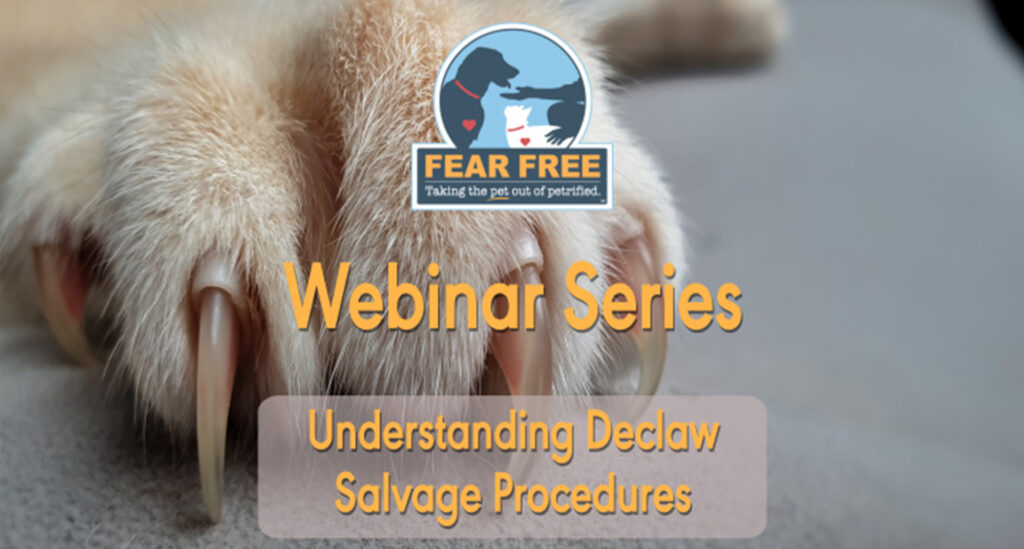
Understanding Declaw Salvage Procedures

Until declaws are eliminated in the United States, you will most likely encounter declawed patients in your practice. With recent advancements in surgery, salvage procedures can help manage pain and improve limb function. Join one of the leading figures in declaw salvage surgery Nicole Martell-Moran, DVM, MPH, DABVP (Feline Practice), to learn about the procedures involved, how to find training, and how you can incorporate it into your practice.

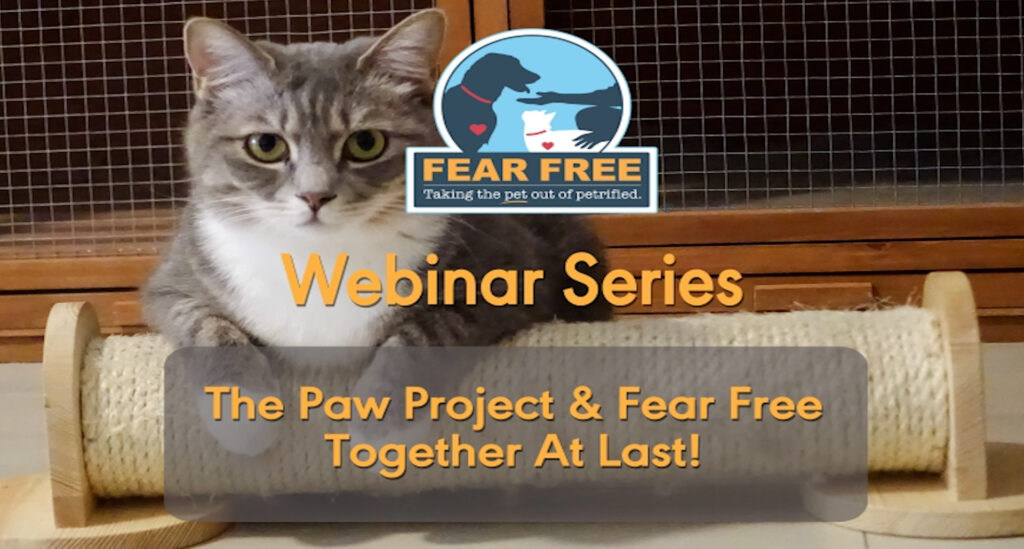
The Paw Project and Fear Free Together At Last!

The Paw Project’s beginning was rooted in helping relieve big cats from complications from being declawed. Thankfully, founder and director Dr. Jennifer Conrad saw the same need in domesticated felines. Don’t miss this opportunity to hear about her journey and her rebuttals against the common arguments in favor of elective feline onychectomy.

Fear Free Certified Practice Town Hall: Discontinuing Declaw Procedures

Following the announcement that Fear Free Certified Practices would be required to phase out elective feline onychectomies, we hosted a town hall with Fear Free founder Dr. Marty Becker, founder and director of The Paw Project Dr. Jennifer Conrad, pain management guru Dr. Michael Petty, and board-certified veterinary behaviorist Dr. Valarie Tynes. The “whys” behind this decision were shared and we wrapped up the hour with Q&A from the audience.

You must be a Fear Free Certified Practice member and logged in to view this webinar

Experiences That Matter: Providing Veterinary Care During The Pandemic

Pet owners have many options when choosing their veterinary healthcare provider. Why should they choose you? Differentiating yourself is a challenge at the best of times, made even more problematic during a pandemic where curbside care has limited our ability to created strong, long-lasting bonds with our clients.

In this webinar, Jonathan Bloom, DVM, presents new, easy-to-use strategies that result in “experiences that matter” and that very quickly define you as the veterinarian of choice.

Brought to you by Elanco.

Course Overview

The CSR is the client’s first point of contact with the veterinary clinic. They play an important role in communicating the Fear Free concept and helping the client prepare their pet for a Fear Free vet visit. This module will help CSRs better understand how to “Speak Fear Free” to clients. It will provide sample scripts and tips. It will also provide them with a better understanding of the FAS scale, an awareness of their surroundings, the knowledge of what steps to take to ensure a positive experience for each pet, and more.

This course was written by Louise Dunn.

This course consists of three lessons:

  • Lesson 1: The CSRs Role for the Pre-Visit
  • Lesson 2: Creating the Fear Free Environment
  • Lesson 3: How to “Speak Fear Free” to Clients

Boxing Down: The Wrong Choice for Animals… and People

Most of us who have been practicing for longer than a decade have used inhalant chambers to “box down” feline patients. It seemed to work, and the patient was able to be treated. Why throw away a potentially useful sedation protocol? Because the use of inhalant chambers or masks (also called “boxing” or “masking”) for sedation or induction to anesthesia is not considered standard of care.

Join Clinical Behavioral Medicine Resident Alison Gerken, DVM, and Washington State University Adjunct Professor Tamara Grubb, DVM, PhD, DACVAA, as they discuss the science of why these techniques are no longer recommended and what you can do instead.

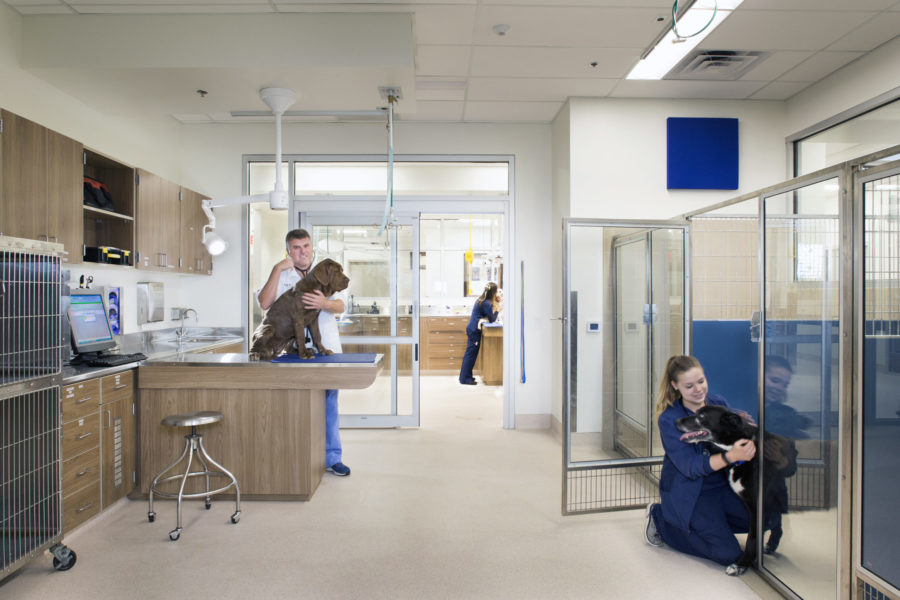
Heather E. LewisMany veterinary practices have developed effective solutions for Fear Free exams and for low-stress patient housing. The next important area to tackle, the treatment room, is an inherently stressful space. Why are treatment rooms so stressful and what can we do to reimagine them?

Treatment rooms are stressful because they are generally designed to be a wide-open space, with many different functions occurring simultaneously. Treatment rooms are this way to ensure efficiency of staffing and safety for patients. For example, animals may be housed in treatment because this is the location where they can be monitored most easily. What if it were possible to maintain safety and efficiency, while de-stressing the treatment and other medical areas of your hospital? I know that it is! Below are a few of our favorite solutions for incorporating Fear Free design concepts throughout the medical areas of the hospital.

Separated Cat Treatment. One of the easiest ideas to implement is a separate cat treatment area located near cat exam rooms and ward. With this design, the cat areas of the hospital can function as a “mini clinic” space. This does not take a lot of room and removes cats from the chaos of the primary treatment space. Designs that include windows into the main treatment room allow for better communication between the cat area and other medical spaces.

Minor Treatment. This treatment space is located behind exam rooms and functions as a quiet area for simple procedures that might need more space or equipment than an exam room might offer. The client can step into this space as well. This minor treatment space is intentionally placed away from potentially frightening and unfamiliar sounds, smells, and activity associated with procedures and surgery. It can remain calmer and quieter because of its placement.

Treatment Curtains. Treatment curtains are borrowed from cubicle curtains used in human medical triage and emergency care. They allow for flexible visual privacy, and they also cut down on noise and visual stimuli, as we have learned anecdotally from using them. A curtain track can be placed in the ceiling around any treatment table to convert it into a semiprivate space.

Separate ICU and Recovery. Separating more critical patients behind glass in the treatment space does wonders. Even if you have few critical or recovering patients, separating them will help create a quieter treatment space and quieter patient space. If you like the idea of glassed wards for more critical patients, ensure that the glass goes to the floor so you can quickly glance in and monitor patients, to continue to keep them safe.

Better Materials and Systems. Once the design is reworked to make treatment areas more specialized, focus on the next layer of design: selecting better materials and systems. Here are a few of our favorite ideas:

  • Dimmable lighting. Lighting that dims allows you to de-stress the space when things are quiet, such as overnight for hospitalized pets.
  • Windows and daylight into treatment. Placing some outside daylight in the treatment room can make it feel more connected to the natural environment, helping to de-stress the space and make your staff feel a lot better.
  • Indoor/Outdoor options. As the Covid-19 crisis has taught us, having some flexible outdoor space can be very helpful for a veterinary practice. What about having a treatment porch, or if that is too ambitious, what about at least having a few operable windows, or a beautiful garden for walking post-surgical patients?
  • Noise control. Noise control is critical. Use good ceiling materials that cut down on noise. Use quiet casters on your chairs, and quiet latches on cages. Every bit of unnecessary noise is an opportunity to rethink design elements.

We have a long way to go with veterinary treatment spaces, but with Fear Free, we’re on our way to reimagining medical care that is far better for the emotional wellbeing of pets than it has been in the past. We are excited to see your ideas implemented in the treatment room of tomorrow, and we know that we will never look back.

This article was reviewed/edited by board-certified veterinary behaviorist Dr. Kenneth Martin and/or veterinary technician specialist in behavior Debbie Martin, LVT.
Heather E. Lewis, AIA, NCARB, is a principal of Animal Arts, an architectural firm that has exclusively designed animal care facilities, including veterinary hospitals and animal shelters, for more than three decades.  She has worked on dozens of projects across the country, both large and small in her 19 years with the firm.  Heather is a member of the Fear Free℠ Advisory Board and assisted in creating the Fear Free facility standards for veterinary hospitals.  Heather is a regular contributor to various veterinary industry magazines.  She has spoken on the design of facilities for the care of animals at dozens of national and regional conferences including Fetch Hospital Design Conferences, the UC Davis Low Stress Animal Handling Conference, and the Humane Society of the United States Animal Care Expo.