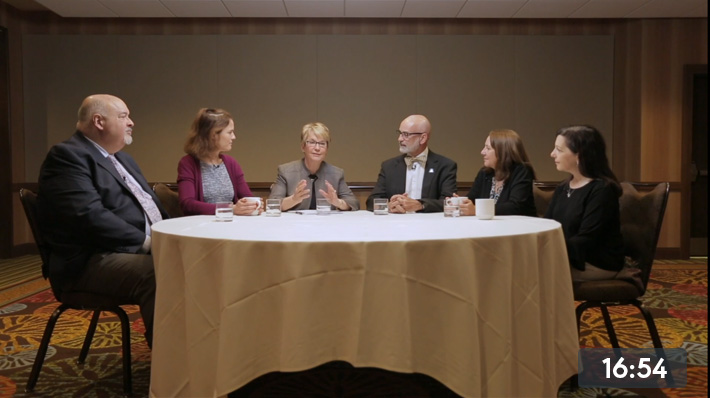
Join a star-studded roundtable of Fear Free experts discussing the interaction of pain and fear, how the variability between specific patients and species can affect pain, and how management of fear can help to alleviate pain.
Join a star-studded roundtable of Fear Free experts discussing the interaction of pain and fear, how the variability between specific patients and species can affect pain, and how management of fear can help to alleviate pain.
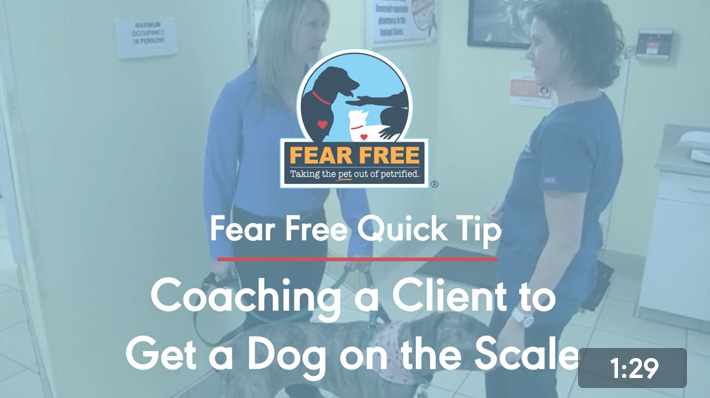
Debbie Martin, RVT, CPDT-KA, KPA CTP, VTS (Behavior), demonstrates how you can help coach your clients to get their dogs on the scale easily and without stress.
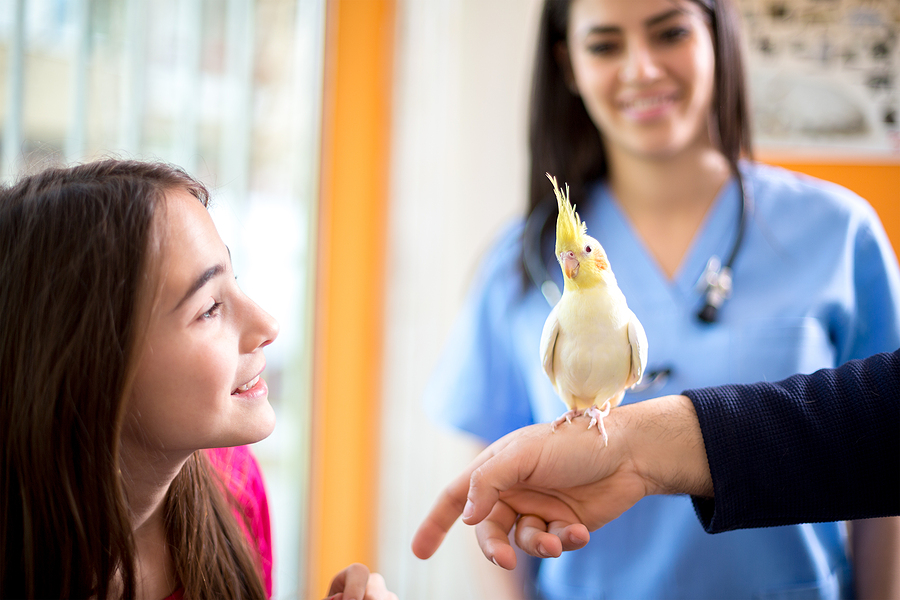
But what happens when things do not go as planned? What if expectations are too high and the pet obtained is unable to live up to the client’s expectations? Biting, screaming, and feather picking are parrot behaviors that many new owners are not prepared for when they acquire their pet. In the avian world, euthanasia is much less likely as most veterinarians are hesitant to end a bird’s life due to the client’s convenience, but this makes it more likely that the bird will be rehomed multiple times.
What if we were able to prepare our avian clients for behavioral problems before they start? What if avian rescues could work to teach birds specific cued behaviors to help eliminate aggression in some of these pets?
Psittacine preparatory programs or avian prep programs can be life-changing for birds and a great resource for owners to understand normal bird behavior, create realistic long-term expectations, and work toward creating an environment that is mentally and behaviorally enriching. They also help teach cued foundation behaviors used to eliminate and replace unwanted behaviors (just as we do with dogs and cats). Avian prep programs can help to strengthen the human-animal bond, keep birds in a home long-term, and increase the bond between client, bird, and clinic. Bonus: offering such programs also increases revenue through fees and the sale of products and treats.
Who will teach the courses? What are the most important topics to teach? What foundation behaviors are most important and why? These are all great questions and we will break them down below:
Educator/Instructor: An avian veterinarian or veterinary technician with a special interest in birds should instruct this course. The individual should be knowledgeable in avian communication, body language, forms of enrichment, and use of positive reinforcement for training. An exotic-animal trainer may be an ideal instructor if one is in your area. This trainer should use and recommend positive reinforcement. Avoid use of aversive training techniques, which can increase fear, stress, and anxiety in all species.
I recommend creating a four-week course. The first two weeks can be taught virtually or in person without the client’s bird present. The goal in the first two weeks will be to review the basics of avian communication, enrichment and environmental set up, learning theory and use of positive reinforcement (with a marker), and answer client questions. The third and fourth classes will focus on teaching cued behaviors with the birds present in the hospital. (See the chart below)
To prevent potential disease transmission or other risks for birds brought to class, take the following measures:
| Class | Topic and Discussion Points |
| Class One (Humans Only) | · Introduction and Client Problem Behavior Discussion (Why are they here and what are they seeing at home?)· Avian Communication
· Environmental Enrichment/Management |
| Class Two (Humans Only) | · Environmental Enrichment/Management (cont.)· Learning Theory and Using Marker Training
· Marker Mechanics and Preparing for Birds in Class |
| Class Three (Humans and Birds) | Break down into 5- to 10-minute training sessions with short breaks in between.· Name Orientation
· Target · Step to Me · Off · Station Training |
| Class Four (Humans and Birds) | Break down into 5- to 10-minute training sessions with short breaks in between.· Name Orientation
· Target · Step to Me · Off · Station Training |
The following behaviors can be useful to have trained and generalized prior to problem behaviors starting. Response Substitution is a term used when we want to replace an unwanted behavior with a new behavior. Teaching and creating strong cued behaviors can help to eliminate and give alternative responses in situations involving attention-seeking or aggression.
Name Orientation: Teaching birds their name can help with obtaining their attention to interrupt unwanted behaviors and ask them to offer a different behavior.
Target Training: This behavior can be used to teach the bird to move from one place to another by teaching them to place their beak near the target.
Step to Me: Cue a bird to move to handler’s arm or hand to be transported from one place to another.
Off: Cue bird to move off of handler during periods where conflict may occur.
Station Training: Teach bird to go to a specific location on cue. This can be used as an alternative behavior.
Avian prep programs and training classes are currently scarce but ideally courses like this will become as routine as dog training classes. Pet birds deserve just as much of a chance to be successful in the home environment as dogs or cats. If you or others you know are teaching a course like this, please update us on the Fear Free for Professionals Facebook Group. We would love to see your photos and ideas for these courses as well as your feedback!
Resources
Luescher, Andrew. Manual of Parrot Behavior. Blackwell Publishing. 2006
Shaw, Julie K. and Martin, Debbie. Canine and Feline Behavior for Veterinary Technicians and Nurses. Wiley & Sons, Inc. 2015.
This article was reviewed/edited by board-certified veterinary behaviorist Dr. Kenneth Martin and/or veterinary technician specialist in behavior Debbie Martin, LVT.
Join world-renowned animal behaviorist, award-winning author, and subject of an Emmy-award winning film Temple Grandin, Ph.D., as she takes a tour of a veterinary hospital with Fear Free founder Dr. Marty Becker and describes what she sees, hears, and experiences. Learn through Dr. Grandin’s first-hand observations how we can better “see” things from animals’ perspectives and how even small improvements, exactly like the ones taught in Fear Free’s Veterinary Certification Program, can make a world of difference for cats and dogs.
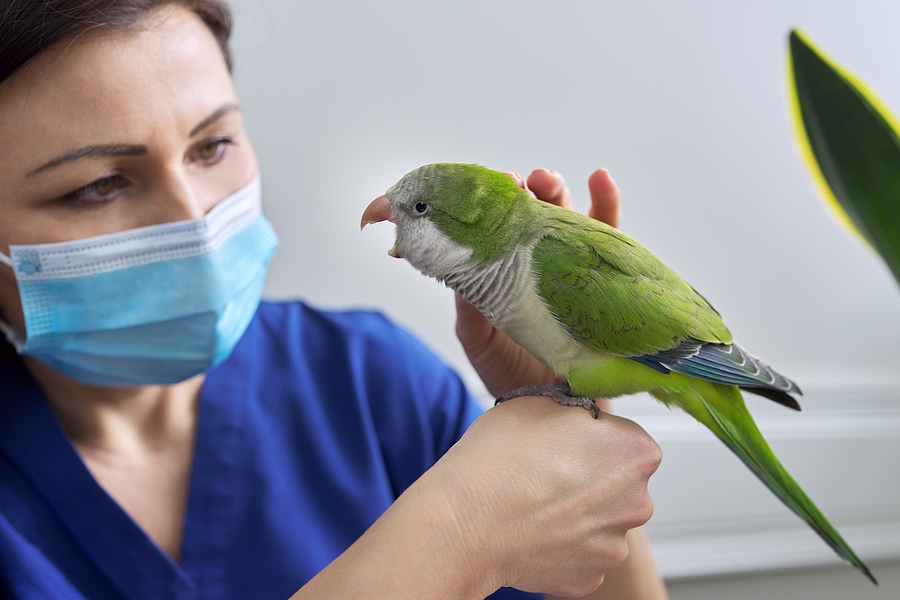
With feathered companions, this is especially important, as many avian behavioral issues may be related to lack of environmental stimuli; specific relationships with members of the household; the owner’s behavior; and daily schedule and routine, to mention a few key pieces of behavioral history taking. Most veterinary behaviorists require a client to complete a behavioral questionnaire prior to the pet’s appointment, but even with this information, they must act as detectives, sifting through the information and asking further questions in the examination room.
This article will discuss four aspects of collecting an avian behavioral history. Having a thorough understanding of the situation can help the veterinary team reach a diagnosis.
This first step is an important factor in taking a history, even though it doesn’t relate to the bird’s behavior. Veterinary professionals should present themselves in a way that promotes and creates an open and honest relationship with the pet owner. If the client feels judged, the history obtained may not be accurate history, leading to misdiagnosis.
Humans communicate visually and verbally. Actively listening and appearing open, sympathetic, and relaxed are important when entering the room to evaluate the patient and meet the owner. When in an exam room with clients, I mention specific behaviors that may be challenging to ignore and tell the client that everyone makes mistakes and we all lose our tempers. I evaluate the client’s nonverbal body language and based on that, I may state that there is zero judgment in this space and that we are a safe zone. We support owners and understand that they are in the office to help their pet. It is not our job to judge, but to help the owner and pet move forward.
Clients who obtain parrots may or may not fully understand normal parrot behavior. Many clients bring their bird in for behavioral evaluation only to learn that the behavior is normal for that species. Parrots, for instance, are inherently loud, destructive, and messy. The parrot walking into the consultation is going to be the same parrot walking out. Giving the client clear expectations can be informative for clients and help them understand long-term goals for modification of unwanted behaviors. Communicating that some of these behaviors are normal can educate the client and lead to a discussion on how to manage the behavior moving forward.
This can be the most challenging part of obtaining the behavior history. It is important for the veterinary professional to witness typical behavior for the bird. With birds, the majority of behavior is going to be displayed in their home environment where they feel most comfortable. Most birds will alter their behavior in the presence of unfamiliar people. While using video to evaluate the behavior is valuable, it may add new, potentially “scary” stimuli to the situation, and this may influence the bird’s behavior.
To help to counteract this, have the client bring the camera or tripod into the environment a few days prior to collecting video and data. This should help the bird habituate to the camera and reduce or eliminate behavior changes. In the text Manual of Parrot Behavior, edited by Andrew Luescher, DACVB, it is recommended that clients film the following prior to the consultation:
The goal of these videos is to give the veterinary professional insight to how the bird interacts at home. The veterinary team can then read and understand the animal’s body language as it is displayed during each circumstance or situation. Caution the client against purposefully eliciting aggressive behavior or frightening the bird. The goal is for the videos to provide a glimpse of the bird’s everyday behavior and comfort level with interactions and surroundings.
The bird’s environment can play a large role in normal or abnormal behavior patterns. This can become a concern when diagnosing a behavior condition. When evaluating the pet’s physical environment, look at the following:
Veterinary professionals may also request that the client submit a video tour of the home. This can aid them in knowing what the pet may be experiencing based on human movement, placement of items, and daily routine.
These are just a few of the considerations to take into account when obtaining an avian behavioral history. Other areas to assess and discuss are the patient’s signalment, breed, developmental history, prior environmental information, and grooming. We will dive into other aspects of taking an avian history in a future blog post.
Reference:
Luescher, Andrew. Manual of Parrot Behavior. Blackwell Publishing. 2006
This article was reviewed/edited by board-certified veterinary behaviorist Dr. Kenneth Martin and/or veterinary technician specialist in behavior Debbie Martin, LVT.
Fear Free and Airvet: A Pawsitive Pairing for Your Practice
Keeping pets (and their vets) stress-free is good for everyone! Fear Free and Airvet have teamed up to help pets live healthier and happier lives. This fireside chat will cover how using Airvet’s connected care platform and Fear Free training can alleviate fear, anxiety & stress in pets while allowing you to easily deliver an outstanding client experience.
Please join Marty Becker, DVM, founder and CEO of Fear Free; Russ Brewer, DVM, CVMA, CVSMT, CCRT of Care Animal Hospital of Pleasant Prairie; and Jeff Werber, DVM, Chief Veterinary Officer of Airvet, as they share their experiences and best practices that will set you and your team apart from the pack.
Speak the Right Words
Debra Vey Voda-Hamilton, principal at Hamilton Law and Mediation, PLLC (HLM), helps vets and their staff learn how to appropriately address disagreements and foster mindful reactions to difficult discussions. As the first conflict consultation practice in the U.S. dedicated to helping people resolve conflicts that arise in business and life over animals, HLM uses empathy, compassion, and methods of alternative dispute resolution (ADR) to assist people in understanding the “why” of a conflict that arises when dealing with animals. These conflicts are relational, not transactional, and can be nipped in the bud—before they nip the veterinarian in the butt—if skills to address the conflict are learned and applied.
Gain the knowledge on how to peacefully and proactively:
Brought to you by our friends at Vetoquinol.