As the final piece of our pain management series, our experts each take a moment to let us know their most important pieces of information and expertise that they hope every veterinary professional can take to heart.
As the final piece of our pain management series, our experts each take a moment to let us know their most important pieces of information and expertise that they hope every veterinary professional can take to heart.

The management of patient pain can often fail when the onus is put onto the owner to properly medicate their pet. Our experts discuss best practices on managing pain at home with clients, particularly with feline patients who can often be difficult to manage. There is also a discussion of what acute pain does to the body of our patients.
One of the most overlooked tenets of Fear Free is the hospital environment and how it can affect your patients’ fear, anxiety, and stress. Our roundtable of experts discuss how you can create a welcoming environment for your patients, clients, and team members.
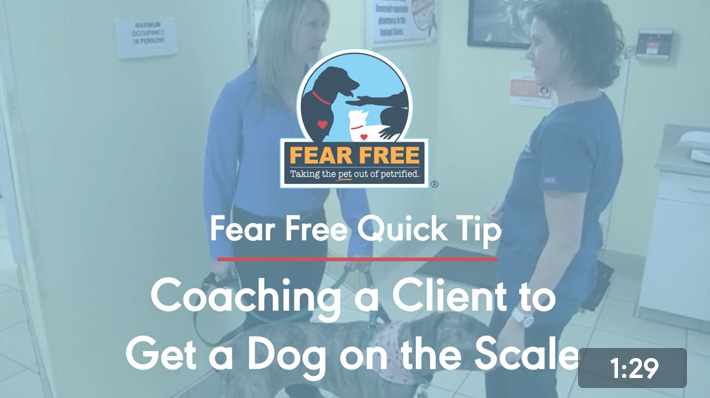
Debbie Martin, RVT, CPDT-KA, KPA CTP, VTS (Behavior), demonstrates how you can help coach your clients to get their dogs on the scale easily and without stress.
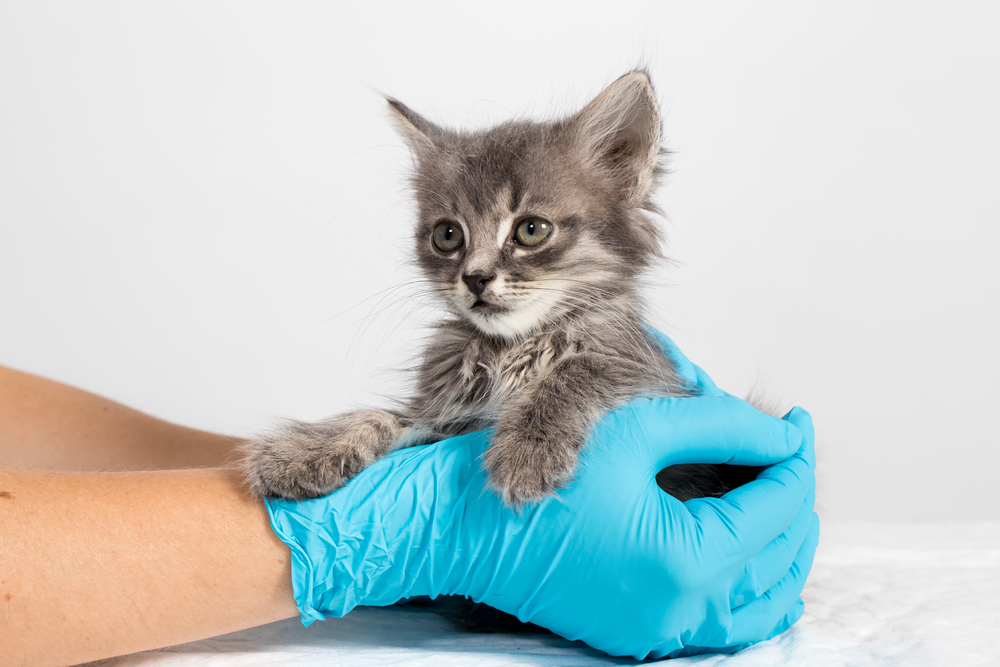
Apprehension about transmission and preconceptions about how they can affect a cat’s quality of life or adoption potential often leads to routine euthanasia for shelter cats who test positive for either disease. And some veterinarians may recommend against adopting a cat with FeLV or FIV particularly if clients have other cats in the household.
Life-saving protocols and good guidelines for adopters make those concerns outmoded, however. Cats with FeLV or FIV can live normal lives without being a hazard to other cats. With preventive healthcare strategies and prompt identification and treatment of illness, both diseases can be managed effectively and their spread limited. Moreover, the Association of Shelter Veterinarians and the American Association of Feline Practitioners do not support euthanasia based solely on a cat’s infection status.
Approximately three to four percent of cats in the United States test positive each year for feline leukemia virus, according to the 2020 AAFP Feline Retrovirus Testing and Management Guidelines. The diagnosis affects an estimated 60,000 cats in animal shelters annually.
It’s important to know that the disease, which suppresses a cat’s immune system, does not run a straight course, says Julie Levy, DVM, PhD, DACVIM, DABVP (Shelter Medicine). It affects different cats in different ways and at different times. Levels may change over time depending on a cat’s immune status. Some cats live with the disease with little problem. It may flare up if the cat is stressed or has a comorbidity such as an upper respiratory infection and then subside. It’s not possible to run a test once and then expect the cat to remain the same throughout life.
More important, people are willing to adopt cats with FeLV and give them the care they need.
There is a high national demand for a lifesaving option for cats diagnosed with FeLV, and more and more shelters are working to place FeLV-positive cats in homes. Programs include Chicago’s Tree House Humane Society, Philadelphia Animal Welfare Society, Operation Kindness in Carrollton, Texas, and Austin Pets Alive!
A cat with FeLV can live for many years without illness and without spreading the disease to other cats if they are adopted into single-cat homes or with other FeLV+ cats. This has made a difference for cats in several ways. One is that recommended options for testing have been pared down to a small menu of the most accurate and cost-effective tests. A long-running study has allowed researchers to determine the most reliable tests as well as to evaluate how the status of cats with the disease changes over time. Using a new quantitative PCR test, shelters can now identify whether a tested cat is likely to be a long-term survivor or develop disease and mortality early.
The advisory panel of the AAFP recommends that kittens be vaccinated for FeLV starting as early as 8 weeks of age with two vaccines given three to four weeks apart and then boosted when they are a year old. Vaccination of cats for FeLV during kittenhood, followed by a single booster vaccination at one year of age, is the best way to prevent spread of the disease and reduce its incidence.
While it does not consider FeLV a core vaccine for adult cats, the AAFP recommends that adult cats should be vaccinated annually for FeLV if they are at risk. Risk factors include spending time outdoors, living with cats known to be infected with FeLV, or interacting with cats of unknown disease status.
Ask clients or adopters about the lifestyle and vaccination status of other cats in the home. While vaccination doesn’t help cats already infected with FeLV, it is important for uninfected cats who may have access to the outdoors or potential contact with infected cats. It’s not uncommon for indoor cats to accidentally get out of the house or to experience a change in lifestyle leading to time spent outdoors on a regular or full-time basis.
Elanco’s range of vaccines against FeLV are designed to give feline patients a more comfortable vaccine experience. The ½ mL vaccine—containing half the volume of traditional 1 mL vaccines decreases administration time, increasing the comfort of the vaccination. It is also highly purified, using PureFil technology, designed to reduce adverse reactions associated with extraneous proteins and cellular debris. The vaccine line is available in a variety of combinations, including the only 1/2mL FVRCP+FeLV vaccine, to reduce the number of injections that may be needed.
Along with FeLV, feline immunodeficiency virus is one of the most common causes of infectious disease in cats worldwide. Cats typically acquire FIV through bite wounds when they fight with FIV-infected cats. A cat’s FIV status should be determined at the time of adoption or if the cat later becomes ill or has any risk of exposure.
But an FIV-positive test does not make a cat unadoptable. While the possibility of transmission is there, exposure to an infected cat is not as risky to uninfected cats as previously thought. FIV-positive cats living amicably with disease-free cats do not appear to pass on the disease. Nor do FIV-positive queens pass on the disease to their kittens. Casual contact, such as allogrooming or sharing water bowls, has not been found to be a common or efficient route of transmission. And while FIV is contagious among cats, it’s not transmissible to humans.
FIV infection can have three phases: acute, asymptomatic, and progressive. In the acute phase, occurring one to three months after infection, cats may have mild signs or no signs. It is followed by an asymptomatic, or latent, phase, which can continue for months or years. They may or may not progress to symptomatic disease.
With good care, some infected cats can live for many years with good quality of life. Some cats show no signs at all, although they remain infectious. However, because FIV affects the immune system, cats with the disease can be more prone to respiratory, dental, eye, or skin infections. Other signs associated with FIV include fever, lethargy, chronic diarrhea, and weight loss.
Clients or adopters caring for cats with FIV should protect them from injuries or wounds that could lead to secondary bacterial infections, as well as from other viruses and parasites that could cause illness. Best management practice is for these cats to live indoors, where they are protected from exposure to potential injuries and infections and prevented from spreading the disease to other cats.
A vaccination for FIV is not commercially available in the U. S., nor is it recommended by any veterinary organizations or schools of veterinary medicine. Its use can complicate diagnosis of FIV infections. Vaccinated cats produce antibodies indistinguishable from antibodies induced by natural infection, making test results unclear if a cat’s vaccination history is unknown. Cats vaccinated for FIV should have a microchip or tag indicating their vaccination status.
The bottom line is that cats with FeLV or FIV are often young, healthy in the moment, enjoying life, and can make great companions. With good care protocols, they can live happy lives with people and other cats.
Click-thru URLS
Fear Free https://fearfreepets.com/
Blog https://fearfreepets.com/blog/
Elanco Animal Health https://www.elanco.us/
American Association of Feline Practitioners 2020 AAFP Feline Retrovirus Testing and Management Guidelines (sagepub.com)
This post is brought to you by our sponsor, Elanco, the maker of TruFel Ultra Vaccines.


TruFel, Ultra, Purefil, Elanco, and the diagonal bar logo are trademarks of Elanco or its affiliates.
©2022 Elanco or its affiliates. PM-US-22-1068
Behavior Solutions for Declawed Cats with Dr. Lisa Radosta
An important part of setting a declawed cat up for successful life at home is understanding and molding their behavior. Join Lisa Radosta, DVM, DACVB, a leader in behavior and a member of the Fear Free Advisory Team, as she discusses behavioral solutions for declawed cats to help reduce their fear, anxiety, and stress both at the clinic and at home.
About the Presenter
Lisa Radosta, DVM, DACVB, graduated from the University of Florida College of Veterinary Medicine in 2000. After completing an internship in small animal medicine and surgery at Coral Springs Animal Hospital, she worked as a primary care veterinarian for two and a half years. She completed a three-year residency in behavioral medicine at the University of Pennsylvania in 2006 and passed the board examination later that year. During her residency, she received the Resident Research Award from the American College of Veterinary Behaviorists (ACVB) two years in a row.
Dr. Radosta lectures nationally and internationally for veterinary professionals and pet owners and is the author of a number of textbook chapters and scientific research articles, She also co-authored “From Fearful to Fear Free: A Positive Program to Free Your Dog from Anxiety, Fears, and Phobias” with Dr. Marty Becker, Mikkel Becker, and Wailani Sung.
She is the section editor for Advances in Small Animal Medicine and Surgery and served on the 2015 AAHA Canine and Feline Behavior Management Guidelines Task Force.

This article was reviewed/edited by board-certified veterinary behaviorist Dr. Kenneth Martin and/or veterinary technician specialist in behavior Debbie Martin, LVT.
Communicating With Clients About Feline Declawing
If you are going to decline to declaw cats, it will be critical that you’re able to clearly explain to clients why the risks of declawing outweigh the potential benefits. In addition, every member of the team must be able to offer clients practical alternatives to declawing in a straightforward and understandable manner.
In this webinar, Valarie Tynes, DVM, DACVB, DACAW, will help build your team’s knowledge regarding why cats scratch and what cats want in the way of a scratching post as well as prepare them for these difficult client conversations.
Valarie Tynes owns Premier Veterinary Behavior Consulting in Sweetwater, Texas. Dr. Tynes is a native of Fort Worth, Texas and she earned her Doctorate of Veterinary Medicine in 1987 from Texas A&M University College of Veterinary Medicine. After several years in private practice, Valarie completed a residency in clinical animal behavior at the University of California at Davis in 2003. Her special interests include miniature pigs and other exotic pets as well as animal behavior. Dr. Tynes is a Diplomate of the American College of Veterinary Behaviorists and a frequent speaker at professional meetings around the world. She has authored numerous articles and chapters on a variety of behavior-related topics and she is the editor of Behavior of Exotic Pets. Dr. Tynes is also the author of Miniature Pig Pet Care, part of A Quick Reference Guide to Unique Pet Species, on the Veterinary Information Network.
Resource Guarding in Dogs: A Fear Free Approach
Resource guarding is a common problem in dogs with a wide variety of behavioral presentations. The condition is sometimes referred to as possessive aggression, and it poses a serious risk of injury when aggression is directed toward humans or other animals. Resource guarding can negatively affect the human-animal bond and the dog’s social relationship with other animals. In this webinar, Kenneth Martin, DVM, DACVB, will discuss prevention, establishing a diagnosis, and treatment recommendations.
Brought to you by our friends at Blue Buffalo.
The Case Against P3 Amputation
While pain management is a vital part of Fear Free, it is even more important for cats who have been declawed. Join us and Robin Downing, DVM, MS, DAAPM, DACVSMR, CVPP, CCRP, founder of The Downing Center for Animal Pain Management, to learn about the trauma of feline toe amputation from the pain, biomechanical, and bioethical perspectives. This will energize your commitment to “just say no”!