Our friends at Latah Creek Animal Hospital displaying their certifications at their clinic.
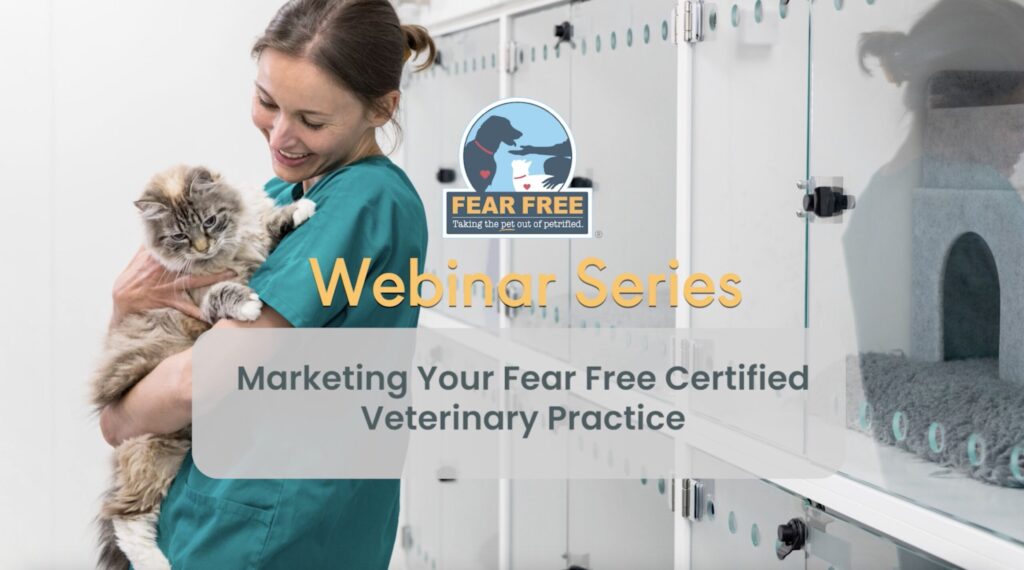
So, you’ve completed your Fear Free® Certification or Fear Free®Veterinary Practice Certification. First and foremost, congratulations, and thank you! You have taken a huge step in alleviating fear, anxiety, and stress for your clients, their pets, and even your team. Now it’s time to start spreading the word!
As you move through your Fear Free marketing journey, keep in mind that like all of us, pet owners are busy, and their attention is demanded by many other businesses as well as personal obligations. However, as their trusted Fear Free Certified Professional, the messages you share are often held in their highest regard. To get the most out of this benefit, always ensure that you are crafting your content and messaging in a way that addresses how your Fear Free Certification benefits your clients and their pets as quickly as possible. Align your goals with theirs and you’ll end up with happier, healthier, more relaxed pets and, in turn, happier pet parents.
Whether you have achieved your individual Fear Free Certification, or your clinic has achieved Fear Free®Veterinary Practice Certification, we recommend starting by choosing a few goals, defining specifically what success looks like to you, and then outlining and deploying your marketing plan.
As you work on developing your goals and success measures, here are some tips for getting started:
Marketing Your Individual Fear Free Certification
Your individual Fear Free Certification is a powerful tool that can be used to market not only your personal brand, but also elevate the work you do.
- Display Your Fear Free Certified Professional Badge. We recommend adding your certified professional badge to your team member bio on your company’s website and updating it to include more about Fear Free, your certification, and the difference it brings for the pets in your care.Additionally, add a homepage spotlight on your company’s website highlighting the presence of Fear Free Certified Professionals on your team. We encourage you to take that a step further and link the spotlight to another page where you explain what Fear Free is, how having Fear Free Certified Professionals on your team benefits your clients and their pets, and links to where they can learn more (here’s a great page to send them to).
- Educate Clients Directly. Weave Fear Free principles into your touch points when preparing clients for appointments, during their visit, and in follow-up communications. Let clients know you are a Fear Free Certified Professional and what that means for their pet by walking them through what to expect and following up with them on that education throughout their Fear Free visit. If they have a pet who experiences fear, anxiety, or stress in the veterinary, grooming, training, or boarding & daycare environment, discuss how their Fear Free visit will be a different and a more positive experience for their pet and themselves than what they may have experienced in the past. Discuss how your team will allow their pet to tell them if they’ve had enough and stop the treatment or appointment if their FAS level becomes too high. Continuing that education from your marketing messaging through to their in-person visit can have a significant impact.
- Shine a Spotlight on Your Certification. Ask your company’s marketing team to create a team member spotlight about your Fear Free certification. This can be shared on social media or even in an email newsletter. Have someone snap a photo of you in action practicing Fear Free techniques and pair it with a brief write-up about you, your certification, what it means for pets in your care, and where clients can find more information.
- Be a Fear Free Champion in Your Professional Community. Odds are, you are one of many Fear Free Certified Professionals in your community. Use the Fear Free Online Directory to find other Fear Free Certified Professionals in your area. Reach out to them, build relationships, and discuss how you can promote and refer clients to each other to strengthen the Fear Free ecosystem in your community.
- Grow Your Professional Brand. Are you working on amplifying your professional brand on social media? Map out your goals for your brand and utilize your certification to support them. We recommend developing a campaign across all the social media channels you use with a few different posts highlighting Fear Free, what it means to be Fear Free Certified, and how that certification can benefit your audience. Use photos of you in action, share success stories, and include calls to action for your audience to take on each post. Our Fear Free Marketing Toolkit, which can be found on the left side panel of your member homepage on our website, includes several social media posts and cover photos to help you get started spreading the word.
- Achieve Your Career Goals. Are you looking to move to the next level in your career, find a new role, or build your network? Share regular posts on LinkedIn about the work you put in to become certified, how it is helping you in your everyday practice, and the difference it makes for the pets in your care. Add your certification to your resume and utilize the Fear Free network to find a company that aligns with your professional goals. Find and connect with like-minded Fear Free Certified Professionals through our private member community on Facebook to further work toward your professional goals.
Marketing Your Fear Free Veterinary Practice Certification
Fear Free Veterinary Practice Certification allows you to not only bring a higher level of Fear Free care to your patients but also opens the door to many new opportunities for marketing Fear Free to your clients and community.
- Define Your Differentiators. One of the first steps in your clinic’s marketing strategy should be developing and advertising your clinic’s differentiators. If you haven’t already, gather your team and brainstorm 3 to 5 things that make your clinic unique from others nearby. Fear Free Veterinary Practice Certification is a built-in differentiator and a great place to start. Once you define some additional differentiators, highlight them on your website’s homepage, on social media, and in client communication. Tell the story of not just what you do differently, but how you do it differently. Looking for a great example of highlighting Fear Free as a differentiator within a Fear Free Certified Veterinary Practice group? Check out PetVet365’s homepage and Fear Free Experience page.
- Display Your Certified Practice Badge. Add your certified practice badge to your clinic’s website homepage with a brief write-up on what it means to be certified and what it means for your clients. Couple your homepage highlight with an additional page on your website that dives deeper into your Fear Free Certified Veterinary Practice designation, the hard work your team completed to get there, and how it will positively affect your clients’ experience with your clinic. Need some inspiration? Check out how Family Pet Health in Murfreesboro, Tennessee, showcases their veterinary practice’s certification on their homepage and an additional Fear Free page.Additionally, your team’s professional certification badges should be included on their website biographies. Spotlight them on social media or in your clinic’s newsletter to continue spreading awareness. Our Fear Free Marketing Resources page, which can be found on your member homepage on our website, also includes social media graphics and client-facing videos you can share to spread the word.
- Walk the Walk, Don’t Just Talk the Talk. Marketing can fall flat when it isn’t backed up by your clients’ experiences. Make sure clients and their pets can recognize your differentiators, especially your Fear Free Veterinary Practice Certification, in every interaction, from their search online to the preparation for their appointment, from their time inside your clinic to the follow-up after their visit. Don’t let the initial marketing of your certification be the end; keep reminding, educating, and impressing your clients with the Fear Free principles your team practices every single day.Also, remember that word of mouth is one of the most powerful marketing tools you have at your disposal, so arm your clients with the education they need to shout your clinic’s name from the rooftops to their families and friends!
- Attract and Retain Qualified Team Members. We all know that attracting strong candidates and retaining them is a pain point many practices are experiencing right now. Recruitment marketing is just as important as client marketing and can make a big difference in the types of applications you receive for open positions. Being a Fear Free Certified Veterinary Practice is a powerful recruiting tool that you should use to elevate your practice above the rest. Include that you are a Fear Free Certified Veterinary Practice in your job ads, the careers page on your website, and on your clinic’s LinkedIn page, explaining how that designation improves your team’s experience, safety, and medical standards, as well as delighting your clients.
- Network, Refer, and Cross Promote Within Your Fear Free Ecosystem. There are likely many other Fear Free Certified Professionals in your community who are looking to ensure that their clients have a Fear Free experience everywhere they go. Use the Fear Free Online Directory to find certified groomers, boarding and daycare facilities, trainers, and pet sitters in your area. Connect with them, build relationships, and develop strategies for referring clients and cross promoting each other. This could look like a postcard or flyer you each give out to new clients that includes a special gift or discount, highlighting each other on social media or on your websites, and referring clients who are looking for a new professional service to a fellow Fear Free Certified Professional.
As with any new marketing endeavor, failing to ensure that you have the resources you need can result in missing goalposts. The great news is that our Fear Free team is here to support you and provide those tools you need to achieve your goals and alleviate fear, anxiety, and stress for not just pets, but people too.
—
Since 2016, Fear Free has helped to change the way pets receive care from both veterinary and pet professionals. By closely listening to the needs of pet care professionals, Fear Free has built a robust catalog of certification programs and courses that focus on emotional wellbeing, enrichment, and reduction of fear, anxiety, and stress in pets. Over 100,000 Fear Free Certified Professionals are working to change the standard of animal care across the world. We thank you for being an important part of this initiative.
To learn more about Fear Free, register for a new membership, renew your membership, or learn more about Fear Free Veterinary Practice Certification, visit www.fearfreepets.com.