Blog Archives

Consider the Senses of the Fear Free Exam

Dr. Julie Reck explores the details involved in creating a Fear Free experience. She also discusses pre-appointment opportunities, easy-to-implement facility alterations, and exam room cleaning tips to make sure your patients have the best experience possible. Sponsored by Virox.

Reducing Dog Bites by Understanding the Secret Language of Dogs

Dog bites and injury to veterinarians, staff, and pet professionals are often considered an occupational hazard. Many of the situations that may result in a dog bite can be prevented by understanding the language and emotions of dogs.

Celebrity dog trainer and author Victoria Stilwell discusses dog body language, behavior, and how to safely interact with dogs as part of National Dog Bite Prevention Week.

Stilwell is joined by State Farm Brand Specialist Heather Paul, who discusses dog bite insurance claims data for 2018, dog bite liability, and how the insurance company is working to reduce dog-related injuries as a member of the Dog Bite Prevention Coalition.

Sponsored by State Farm

Postcards from the Cat: Highlights of Feline Communication & Natural Behavior

Learn about the facets of feline communication and behavior, as it relates to working and living with this truly fascinating species.

Dr. Marie Hopfensperger is one of two board-certified veterinary behaviorists in the state of Michigan. She graduated with honors from the College of Veterinary Medicine at Michigan State University in 2009. She was a small animal primary care veterinarian in northern Michigan before returning to academia to pursue her passion for behavior. She completed a non-traditional residency, spending time at North Carolina State University and Michigan State University. She has taught primary care and behavior medicine at Michigan State since 2013. Her areas of interest are behavioral medication, aggression, and feline inappropriate urination. Her household includes a human son, two cats, two dogs, two parakeets, and a rabbit, most of whom were adopted from area shelters.

|
By Mikkel BeckerAre you helping or hurting your pet by providing comfort? You may have heard that comforting a pet when he’s frightened is the wrong thing to do because it “reinforces” that he’s right to be fearful. I’m here to share the good news with you that this concept isn’t correct. Here’s what to know about calming your pet.

You’re not “reinforcing fear” by providing comfort to a pet. Many animals act calmer if they are near their favorite human or if they are handled and interacted with in a manner they find reassuring.

You may, however, escalate your pet’s stress if he picks up on cues that you are nervous or on edge. If you are attempting to comfort him in a way that’s different from how you normally interact with him, such as hovering or jumping to attend to him immediately, it may signal to your dog or cat that you are upset. His response may be to become worried himself.

If petting, massage, and T-touch handling help your pet to visibly settle, by all means, do it! But if the dog or cat avoids touch or acts agitated or upset with handling, give him some space or interact in a more hands-off manner such as redirecting his attention to a food puzzle or other favorite toy.

Left untreated fears can escalate overtime. Although it is ok for your dog to seek comfort with your presence when he is afraid, allowing that to be the sole coping strategy can be a recipe for disaster. For example, if your dog becomes frightened by something when he is home alone, he might panic because he has not learned any other successful coping strategies. Talk to your pet’s veterinary team about who they recommend for assistance in addressing your pet’s fears before they escalate.

Dogs pick up cues from people on whether to relax or panic. The more comfortable and calm you feel, the more likely your pet will pick up the message and relax in turn.

To communicate a calm demeanor, start by working with your pet’s veterinary team to create an action plan for responding to fear, anxiety, and stress in the home. Knowing how you’ll react to your pet’s angst is empowering for you and communicates to your pet that all is well.

To reinforce that calm demeanor for yourself, practice deep breathing and mindfulness. Settling down with a relaxing read, watching a feel-good show, or playing music you like are other potential ways to decrease your own stress and, by extension, your dog’s.

This article was reviewed/edited by board-certified veterinary behaviorist Dr. Kenneth Martin and/or veterinary technician specialist in behavior Debbie Martin, LVT.

In a perfect world, Dr. Alicia McLaughlin would establish relationships with animals who have no experience with veterinary visits and thus no fears regarding them. But at the Center for Bird and Exotic Animal Medicine near Seattle, Washington, she is more likely to encounter animals who have already developed fear, anxiety, and stress (FAS) associated with the veterinary environment and physical care. Many of these animals are naturally frightened of new persons, places, and experiences, and limited socialization early in life makes it difficult for them to deal with changes that deviate from the narrow scope of what they’ve learned is normal and safe. Not surprisingly, many of the animals Dr. McLaughlin treats are already on edge before she walks into the exam room.When animals come in with preformed notions and established concerns, the opportunity to start with a clean slate and make the experience positive from the onset has already passed. Instead, with many of these animals McLaughlin is doing damage control, backtracking from previous negative experiences and recovering from a lack of ongoing positive experience and preparation.

“I’m often working up from a negative with my patients because they have such bad history,” says Dr. McLaughlin.

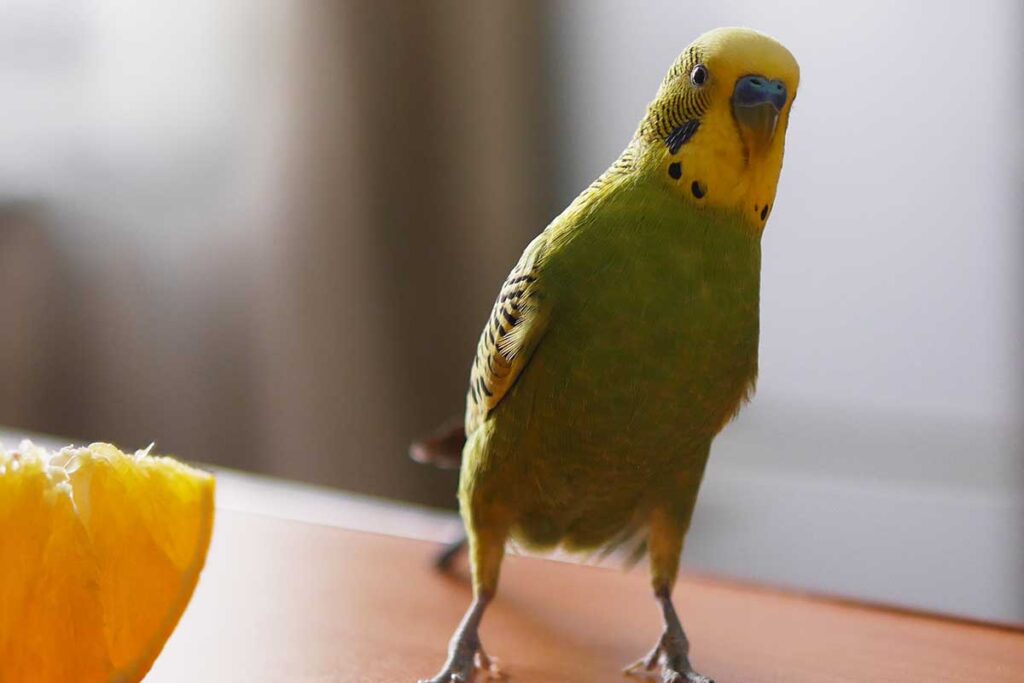
Sadly, common practice for handling birds in many pet care environments is to put the parrot on the ground and throw a towel on him. Such unsettling and scary experiences lead to increased angst for the animals.

“A lot of behavioral flooding happens with birds. It’s the status quo for most places. It’s not just vet hospitals. It happens at many pet stores when the parrot goes in for grooming, too,” says McLaughlin.

Alleviating and reducing FAS helps to bring the animal into a more neutral emotional state. Then he or she is more receptive to pleasant pairings that accompany the veterinary experience and positively affect the animal’s emotional outlook. This makes the situation less concerning for the animal and improves the ability to handle him and provide care.

A greater challenge in helping these patients is dealing with people who don’t understand the signs of FAS or the negative outcomes that can happen because of it.

“The hardest part is dealing with someone who has expectations in their head for how care should be or how it has always been. Or dealing with a person that’s driven by strict time constraints,” says Dr. McLaughlin.

The best approach McLaughlin has found to work gradually with these clients and build a rapport with them. Ultimately, this helps her to reach her goal of improving the lives of animal patients.

“I try to focus on one, two, or three things max they can do per visit to improve their bird’s quality of life. If I build enough rapport they’ll keep coming back and we can keep building,” says Dr. McLaughlin.

Putting the treat into treatment isn’t possible for all of McLaughlin’s patients, who sometimes don’t take food when they’re too upset. But just because the animal won’t take food doesn’t mean the visit can’t be Fear Free. There are numerous Fear Free-friendly tools McLaughlin uses to help.

“Some animals, like pigs, are easy to work with because they’re so food-motivated. Birds are more challenging because they are often already so far over the threshold it’s hard to reach them. Being sensitive to body language and taking things slow can help.”

Because many birds are already amped up and display signs of escalated FAS by the time they arrive for care, sedation is a tool that’s often utilized to deliver physical care in a manner that’s protective of emotional wellbeing.

“Using sedation on those birds that are already really stressed on arrival makes a big difference in how the visits go. It’s safer, the bird has a better quality of life, and it reduces negative experiences to help build for the future of that bird’s care going forward,” says Dr. McLaughlin.

“Emphasizing the need for minimal stress veterinary medicine has changed our approach to patients. Our staff tries to minimize coercion when possible, and sedation is seen as a way to help improve our patient’s veterinary experience when any potentially stressful medical procedures need to happen. There’s an increased urgency to try to quickly bring the stress levels down when they occur, along with more creative problem solving between staff members to either prevent or address stressful situations,” says McLaughlin.
Want to take your Fear Free education to the next level? In this podcast you’ll learn about the exciting new content we have in store for you in the Level 2 course you will receive with your renewal. The Level 2 module chairs and authors, Dr. Kathryn Primm, Monique Feyrecilde LVT and Kelly Capasso join us to talk about Fear Free Level 2 and how it will make your medicine and work even better.