Blog Archives

Unleash Your Inner Muttgyver: Tips and Tactics to Deal With Dog and Cat Pet First Aid Situations

In this recorded webinar, join health and safety coach Arden Moore as she demonstrates first aid on Pet Safety Dog Kona and Pet Safety Cat Casey, unleashing new ways to safely render aid without a pet first aid kit handy and safely transport injured pets. Learn how to incorporate Fear Free techniques to combat fear, anxiety, and stress in injured pets and build a confident, can-do attitude in you.
Happier Cats and Happier Clients: Diagnosing and Treating Feline OA

In this recorded webinar, Michael Petty, DVM, CVPP, CVMA, CCRT, CAAPM, covers how fear, anxiety, and stress can impact pain and vice versa, along with a team- and case-based approach to diagnosing and treating feline OA. A new treatment option, recently approved for controlling the pain associated with feline OA, is also discussed.
Brought to you by our friends at Zoetis

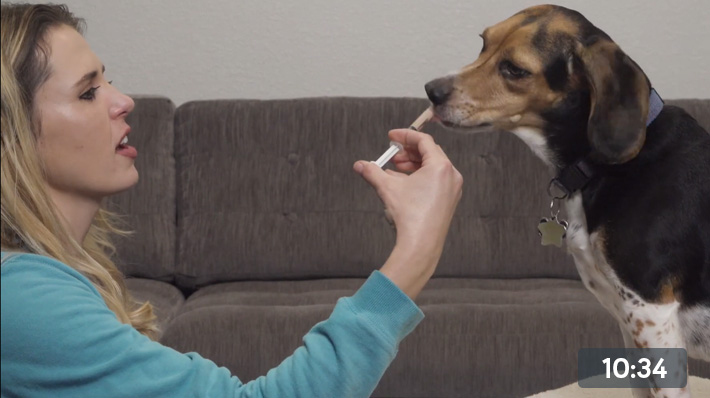
Just the idea of medicating your pet can send both of you running for the hills. Mikkel Becker, CBCC-KA, KPA CTP, CDBC, CPDT-KA, CTC and Debbie Martin RVT, CPDT-KA, KPA CTP, VTS (Behavior) explain how you can make this stressful task rewarding and Fear Free for both you and your pet.

As the final piece of our pain management series, our experts each take a moment to let us know their most important pieces of information and expertise that they hope every veterinary professional can take to heart.

You must be a Fear Free member and logged in to view this webinar

Link to Schoox Content

The management of patient pain can often fail when the onus is put onto the owner to properly medicate their pet. Our experts discuss best practices on managing pain at home with clients, particularly with feline patients who can often be difficult to manage. There is also a discussion of what acute pain does to the body of our patients.

You must be a Fear Free member and logged in to view this webinar

One of the most overlooked tenets of Fear Free is the hospital environment and how it can affect your patients’ fear, anxiety, and stress. Our roundtable of experts discuss how you can create a welcoming environment for your patients, clients, and team members.

You must be a Fear Free member and logged in to view this webinar

The roundtable of experts discuss how the implementation of Fear Free in hospitals can help reduce the stress of all members of the veterinary team and owners—and thus the FAS of the clients and patients. There is also a discussion on how to handle referral clients, especially those who may not be able to come back for repeated visits and how putting yourself in the place of the animal can help you to understand how to manage the hospital environment for them.

You must be a Fear Free member and logged in to view this webinar

Blood draws are an essential part of practicing veterinary medicine, but they can be stressful for the professional, let alone the patient. Veterinary nurse/animal trainer Laura Ryder, CPDT-KA, KPA-CTP, shows you how you can get a canine blood draw done the Fear Free way.

You must be a Fear Free member and logged in to view this webinar

Join a star-studded roundtable of Fear Free experts discussing the interaction of pain and fear, how the variability between specific patients and species can affect pain, and how management of fear can help to alleviate pain.

You must be a Fear Free member and logged in to view this webinar

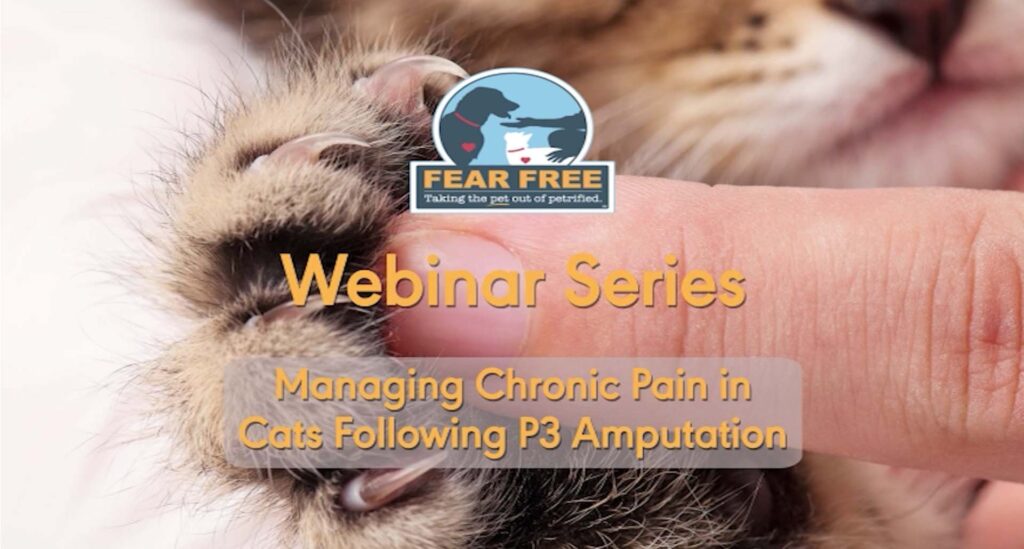
Managing Chronic Pain in Cats Following P3 Amputation

Cats’ paws and toes play a critical role in their lives. Sometimes, however, we see cats in our practices who have had their P3s amputated. These cats, no matter how carefully their surgeries were performed, are subjected to the same nervous system aberrations that occur in humans post-amputation, which can result in chronic maladaptive, neuropathic pain in up to 80% of patients.

In this session, Robin Downing, DVM, MS, DAAPM, DACVSMR, CVPP, CCRP, will explore ways to “unwind” the peripheral and central sensitization that occurs in the wake of P3 amputation, both in the feet, and downstream from altered biomechanics.