Blood draws, chemo, happy vet visits, even training veterinary students: Fear Free makes things work. Here are this month’s success stories.
Chemo for Indy
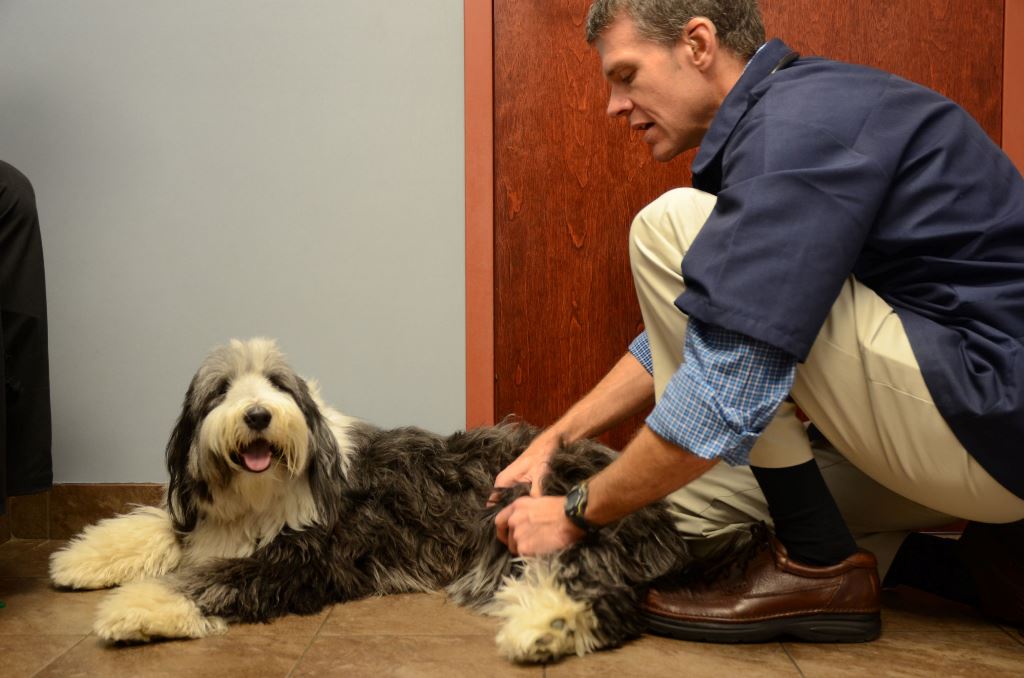
Indy was a middle-aged mixed-breed dog who developed Stage 3a lymphoma requiring weekly treatment under a CHOP chemo protocol. Only one problem: he was an FAS 4-5 patient who did not like to be touched, let alone restrained. How were we going to treat weekly with IV catheter-administered chemotherapy? Spent a lot of time in the early days fine-tuning a PVP protocol that allowed us to work on touch gradient approach so we could eventually hold his paw and use a regular or butterfly catheter to administer therapy. We always had myself and one specific technician available to work on desensitization with gentle restraint and forelimb holding. Lots of treats. For longer IV treatments, we preemptively sedated Indy. By the end of his treatment cycles, he would walk into the chemo room, sit or lie on a padded mat, and let us treat without incidents. Amazing! It works!
Jeffrey D. Palmer, DVM, Elite Fear Free Certified Professional, Burr Ridge Veterinary Clinic, Darien, Illinois
PVP, Tuna Lead to Successful Cat Exam
 A new feline patient with a high level of fear, anxiety, and stress went home with gabapentin as a pre-visit pharmaceutical. The exam we performed two days later was great. He was readily eating tuna and happy to be petted. He did well for a complete exam, including radiographs and blood draw. The Feliway-infused towel was also a great help.
Matthew Hudson, DVM, Elite Fear Free Certified Professional, VCA Blum Animal Hospital, Chicago, Illinois
Cat Can Do
We have seen so many success stories with numerous patients, but the best for me is my personal cat. He is an uncontrolled diabetic, and the first year I owned him he had a lot of blood draws and vet visits. He was a wonderful-tempered cat at home, but at the clinic, while he never bit or scratched, he hissed and struggled every time he came out of the cage and became a difficult patient to handle. He is very food-motivated and after we started Fear Free practices and he got squirt cheese and baby food every time he was handled, he now purrs and rubs on everyone when he comes for treatments and is so much happier and easier to handle. I am overall so much more aware of a patient’s anxiety level the moment they walk in the door now, and it gives us a chance to start finding ways to alleviate their stress before it escalates.
Cheri Crane, Elite Fear Free Certified Professional, Customer Service Representative, Healing Paws Veterinary Clinic, Springfield, Missouri
Culture Change
For most of my practice career, I have been involved in student training. Some students embraced the things I taught them about the importance of minimizing fear, anxiety, and stress in patients, while others felt I was “too soft,” “only cared about giving the animals treats,” or “was crazy or misguided in my efforts.” Fellow faculty members sometimes shared these sentiments and even accused me of not being able to “get the job done” when I would elect to postpone or re-plan a procedure for an animal. The revolution of awareness that Fear Free has helped to create in our profession has changed the way I am viewed by students and colleagues. No longer the “crazy Dr. Griffin,” I am the one they ask to teach them about low-stress handling and Fear Free techniques. The art and science of Fear Free have become valued: this is truly a gift for all of us, our patients, and their owners. I look forward to the day when Fear Free is taught in all veterinary colleges and is fully embraced as an indispensable standard of care in veterinary practice.
Brenda Griffin, DVM, DACVIM, Elite Fear Free Certified Professional, Adjunct Clinical Associate Professor of Shelter Medicine, Maddie’s Shelter Medicine Program, University of Florida College of Veterinary Medicine, Gainesville, Florida
Happy Puppy, Happy Vet Visit
I took a client’s puppy to our veterinary office for a happy visit after the previous appointment did not go well for them. We played on the floor, showed off some of their tricks, ate some really yummy food. I was able to ask for a nose target to get up on the scale all on his own! We were able to leave with a calm, happy puppy and his next vet visit went much better.
Jenn Hauta, Elite Fear Free Certified Professional, Fairy Dogmother Training & Pet Care, Nanaimo, British Columbia, Canada
 I’m a Fear Free trainer, but there are no veterinarians I trust in my town, so I travel an hour to TLC Pet Hospital in Albuquerque and have had the most amazing experiences, thanks to the patience, kindness, and knowledge of the staff there. My dogs are fearful, and one is especially vet-phobic after traumatic experiences elsewhere. Some of his past vet visits have been so anxiety-inducing for him that I also end up in tears. But with gabapentin on board and the Fear Free approach from Dr. Long and Sam the veterinary assistant, my dog was wagging, approaching them, licking their faces, asking for pets, and acting like the brave and social dog he is at home. All of us in the room were floored by the change! At the next checkup he took food from them, did some chin-rest stationing with them, targeted their hands, and showed off his tricks. My own fear, anxiety, and stress levels have been drastically reduced thanks to their dedication to Fear Free vet visits. I’ll continue to do the two-hour round trip because I love having a veterinarian who listens to me and treats me like an adult, and because my dogs’ mental and emotional health is taken as seriously as their physical health at TLC. I am so thankful for their care and commitment to Fear Free vet visits and their overall friendly clinic.
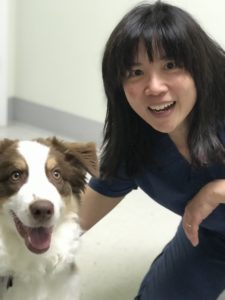 I work closely with the veterinary hospitals in my town. The team at Appalachian New River Veterinary Associates (ANRVA) referred Toby to me. Toby was terrified at the veterinary hospital and could not take food, even as a young puppy. I established a rapport with Toby away from the veterinary hospital. I did this using special food and something else Toby loved – play! Toby learned foundation behaviors that gave some predictability to our sessions and helped him feel safe.
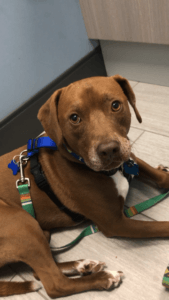 Maxwell is a 7-year-old retriever/hound mix who was rescued from a hoarding situation with more than 100 dogs. Maxwell was the most fearful of them. We don’t know a lot about Maxwell’s day-to-day life while on the hoarder’s property, but volunteers reported that he was kept in a small shed without much social interaction.