Blog Archives

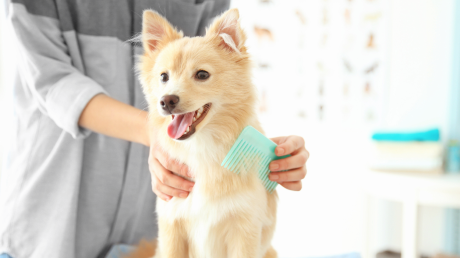
How many times have you seen an animal shy away from the blow dryer or the nail clippers? How about trembling in the bathtub? Many animals don’t necessarily enjoy having their feet handled, getting a haircut, or taking a bath. But there’s a lot that groomers can do to make those things more comfortable (and even fun!) for them.

The Fear Free Groomer Certification Program teaches you how to use Fear Free concepts to ensure that the grooming experience is as enjoyable as possible for every pet, every time. Step-by-step video clips and slides show you how to teach animals to love the grooming table, clippers, the bathtub, the blow dryer, grooming shears, the groomer’s loop, and more.

Whether it is the animal’s very first visit to the salon or they have already developed a fear, you can help them. You’ll learn how to recognize even the most subtle signs of stress, and you’ll be well equipped on how exactly you can help a pet who is feeling stressed.

You’ll learn how to set the salon environment up to help ensure Fear Free grooms, from the moment a pet enters the salon, throughout the groom, and until the moment they leave. This includes shop layout, sights, sounds, smells, entrances and exits, and more.

All this translates into happier pets, more frequent visits, and satisfied pet owners spreading the word about how much fun their dog or cat had at your salon. Decrease stress on you and the animals, and increase your revenue!

The purchase of the Fear Free Groomer Certification Program provides you with an annual membership for the program, which requires an annual renewal fee and completion of additional annual CE to maintain your membership.

This course has been approved by the PACCC for 5 CEU

|
By Tamara Grubb, DVMIn human medicine, postoperative nausea and vomiting are among the most prevalent and concerning of all postanesthetic complications. The conditions are so common and have such an impact on human health care that they have earned their own acronym from the National Health Library, PONV.

A recent PubMed search of PONV garnered almost 10,000 hits. For the human patient, PONV is unpleasant and results in dissatisfaction with perioperative care (Gan et al. 2014). Humans would pay extra to prevent PONV (Gan et al. 2014). Unfortunately, PONV is more than just an annoying occurrence. Vomiting itself can cause other postoperative complications, and PONV has been called “distressing” by humans who experience it (Gan et al. 2014).

As all veterinarians and veterinary technicians can attest, PONV also occurs in veterinary patients, and we should ask ourselves this question: is PONV distressing to our patients? Could PONV lead to or add to fear, anxiety, and stress (FAS)?

The author of a recent review of nausea and vomiting in veterinary patients makes a strong argument that these conditions could cause or compound FAS and could be considered an animal welfare issue (Hay Kraus 2017). The point is made in the review that Brambell’s Five Freedoms of animal welfare include freedom from discomfort, pain, and distress. PONV likely causes discomfort, could contribute to pain, especially in patients with preexisting abdominal pain, and could potentially be distressing.

Maybe we can’t definitively know whether an animal experiencing PONV is “distressed” or not, but we can argue that reduction of PONV is medically beneficial to our patients. Potential adverse effects of PONV include dehydration, electrolyte imbalances, esophagitis, aspiration pneumonia, exacerbation of pain, and elevated intracranial and intraocular pressure. In addition, PONV is likely to cause anorexia and may even contribute to agitation in the recovery phase of anesthesia.

Fortunately, we have drugs, such as maropitant, that decrease the incidence of PONV and the associated adverse effects. Numerous studies describe the anti-nausea and anti-emetic effects of maropitant in both dogs and cats (Hay Kraus 2017). One study also showed that dogs receiving maropitant returned to normal food intake postoperatively more rapidly than dogs not receiving maropitant (Ramsey et al. 2014). At 20 hours post-anesthesia, 93 percent of the dogs receiving maropitant versus 46 percent of the control dogs had returned to normal feeding. This could aid in alleviating dehydration, electrolyte imbalances and any nutritional deficits that might affect healing.

In the same study, dogs receiving maropitant had a better quality of recovery than control dogs. This could be due to decreased PONV and could add support to the theory that PONV is distressing to veterinary patients. In human medicine, administering sedatives that also decrease the incidence of PONV is recommended for treating emergence delirium in children (Dahmani et al. 2014).

Finally, reduction of PONV is not only medically appropriate for the patient, it is also important for maintaining the human-animal bond and pet-owner satisfaction with perioperative care. Nausea, vomiting, and anorexia are major concerns for pet owners, and presence of any of these conditions generally leads to owners assuming that their pets are experiencing diminished quality of life. As in human medicine, pet owners are concerned enough about PONV to pay extra money for its prevention (Hay Kraus 2017).

The bottom line is that PONV can be a medical concern both on its own and through complications caused by the act of vomiting or the vomitus itself (i.e., aspiration). PONV can exacerbate pain. PONV may contribute to FAS. Owners are concerned about PONV. We have drugs with high safety margins that effectively alleviate or eliminate PONV, and one of those (maropitant) may even play a role in analgesia. So why wouldn’t we treat or prevent PONV, regardless of the motive?

This article was reviewed/edited by board-certified veterinary behaviorist Dr. Kenneth Martin and/or veterinary technician specialist in behavior Debbie Martin, LVT.

Care of Hospitalized and Boarding Patients

Dr. Rachel Abrams

Join Fear Free Practice Certification Manager Dr. Rachel Abrams for an overview of the path to practice certification and a discussion about preventing and alleviating FAS in your hospitalized and boarding patients.

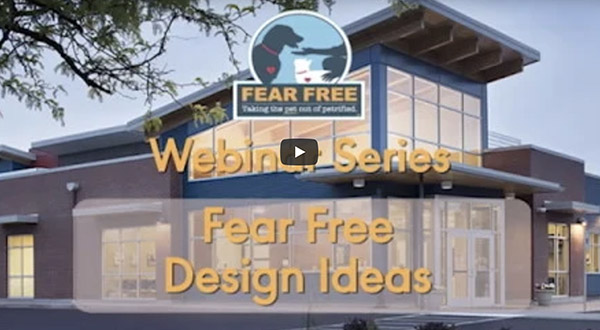
Fear Free Design Ideas

The built environment affects the mental and physical well being of people and animals. What can you in your Fear Free Certified hospital to further foster a low-stress and healthy environment? In this webinar we will give you tips and tools for implementing Fear Free design into your spaces.

What’s that you smell?

We know that dogs’ and cats’ sense of smell if far superior to ours. What can we do to to optimize their olfactory experience? In this webinar, Fear Free Practice Certification Manager Dr. Rachel Abrams will take a closer look at Optional Facilities Standard 4.8 “Cleaning protocols to improve olfactory experience for pet are in place.”

All webinars in this series open with a brief overview of the path to practice certification and conclude with a live Q&A session.

|

Do You Hear What I Hear? Noise Aversion Beyond Thunder and Fireworks

Noise aversion isn’t only about thunder and fireworks. Many of your patients are suffering daily from noise aversion to everyday environmental events.

What can the veterinary professional do? In this webinar, sponsored by Zoetis, board certified veterinary behaviorist and Fear Free Executive Council member Dr. Lisa Radosta discusses a variety of treatments that can help patients with noise aversion live happier lives.

Fear Free: Evolving to the Hospitalized, Emergent, and Sick Patient, sponsored by Zoetis

Dr. Tamara Grubb, PhD

In this webinar, board certified veterinary anesthesiologist Dr. Tamara Grubb, PhD, discusses the interconnectedness of pain with fear, anxiety, and stress, and examines therapeutic and diagnostic strategies for both. Topics covered include the relationship between FAS and pain, diagnosing and treating both pain and FAS, reducing FAS in the hospitalized patient, and FAS and pain in the emergency setting. The relationship of pain with fear, anxiety, and stress (FAS) – a relationship that works both ways – is crucial for veterinary professionals who seek to treat their patients’ physical and emotional health. How can the veterinary professional best understand, diagnose, and treat both pain and FAS?

Case Management of Fear, Anxiety, Stress, and Pain, sponsored by Zoetis

Ralph C Harvey, DVM, MS, Diplomate ACVAA, UTCVM

Pain adversely affects the fearful, anxious, and stressed patient. These clinical issues are tightly interrelated, and we best manage them together. In this webinar, Dr. Ralph C. Harvey, a specialist certified by the American College of Veterinary Anesthesia and Analgesia, presents clinical cases demonstrating effective management of this deleterious continuum so as to enhance favorable outcomes for patients, clients, veterinary personnel, and practices.

|
By Kim Campbell ThorntonRead part one of this series here.

We all know that cats are tough to decode. They hold their secrets tightly, refusing to share how they feel. Old cats are especially wily when it comes to concealing illness or pain. Being able to see through their camouflage is key to keeping them healthy and serene in their golden years.

In her lecture “It’s Not Just Old Age: Optimizing Health Care for Senior Cats,” presented earlier this year at the Western Veterinary Conference in Las Vegas, Susan Little, DVM, board-certified in feline practice, shared some of her secrets for questioning owners and examining cats to get at the truth within.

Get All The Info

Dig deep. Owners might not mention certain things because they assume changes they see are normal in an old cat instead of realizing that they could be related to disease or pain.

One study found that 55 percent of owners don’t know that cats can have kidney disease without appearing sick, and 38 percent don’t know that senior cats can develop osteoarthritis. Subtle signs of sickness that owners might attribute to old age or fail to connect to illness include not using the litter box, being less social or less active, eating or drinking poorly, weight loss, a change in sleeping habits, and bad breath.

We often hear that it’s important to ask open-ended questions to gather details, but Dr. Little recommends a combination of open- and closed-ended questions because so many variables influence the answers, including the cat’s age and the owner’s level of experience with cats. She likes to start with open-ended questions and then narrow her focus with closed-ended questions.

Phrase questions to elicit specifics

“I’m still learning to take a good medical history,” Dr. Little says. “It’s an art; it’s a real skill.”

For instance, instead of asking, “Have you noticed any changes in your cat’s litter box use,” say “Tell me about your cat’s litter box use.”

That’s a good way to get detailed comments about urine output, stool quality, and litter box behavior that owners might not think to mention. If the owner says, “He forgets where the litter box is,” maybe he didn’t forget, Dr. Little says. Maybe the litter box is downstairs in a dark basement and it hurts to go down the stairs or it’s too dark in the basement, and he can’t see very well anymore. These types of questions can give you a bigger, better picture of what’s going on with a senior cat.

Visual Aids And Other Feedback

It’s a cliché that a picture is worth a thousand words, but the fact remains that pictures help. Show owners a fecal score chart with actual pictures of poop, not just line drawings, and ask them to point to the one their cat’s poop resembles.

“Not all owners know what is normal, especially if the cat’s stool is like that all the time,” Dr. Little says.

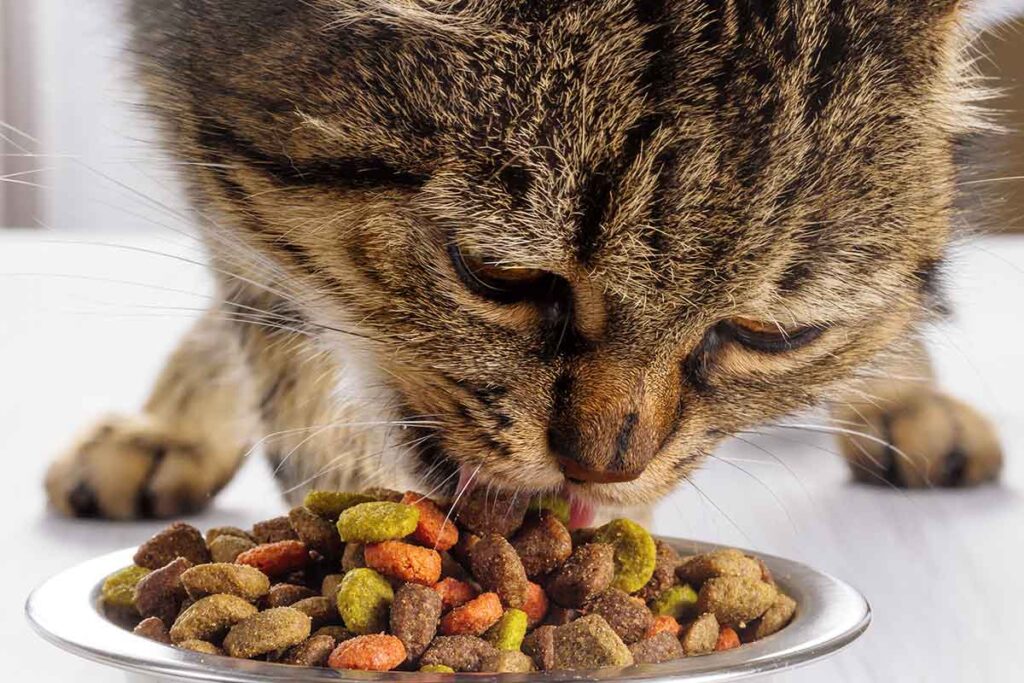
Know how much the cat eats. Many owners don’t measure food; they just keep the bowl topped up. For free-feeding owners, ask them to weigh the bowl of food morning and evening for a few days or even a week. The difference tells you how much the cat actually eats.

Before owners come in, ask them to complete a questionnaire on their cat’s pain levels. This should be done at home so the answers can be thoughtful and not rushed. One to consider is the Feline Musculoskeletal Pain Index, available from North Carolina State University.

It’s also a good idea to ask owners to fill out a diet history form at home or ask them to use a smartphone to photograph the bags or cans for everything they give their cat.

“People always forget what they feed the minute they walk in the vet’s door,” Dr. Little says.

Other useful assessment tools to give owners, in advance if possible, are the free downloadable brochure How Do I Know If My Cat Is In Pain?, free nutritional and other health guidelines from World Small Animal Veterinary Association, and checklists from the Indoor Pet Initiative, including a health history questionnaire and environmental needs for senior pets.

In the next post, how Dr. Little conducts successful exams with senior cats.

This article was reviewed/edited by board-certified veterinary behaviorist Dr. Kenneth Martin and/or veterinary technician specialist in behavior Debbie Martin, LVT.