Blog Archives

||
Editor’s Note:Alyson Evans is a Fear Free Certified veterinary technician, a certified Compassion Fatigue coach, and the hospital manager at Briargate Boulevard Animal Hospital in Colorado Springs, Colorado. This first-person piece is part of an email to Fear Free Education team staff describing her own experience working in the field, in the currently overwhelmed veterinary industry. We thought that many of you might relate to it, so we asked if we could share it.

I thought I was happy and handling my stress well, but I wasn’t. I was hiding stress from my team and taking it out on my husband and son. Not a healthy way to cope. Burnout is a state of emotional, physical, and mental exhaustion caused by excessive and prolonged stress. It occurs when you feel overwhelmed, emotionally drained, and unable to meet constant demands.

I received some personal coaching about burnout and had some one-on-one time with a coach. It was eye-opening to me and confirmed that I was suffering from burnout. “Suffering” is a difficult word to stomach, especially when talking about yourself.

Here is perhaps an even harder pill to swallow: As women, we let ourselves get into a position of burnout. Men don’t typically experience burnout as much as women do. We are raised and taught to be the primary caregivers for our children and family. We put ourselves last and think that we need to be more like men to succeed.

Once I realized I had allowed myself to take on all of these roles, I said right then: “No more.”  I set boundaries at home with my 3-year-old son and my husband. I want to raise my son to know that women are not just caregivers; they are individuals who need boundaries and that he needs to be a partner in any relationship he is in, work or personal.

I told my team that although I seemed happy and upbeat at work, I would go home and keep thinking about all of them. How would I get them pay increases if we didn’t hit our quarterly goals? How could I show more appreciation? Would more of my team quit? How would I find replacement team members given the national shortage of veterinary professionals?

One of my exercises was to fill out a pie chart. Out of 100 percent of the day, how much of that time was spent thinking about work? How much was spent caring for my son? How much time did my husband receive? Then, how much for me? Out of the time spent with my son and husband, how much time was I actually present: No phone on me, not multitasking, but actually engaging with them? This was so difficult, and at this point I burst into tears.

I spent 80 percent of my day thinking about work, from the time I woke up to hours after I had  left. I gave 15 percent to my son and 5 percent to my husband, leaving 0 percent to myself.

Having the visual of the pie chart led me to set new rules or boundaries in my home. When my son and I get home from school and work, we spend 30 minutes outside together listening to children’s music and drawing with chalk on our driveway (both adults and kids need to be able to transition from work/school to home). Once we do that, we go inside and I call my husband to see when he will be home so I can make dinner or start prepping dinner for him to make. (We make a weekly dinner menu to take that added daily stress off our plate.) When he arrives home, we each have 30 minutes to send any necessary texts and then phones go on chargers in our bedroom so we can engage, be present, eat together, and talk during dinner. Once our son is in bed, we take 30 minutes to check Facebook or do whatever we want before spending quality time together.

A big part of combating burnout is owning your share of it and how you got there. If there have been a lot of euthanasias, speak up and let your supervisor know that emotionally, you need a break. (I just did four in two days and needed to tap out for the last one of the day). It is okay to admit that and to speak up when it is to the point of emotional breakage, but if you are someone who just dodges euthanasias and puts that strain on your co-workers, then that is not fair to your team members.  We must own what is happening to us and reflect on what we are allowing to cause the burnout.

Support staff should check in on doctors who have done multiple euthanasias, as they should with each other. Management needs to do so as well. If management is also a trained tech, have them take a euthanasia or two if they can, to lighten the emotional load that their team carries.

For management teams: When you hear a team member say “I’m so burned out,” take that seriously and pull that member aside to talk. Have that conversation, because if it really is burnout, they need some time to be away from work to focus on themselves, talk with a coach or therapist, and get support. Having wellness conversations with team members is important in this field and is the only way we can keep our team mentally healthy.

Alyson Evans, CVMA CVA, RVT, CVT, CCFP, Hospital Manager, Briargate Boulevard Animal Hospital, Colorado Springs, Colorado

Check out our Fear Free on the House page for resources on wellness, quick tips, and more!

This article was reviewed/edited by board-certified veterinary behaviorist Dr. Kenneth Martin and/or veterinary technician specialist in behavior Debbie Martin, LVT.
 
|

The Case Against P3 Amputation

While pain management is a vital part of Fear Free, it is even more important for cats who have been declawed. Join us and Robin Downing, DVM, MS, DAAPM, DACVSMR, CVPP, CCRP, founder of The Downing Center for Animal Pain Management, to learn about the trauma of feline toe amputation from the pain, biomechanical, and bioethical perspectives. This will energize your commitment to “just say no”!

Fear Free and Airvet: A Pawsitive Pairing for Your Practice

Keeping pets (and their vets) stress-free is good for everyone! Fear Free and Airvet have teamed up to help pets live healthier and happier lives. This fireside chat will cover how using Airvet’s connected care platform and Fear Free training can alleviate fear, anxiety & stress in pets while allowing you to easily deliver an outstanding client experience.

Please join Marty Becker, DVM, founder and CEO of Fear Free; Russ Brewer, DVM, CVMA, CVSMT, CCRT of Care Animal Hospital of Pleasant Prairie; and Jeff Werber, DVM, Chief Veterinary Officer of Airvet, as they share their experiences and best practices that will set you and your team apart from the pack.

Steve DaleFor two decades I’ve been speaking at veterinary and animal behavior meetings about the need to enrich indoor environments for companion animals, but most especially for indoor cats. When I began, Tony Buffington, DVM (professor emeritus at The Ohio State University College of Veterinary Medicine), and others at around that time had begun publishing studies demonstrating that living in a dull environment increases stress in cats and may cause or contribute to both behavior issues and a variety of health problems.

By enrichment, I mean providing suitable outlets to meet the specific, hard-wired needs of a particular species. For cats, enrichment includes the manner in which they are fed.

There’s no doubt that cats, being the predators they are, have a built-in prey drive. But what is the best way to activate that drive, and do cats prefer to be fed?

Years ago, it was discovered that some laboratory rodents and a varied roster of zoo species prefer to work for their food, a phenomenon known as contrafreeloading, rather than dining from a free-standing food dish.

Mikel Delgado, Ph.D., a certified applied animal behaviorist and certified cat behavior consultant, set out to learn if domestic cats contrafreeload in a home environment. The only previous study on cats dated to 1971, with six laboratory cats showing no interest in working for their meals.

Delgado hypothesized that in a home environment, domestic cats would readily contrafreeload and show a preference for eating from a food puzzle compared to a dull tray piled with identical food. She also hypothesized that more active cats would be more likely to contrafreeload.

“I’ve long recommended food puzzles to clients with positive results,” she says. “In nature, cats hunt so I was certain that tapping into what cats are hard-wired to do would be no problem and we’d easily prove the previous study [for cats] wrong. However, science can be funny that way, and yes we were surprised [by the results].”

Those results were recently published in a paper called “Domestic cats (Felis catus) prefer freely available food over food that requires effort” (with Brandon Sang Gyu Han, grad student at the University of California Davis School of Veterinary Medicine, and veterinary behaviorist Melissa Bain, DVM, professor of clinical animal behavior at UC Davis School of Veterinary Medicine) in the Journal Animal Cognition.

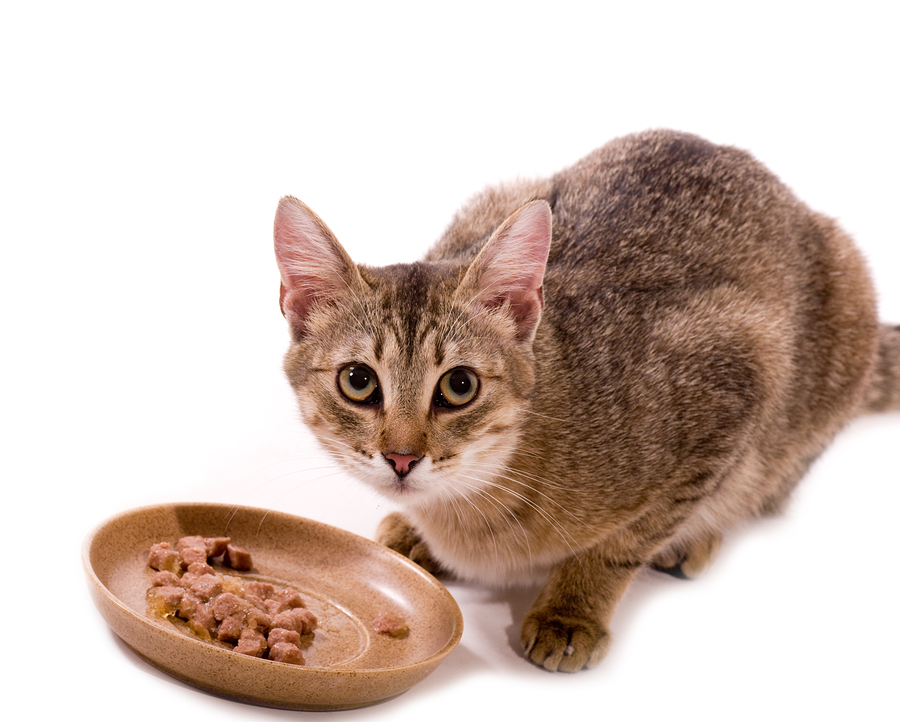
Seventeen cats participated in the study, using one consistent food puzzle (Trixie Pet Tunnel Feeder Food Puzzle) with a food dish next to it.

Surprise: Cats did little contrafreeloading. Instead, they mostly chose the easy meal from the bowl. Most cats ate some food from both sources, but the amount of food eaten from the easy meal on the tray was significantly higher than the amount of food eaten from the puzzle. Almost half the cats consumed less than 10 percent of food from the puzzle. And none of the cats were considered strong contrafreeloaders.

“Though surprising, our findings were statistically relevant,” says Delgado. “There wasn’t a lot of variability.”

However, veterinary behaviorist Theresa DePorter, DVM (who is boarded both in the U.S. and Europe), says, “We’ve actually known for a very long time that domestic cats do contrafreeload – depending on how we define contrafreeload – as very well fed indoor/outdoor cats who clearly don’t require a meal but apparently enjoy the chase and catch and then deliver rodents or birds as live ‘gifts.’”

Dr. DePorter, who lives in a rural setting, says one of her cats – who happens to be very well fed – catches mice.

Liz Bales, VMD, notes another factor: “The seeking circuit was missing in this study. Cats need to go through seeking and finding their prey, the hunt. The pounce and eat is only a fraction of the process, which was represented by the food puzzle but it just sits on the ground next to a food bowl and may not be stimulating enough for many cats who naturally are hard-wired to seek. Also, there’s no movement involved with this particular food puzzle, and movement is stimulating for cats.”

Dr. Bales adds: “In my experience, cats being cats, the acclimation period, four to 12 days, of a novel way to feed wasn’t nearly long enough. I would think the acclimation period to the food puzzle should be months and not days.” And indeed, Bales does have acclimation experience as she is also an entrepreneur who created “hunting products” for cats, notably the Indoor Hunting Feeder (https://docandphoebe.com/).

Cats may be timid, cautious or at least circumspect about anything novel such as a new food puzzle, adds DePorter. “Yes, they may well require more acclimation time, particularly since these cats may have had no prior experience with food puzzles.”

Neither Bales nor DePorter quibble with the notion that this study was well-thought out and important, but both consider it only a start, and Delgado doesn’t disagree.

Delgado’s hypothesis that generally more active cats would be more into contrafreeloading also fell flat.

Delgado suggests: “Perhaps it means lives are so enriched of the cats in the study that their drives to use puzzle feeders was reduced. Perhaps we could have better acclimated and more motivated by using treats at first in the feeders. Also, individual cats may have individual preferences to different food puzzles.”

Delgado, who co-owns a website that sells puzzle feeders (www.foodpuzzlesforcats.com) is in no way suggesting pet parents diminish use of puzzle feeders. “For starters, do understand most of the cats in our study did eat something from the puzzle feeder.”

Bales says “countless times” she has witnessed her puzzle feeders contributing to solve behavior problems, which in some cases has kept cats in homes.

DePorter also remains a cheerleader for puzzle feeders. “I absolutely don’t interpret this study is suggesting not to use puzzle feeders – that would be a mistake. We know puzzle feedings are enriching, help to control food intake, and provide physical and mental exercise and may reduce obesity – which is so common among cats. And, of course, obesity leads to a laundry list of issues.”

Delgado concludes, “Certainly, there’s more to learn, more to do – understanding cats has never been easy.”

This article was reviewed/edited by board-certified veterinary behaviorist Dr. Kenneth Martin and/or veterinary technician specialist in behavior Debbie Martin, LVT.
Steve Dale, CABC (certified animal behavior consultant), hosts two national pet radio shows and is on WGN Radio, Chicago. He’s a regular contributor/columnist for many publications, including CATSTER, Veterinary Practice News, and the Journal of the National Association of Veterinary Technicians in America. He’s appeared on dozens of TV shows, including Oprah, many Animal Planet Programs, and National Geographic Explorer. He has contributed to or authored many pet books and veterinary textbooks such as “The Cat: Clinical Medicine and Management” and co-edited Decoding Your Dog, by the American College of Veterinary Behaviorists. He speaks at conferences around the world. www.stevedale.tv.
Steve DaleRoxy’s arthritis had worsened. Because of the 18.5-year-old Devon Rex cat’s history of gastrointestinal issues, her veterinarian and owners had few pharmaceutical options for managing her pain.

For clients, seeing a pet in pain is the worst. Cats are especially adept at masking pain, so when they actually show they are in pain, they are really hurting. That’s where we were with Roxy.

Gabapentin had been prescribed, but all it did was increase her catnap time. I consulted an expert. “Let me hold Roxy’s paw and we’ll slowly increase the dosage,” said Robin Downing, DVM, internationally renowned for her knowledge about pain in pets.

Dr. Downing consulted with my Chicago, Illinois-based primary care practitioner Natalie Marks, DVM, who welcomed Dr. Downing’s contribution.

Downing gradually upped the dose of the gabapentin, and her persistent yet measured effort appeared to bring results without an accompanying significant primary side effect of the drug: drowsiness.

“Multimodal is the best approach for osteoarthritis for nearly all cats,” Downing says. To that end, we began to employ a tool called an Assisi Loop, which uses targeted pulsed electromagnetic field technology to treat pain and decrease inflammation. That not only benefited Roxy’s osteoarthritis, but also had the potential to aid her GI issues. In addition, for arthritis I give her injections of Adequan.

That was in 2018 and Roxy clearly benefited from the collaboration between Drs. Downing and Marks and the multimodal approach. However, about a year ago, I noted that Roxy appeared to be struggling a tad more and asked Dr. Marks for further advice.

“The struggle we have as small-animal practitioners is that we only have certain pain medications that are safe and approved for cats as they age, and many are contraindicated for cats with other conditions,” Marks said. “Our goal for our patients is for them to have the best quality of life and to be as pain free as possible every day. The beauty of veterinary medicine today is that we have a variety of integrative therapies which are readily available, and I thought about medical massage therapy. And technology can deliver a way to demonstrate options as never before.”

She suggested I contact Rosemary LoGiudice, DVM, who is boarded in veterinary rehabilitation medicine and practices in Hanover Park, Illinois. She is at least an hour from my home, not to mention this was all happening at the height of the pandemic.

Marks said, “I think this may be the perfect use of telehealth. And I believe massage therapy may help.” Dr. LoGiudice agreed.

LoGiudice noted that ideally she would want to get her hands on Roxy to feel her flexibility and for heat in the joints. But she was able to communicate with Dr. Marks, who has known Roxy most of her life and had recently examined her.

Using my phone, I took video of Roxy moving in her own element from different angles as directed by LoGiudice, who says, “When I can see the dog, cat, or horse moving in a natural way, I can get a good feel for stride and how the joints are moving. Very few dogs and cats are going to show me in the exam room how they move at home.”

LoGiudice and I jumped on a Zoom show and tell call. Dr. LoGiudice held a plush dog in her lap. She showed me exactly what to do, where to do it and how much pressure to exert when offering massage therapy. Old-school written directions could never replicate Dr. LoGiudice demonstrating, and then watching me and directing me, “Move your hand slightly lower.”

I gradually spent more time every night massaging Roxy. Roxy not only didn’t fend off the nightly spa treatment, she began to request it. Even now, a year later, when I stop, she paws at my face demanding more.

That was no surprise to Downing. “If this was causing Roxy pain or discomfort, or Roxy didn’t enjoy it, she still moves well enough to walk away,” she says.

Watching video of Roxy two weeks after the start of the Dale Spa treatment, LoGiudice wasn’t surprised either by the effect of medical massage to slightly but noticeably increase Roxy’s mobility and interest in exploring or moving to whatever room my wife and I are in. Also, LoGiudice is now inspired by the idea of using video and video chat to support clients in a way she hadn’t previously considered.

Downing agreed. “There’s no substitute for being hands-on with our patients, and for office visits, but you can certainly observe more remotely than what is possible in an exam room. And to schedule time for a virtual lesson in medical massage therapy, acupressure techniques, or teaching animals how to stretch are only a few examples.”

From her perspective of having known Roxy for more than half her life, Dr. Marks says, “I absolutely saw a difference in Roxy. What I really loved about this collaboration isn’t only about considering integrative care, it’s about how veterinarians are being creative to help all involved, especially at this time. And right now, we do need to be creative. I hope this specific type of partnership and using technology in the way we did with Roxy becomes a model, sticking around long after the pandemic.”

This article was reviewed/edited by board-certified veterinary behaviorist Dr. Kenneth Martin and/or veterinary technician specialist in behavior Debbie Martin, LVT.

Steve Dale, CABC (certified animal behavior consultant), hosts two national pet radio shows and is on WGN Radio, Chicago. He’s a regular contributor/columnist for many publications, including CATSTER, Veterinary Practice News, and the Journal of the National Association of Veterinary Technicians in America. He’s appeared on dozens of TV shows, including Oprah, many Animal Planet Programs, and National Geographic Explorer. He has contributed to or authored many pet books and veterinary textbooks such as “The Cat: Clinical Medicine and Management” and co-edited Decoding Your Dog, by the American College of Veterinary Behaviorists. He speaks at conferences around the world. www.stevedale.tv.
|

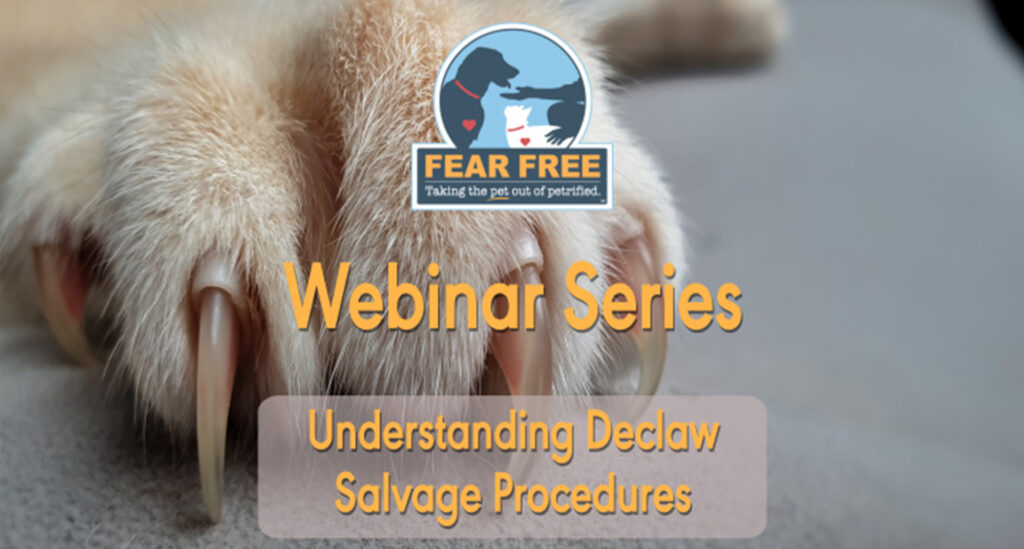
Understanding Declaw Salvage Procedures

Until declaws are eliminated in the United States, you will most likely encounter declawed patients in your practice. With recent advancements in surgery, salvage procedures can help manage pain and improve limb function. Join one of the leading figures in declaw salvage surgery Nicole Martell-Moran, DVM, MPH, DABVP (Feline Practice), to learn about the procedures involved, how to find training, and how you can incorporate it into your practice.