Mikkel Becker
One of the best ways to earn a pig’s trust and friendship is by appealing to the pig’s big appetite. The saying “eat like a pig” holds true for many pigs who are highly focused on food. At The Center for Bird and Exotic Animal Medicine near Seattle, Washington, Dr. Alicia McLaughlin and her team have found that food talks when it comes to swaying swine to seeing veterinary team members as friends rather than foes, and in doing so, obtaining their calm cooperation.
Creative strategies have also shown big benefits for some of Dr. McLaughlin’s patients. One strategy that works for some pigs is to “fork” the pig using gentle presses of a fork on the pig’s back. Pigs who are calmed by such touch will often lie down on their side to soak up the soothing massage, exposing their underside and allowing belly and foot exams to be completed with the pig’s willing cooperation.
Dr. McLaughlin also incorporates the owner’s participation into the care experience. With one pig, the trick for getting a willing hoof trim was as simple as the owner bringing in a favorite treat: cucumbers! On one end of the pig, a person held on to a whole cucumber for the pig to chomp on, while at the undercarriage another team member performed hoof care. By the time the entire cucumber was finished, so was the hoof care, making it a win-win for pig and people.
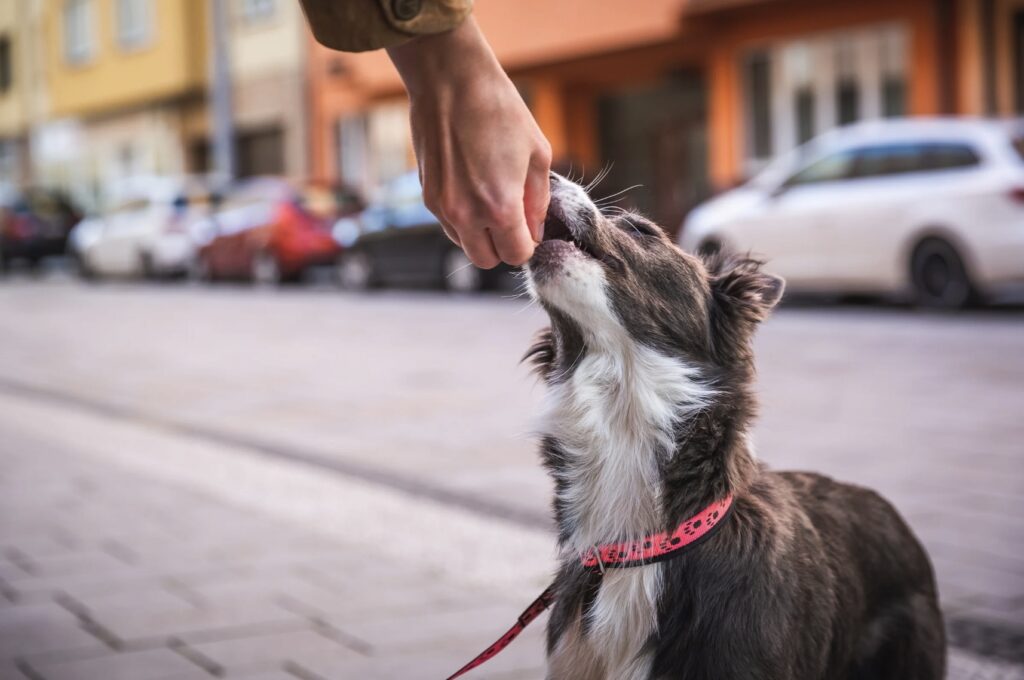
One technician during the exam or care is often charged with the task of giving tasty treats with the pig’s owner nearby to keep the swine distracted during the exam. The trick of treats is finding what works best for each patient. Pig owners are encouraged to bring in their pig’s favorites in addition to the ones already on hand in the hospital.
Three delectable delights for pigs to pig out on during Fear Free exams and procedures are peanut butter, cream cheese, and Cheerios. For instance, peanut butter placed on a tongue depressor or smeared inside a small bowl may be used to distract the pig during the exam.
One of the greatest challenges of pig exams is getting a weight. Pigs don’t like to be lifted or restrained, and with the size of many pigs, doing so to get the swine onto the scale would be upsetting, causing avoidance in the future.
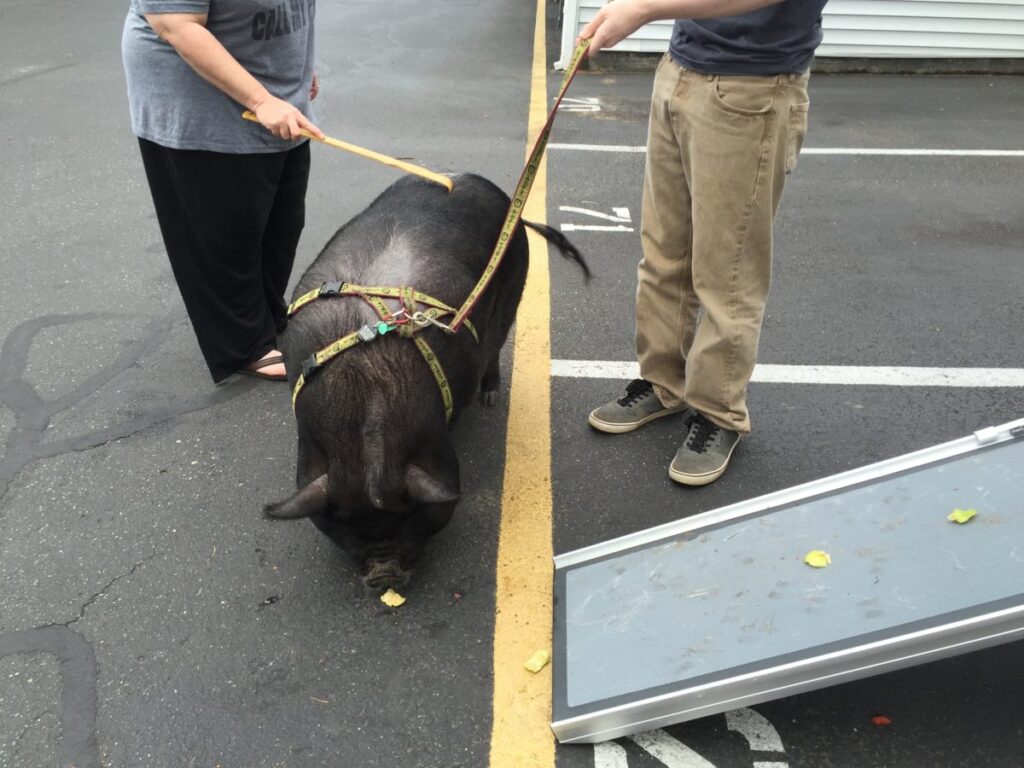
A solid approach is to get the pig to move onto the scale on his own. This is best achieved with a combination of teamwork, time, and treats.
“Make your job as easy as possible by creating a chute-type scenario leading up to the scale using human bodies or other items to funnel the pig onto the scale,” says Dr. McLaughlin.
A line of Cheerios or other tasty treats can be placed for the pig to follow through the chute and onto the scale. In the center of the scale, place a pile of treats to keep the pig in place momentarily while being weighed.
Most important, avoiding force is critical for earning trust.
“Don’t push it. I’m a firm believer in giving a pig a little more time, and it will end up taking less time in the long run,” says Dr. McLaughlin.
This article was reviewed/edited by board-certified veterinary behaviorist Dr. Kenneth Martin and/or veterinary technician specialist in behavior Debbie Martin, LVT.
Mikkel Becker, CBCC-KA, CPDT-KA, KPA CTP, CDBC, CTC, is lead animal trainer for Fear Free Pets. She is a certified behavior consultant and trainer who specializes in reward-based training that’s partnered closely with the pet’s veterinary team. Mikkel is coauthor of six books, including From Fearful to Fear Free.