Blog Archives

A four-part “from the trenches” series, written by a Fear Free veterinarian for Fear Free veterinary professionals.This is Part Two of a four-part series on helping Fear Free Certified Veterinary Professionals handle patients with high levels of FAS and communicate with their owners.

By Julie Liu, DVM

You see a historically high FAS dog on your schedule for planned sedation and feel confident in your plan. The client has done a great job with positive basket muzzle training and administering PVPs as directed, and while the PVPs don’t really seem to have had much of an effect, surely the sedation you just gave will help her feel calmer. So, you wait. And wait. No effect. Did you miscalculate your doses?

Unfortunately, despite all your careful planning, you will encounter some hurdles when managing high FAS patients, particularly during procedures that are more painful or aversive. Here are some tips on circumventing roadblocks during Fear Free care:

  • Re-evaluate wants vs. needs. It’s easy to lose sight of this Fear Free fundamental when you’re in the middle of handling a pet, especially since vet professionals tend to be very goal-oriented. When a patient’s FAS escalates, take a mental step back and ask yourself whether your current task is truly medically necessary for that pet at that moment. With a Fear Free approach, much of what we do in general practice is considered a want, not a need. Making the ethical call to stop before you cause further emotional damage to that pet can be difficult, but it’s amazing how much further you get when non-urgent concerns are deferred for a follow-up visit.
  • Reassess your analgesia and decide if sedation or anesthesia is more appropriate. Sometimes we underestimate the level of pain caused by procedures we want to accomplish. When a high FAS pet escalates from pain, upgrading to stronger analgesics such as a full mu opioid or engaging multimodal pain relief can help bring FAS back down. However, in some pets this will be inadequate, and stepping up to sedation or even general anesthesia may be needed. One high FAS dog I saw would take treats readily during the initial visit, but would try to bite whenever I tried to examine the area of matted hair on his rear leg. He was rescheduled to come back the next day, but PVPs, analgesics, initial sedation attempts, and adding on more sedation medications didn’t touch him. He finally ended up needing general anesthesia, and what I thought was a matted hotspot was actually a several cm region of semi-necrotic tissue that was much more painful and inflamed than I ever could have guessed.
  • Teamwork makes the dream work! When interacting with a high FAS pet, think of your team outside of the vet clinic as well, particularly if you encounter a roadblock. I’m eternally grateful for the veterinary behaviorists, in-home providers, positive trainers, behavior consultants, groomers, and pet sitters in my area. Establishing a referral network of ethically aligned pet and vet professionals will help that pet receive the care they deserve throughout their life, while also making your job easier. For example, since most vet clinics don’t have trainers on staff, I routinely refer to reward-based trainers to help with skills that can reduce FAS during vet visits such as reducing arousal around other dogs: desensitization and counterconditioning to restraint, basket muzzles, nail trims, injections, Elizabethan collars, going into carriers; and training for veterinary cooperative care. And if you aren’t lucky enough to have veterinary behaviorists in your area for direct patient referral, many provide virtual behavior consulting with other vets to help manage challenging patients.

This article was reviewed/edited by board-certified veterinary behaviorist Dr. Kenneth Martin and/or veterinary technician specialist in behavior Debbie Martin, LVT.

Julie Liu is a veterinarian and freelance writer based in Austin, Texas. In addition to advocating for fear free handling, she is passionate about felines and senior pet care. Learn more about Dr. Liu and her work at www.drjulieliu.com.

Continue learning about managing patients with high FAS through Part OnePart Three & Part Four of this series.

 Want to learn more about Fear Free? Sign up for our newsletter to stay in the loop on upcoming events, specials, courses, and more by clicking here.              

Resources

  1. Moral stress the top trigger in veterinarians’ compassion fatigue | American Veterinary Medical Association
  2. https://journals.sagepub.com/doi/full/10.1177/1098612X221128760
  3. https://fearfreepets.com/pain-and-fear-two-sides-of-the-same-coin/
  4. https://icatcare.org/our-campaigns/pledge-to-go-scruff-free/
  5. https://fearfreepets.com/treat-ladder/
  6. https://fearfreepets.com/top-10-treats/
  7. https://fearfreepets.com/wp-content/uploads/delightful-downloads/2019/01/Keep-Calm-and-Muzzle-On-1.pdf
  8. https://fearfreepets.com/courses/fear-free-certification-program/
  9. https://fearfreepets.com/courses/fear-free-certification-level-3/
  10. https://fearfreepets.com/fas-spectrum/
  11. https://fearfreepets.com/wp-content/uploads/delightful-downloads/2020/08/Dog-Sedation-Pain-Algorithm-2020.pdf
  12. https://fearfreepets.com/wp-content/uploads/delightful-downloads/2020/08/Cat-Sedation-Pain-Algorithm-2020.pdf
  13. https://fearfreepets.com/calming-pet-owners-concerns-sedation/
  14. https://www.felinegrimacescale.com/
  15. https://fearfreepets.com/courses/fear-free-level-2/
  16. https://www.avma.org/resources-tools/practice-management/communicating-clients-using-right-language-improve-care
  17. https://fearfreepets.com/resources/fear-free-store/fear-anxiety-and-stress-spectrum-cat/
  18. https://fearfreepets.com/resources/fear-free-store/fear-anxiety-and-stress-spectrum-dog/
  19. Moses L, Malowney MJ, Wesley Boyd J. Ethical conflict and moral distress in veterinary practice: A survey of North American veterinarians. J Vet Intern Med. 2018 Nov;32(6):2115-2122.
  20. https://www.youtube.com/watch?v=ExaL-pp9Kok&t=1531s
A four-part “from the trenches” series, written by a Fear Free veterinarian for Fear Free veterinary professionals.This is Part One of a four-part series on helping Fear Free Certified Veterinary Professionals handle patients with high levels of FAS and communicate with their owners.

By Julie Liu, DVM

At least once a day, I see a high FAS patient. While I don’t always know their detailed backstory, the alerts on their patient files are like a roadmap to how they got there, as a “wiggly” puppy transforms into an adolescent that “may urinate” to a 3-year-old who’s a “CAUTION, WILL BITE!!!” Some days it seems like every pet has an FAS score of 4 or 5, and for Fear Free Certified Professionals, those days can be both emotionally and physically exhausting. It’s even more disheartening when we encounter ethical quandaries such as a pet parent who’s not on board with our Fear Free plan for their highly stressed pet. These situations are common, and according to psychotherapist and compassion fatigue expert Dr. Elizabeth Strand, moral stress is the number-one contributor to compassion fatigue in vet med1.

So what do we do with these high FAS patients? How do we care for their emotional and physical wellness, while also caring for our own wellbeing and balancing the needs of the pet parent? Flexibility, communication, and supporting the Fear Free team culture are key to approaching these challenging cases.

After becoming Fear Free certified, I started realizing that a patient would be a lot less stressed if I approached the interaction like jazz–with a general sense of where it might go, but incorporating improvisation and responding to what the pet was communicating at that moment. This may mean giving the pet a brief break during handling to allow de-escalation, or even backing off completely on what I was originally trying to accomplish. Fear Free handling is a dialogue, not a monologue. When handling a patient with high FAS, a few other guiding principles can help:

  • Location, location, location. When handling any pet, try to choose the area where the pet prefers to be and is most comfortable. There are multiple places where a pet can be handled other than an exam table, such as the floor, on a lap, on the bench, or in the bottom of their cat carrier. In general, many pets with high FAS also do better with the owner present.
  • Give every pet a sense of choice and control where possible. Encourage voluntary movement by calling the pet using a happy voice, asking the owner to call them over, or luring them to move of their own free will with a treat or toy. Many dogs also know cues for sit and down, so instead of pushing a dog’s rear end down and pulling their legs out to get them sternal, ask or lure the dog to a sit and down. Respect the cat’s choice to stay in the carrier and access them by removing the top of the carrier and covering them with a towel to facilitate hiding. When restraining a pet, especially a high FAS pet, allowing them to stay in the position they prefer goes miles toward keeping them calm, whether it’s allowing a dog to stand instead of sit for a jugular draw or allowing a cat’s front end to remain sternal instead of forcing them into full lateral to reach the medial saphenous.
  • Less is more. Use the minimum number of people needed and the least amount of restraint needed while staying safe. The more hands on a pet and the more people crowded around them, the more likely they are to become stressed.
  • Prevent and treat for pain. Pain contributes to FAS and vice versa, and as mentioned in a 2022 Fear Free roundtable3, pain and fear are “two sides of the same coin.” Dull needles also hurt more, so try to make it common practice during sample collection to not reuse needles. During unsuccessful blood draws, I often see people pulling the needle out of a pet’s skin, re-palpating the vein, and then pushing that same, microscopically shredded needle back into that pet’s skin for a second or third attempt as the pet gets more and more stressed.
  • Sedate early, not as a last resort. With many high FAS pets, you will often reach a limit for what PVPs can accomplish. Injectable sedation may be the best way to help minimize FAS. Sedating earlier when the patient is calmer will be safer for the pet and likely allow you to use lower doses of anesthetic drugs. Familiarizing yourself with Fear Free in-clinic sedation protocols, lowering the charge for sedation to get client buy-in ($70 is more palatable than $140), and getting staff members comfortable with sedation/monitoring will also prove invaluable. Another way to approach stressful procedures for high FAS pets is to tack them onto an already-scheduled procedure involving general anesthesia. Depending on the patient’s needs, these could include shaving a matted cat, microchipping, trimming or dremeling nails, performing a cystocentesis, aspirating a growth in a sensitive location, expressing anal glands, or performing an orthopedic exam/radiographs. For more info on Fear Free in-clinic sedation, check out Fear Free Level 1 module 7b8, Fear Free Level 3 module 19, and these other Fear Free resources10, 11, 12, 13.

This article was reviewed/edited by board-certified veterinary behaviorist Dr. Kenneth Martin and/or veterinary technician specialist in behavior Debbie Martin, LVT.

Julie Liu is a veterinarian and freelance writer based in Austin, Texas. In addition to advocating for fear free handling, she is passionate about felines and senior pet care. Learn more about Dr. Liu and her work at www.drjulieliu.com.

Continue learning about managing patients with high FAS through Part TwoPart Three & Part Four of this series.

 Want to learn more about Fear Free? Sign up for our newsletter to stay in the loop on upcoming events, specials, courses, and more by clicking here.

Resources

  1. Moral stress the top trigger in veterinarians’ compassion fatigue | American Veterinary Medical Association
  2. https://journals.sagepub.com/doi/full/10.1177/1098612X221128760
  3. https://fearfreepets.com/pain-and-fear-two-sides-of-the-same-coin/
  4. https://icatcare.org/our-campaigns/pledge-to-go-scruff-free/
  5. https://fearfreepets.com/treat-ladder/
  6. https://fearfreepets.com/top-10-treats/
  7. https://fearfreepets.com/wp-content/uploads/delightful-downloads/2019/01/Keep-Calm-and-Muzzle-On-1.pdf
  8. https://fearfreepets.com/courses/fear-free-certification-program/
  9. https://fearfreepets.com/courses/fear-free-certification-level-3/
  10. https://fearfreepets.com/fas-spectrum/
  11. https://fearfreepets.com/wp-content/uploads/delightful-downloads/2020/08/Dog-Sedation-Pain-Algorithm-2020.pdf
  12. https://fearfreepets.com/wp-content/uploads/delightful-downloads/2020/08/Cat-Sedation-Pain-Algorithm-2020.pdf
  13. https://fearfreepets.com/calming-pet-owners-concerns-sedation/
  14. https://www.felinegrimacescale.com/
  15. https://fearfreepets.com/courses/fear-free-level-2/
  16. https://www.avma.org/resources-tools/practice-management/communicating-clients-using-right-language-improve-care
  17. https://fearfreepets.com/resources/fear-free-store/fear-anxiety-and-stress-spectrum-cat/
  18. https://fearfreepets.com/resources/fear-free-store/fear-anxiety-and-stress-spectrum-dog/
  19. Moses L, Malowney MJ, Wesley Boyd J. Ethical conflict and moral distress in veterinary practice: A survey of North American veterinarians. J Vet Intern Med. 2018 Nov;32(6):2115-2122.
  20. https://www.youtube.com/watch?v=ExaL-pp9Kok&t=1531s
Fear Free Tips for Working with Reactive Dogs

Many dogs experience reactivity or are labeled as “difficult” due to FAS-driven behaviors. It doesn’t have to be that way!

Join Fear Free’s Lead Trainer, Mikkel Becker, CBCC-KA, CDBC, KPA CTP, CPDT-KA, CTC, as we delve into the prevalence of FAS-based behaviors, identifying pet triggers and strategies for behavior management.

Finessing a Fear Free Stay: Safe Animal Handling

Join us to learn tips and tricks to reduce fear, anxiety, and stress (FAS) in sensitive pups, ways to increase control with impulsive dogs, and strategies to set up a more serene space in our upcoming webinar brought to you by our friends at Virox.

Serene Vaccines: The Fear Free Vaccine Experience

There are many lifestyle factors that influence the decision to vaccinate or not, and we must learn to be proactive in addressing potential concerns that may arise for pet parents. Brought to you by our friends at Elanco.

Fear Free Spaces: Designing your Fear Free Environment

Do you want to create a space that better reduces fear, anxiety, and stress (FAS) in pets? Join us as Roger Layman, Elite FFCP, AIA, NCARB, discusses how Fear Free can enhance your clinic or shelter design, whether you are rearranging, remodeling, or building a brand new space. A new building or remodel provides the perfect opportunity to interweave FAS-reducing design into your plans, but your current space can also be reimagined to reduce FAS. Register now to learn how to create a safe and serene space for pets, pet parents, and your team!

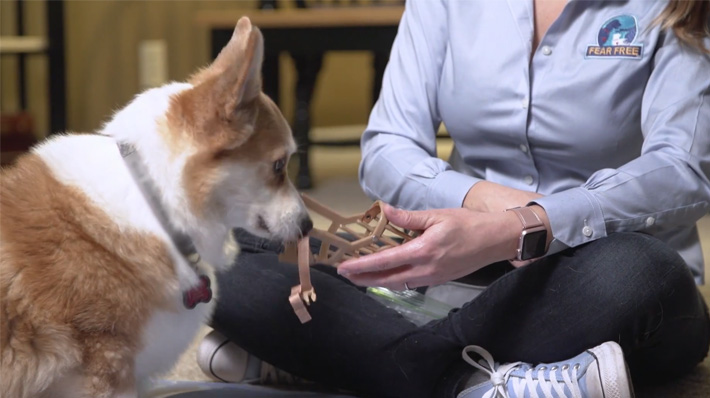
Muzzle training is essential training for a new dog. Creating comfort and ease with wearing a muzzle can help build confidence and make treatments easier for both you and the dog. Mikkel Becker, CBCC-KA, KPA CTP, CDBC, CPDT-KA, CTC, and Debbie Martin RVT, CPDT-KA, KPA CTP, VTS (Behavior), will show you how to safely and effectively muzzle train.

You must be a Fear Free member and logged in to view this webinar

Tail Wagging Treatments: Fear Free in Veterinary Rehab Settings

There are a wealth of opportunities after graduation, one of those being veterinary rehabilitation. Whether you become a rehabilitation veterinarian or weave rehabilitation into your general practice treatment plans, join us as we discover how to reduce fear, anxiety, and stress in pets during their rehabilitation. This webinar will discuss the possibilities of veterinary rehabilitation post-graduation, common stressful events for pets during their rehabilitation treatments, and methods to reduce FAS within your treatment plans.