Blog Archives

||

Course Overview

There are many barriers to veterinary care, and cost is one of the most prevalent. As pet advocates and educators, you know that financial barriers cause stress for vets, pet parents, and pets themselves.

In this short course presented by Trupanion, we will discuss cost of care, the stop-treatment threshold, and how quality pet medical insurance, such as Trupanion, helps to lessen this burden, thereby alleviating fear, anxiety, and stress.

This course contains three lessons:

  • Lesson 1: Introduction to barriers to care
  • Lesson 2: The veterinary professional’s role in cost of care education and impact on the industry
  • Lesson 3: Quality medical insurance for pets: A solution

This course has been approved for .5 hours of RACE non-medical CE.

Presented by Trupanion

By Jennifer Merlo, DVM, CVBMC, Fear Free Director of Veterinary AffairsWe mention heartworm prevention to pet parents during almost every veterinary visit. So how is it that more than 1 million pets in the United States have heartworm disease1? American Heartworm Society (AHS) study data collected in 2022 shows that rates of heartworm disease continue to trend upward in both recognized “hot spots” and in locations where heartworm disease was once rare.2

Due to the increased incidence of travel and remote work career options, the United States is experiencing spread of heartworm prevalence throughout the country. Despite our best intentions, our pet parents are still unclear on the severity of the disease and the importance of maintaining proper heartworm prevention.

Here are five ways to help increase your client compliance and decrease the incidence of heartworm disease in your area:

  1. Discuss heartworm prevention at every visit for every pet.

Veterinarians and veterinary staff recognize the importance of discussing heartworm prevention at puppy appointments. However, often we forego discussing it during adult and senior canine patient visits. The AHS reports that only 37 percent of the U. S. canine population is on heartworm prevention!3 This is a staggering number, and it is our job to educate our clients on the importance of prevention for every pet, year-round. We must make it a point to have this discussion with them at every visit and reinforce the importance of prevention rather than treatment.

  1. Cats get heartworms, too!

Too often we neglect to have this important conversation with our feline pet parents. Fewer than 5 percent of cats are on heartworm prevention3. Most feline pet parents do not think about their cat being at risk, since most of them are indoor-only pets. It is important to have open discussions with cat owners about the spread of heartworms. Educating them that even “indoor” cats are still at risk for mosquito bites and heartworm disease can help reduce the incidence within our feline population. Pet owners may not be aware that there are multiple options for adequate heartworm prevention in cats that do not include giving an oral medication; something we know that causes lower compliance rates in cat owners.

  1. Heartworms travel and so do our pets.

The last few years have seen an increase in the number of remote workers, as well positions that require travel across state lines. Our pet owner population now looks at their dog companions as part of the family who often travel with them. As veterinary professionals, we can no longer rely on heartworm incidence maps as they relate to our direct location since our patients are traveling on a regular basis. Heartworm disease has now been diagnosed in all 50 states and without proper education our pet parents may not be aware that they are unintentionally putting their pets at risk. Be sure to ask questions about travel, including vacations as well as work travel, and be sure that pet owners understand that all pets, in all states, are at risk for contracting heartworms.

  1. Ensure that pet parents are regularly giving heartworm prevention.

When I was in practice, I was always in awe of the fact that most pet owners had an ample supply of heartworm prevention at home, yet our records indicated they should need to buy more. This is often because most pet owners only give their pet’s heartworm prevention one-third of the time. With the numerous options available on the market today, there is an option available for every pet parent to become compliant with their pet’s prevention routine. Discuss different prevention options and gauge what your client feels they can be most consistent with. By opening the conversation and talking through what works best for them, you increase your veterinary-client bond while simultaneously reinforcing the human-animal bond.

  1. Recommend heartworm testing annually.

 Despite everyone’s best intentions, sometimes doses of prevention get missed, and it’s our job to help our pet parents provide the best medical care for their pets. Recommend yearly heartworm testing to ensure that their pet is free of heartworm disease. Make obtaining the blood sample a Fear Free experience by using a Considerate Approach through positive rewards such as delicious treats or petting and using small-gauge needles to minimize discomfort. My staff was great at using insulin syringes to obtain the minimal amount of blood necessary to perform this annual test while the pet parent offered the patient treats. Most of our patients did not even realize venipuncture had occurred! Remind owners that unless we test, we won’t know, and that it’s just as important to monitor for heartworms as it is to prevent them.

It only takes one bite from an infected mosquito to transfer heartworms to a cat or dog. Let’s join with our pet parents to ensure that all our canine and feline patients are well protected.

Resources

  1. American Heartworm Society, 2023; https://www.heartwormsociety.org/
  2. American Heartworm Society Incidence Map, April 11, 2023
  3. The Truth About Cats and Dogs, American Heartworm Society

This article was reviewed/edited by board-certified veterinary behaviorist Dr. Kenneth Martin and/or veterinary technician specialist in behavior Debbie Martin, LVT.

Want to learn more about Fear Free? Sign up for our newsletter to stay in the loop on upcoming events, specials, courses, and more by clicking here.


Empowered: Veterinary nursing for today and tomorrow

Veterinary technicians are more important now than ever before. In this webinar, join Angela Logsdon-Hoover, LVT RVT CVT ABCDT CCFP and learn how to continually grow in your career as a veterinary technician while making a big impact in the field of veterinary medicine.

Bernadette Kazmarski
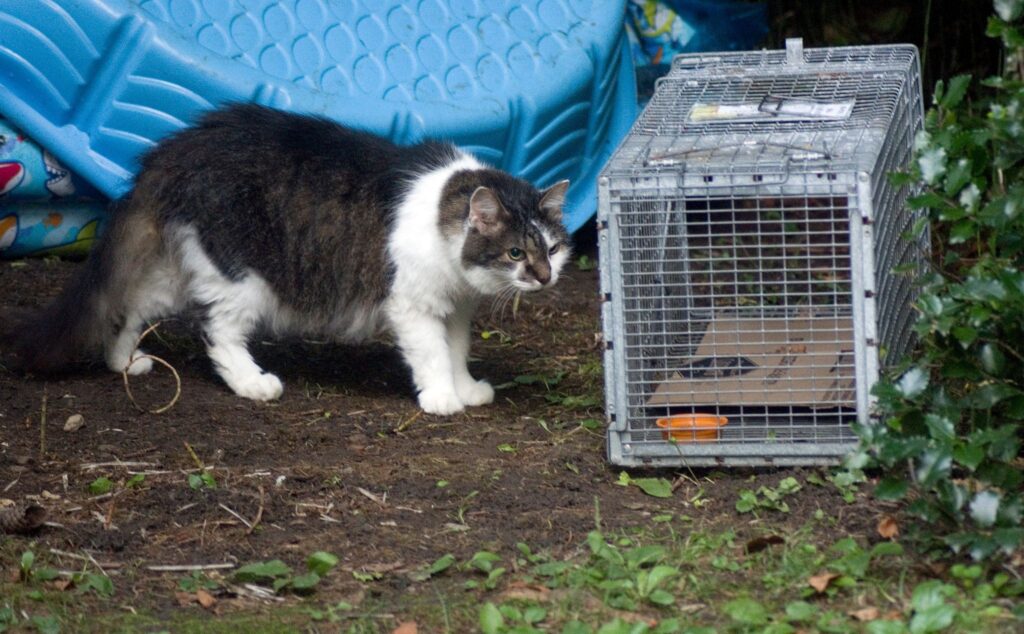
We think of Fear Free techniques for handling pets in shelters, at veterinary visits, and in our homes. But some cats need to be brought to those places in a most stressful way—being caught in a humane trap. Fear Free techniques can help relieve stress even in these situations.

Most cats are trapped for TNR—neutering, vaccination, and return to a colony. Young kittens and somewhat friendly cats will often be kept for socialization and adoption. Lost cats often need to be trapped, as well as cats in hoarding and humane cases. All of those circumstances are already very stressful.

Being Trapped Violates a Cat’s Instincts

So if cats find boxes irresistible, why would walking into a wire box be frightening to them? Cats will seek and tuck themselves into small spaces for safety and as part of their predatory behavior to both inspect to find prey and hide to ambush prey. But a cat doesn’t want to be ambushed herself, and she needs to feel a sense of security about the space and see a safe exit in order to explore it.

Knowing that, we set up a wire tunnel with one way in and no way out and we expect a cat to walk into it? Yes, we do. They need to be handled, held overnight or longer, and sometimes treated while in a trap too. It’s an immense amount of anxiety and stress for any cat.

Fear Free for Community Cats

This is one area of cat handling where, knowingly or unknowingly, Fear Free techniques have long been used because following a cat’s cues and overcoming her anxiety is the only way to trap successfully.

“Working in TNR/community cat care, I think Fear Free is extremely important,” said Sterling “TrapKing” Davis, founder of TrapKing Humane. “The purpose is to prevent and alleviate fear/stress/anxiety in pets and for our community pets.”

No trapping happens without a plan and preparation for each step of the process, so the cat is treated humanely and experiences the least amount of stress: set the trap in a safe location, use high-value food as a bait, monitor the trap, and when the trap closes behind the cat cover the trap immediately to calm her and eliminate visual stimulation. Then, at each move minding the cat’s comfort and security, carry the trap and transport to wherever the cat needs to go for the necessary services and care.

“It’s things like making sure you have newspapers/pee pads in the trap beforehand. Making sure to cover the traps to calm the kitty and during transports, having a decent temperature and keeping vehicle windows rolled up as wind noise can be really scary, especially with everything going on,” Davis says. “TNR kitties will be a little confused/stressed until you return them back to their colony so Fear Free and understanding it can be extremely helpful.”

Familiarity in the Midst of Chaos

Though there are protocols for trapping, a cat rarely walks into the trap on the first attempt. All cats react to a change in routine with some amount of distrust, and you’re about to put a big change in their routine. Plan the process around familiar elements and adjust as necessary. Here are two examples from my own experiences.

Adding something new to any cat’s environment can create stress. If a cat seems particularly fearful, I’ll often start by conditioning her to the trap: set up the trap, sanitized and sprayed with pheromones, secured open so it can’t accidentally shut, and the cat can walk in and out, rubbing her scent on it. Feed her in the open trap until she seems comfortable, and when ready set the trap so it shuts when she confidently walks in for breakfast.

If the cat has a regular caretaker, they can participate to keep the cat’s routine as familiar as possible. In trapping a colony of 10, I made the plans, set the traps, then left to remove my scent and activity while advising the caretaker in messages. He opened the garage door, greeted them, then sat down with his coffee as he always did. We trapped them all in two days with very little stress because they were confident enough of their circumstances and caretaker to walk into the traps for their food.

Stacy LeBaron, host of the weekly Community Cats Podcast, agrees. “Incorporating some Fear Free techniques into a good trapping plan could benefit both the cat and the trapper during the trapping, surgery, recovery and release stages. Being calm, quiet, and relaxed are bedrocks to successful trapping and colony management,” she says.

This article was reviewed/edited by board-certified veterinary behaviorist Dr. Kenneth Martin and/or veterinary technician specialist in behavior Debbie Martin, LVT.

Bernadette E. Kazmarski is a self-employed commercial artist, writer, graphic designer, illustrator, and fine artist whose portfolio includes hundreds of commissioned pet portraits as well as landscape and wildlife artwork. She is author of the award-winning daily blog The Creative Cat featuring feline and pet health, welfare, adoption, and rescue, plus humor, poetry, and lots of cat photos. Bernadette has been rescuing and fostering cats since 1980 and works with her local TNR organization to TNR or foster/socialize. Her current feline family includes a mom and litter of five incredible house panthers and five former feral rescues in training, plus two rescue fosters from her neighborhood.

Want to learn more about Fear Free? Sign up for our newsletter to stay in the loop on upcoming events, specials, courses, and more by clicking here.

Osteoarthritis insidiously, quietly, and progressively robs dogs of their quality of life. Think about it: People with OA don’t go to their doctor complaining of “lameness” – they complain that they’re in pain. Worst of all, the Labrador lifespan study found OA was the most common cause of death when it prompted an end of life decision. In this podcast, Ross H. Palmer, DVM, MS, DACVS, explains that early diagnosis and an exam that “tells you where it hurts” are the keys to successful treatment.

Brought to you by Zoetis Petcare.

Brought to you by Zoetis Petcare.

Thunder, fireworks, and many everyday sounds can be triggers for dogs with noise aversion. In this podcast, Margaret Gruen, DVM, MVPH, PhD, DACVB, Fear Free Certified, Assistant Professor of Behavioral Medicine at the North Carolina State College of Veterinary Medicine, shares tips on how veterinarians can help their clients and patients deal with this difficult problem.

Brought to you by Zoetis Petcare.

The holiday season can be difficult for pets. Join Sharon L. Campbell, DVM, MS, DACVIM, Zoetis Petcare Medical Lead for Analgesia, Sedation, and Anesthesia; Joyce A. Login, DVM, Zoetis Petcare Medical Lead for Pain, Oncology, and Specialty Products; and host Steve Dale to get expert Fear Free tips on helping them enjoy the season along with their owners.

Sponsored by Zoetis Petcare.