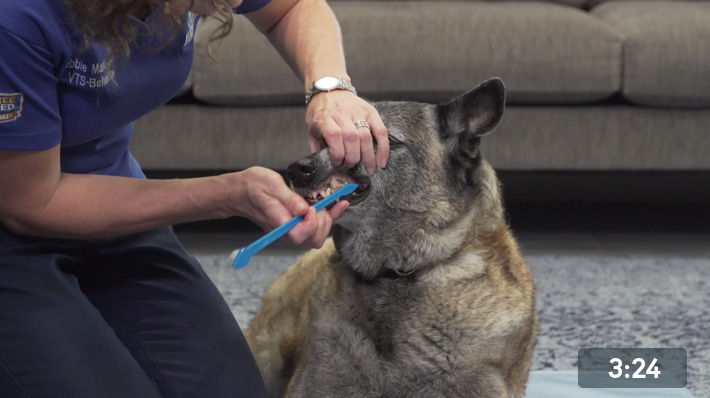
Mikkel Becker, CBCC-KA, KPA CTP, CDBC, CPDT-KA, CTC, and Debbie Martin RVT, CPDT-KA, KPA CTP, VTS (Behavior), explain how you can take the stressful task of brushing your pet’s teeth into something Fear Free for both of you.
Mikkel Becker, CBCC-KA, KPA CTP, CDBC, CPDT-KA, CTC, and Debbie Martin RVT, CPDT-KA, KPA CTP, VTS (Behavior), explain how you can take the stressful task of brushing your pet’s teeth into something Fear Free for both of you.
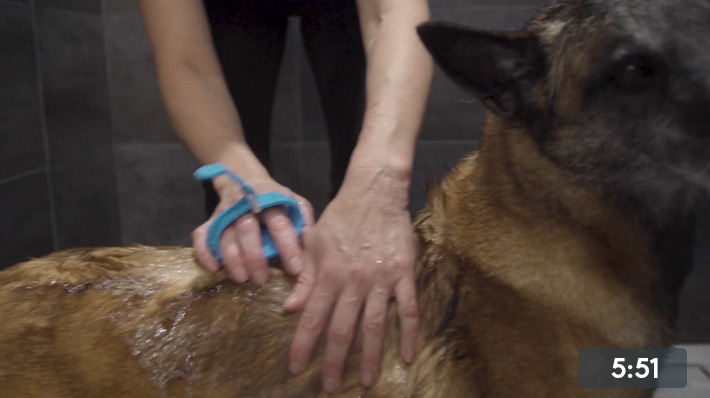
When just the word “bath” can set off your dog, you know something is wrong. Mikkel Becker, CBCC-KA, KPA CTP, CDBC, CPDT-KA, CTC and Debbie Martin RVT, CPDT-KA, KPA CTP, VTS (Behavior) show you how you can make bath time a rewarding and Fear Free experience for your pet.
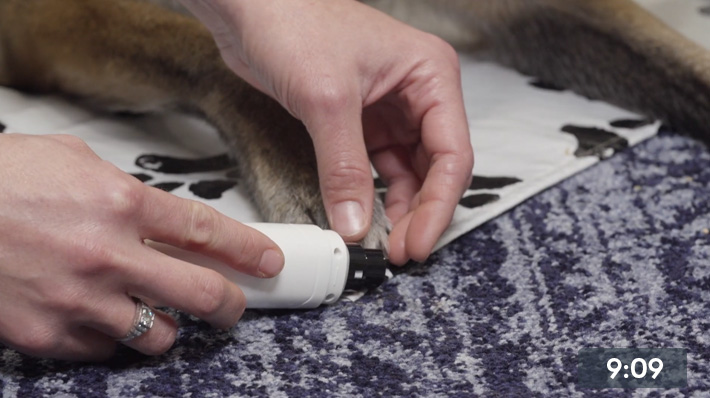
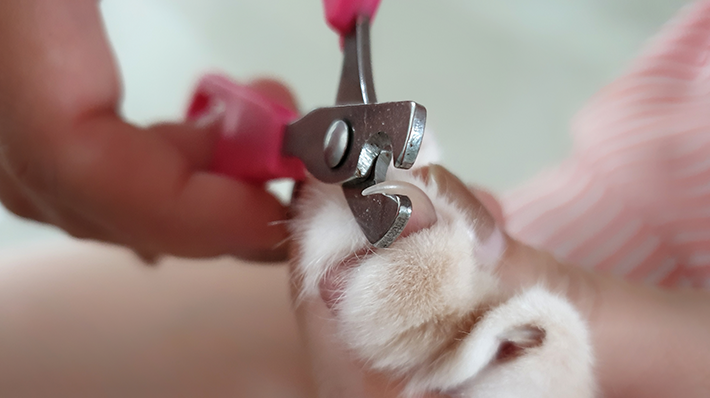
Mikkel Becker, CBCC-KA, KPA CTP, CDBC, CPDT-KA, CTC and Debbie Martin RVT, CPDT-KA, KPA CTP, VTS (Behavior) explain how Fear Free principles can be used to create a comfortable and safe nail trim experience for you and your pet.
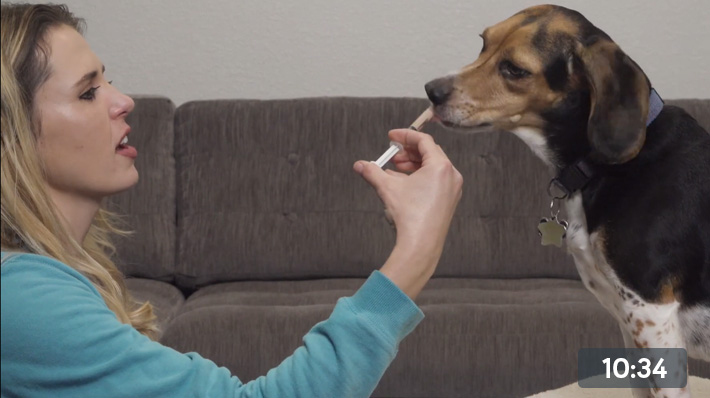
Just the idea of medicating your pet can send both of you running for the hills. Mikkel Becker, CBCC-KA, KPA CTP, CDBC, CPDT-KA, CTC and Debbie Martin RVT, CPDT-KA, KPA CTP, VTS (Behavior) explain how you can make this stressful task rewarding and Fear Free for both you and your pet.
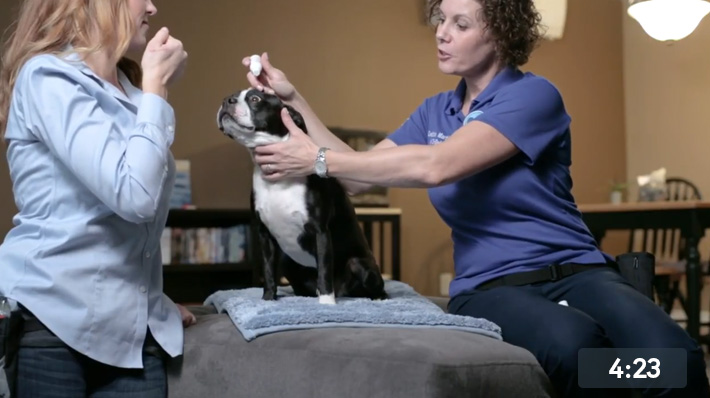
Creating a Fear Free Treat-Ment station can help you and your pet make needed procedures such as nail trims, injections, and grooming easier. Mikkel Becker, CBCC-KA, KPA CTP, CDBC, CPDT-KA, CTC, and Debbie Martin RVT, CPDT-KA, KPA CTP, VTS (Behavior), will show you how to put the “treat” in treatment!
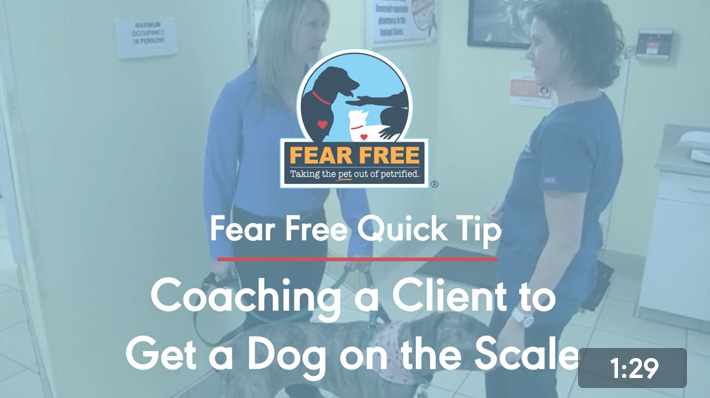
Debbie Martin, RVT, CPDT-KA, KPA CTP, VTS (Behavior), demonstrates how you can help coach your clients to get their dogs on the scale easily and without stress.
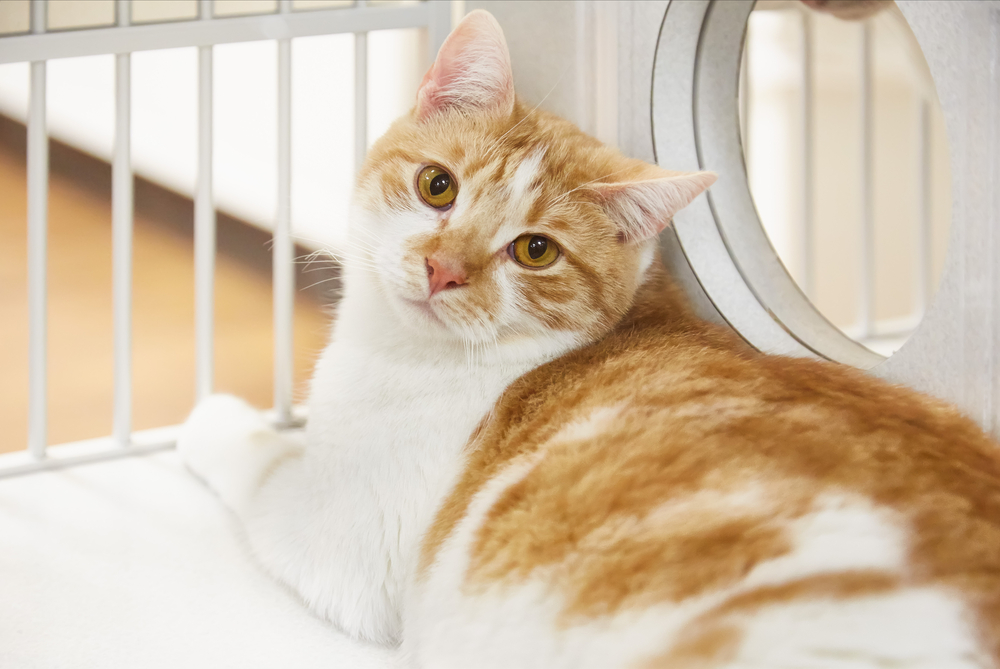
A good lighting design can help reduce fear, stress, and anxiety in a shelter setting and can help the pets go home more quickly. It is well worth the investment!
This article was reviewed/edited by board-certified veterinary behaviorist Dr. Kenneth Martin and/or veterinary technician specialist in behavior Debbie Martin, LVT.
I’ve been a volunteer puppy raiser for Summit Assistance Dogs for about seven years. Each 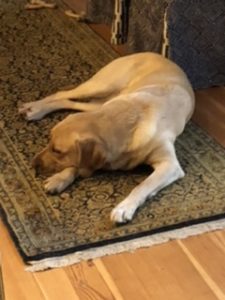 year I’ve raised a pup following Summit’s training guidelines based on positive reinforcement and what puppies can handle at each developmental stage. Each pup explores the world in tiny increments based on what they tell me through body language about how the new environment feels to them. Sometimes we don’t even get out of the car if the pup seems to be hesitant. If they’re not ready for a new place, we go somewhere they have already been to build confidence. Each pup is born with unique strengths and levels of confidence. The big and bold ones move through environments more quickly than timid pups. My current pup, Jazz, came to me at 11 months of age. She was timid about change, so we moved slowly and calmly. We joined a scent work class, which allows the dogs to move freely at their own pace. This built her confidence quickly and now she rocks in almost any setting. Watching what your pet tells you through body language (relaxed, happy, withdrawn, cowering) is key to a truly Fear Free companion.
Anne Campbell, Greenbank, Washington
Alaska is a three-and-a-half-year-old white German Shepherd, who was adopted from a pet  store when she was three months old. Early veterinary visits had caused her to become fearful. Medication didn’t help and she required heavy restraint. Her pet parents called our clinic about taking her on as it had been suggested that she might prefer a female veterinarian.
We requested that they start to get Alaska comfortable with a muzzle at home and to do drop-in visits when our clinic wasn’t busy. They did all this over the course of a month. For the first visit, we asked Alaska’s previous vet to write her a prescription for Trazodone and advised her owner to give it on an empty stomach 12 hours and two hours before the exam, because of the hepatic first pass effect of the drug.
We booked out extra time for the visit. We took down preliminary info like diet, likes and dislikes, activity, allergies, etc., from mom while dad waited outside with Alaska. Her mom told us that at the previous vet, the exam room was small and that Alaska didn’t like being confined, so we pushed our rolling exam table against the counter, leaving an open space in the exam room. We had already started the lavender diffuser and Baby Einstein classical music.
To mask any hospital odor, the tech, assistant, and I washed our hands and exposed arms, dried them thoroughly, and applied Bath and Body Works Stress Relief Eucalyptus and Spearmint body lotion. The pet parents walked a muzzled Alaska into the room and we gave her space to walk and investigate. The assistant crouched to her level, and I sat on the lowered rolling table. We stretched out our arms for her to sniff….no growls! However, her ears were flat back. I called that to everyone’s attention and explained to her parents that she was wary, stressed, and afraid, and that we needed to move cautiously and slowly. As she made her rounds to us and looked us in the face, we closed our eyes or turned away, so we weren’t staring at her, while we talked to her gently and started to stroke her.
We started feeding her peanut butter, and I was able to look at her eyes from an angle, and slowly went to her ears, but she raised her lip at the otoscope, so I stopped and let her regroup. Mom then said she didn’t like ears, feet, or back touched. Eventually, Alaska’ s ears came from flat to sideways elevated to straight up. She nudged the assistant for attention, and I was able to palpate her abdomen, examine her haircoat, and auscultate her heart and lungs. The assistant continued with the peanut butter, mom with bits of chicken, and lots of neck rubs and sweet talk, and I was able to give her four vaccinations. We paused at that point, as she needed to have blood drawn for a heartworm test.
I wish I had grabbed my cell phone; Alaska was lying in the middle of the floor, back legs curled around, front feet outstretched, ears straight up, and if it weren’t for the panting, looking completely relaxed as if she were at home. The parents were amazed and happy; this had never happened before.
While they wanted to get everything done in one visit, I persuaded them that we should stop at this point so she would have a positive visit to build on. (I had squirted some alcohol on a lateral saphenous vein to see how she would take it, and while she didn’t growl, she didn’t like it, so more peanut butter to the rescue.) The owners concurred, and I had them take some Solliquin to start her on, and advised them to come back in a month. In all likelihood we will have to give some IM dexdormitor to draw the blood, but I think we can build on today’s visit. The pet parents couldn’t stop thanking us for taking the time and making the extra effort to understand their beloved dog. I love Fear Free!
Cathy Grey, DVM, Oakdale Animal Hospital, Oakdale, New York
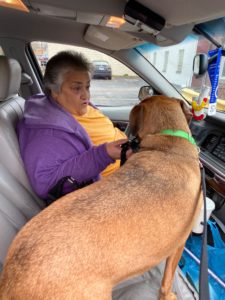 Canasta is fearful of strangers and handling, which makes veterinary visits difficult for both Canasta and her caregiver. I recently started working with Canasta on basket muzzle training and being more comfortable with strangers, but she was in need of bloodwork immediately. Her veterinarian prescribed pre-visit pharmaceuticals, and I worked with the technician to create a handling plan and came to the visit to assist. When Canasta walked in wearing her basket muzzle, I used gentle control to restrain her while the technician drew blood. Canasta even took a treat from the technician when we were done, which is a huge win! Her mother was crying, knowing her dog did so well, and I will continue to work on cooperative care with the caregiver and Canasta.
Tabitha Kucera RVT, CCBC, KPA-CTP, Chirrups and Chatter Cat and Dog Behavior Consulting and Training, and Lyndhurst Animal Clinic, Lyndhurst, Ohio
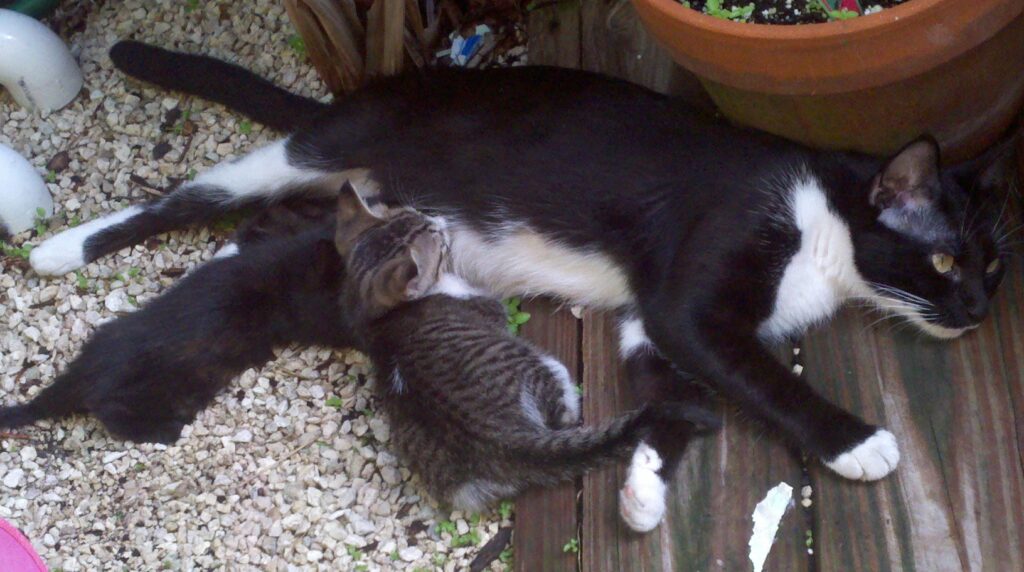
Bates leads the team at Peggy Adams Rescue League in West Palm Beach, Florida. The organization works closely with shelter volunteers, cat rescue groups, and cat-caring neighbors to ensure free-roaming cats in Palm Beach County are properly vaccinated, sterilized, and fed.
It is estimated that more than 200,000 cats live on the streets in Palm Beach County. Once called feral cats, they are now identified as community cats.
“These are cats who live outside, who do not belong to anybody, and who are not adoptable because they are not socialized with people,” says Bates. “They certainly do not belong in animal shelters where they are often euthanized. Our job is to work with community cat advocates to make sure these community cats are neutered/spayed, vaccinated, and returned to their outdoor homes.”
It’s a tall order, but Bates is up for the challenge. He is a Fear Free Pets Shelter Course graduate who works to educate people about the mindset of community cats and safe ways to trap, vaccinate, spay/neuter, and return these cats back to their colonies without stressing them or getting injured.
His shelter also helped get a county-wide law adopted that requires these cats to be sterilized, vaccinated, implanted with a microchip, have left ears clipped to identify these actions and then released to the same area where found.
Bates makes daytime and night-time visits to community cat sites in neighborhoods, car dealership parking lots, and alleys behind restaurants. He gives talks to volunteers and shares tips and resources on two key Facebook pages: Project CatSnip and Community Cats of the Palm Beaches. Project CatSnip is a program of the Peggy Adams Rescue League that provides free TNVR through grant funding and conducts free humane trapping classes.
Even though many of these cats appear friendly and may even allow a trusted person who feeds them to pet them, they are still capable of lashing out if they feel threatened.
“If you see a stray, friendly cat, do not attempt to pick up the cat and put him in a carrier because chances are that you will be bit or scratched,” he cautions. “Scooping up a cat in your arms can make them go into panic mode. The nails come out, and the teeth are ready to bite. It is far safer to set up humane traps to get them in so we can give them vaccinations and spay/neuter them and return them to their cat colony.”
To reduce fear or anxiety in the cat during transport, Bates recommends placing bed linens made of breathable fabric over the trap to help the cat settle down.
“A cat in an uncovered trap is apt to freak out and bounce off the sides of the cage,” he says. “Covered humane traps look like safe spots to a cat. Avoid using heavy blankets, thick towels or quilts because a cat inside could overheat due to the lack of air flow. And, he could also have to inhale the strong ammonia smell if he urinated or defecated during transport.”
To reduce fleas and ticks among these community cats, Bates recommends mixing food-grade diatomaceous earth powder with catnip and allowing the free-roaming cats to roll in it. This powder is safe for pets and people, but destroys exoskeletons in these parasites.
Other insights shared by Bates:
Numbers indicate that this multi-approach effort is working. Before the TNVR program began in 2009, Palm Beach County shelters took in 19,000 homeless cats with more than 14,000 cats euthanized in 2008. That number has been cut to fewer than 2,000 cats euthanized this year in county shelters.
“It really takes a village to help these cats,” says Bates. “We have a passionate group of board members, staff, volunteers, and people in neighborhoods all doing their part to help feed and keep these cats healthy.”
This article was reviewed/edited by board-certified veterinary behaviorist Dr. Kenneth Martin and/or veterinary technician specialist in behavior Debbie Martin, LVT.