Heather E. Lewis
While the best place for a dog or a cat is a loving home, a shelter can be a lot less stressful if the design considers the social, physical, and physiological needs of each animal. One important topic for creating Fear Free spaces in a shelter is lighting. Below are some practical ideas every shelter can incorporate:
While the best place for a dog or a cat is a loving home, a shelter can be a lot less stressful if the design considers the social, physical, and physiological needs of each animal. One important topic for creating Fear Free spaces in a shelter is lighting. Below are some practical ideas every shelter can incorporate:
- Sunlight Is Best. No matter what we do with artificial lighting, we cannot replace the benefits of natural sunlight. Regardless of the age and quality of your shelter, it’s possible to find ways for the pets to experience daylight. For dogs, outside play time or walks will make a positive difference for behavior and well-being. A catio can be a great addition for adoptable cats; they will enjoy sunbathing and exploring a safe outdoor environment. Even if your shelter is extremely limited, look for ways to add a glass door or a tube skylight to let in natural light. Daylight benefits:
- Reinforces natural circadian rhythms.
- Improves staff and volunteer productivity and mood.
- Natural UV disinfection for spaces receiving direct sunlight.
- Energy savings for spaces that do not need to rely on much artificial lighting.
- Creates an environment that feels more natural.
- Replace Fluorescent Fixtures with LED. If you’re building a new shelter, this is required by energy codes, but many people do not know to replace older fluorescent lighting in their current shelters. Fluorescent fixtures buzz and flicker, and these disturbances are more obvious to dogs and cats than to people because of the way pets see and hear. Properly designed LED lighting converts alternating current to direct current at the fixture, which eliminates buzzing and flickering. As a bonus, LED fixtures use far less energy than fluorescent ones, so lighting replacement projects pay for themselves quickly.
- Go Dimmable. LED lighting fixtures are easy to specify with dimming controls. This is a wonderful feature as it allows shelter staff to brightly light spaces when they are being cleaned or during adoption hours, but to turn down the lights during quieter times so dogs and cats can rest more easily throughout the day.
- Keep It Dark at Night. If it is necessary to keep a light on at night for staff safety, specify a fixture that emits red light. Because dogs and cats do not see colors on the red end of the human visible spectrum, a red light creates a darker space for pets at night, allowing them to sleep normally in the shelter.
- Use Cool Color Temperatures. Lighting can be designed to balance beautifully with natural daylight. Fixtures that are color balanced but tuned toward cooler color “temperatures” will feel more like daylight. We specify fixtures that emit light in the 3500 – 4000 Kelvin range. These are cool but not so cold as to feel institutional. The goal is for spaces to feel clean and crisp! Be careful to specify all fixtures in a similar color temperature so they blend well together.
- Light Adoptable Animals Well. While we like animals to rest well during non-adoption hours, we also want them to leave the shelter quickly and go to their forever homes. Adoption spaces should be lit more brightly than circulation areas where people are viewing, so the animals show well and gain the attention of potential adopters.
A good lighting design can help reduce fear, stress, and anxiety in a shelter setting and can help the pets go home more quickly. It is well worth the investment!
This article was reviewed/edited by board-certified veterinary behaviorist Dr. Kenneth Martin and/or veterinary technician specialist in behavior Debbie Martin, LVT.




 year I’ve raised a pup following Summit’s training guidelines based on positive reinforcement and what puppies can handle at each developmental stage. Each pup explores the world in tiny increments based on what they tell me through body language about how the new environment feels to them. Sometimes we don’t even get out of the car if the pup seems to be hesitant. If they’re not ready for a new place, we go somewhere they have already been to build confidence. Each pup is born with unique strengths and levels of confidence. The big and bold ones move through environments more quickly than timid pups. My current pup, Jazz, came to me at 11 months of age. She was timid about change, so we moved slowly and calmly. We joined a scent work class, which allows the dogs to move freely at their own pace. This built her confidence quickly and now she rocks in almost any setting. Watching what your pet tells you through body language (relaxed, happy, withdrawn, cowering) is key to a truly Fear Free companion.
 store when she was three months old. Early veterinary visits had caused her to become fearful. Medication didn’t help and she required heavy restraint. Her pet parents called our clinic about taking her on as it had been suggested that she might prefer a female veterinarian.
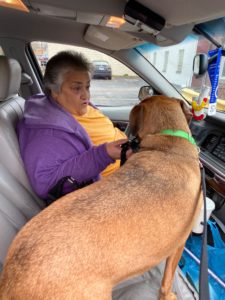 Canasta is fearful of strangers and handling, which makes veterinary visits difficult for both Canasta and her caregiver. I recently started working with Canasta on basket muzzle training and being more comfortable with strangers, but she was in need of bloodwork immediately. Her veterinarian prescribed pre-visit pharmaceuticals, and I worked with the technician to create a handling plan and came to the visit to assist. When Canasta walked in wearing her basket muzzle, I used gentle control to restrain her while the technician drew blood. Canasta even took a treat from the technician when we were done, which is a huge win! Her mother was crying, knowing her dog did so well, and I will continue to work on cooperative care with the caregiver and Canasta.