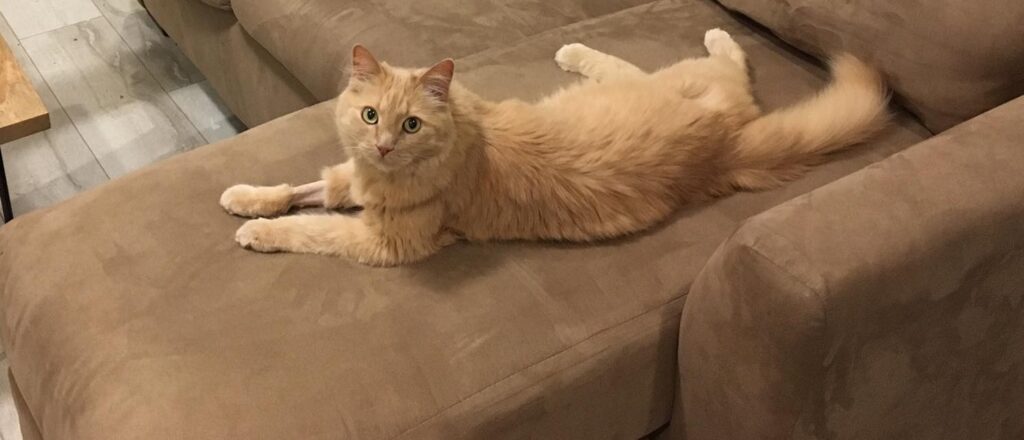

Hetch has had myriad health issues over the last year, necessitating four hospitalizations and at least 10 veterinary visits. Fortunately, pre-medication at home with buprenorphine and trazodone in addition to a quick injection of alfaxalone at the hospital has allowed for almost effortless hospitalizations and has prevented further UOs. Hetch had never needed to be boxed down.
When Hetch recently needed an anesthetic procedure, I researched veterinary specialists in my new area and dropped him off at a trusted specialty hospital. I reminded the staff that Hetch blocks when stressed and attached a note to his carrier requesting that I be called if he became stressed. I thought I was doing everything right to prevent another UO. However, when I picked Hetch up from the hospital after his procedure, I found my normally mellow cat panicking inside his carrier. When I inquired as to why Hetch was so distressed, I was astonished to learn that he had been “boxed down” that day. In other words, rather than being given a fast-acting injectable medication to induce anesthesia, he was stuffed into a box that was then filled with anesthetic gas – a prolonged and stressful way to be anesthetized.
When we returned home, Hetch began vocalizing and walking in and out of his litterbox. I panicked when I realized we might be facing another UO. Fortunately, Hetch wasn’t blocked, but for days after that veterinary visit, my normally social, loving kitty hid beneath the bed and barely ate. He was traumatized, and the only difference in that visit from all of his others was that he was boxed down. Not only was I incredibly saddened to think of my own cat being subjected to the inhalant chamber, I was also deeply troubled to learn that inhalant chamber use is not uncommon in veterinary medicine.
Why “Boxing Down” Animals Isn’t a Good Choice
Most of us who have been practicing for longer than a decade have used inhalant chambers to “box down” feline patients. It seemed to work, and the patient was able to be treated. Why throw away a potentially useful sedation protocol? Because the use of inhalant chambers or masks (also called “boxing” or “masking”) for sedation or induction to anesthesia is not considered standard of care for a number of reasons. (We should note, however, that mask sedation is commonly used for birds.)
- Use of inhalant induction can be dangerous to pets.
In a study on anesthetic risk for death, Brodbelt (2009) showed that inducing and maintaining patients on inhalants alone added to the risk of anesthetic fatalities. The risk is secondary to the high dose (high percentage setting on the vaporizer) of inhalants required to achieve induction.

The high dose can cause dangerous physiologic changes, such as hypotension and respiratory depression. In addition, mask or inhalant induction requires a prolonged period with an unprotected airway (i.e., no endotracheal tube) with an increased risk of airway compromise or obstruction. Because of this, inhalant induction can be dangerous in any animal and is contraindicated in brachycephalic animals.
The excitatory phase of anesthesia (Stage II; Table 1) is exaggerated and prolonged with this type of induction, further increasing the dose necessary to achieve induction. The excitement causes a release of catecholamines, which may cause tachycardia, hypertension, and hyperventilation and may increase the risk of arrhythmias and/or cardiopulmonary arrest.
Once the patient is induced, a higher concentration of inhalant is required for the maintenance phase of anesthesia when compared to the dose of inhalants required to maintain anesthesia in patients who also had premedications or injectable induction drugs.
- Use of inhalant induction can be dangerous to humans.
The veterinary healthcare team and any pet parents who are present may be potentially exposed unnecessarily to anesthetic inhalants. No matter how tightly the induction chamber is sealed or the mask is fit, it is never totally leak-proof. There will be contamination of the environment with the inhalant gas. Although not consistently linked, health concerns due to exposure to anesthetic gases have been shown to range from reproductive effects such as spontaneous abortion (Shirangi et al. 2008) to genetic damage (Cakmak et al. 2019). OSHA states: “The waste anesthetic gases* and vapors of concern are nitrous oxide and halogenated agents (vapors) such as halothane, enflurane, isoflurane, and desflurane. Some potential effects of exposure to waste anesthetic gases are nausea, dizziness, headaches, fatigue, and irritability, as well as sterility, miscarriages, birth defects, cancer, and liver and kidney disease.” (https://www.osha.gov/SLTC/wasteanestheticgases/index.html)
*Waste anesthetic gas is inhalant anesthetic gas not metabolized by the patient and is exhaled back into the breathing system. It should be evacuated from the anesthetic machine by the scavenging system. Unfortunately, the gas often leaks from the machine or breathing system, causing environmental contamination and human exposure.
The view on dangerous results related to use of chamber inductions in animals is shared by both veterinary and human-health experts:
“Chamber inductions should never be routine but rather a ‘last resort’ and only when other approaches have failed.” (Robertson et al. 2018)
“Mask or chamber inductions can cause stress, delayed airway control, and environmental contamination and are not recommended by the authors.” (Grubb et al. 2020)
“Chamber induction in unpremedicated, agitated cats is the least desirable technique described in these Guidelines, since an agitated cat will require more inhalant anesthetic to achieve the desired endpoint. This increased inhalant anesthetic requirement results in severe depression of the cardiovascular system. Additionally, an increased release of catecholamines predisposes the cat to development of cardiac arrhythmias.” (Robertson et al. 2018)
“The use of an induction chamber with gas anesthetic as a method of restraint may mean less control of the patient’s airway and raises concerns about other safety issues for the cat and the staff.” (Robertson et al. 2018)
“A disadvantage of this technique is the unavoidable release of anesthetic gases and exposure of personnel when the cat is removed from the chamber.” (Rodan et al. 2011)
“Exposure to waste anesthetic gases* can cause serious injury and permanent damage.” (https://www.osha.gov/SLTC/wasteanestheticgases/solutions.html)
- Inhalant chambers increase stress.
Stress has many definitions, but according to the National Research Council Committee on Recognition and Alleviation of Distress in Laboratory Animals, it is defined as a real or perceived perturbation that threatens homeostasis.

The stress response is a normal part of daily life but becomes harmful when triggered too intensely or for too long (Hekman, 2014). Different stressors cause varying levels of activation of these responses, but it has been shown that uncontrollable stressors from which an animal cannot escape and which cannot be mitigated activate the stress response more strongly across species (Dess, 1983).
Activation of the sympatho-adreno-medullary (SAM) axis in response to an acute stressor initiates an immediate response, often known as the “fight or flight” response. SAM axis activation leads to mydriasis, increased heart rate, increased blood pressure, cutaneous vasoconstriction, increased plasma glucose, and increased free fatty acid concentrations (Hekman, 2014).
A slower response to a stressor is mediated by activation of the hypothalamic-pituitary-adrenal (HPA) axis, with effects seen in minutes to hours to days. This response mediates release of glucocorticoids from the adrenal cortex. Glucocorticoids affect a wide range of physiologic functions including, but not limited to, metabolic processes such as protein, glucose, and fatty acid metabolism; immune function; gastrointestinal motility; growth; thyroid function; and reproduction (Hekman, 2014).
The overall effect of these responses is to mobilize energy stores, increase oxygen intake, decrease blood flow to non-critical areas, and inhibit digestion, growth, immune function, reproduction, and pain perception (Tynes, 2014).
Several studies have demonstrated that inhalant chambers are significant stressors. Reiter et al 2017 found that inhalant anesthesia increased concentrations of various hormones, including cortisol, corticosterone, and other glucocorticoids in mice, indicating activation of the HPA axis. The mice in this study appeared agitated and dug in the corners of the induction chamber. Similarly, a study by Flecknell et al 1996 found that induction of anesthesia in an inhalant chamber and an inhalant face mask caused all animals to avoid inhaling anesthetic vapor and to breath-hold, behaviors indicating that the induction was aversive. Another study by Flecknell et al 1999 evaluating the effects of induction of anesthesia with sevoflurane and isoflurane in an inhalant chamber found that most animals struggled violently during induction and breath-held, leading the study authors to conclude that both sevoflurane and isoflurane were aversive and should be avoided.
Furthermore, inhalant chambers cause increased struggling, breath-holding, and excitement because induction times with inhalant anesthetics are generally slower than intravenous agents such as propofol (Lester et al 2012).
- Stress increases morbidity and mortality.
The consequences of physiologic and psychogenic stress on health and welfare outcomes have been documented across a range of domestic species.
Stress can increase susceptibility to infection and sepsis, reduce the rate at which wounds
heal, and increase the risk of gastric ulceration development (Hekman, 2014).
Westropp 2006 showed that cats with feline idiopathic cystitis (FIC) had altered bladder permeability, most notably during the initial period of stress.
Some cats may develop marked hyperglycemia secondary to an acute stressor, including struggling, with some cats having glucose concentrations in the diabetic range (> 200 mg/dL) over 90 minutes after exposure to the acute stressor (Rand et al 2002). This may lead some cats to be treated with insulin despite not being diabetic. Furthermore, struggling in an induction chamber may lead to injury of the patient.
- Inhalant chambers perpetuate fear.
The animals considered candidates for use of the inhalant chamber or mask are often displaying aggression or fear and restraint is considered difficult or impossible.
Most animals visiting the veterinary hospital display signs of fear. A study by Doring et al 2009
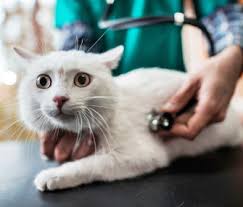
found that 78.5% of clinically healthy dogs visiting a veterinary hospital in Germany showed signs of fear on the examination table. Quimby et al 2011 found that most cats hid more and had elevated physiologic parameters associated with stress (heart rate, respiratory rate, and blood pressure) when in a veterinary clinic compared to their home. In a survey of over 1,100 cat caretakers in Italy, most cats showed signs of fear during all stages of a veterinary visit, including 73% in the reception, 85% on the examination table, 55% during examination, and 58% after returning home. Restraint, pain, and anxiety led to aggression toward veterinarians and caretakers in these cats (Mariti, 2016).
Use of an inhalant chamber or mask will undoubtedly perpetuate underlying fear in patients already displaying fear. Koolhaas 1997 found that a single experience with a major stressor may have long-term consequences ranging from hours to days to weeks. Mariti 2016 showed that 34% of the cats’ stress following a veterinary visit subsequently worsened with handling in other situations. Landsberg 2013 supports that a single exposure to a stressor can be enough to cause a fearful response in the future. Therefore, the trauma of the inhalant chamber or mask is likely to increase the pet’s fear and anxiety at future veterinary visits. This will compromise the veterinarian’s future ability to provide the highest quality of care to these pets.
- Increased fear, anxiety, and stress compromise patient care and veterinary staff safety.
Patients subjected to an inhalant chamber may display more fear and aggression. This can make administration of treatments and medications in hospital or at home following the procedure more difficult or unsafe for veterinary staff or clients.
Dog and cat bites as well as cat scratches are the most common cause of injury to veterinary hospital staff (Jeyaretnam, 2000), so increased pet fear and anxiety compromise the safety of staff.
- Stressful veterinary visits have economic implications to the practice.
According to the Bayer veterinary care usage study, their pets’ stress is a leading reason pet parents fail to bring their animals to the veterinary hospital (Volk, 2011). Out of more than 1,000 cat caretakers, 58% reported that their cat hates going to the veterinarian and 38% of the cat caretakers reported that they themselves were stressed just thinking about taking their cat to the veterinarian (Volk, 2011). In a survey of 200 cat owners conducted by the International Society of Feline Medicine and Your Cat magazine, 20% of respondents said their most recent visit to a veterinarian had been sufficiently stressful that they would either avoid going back or would change veterinarians (Rodan 2005).
Cats are already underserved veterinary patients. In the Bayer usage study, 40% of cats had not been to a veterinarian in the last year compared to 15% of dogs (Volk, 2011). More than three-quarters of veterinarians in that study reported that care for cats is one of the most significantly missed opportunities in veterinary practice (Volk, 2011).
Stressful veterinary visits are likely to result in a further decline in cat visits, creating a greater obstacle to reaching the feline market.
Overall, the implications of using an inhalant chamber are far-reaching. For all of the above reasons, taking steps to decrease physiological and emotional stress is an essential medical goal, one that is significantly undermined by use of an inhalant chamber or mask.
Why Chemical Restraint Shouldn’t Be a Last Resort
Chemical restraint is often necessary for animals displaying fear and aggression and should not be considered a last resort (Grubb et al. 2020 Lloyd, 2017). According to the American Association of Feline Practitioners/International Society of Feline Medicine Guidelines on Feline Friendly Handling, indications for chemical restraint include the following:
–when an animal shows fear, anxiety, stress, or aggression;
–situations in which pain, discomfort or surgery is anticipated and where analgesia alone will be insufficient;
–when gentle restraint does not provide sufficient safety for the team.
Fortunately, many alternatives to inhalant induction exist to achieve chemical restraint, starting with premedication at home.
Evaluating Patient Fear, Anxiety, and Stress and Determining the Need for Pre-Visit Pharmaceuticals
Premedication at home may reduce the need for the inhalant chamber or mask and may reduce the need for injectable sedation or general anesthesia. It can make handling the patient more pleasant for all. Use of the FAS scale will aid in determining which pets may benefit from pre-visit pharmaceuticals (PVPs).
The FAS scale was created to rate a patient’s level of fear, anxiety, and stress in the veterinary clinic. It is a useful tool to determine if a PVP and/or injectable sedation is indicated.
A pet with FAS scores of 2 or 3 displays some lack of interest in treats, toys, and/or attention. This pet may fidget and have difficulty settling. This is consistent with moderate fear, anxiety, and stress, and a pre-visit pharmaceutical is recommended.
A pet with FAS scores of 4 or 5 displays little to no interest in treats; exhibits a fight, flight, or freeze response, and may display aggression. This is consistent with a high degree of fear, anxiety, and stress, and pre-visit pharmaceuticals combined with injectable sedation if needed is recommended. (Martin K and Martin D, 2007).
When scheduling veterinary appointments or procedures, ask clients about the pet’s behavior in the veterinary hospital. If the pet has a history of being fearful in the hospital, have the pet parent administer oral anxiolytics and/or sedatives such as gabapentin, trazodone, buprenorphine, transmucosal dexmedetomidine, and benzodiazepines prior to arrival.
Using PVPs
All pre-visit pharmaceuticals have variable effects in individual animals and should be tested prior to the veterinary visit to evaluate time to onset, effect, duration of effect, and possible adverse effects. This information will enable the veterinarian to evaluate the pre-visit pharmaceutical plan and make adjustments if warranted to ensure an optimal outcome.
Potential pre-visit pharmaceuticals include gabapentin, trazodone, benzodiazepines, some opioids, and some formulations of alpha-2 agonists. Oral acepromazine and melatonin can also be considered (Costa et al. 2019), keeping in mind, however, that acepromazine should never be used alone, as it is a tranquilizer but not a good anxiolytic. Before prescribing a medication as a pre-visit pharmaceutical, the attending veterinarian should consider the age of the pet, any interactions with other medications or supplements currently being administered, the pet’s overall health status, interactions with the chosen anesthetic protocol, and any other contraindications to administration.
Gabapentin
While not labeled for use for anxiety, gabapentin is increasingly used to reduce anxiety in humans and in veterinary patients. In a study by van Haaften et al 2017, 100 mg of gabapentin per cat prior to a veterinary visit resulted in significantly lower stress during transportation and examination as reported by pet parents, and increased compliance during examination as reported by veterinarians. Gabapentin also reduces neuropathic pain, which may benefit patients in which underlying pain may be contributing to fear and aggression.
Sedation is a possible side effect and may vary depending on cat size, so administer 50 mg to petite or geriatric cats. Large cats may require 200 mg for optimal effect. Other side effects of gabapentin include ataxia, hypersalivation, vomiting, and increased appetite.
Gabapentin should be administered three hours prior to the veterinary visit. The capsule may be opened and the powder sprinkled onto 1 tablespoon or less of wet food, tuna juice, Churu, or other tasty food. The effects of gabapentin may last for 8 to12 hours. When using gabapentin, administering an additional dose the night before the veterinary visit may be helpful.
Trazodone
This serotonin antagonist reuptake inhibitor is an anxiolytic and sedative. The dose of trazodone for cats is 50 to 100 mg per cat (not mg/kg). It should be administered three hours prior to a veterinary visit.
Side effects of trazodone may include drowsiness, variable mild gastrointestinal effects such as vomiting, diarrhea, decreased or increased appetite, and paradoxical excitation. When administering a test dose at home prior to the veterinary appointment, have the pet parent assess the pet’s level of sedation three hours after administration by calling the pet in a happy voice, shaking a treat jar, and/or getting out the pet’s favorite toy. If the pet readily rises and runs over to the pet parent, then the dose should be increased by 25% and another test performed at home. Duration of effect is 4 to 12 hours.
Benzodiazepines
These potent anxiolytics have a rapid onset of action with effects that last a few to several hours. They are reasonable options for patients with severe fear and anxiety, but their use is not recommended in patients with aggression.
Benzodiazepines may cause a paradoxical excitement reaction, so it is necessary that they be tested at home prior to a veterinary visit. Other side effects include ataxia, sedation, muscle relaxation, and increased appetite.
Commonly used benzodiazepines in cats include lorazepam and alprazolam.
Lorazepam has no active metabolites, so it is safer for geriatric patients and patients with hepatic disease. The dose of lorazepam for cats is 0.25 to 0.5 mg per cat (not mg/kg). It should be administered two to three hours prior to a veterinary visit.
Alprazolam has a different pathway for metabolism than diazepam, so it may have reduced risk of liver toxicity in cats. The dose of alprazolam for cats is 0.125 to 0.25 mg per cat (not mg/kg). It also should be administered two hours prior to a veterinary visit.
Injectable diazepam is used frequently in cats for anesthesia. There are a few reports of oral diazepam causing fatal hepatic failure when used at high dosages. Use it with caution in cats with hepatic disease and do not exceed clinical doses.
Buprenorphine
Buprenorphine is a partial mu agonist with analgesic and mild sedative effects. It is commonly administered with other sedatives and anesthetics, making it a reasonable option for balanced sedation or anesthesia in cats and dogs. Side effects may include sedation (which is the goal in this situation), hyperthermia, hypothermia, vomiting, and constipation.
Buprenorphine can be administered transmucosally in cats at a dose of 0.01 to 0.02 mg/kg, although a higher dose may be necessary since oral transmucosal uptake is low and variable (Steagall et al. 2014). Buprenorphine should be administered two to three hours prior to a veterinary visit. Duration of action is four to eight hours. Simbadol provides analgesia for 24 hours but efficacy of this duration has not been proven for OTM administration. (Steagall et al. 2014).
Sileo
Sileo, which is transmucosal dexmedetomidine, is FDA-licensed to treat dogs with noise aversions but is used off-label in a number of situations to reduce anxiety in dogs and cats. Sileo is fast-acting and minimally sedating. At a dose of 0.02 mg/kg, it can be combined with buprenorphine for use in cats with more significant fear and stress. In dogs, the dose is 0.01 to 0.04 mg/kg, and combination with buprenorphine is also an option. Sileo should be administered 60 minutes prior to a veterinary visit.
Not only will an effective pre-visit pharmaceutical plan decrease the animal’s fear, anxiety, and stress, it will also allow for easier and safer administration of intramuscular injections of premedications and anesthetics for all involved.
Transportation and Handling on Arrival
Request that the pet parent transport the patient in a soft, squeezable carrier or a carrier with a top that can be easily removed to facilitate low-stress handling. When the pet arrives at the hospital, immediately place the pet, still in the carrier, in a quiet room. Cover cat carriers with towels sprayed with Feliway.
Proper patient handling skills are paramount to minimizing stress and increasing safety during sedation or anesthesia (Yin 2009, Rodan et al 2011). Low-stress handling techniques are intended to minimize fear and pain experienced by pets during veterinary examination and increase safety of the veterinary team (Rodan 2010, Yin 2009). When handled appropriately with gentle restraint and Fear Free techniques, full anesthesia may not be necessary.
Removal From Carrier
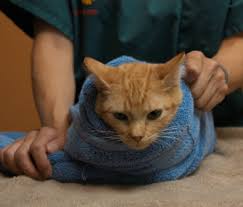
Use gentle restraint when performing a physical exam and administering intramuscular injections. Do not grab and pull the pet out of the carrier and do not tilt to shake the pet out. For markedly fearful and/or aggressive pets who have arrived in a soft carrier, gently squeeze the sides of the carrier to administer an intramuscular injection through the carrier. For pets who have arrived in a carrier with a removable top, gradually remove the top half of the carrier while simultaneously placing a towel between the two halves of the carrier. Cover the pet with the towel, starting at the rear, and gradually move the towel up the pet’s body while removing the carrier top. This will allow for restraint under the towel for an exam and intramuscular injection.
Additional Sedation
If the pet needs a deeper plane of sedation, balanced sedation can be achieved with intramuscular injections of an opioid, dexmedetomidine or medetomidine, midazolam, alfaxalone, Telazol, and/or ketamine. If IV access is possible, propofol can be added to this list of drugs. When using injectable sedation, be aware that fear, anxiety, and stress may produce a more variable and less efficacious sedative response. The protocol may need to be adjusted. For all drugs, if the patient is deeply sedated or anesthetized, provide supplemental oxygen and initiate monitoring of physiologic parameters and support of normothermia.
For the opioids, mu agonists such as methadone, morphine, and hydromorphone provide the most profound analgesia and should be considered for patients undergoing surgical or other painful procedures. Buprenorphine is a partial agonist and may provide more analgesia than butorphanol but may also be less sedating. As previously stated, buprenorphine is absorbed after OTM administration, as is methadone.
Butorphanol provides mild, short-duration (60 minutes in the dog, 90 minutes in the cat) analgesia so is not optimal for painful procedures. However, butorphanol is a fairly effective sedative in both dogs and cats, especially in sick or aged patients. It is often combined with an alpha-2 agonist to increase the depth and predictability of sedation in healthy dogs and cats, as well as to enhance the alpha-2 mediated analgesia. Nausea and vomiting are the main adverse effects. Pre-treatment with an anti-emetic, such as maropitant, is recommended. Oral maropitant can be administered at home by the pet parent, thereby decreasing the likelihood of vomiting from the car ride to the hospital. Oral maropitant is approved for the dog at 2 mg/kg and used off-label in cats at 1 mg/kg (Quimby 2020). Other adverse effects include those listed above for buprenorphine. Naloxone can be used to reverse the effects of all opioids, although buprenorphine binds tightly to opioid receptors, making full reversal difficult.
Alpha-2 agonists, such as dexmedetomidine and medetomidine, provide fairly rapid analgesia and sedation and their effects can be reversed. There is a ceiling on the degree of analgesia, so further dosing acts to increase the degree of sedation, duration of sedation, and potential adverse effects. Alpha-2 agonists produce an initial hypertension and reflex bradycardia. Avoid using them in patients with most cardiovascular diseases. Alpha-2 agonists may also cause nausea and vomiting. Oral maropitant can be administered by the pet parent at home prior to the visit. Otherwise, administer maropitant SQ prior to the alpha-2 agonist if possible or administer maropitant SQ or IV once the cat is sedate.
Dexmedetomidine will markedly reduce the amount of induction and maintenance drugs required for anesthesia; use half or less of the standard induction drug dose. Wait at least 15 to 20 minutes after administering dexmedetomidine before induction to allow maximum effect to occur. Because level of sedation can be tailored to the patient by adjusting the dose and because the effects of alpha-2 agonists are reversible, this class of drugs is commonly used for sedation of pets admitted for outpatient procedures. The alpha-2 drug effects do not always require reversal, but reversal allows rapid return of a fully conscious pet to the pet parent.
Alfaxalone is an anesthetic drug that can be used at low dosages for sedation or high dosages for anesthesia. It has a short time to onset and rapid duration of action with minimal adverse effects, which include dose-dependent minimal to mild cardiovascular and respiratory depression. It can be safely combined with other premedications such as opioids, dexmedetomidine, medetomidine, midazolam, and acepromazine. Alfaxalone can be administered intramuscularly (IM) and is a good option for cats but its volume makes it impractical for IM injections in larger pets. When used as a sole agent, recovery can be rough so balanced premedication protocols will help to diminish or eliminate this effect.
Ketamine is a dissociative anesthetic that is effective when administered intramuscularly and can be used at lower dosages for sedation and higher dosages for anesthesia. It provides analgesia when used at low doses and administered as an infusion. It is often combined with a benzodiazepine (midazolam or diazepam) for induction. Cardiovascular and respiratory depression are uncommon but could occur if the drug is administered to a severely compromised patient at an anesthetic dose.
Anesthetic dosages may need to be avoided in pets with a history of seizures or suspected intracranial disease, although recent data indicate that the drug may be used with caution in these pets. Anesthetic dosages should be avoided in cats with hypertrophic cardiomyopathy or pets with other cardiac diseases in which tachycardia could be detrimental. Use anesthetic dosages with caution in pets with renal disease. Ketamine is excreted unchanged by the kidneys in cats, and drug accumulation, with subsequent prolonged recoveries, could occur. However, low sedative dosages and the even lower infusion dosages used for analgesia are generally appropriate in all of these patients.
Telazol (tiletamine/zolazepam) is a combination of a dissociative agent (tiletamine) and a benzodiazepine (zolazepam) that can be administered IM and can be used at lower dosages for sedation and at higher dosages for anesthesia. Telazol is an excellent option for FAS-level 5 cats and dogs because the small volume needed to produce sedation or anesthesia can easily and quickly be administered IM. It has a quick onset and longer duration of action than ketamine, and it is not reversible. According to the product label, Telazol is contraindicated in pets with pancreatic disease or severe respiratory and/or cardiovascular disease; however, clinically these are precautions but not contraindications. Follow the same precautions as those listed for ketamine.
Conclusion

Overall, the use of inhalant chambers and masks is dangerous and stressful for both pets and anesthesia personnel. Stress causes deleterious effects on health outcomes and compromises mental wellbeing. Given the many alternatives that exist, use of an induction chamber or mask is a poor choice for sedation or induction and should be avoided for all patients. We as a veterinary community must prioritize practices that are both safe and stress-reducing for our patients and colleagues.
Hetch-Hetchy’s comfort for veterinary visits and procedures has increased substantially thanks to an effective protocol of pre-visit pharmaceuticals (0.02 mg/kg buprenorphine OTM and 50 mg trazodone PO 3 hours prior to getting into the car), an intramuscular injection of a sedative (alfaxalone) as needed, and low-stress handling. Having seen how swiftly he responds to this approach has highlighted the recent use of an inhalant chamber to sedate him as an archaic, inhumane practice that needs to be eliminated from our practices.
Table: Stages and Planes of Anesthesia
| Stage | Description | Details |
| 1 | Disorientation, sedation | Occurs following premedications |
| 2 | Delirium, excitation, uncontrolled movement | Occurs during induction and recovery. Anesthetic plans should be designed so the patient spends minimal time in this phase. Induction should be rapid (use injectable drugs) and recovery should include sedatives if excitement/dysphoria occurs. |
| 3 | Unconsciousness, surgical plane of anesthesia | Plane 1: Light anesthesia, depth inadequate for moderately-severely painful procedures unless local anesthetic blocks are part of the protocol.Plane 2: Moderate anesthesia, adequate for painful procedures with administration of appropriate analgesia.
Plane 3: Deep anesthesia, required if analgesia is not part of the protocol. More physiologic depression occurs in this plane than in previous planes. Plane 4: Excessively deep anesthesia, dangerous physiologic depression. Turn the vaporizer off and start ventilating for the patient to speed inhalant elimination. |
| 4 | Too deep! | This stage is between respiratory arrest and circulatory collapse. Take the patient off the anesthetic and prepare for CPR. |
References
Brodbelt D. Perioperative mortality in small animal anaesthesia. The Veterinary Journal. 2009; 182:152–161.
Çakmak G, Eraydın D, Berkkan A, Yağar S, Burgaz S. Genetic damage of operating and recovery room personnel occupationally exposed to waste anaesthetic gases. Hum Exp Toxicol. 2019 Jan;38(1):3-10.
Costa RS, Karas AZ, Borns-Weil S. Chill Protocol to Manage Aggressive & Fearful Dogs. Clinicians Brief May 2019.Crowell-Davis S, Murray T, Mattos de Souza Dantas L. Veterinary Psychopharmacology. 2nd Edition. Wiley Blackwell, Hoboken, NJ, 2019.
Dess N.K., Linwick D., Patterson J., Overmier J.B., Levine S. Immediate and proactive effects of controllability and predictability on plasma cortisol responses to shocks in dogs. Behav. Neurosci. 1983;97:1005–1016
Döring D, Roscher A, Scheipl F, Küchenhoff H, Erhard MH. Fear-related behaviour of dogs in veterinary practice. Vet J. 2009 Oct; 182(1):38-43.
Flecknell P, Cruz I, Liles J, Whelan G. Induction of anaesthesia with halothane and isoflurane in the rabbit: a comparison of the use of a face-mask or an anaesthetic chamber. Lab Anim. 1996: 30(1):67-74.
Flecknell P, Roughan J, Hedenqvist P. Induction of anaesthesia with sevoflurane and isoflurane in the rabbit. Lab Anim. 1999 (33):41-46.
Grubb T, Sager J, Gaynor JS, Montgomery E, Parker JA, Shafford H, Tearney C. 2020 AAHA Anesthesia and Monitoring Guidelines for Dogs and Cats. J Am Anim Hosp Assoc. 2020; In press.
Hekman JP, Karas A, Sharp CR. Psychogenic stress in hospitalized dogs: Cross species comparisons, implications for health care, and the challenges of evaluation. Animals. 2014; 4.2:331-347.
Jeyaretnam J, Jones H, Phillips M. Disease and injury among veterinarians. Aust Vet J. 2000 Sep; 78(9):625-9.
Koolhaus, J.M., Meerlo, P., DeBoer, S.F., Strubbe, J.H., Bohus, B., 1997. The temporal dynamics of the stress response. Neurosci. Biobehav. Rev. 21, 775–782.
Landsberg G. Behavioral Management of Fear and Aggression in Your Patients, 2016, pp 519-521. https://www.fetchdvm360.com/wp-content/uploads/2016/08/CVCKC-2016-505-524-low-stress_pet-friendly_practice.pdf. Accessed 23 Feb 2020.
Landsberg G., Hunthausen W., Ackerman L. Behavior Problems of the Dog and Cat. 3rd ed. Saunders Elsevier; Edinburgh, Scotland: 2013.
Lester P, Moore R, Shuster K, Myers D. Chapter 2- Anesthesia and Analgesia. In “The Laboratory Rabbit, Guinea Pig, Hamster and Other Rodents.” American College of Laboratory Medicine. Academic Press, London, 2012; p 33-56.
Lloyd J. Minimizing stress for patients in the veterinary hospital: Why it is important and what can be done about it. Vet Sci. 2017;4(22):1-19.
Mariti C, Bowen J, Campa S, Grebe G, Sighieri C, Gazzano A. Guardians’ Perceptions of Cats’ Welfare and Behavior Regarding Visiting Veterinary Clinics. J Applied Animal Welfare Science. 2016, 19(4):375-384.
Martin K, Martin D. FAS Scale. Fear Free, 2007.
National Research Council (US) Committee on Recognition and Alleviation of Distress in Laboratory Animals. Recognition and Alleviation of Distress in Laboratory Animals. Washington (DC): National Academies Press (US); 2008.
OSHA: https://www.osha.gov/SLTC/wasteanestheticgases/index.html
OSHA: https://www.osha.gov/SLTC/wasteanestheticgases/solutions/index.html
Quimby J. Maropitant Use in Cats, 2020. Available online: https://todaysveterinarypractice.com/maropitant-use-in-cats/. Accessed 13 June 2020.
Quimby J, Smith M, Lunn K. Evaluation of the effects of hospital visit stress on physiologic parameters in the cat. J. Feline Med. Surg. 2011, 13:733-737.
Rand JS, Kinnaird E, Baglioni A, et al. Acute stress hyperglycemia in cats is associated with struggling and increased concentrations of lactate and norepinephrine. J Vet Intern Med. 2002;16(123-132).
Reiter C, Christy A, Olsen C, Bentzel D. Response to Isoflurane-induced anesthesia in C57BL/6J mice. J Am Assoc Lab Anim Sci. 2017, 56(2):118-121.
Robertson SA, Gogolski SM, Pascoe P, Shafford HL, Sager J, Griffenhagen GM. AAFP Feline Anesthesia Guidelines. J Feline Med Surg. 2018 Jul;20(7):602-634.
Rodan I. Understanding feline behavior and application for appropriate handling and management. Topics in Companion Animal Medicine. 2010;24(4):178-188.
Rodan I, Cannon M. Chapter 9: The Cat in the Veterinary Practice. In “Feline Behavioral Health and Welfare.” Elsevier Health Sciences, 2015, p 102-111.
Rodan I, Sundahl E, Carney H, Gagnon AC, Heath S, Landsberg G, Seksel K, Yin S. AAFP and ISFM feline-friendly handling guidelines. J Feline Med Surg. 2011 May;13(5):364-7.
Scheftel JM, Elchos BL, Rubin CS, Decker JA. Review of hazards to female reproductive health in veterinary practice. J Am Vet Med Assoc. 2017 Apr 15;250(8):862-872.
Shafford H. Serenity Now: Practical Sedation Options for Cats and Dogs, 2016. https://vetanesthesiaspecialists.com/wp-content/uploads/2015/05/SedationOptions_DogsAndCats_Shafford_updated2017.pdf. Accessed 23 Feb 2020.
Shirangi A, Fritschi L, Holman CD. Maternal occupational exposures and risk of spontaneous abortion in veterinary practice. Occup Environ Med. 2008 Nov;65(11):719-25.
Steagall PV, Monteiro-Steagall BP, Taylor PM. A review of the studies using buprenorphine in cats. J Vet Intern Med. 2014 May-Jun;28(3):762-70.
Subramaniam K, Subramaniam B, Steinbrook RA. Ketamine as adjuvant analgesic to opioids: A quantitative and qualitative systematic review. Anesth Anal 2004; 99(2):482-495.
Tynes V.V. The Physiologic Effects of Fear, 2014. Available online: http://veterinarymedicine.dvm360.com/physiologic-effects-fear. Accessed 13 April 2020.
Van Haaften K, Forsythe L, Stelow E, Bain M. Effects of a single reappointment dose of gabapentin on signs of stress in cats during transportation and veterinary examination. J of Am Vet Med Assoc. 2017;15(10):1175-1181.
Volk JO, Felsted KE, Thomas JG, Siren CW. Executive summary of the Bayer veterinary care usage study. J Am Vet Med Assoc. 2011 May 15; 238(10):1275-82.
Westropp JL, Kass PH, Buffington CA. Evaluation of the effects of stress in cats with idiopathic cystitis. Am J Vet Res. 2006;67:731-736.
Yin S. Low stress handling, restraint and behavior modification of dogs and cats. CattleDog Publishing, 2009.
This article was reviewed/edited by board-certified veterinary behaviorist Dr. Kenneth Martin and/or veterinary technician specialist in behavior Debbie Martin, LVT.
 Sponsored by our friends at Zoetis Petcare. NA-02292