Blog Archives

Course Overview

In this course, you will learn ways in which the Fear Free Animal Trainer can partner in Fear Free efforts to keep animals calm during veterinary care, procedures, and even on the day of surgery. This includes teaching animals the concept of a Treat-Ment station, training them to accept passive restraint, and acclimating them to sounds and equipment used during common diagnostic procedures.

While it’s impossible to train for every possible scenario, general training strategies can be practiced, such as training a dog to lie on his side while being handled, preparing him for an injection, or teaching him to indicate his willing consent for handling or care.

Through several in-hospital and at-home video tutorials, you will learn step-by-step how to proactively prepare animals for procedures such as ECGs, radiographs, ultrasounds, surgery, and more.

This module has been approved for 1.5 CEUs from CCPDT, IAABC, and KPA as well as 1 RACE approved CE hour.
|

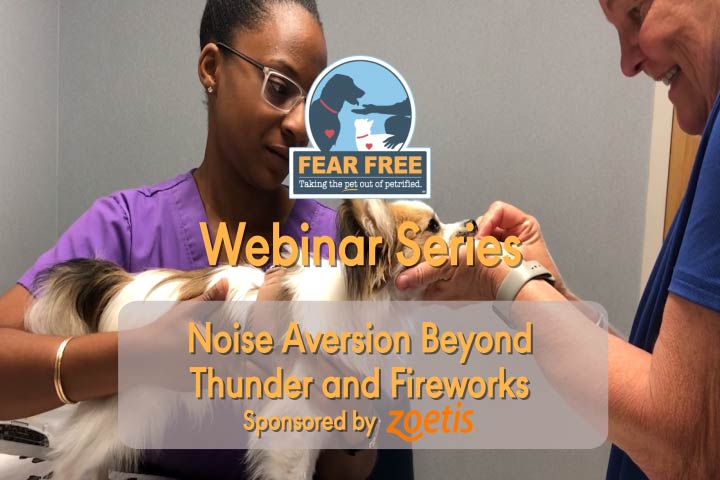
Do You Hear What I Hear? Noise Aversion Beyond Thunder and Fireworks

Noise aversion isn’t only about thunder and fireworks. Many of your patients are suffering daily from noise aversion to everyday environmental events.

What can the veterinary professional do? In this webinar, sponsored by Zoetis, board certified veterinary behaviorist and Fear Free Executive Council member Dr. Lisa Radosta discusses a variety of treatments that can help patients with noise aversion live happier lives.

|

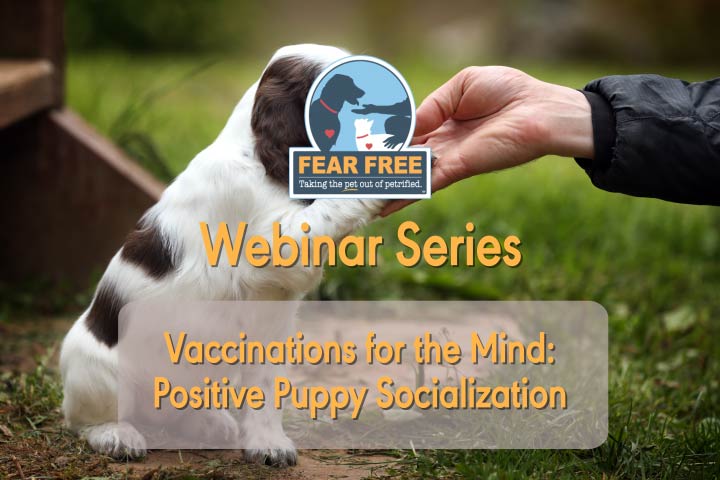
Vaccinations for the Mind: Positive Puppy Socialization

Monique Feyrecilde, CVT, VTS (Behavior)

Puppies should explore the world and the people with whom they share it. When clients bring home a puppy, they have a golden opportunity to protect their newest family member from fear and anxiety later in life. By making a positive puppy transition and socialization plan, owners can help puppies have a smooth and happy puppyhood, adolescence, and adulthood. In this Fear Free webinar, sponsored by Ceva, Monique Feyrecilde, CVT, VTS (Behavior) covers techniques, products, and client education to get puppies started off on the right paw; how early detection and intervention can help shy puppies blossom; and more. Sponsored by Ceva.

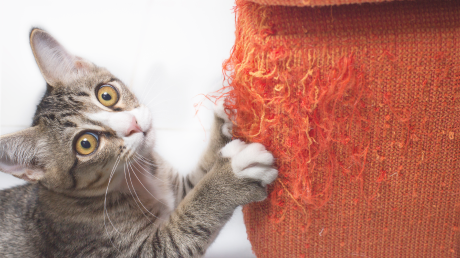
In this one-hour module, you will learn what natural functions scratching serves for cats; common owner responses to scratching and the problems associated with them; and the potential fallout from declawing cats. Most importantly, you’ll come away with several safe and effective alternative solutions to the problem of unwanted scratching, and a made-for-owners handout to help guide them in the right direction.

This module is open to all professionals that are already signed up for the certification program, and is RACE approved for 1 hours in the category of Scientific.

    Feline Destructive Scratching is divided into five lessons:

  • Lesson 1: Feline Scratching Defined (The Good)
  • Lesson 2: Scratching as a Problem for Owners (The Bad)
  • Lesson 3: Common Responses (The Ugly)
  • Lesson 4: Why Not Surgically Declaw Cats?
  • Lesson 5: Safe, Effective Alternatives to Declawing
While Fear Free can often seem as though it’s only about animals’ emotional wellbeing, Fear Free is passionate about the science of animal care as well. Gary Landsberg, DVM, DACVB, DECAWBM (CA), Head of Research at Fear Free, brings you behind the scenes to tell you how Fear Free is advancing research in the field of veterinary medicine.

Many of those not familiar with Fear Free think it’s all about the treats. Rachel Abrams, DVM (Practice Certification Manager, Fear Free), shows us that while treats are an effective tool for veterinary professionals, they’re just the beginning of ways that Fear Free can help improve your treatment of patients.

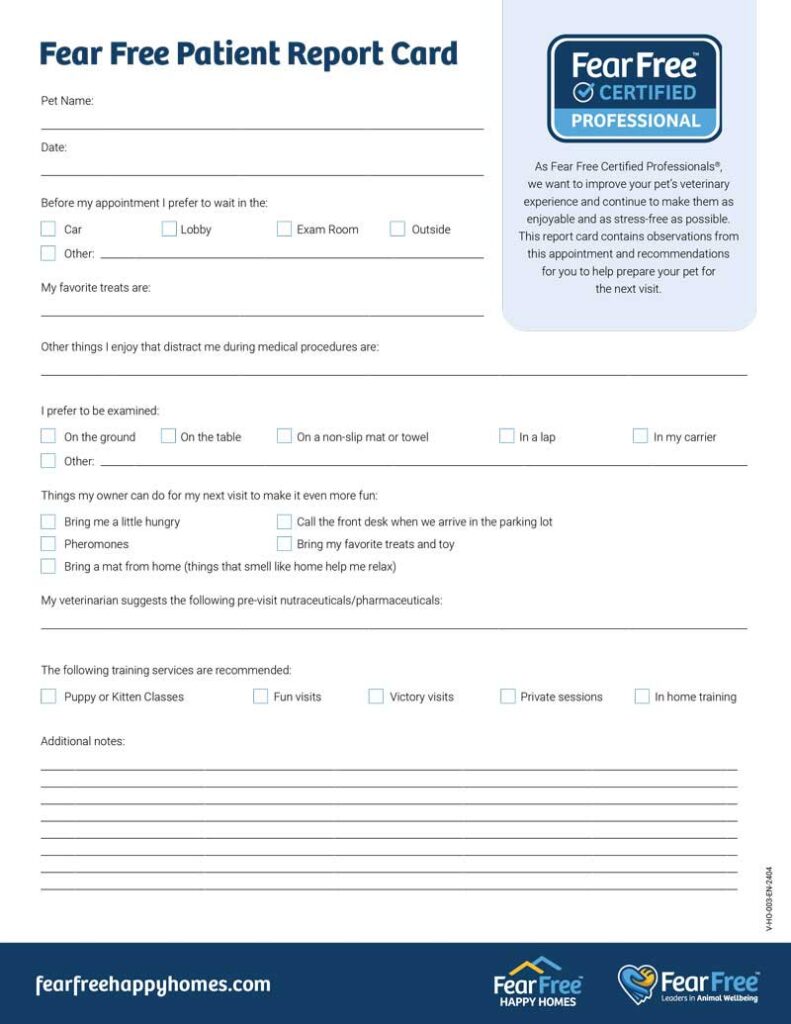
Fear Free Patient Report Card

When it comes to creating Fear Free veterinary visits, thinking about a patient’s individual needs is critical. Communicating those needs to the pet’s owner is also very important, as many of the pet’s preferences and behavioral tendencies carry over into other aspects of the pet’s life and future veterinary visits.
As somewhat of a client-friendly variation of a pet’s emotional record, use this digitally fillable or printable Fear Free Report Card to help connect with the client and ensure they go home with an understanding of their pet’s needs and emotional health while at the veterinarian.

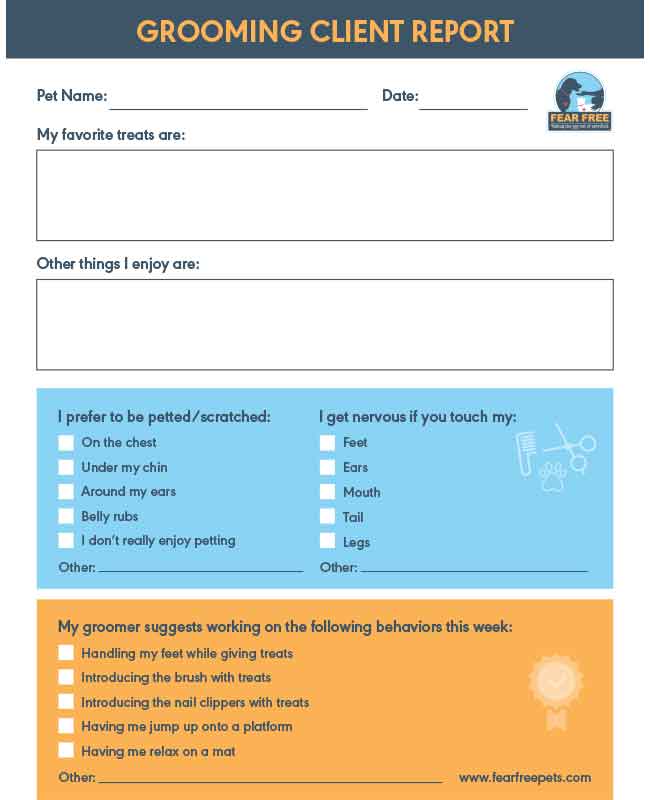
Fear Free Groomer Client Report Card

Use this report card to take your grooming service to the next level. This report card lets your clients know you value their pet and strive to give them the most Fear Free grooming experience possible. You can mark what their pet enjoyed, what treats you gave them, any sensitive areas they may have, and even additional behaviors owners can work on to make their next grooming experience even better.

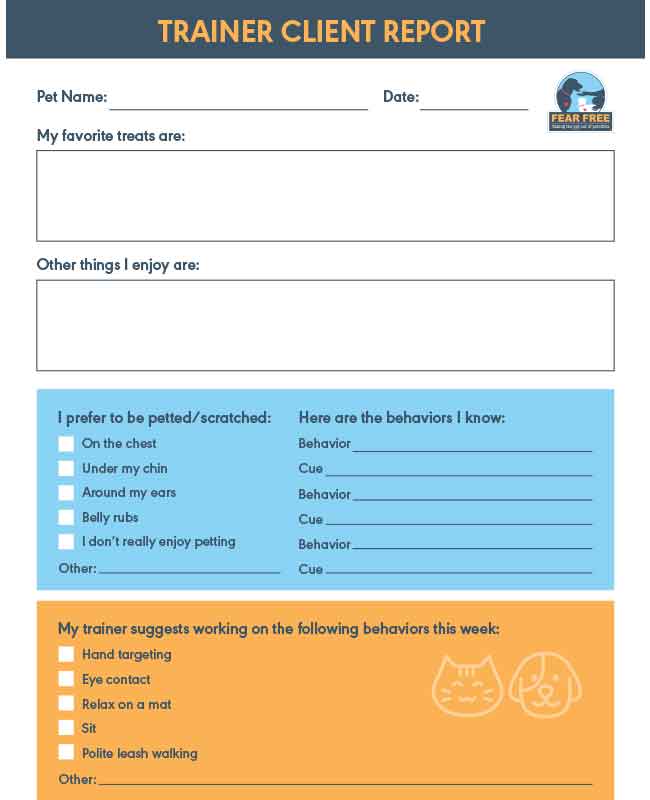
Fear Free Trainer Client Report Card

This report card can help you educate your training clients and help increase compliance. Mark what treats and activities their pet enjoys, what behaviors and ques they already know, and what behaviors they should work on.

In the Fear Free practice, trainers and veterinary professionals form a symbiotic relationship for the benefit of the patient’s health. On this podcast, Mikkel Becker, chief developer of the Fear Free Trainers Course, gives her thoughts on the place of trainers in patient’s health and wellbeing, what the relationship between trainers and vet professionals looks like in practice, and more!

Completing the Fear Free Animal Trainer Program allows trainers to work in partnership with veterinary teams to prevent and alleviate fear, anxiety, and stress and improve an animal’s emotional wellbeing during veterinary care and home care. This certification program is designed to give qualified animal trainers the knowledge and tools required to begin implementing Fear Free techniques with their clients’ pets at the veterinary hospital, through in-clinic training classes for puppies and kittens, and in day-to-day training of animals in the home.

Trainers who complete the Fear Free Animal Trainer Certification Program will acquire the skills to manage and handle dogs and cats alongside the veterinary team during veterinary visits and care to ease the pet’s apprehension regarding exams, procedures, and other care. The techniques may also be used in a home setting for carrying out or administering specific veterinarian-prescribed care plans or routine care like grooming. Most important, the Fear Free animal trainer is equipped to prepare pets for what to expect at the veterinary clinic so they have an enjoyable, stress-free experience.

By collaborating with and complementing the veterinary team’s efforts, the trainer can better provide preventive services and partner with the veterinary team to address training and behavior concerns, working from a whole health concept and with the oversight of the pet’s vet. In doing so, the pet and pet parents have a higher quality, unified team providing quality, complete care.

The purchase of the Fear Free Animal Trainer Certification Program provides you with an annual membership for the program, which requires an annual renewal fee and completion of additional annual CE to maintain your membership.

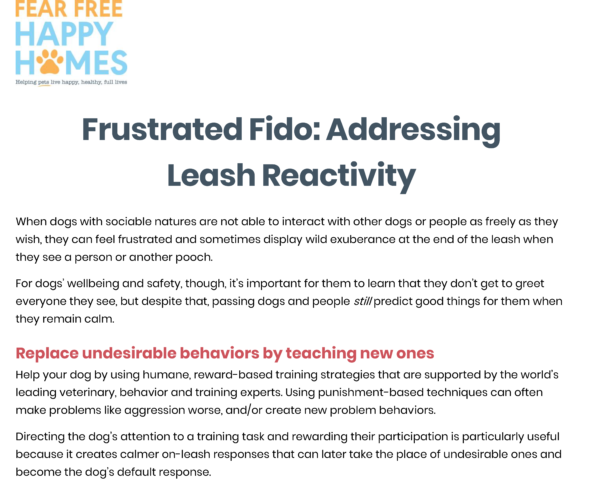
When dogs with sociable natures are not able to interact with other dogs or people as freely as they wish, they can feel frustrated. Use this handout to help educate your clients on ways to alleviate leash reactivity.