Tony Johnson, DVM, DACVECCFear limits options.
When a patient is fearful of seeing me at a veterinary hospital, their world shrinks to two options: flee or fight. Neither one is fun for them or helps me do what I’m supposed to do for the patient and the family who loves them: find out what’s wrong and make it better.
With patients who are driven by fear, their natural instincts kick in and they resist everything we need to do to get them well.
I’m sure you’ve all been there when trying to treat a fearful patient. Patients displaying aggression are driven by fear. The vast majority of them don’t display this type of behavior at home – so why do they revert to aggression when we are trying to help them?
Think of their first few visits to the hospital and try to see it from their perspective. The car ride. They are likely apprehensive when loaded into the car or carrier. Their owner may try to soothe them with calming words, but fear takes hold.
The sights and smells. When they arrive at the hospital, they can smell the fear from dozens – hundreds – of other pets before them. They can smell the odors of the hospital – cleaning and disinfecting products, the cautery unit in surgery, the parvo dog in isolation. Their heightened sense of smell, many thousands of times what ours is, wafts all of these to them: smells of sickness and death. They sense that this is a bad place.
After this – needles, restraint. The inability to move. The fear of being atop the exam table with no place to run.
Is it any surprise, then, that they would grow to dislike this place and its occupants?
We know that we want to help them. We know that a vaccine will prevent deadly diseases, that a spay will prevent unwanted pregnancies and pyometra…but they don’t.
Lest I be misunderstood – I am not saying that a veterinary hospital is a bad place – not at all. I love them and I know the good that veterinarians do each and every day to protect and preserve animal health and promote healing. We just need to find a way to explain it to our patients.
Since we can’t use words (or my favorite means of communication – interpretive dance), we have to show them by our actions. We have to note the aspects of our places of work and our way of handling them and convey the concept that this is not a bad experience. We have to make their perception of this is a bad place become Hey, this ain’t half bad.
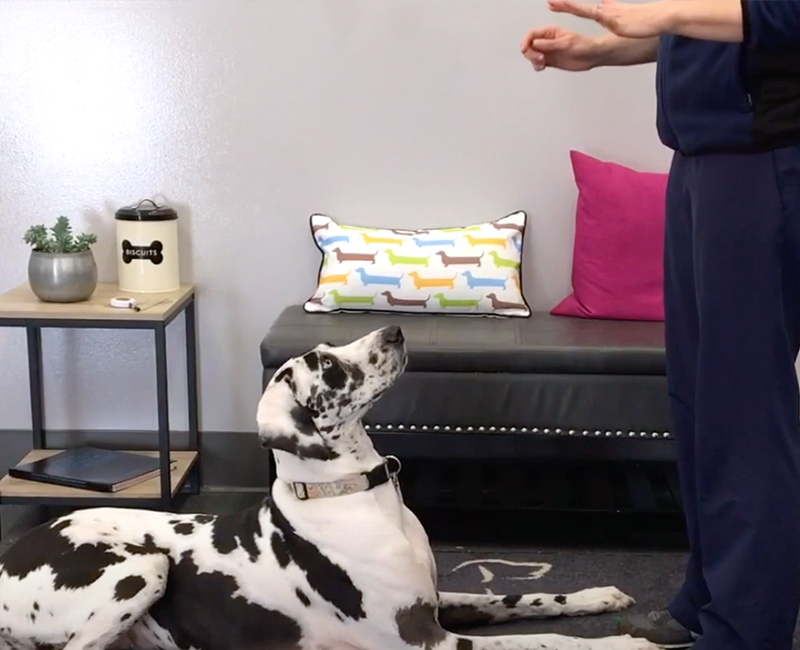
I know it can’t happen each and every time – I can’t take the time to cozy up to the Great Dane that just came crashing into my ER with a GDV – but I can take the time to make sure his post-op stay is as free of pain and anxiety as I can safely make it.
Fear Free is a mindset. It’s a new way of looking at our interactions with patients to suss out aspects that can be improved, spikes of fear that can be dulled, practices and protocols that can be improved.
Why?
You can look at it as a moral imperative – we have taken an oath. It’s the right thing to do. No patient should be worse off for seeing us.
You can look at it practically, as well.
Imagine the stress of trying to do a toenail trim or a heartworm test on a 90-pound dog displaying fear and aggression. That dog is probably recalling all sorts of memories, stretching back to puppyhood, of nauseating car rides, stressful physical restraint, triggering smells.
Now imagine a dog who saw each visit before this one as a chance for treats, pets, and gentle interaction. Happy visits – just in and out the door, and he didn’t even notice the DHLPP jab because he was too busy licking peanut butter off of a kind hand and the veterinarian giving the shot used a brand-new needle. Imagine a dog who received safe sedation for a laceration instead of being held down and receiving nothing but Brutacaine.
Which dog do you think will let you trim his toenails with less stress – for all of you?
Fear Free isn’t just about the patients. How many times do you think your top-tier tech will wrestle with that dog before she hears the siren call of nursing school? How many times will you look at the chart of the FAS 5 dog and feel your heart sink? Feel burnout creeping ever closer?
This doesn’t happen with a calm pet who knows that a visit to a veterinary hospital is a good thing, not a terrifying experience. In my 20 years of emergency practice, I’ve seen fear quite literally kill many patients – patients who are barely coping with illness at home, who then take a lethal turn when the fright of a car ride or veterinary visit tips them over the edge. Fear Free could have saved many of them.
If you take a patient who’s comfortable with the whole process in a veterinary hospital – check-in, physical exam, diagnostic tests, and going back home – you have a patient who doesn’t want to flee or fight me or my team. They’re cooperative and calm – they might enjoy the whole thing if we give them love, confidence, and, of course, plenty of treats). And judicious use of sedatives and analgesics can help offset the fear, anxiety, and stress of visits and procedures. Fear Free patients will let me run the tests and do the physical exam that gets me the answers I need to deliver the best care I can.
Without fear – when pets are Fear Free – it’s not only easier for everyone, it’s better medicine. It’s less stress – for everyone. It’s fewer shots in the dark. Fewer guesses, fewer misdiagnoses, fewer “let’s-see-if-this-fixes-it” treatments ending in lost time, bad outcomes, and problems like global antibiotic resistance. Fear Free practices mean more pets go home faster, and you and your staff are happier and more productive.
This article was reviewed/edited by board-certified veterinary behaviorist Dr. Kenneth Martin and/or veterinary technician specialist in behavior Debbie Martin, LVT.
Dr. Tony Johnson, DVM, DACVECC, is a 1996 Washington State University grad and obtained board certification in emergency medicine and critical care in 2003. He is currently Minister of Happiness for VIN, the Veterinary Information Network, an online community of 75,000 worldwide veterinarians, and is a former clinical assistant professor at Purdue University School of Veterinary Medicine in Indiana. He has lectured for several international veterinary conferences (winning the small animal speaker of the year award for the Western Veterinary Conference in 2010) and is an active blogger and writer.