Blog Archives

Steve Dale, CABC
Just as we have our own individual taste preferences, so do dogs and cats. And food can be the way to their hearts. Many Fear Free Certified veterinary practices and Fear Free veterinarians even offer “menus” and keep track in pets’ records of personal preferences.

Of course, many cats will do anything for tuna. And dogs love those hot dogs. Those statements won’t stop the pet press.

However, veterinarians and veterinary technicians can also think outside the treat box. Sometimes, just because it’s novel, a treat may be more enticing. Also, at home these items might be used for training or for animals needing a bit of an appetite boost (always only with veterinary approval).

Who knew, for example, that many cats have a thing for olives (no pits please) or marshmallows. Or that dogs, and not necessarily Australian Cattle Dogs, love Vegemite, an Australian food spread made from leftover brewers’ yeast extract with various vegetables and spices. Most Americans disdain Vegemite, but many dogs love the stuff.

With Fear Free founder Dr. Marty Becker contributing, here’s a list of 20 surprising treats:

  • Anchovy paste
  • Apple
  • Baby food (without onion)
  • Bananas
  • Blueberries
  • Bonito fish flakes (known as katsuobushi in Japanese cuisine)
  • Braunschweiger
  • Cheerios
  • Cheez Whiz/Easy Cheese
  • Churros (fried-dough pastry)—hold the chocolate sauce
  • Green beans
  • Liverwurst
  • Marshmallow cream
  • Mini marshmallows
  • Olives (no pits)
  • Peas
  • Peanut Butter (avoid sugar-free peanut butters containing the artificial sweetener Xylitol, which is toxic to pets)
  • Rice cakes (plain)
  • Sardines (in pesto, in olive oil or in water)
  • Vegemite

Remember to keep portion sizes small, appropriate for the size of the pet. You don’t want to send him home with a tummy ache!

This article was reviewed/edited by board-certified veterinary behaviorist Dr. Kenneth Martin and/or veterinary technician specialist in behavior Debbie Martin, LVT.
Steve Dale, CABC (certified animal behavior consultant), hosts two national pet radio shows and is on WGN Radio, Chicago. He’s a regular contributor/columnist for many publications, including CATSTER, Veterinary Practice News, and the Journal of the National Association of Veterinary Technicians in America. He’s appeared on dozens of TV shows, including Oprah, many Animal Planet Programs, and National Geographic Explorer. He has contributed to or authored many pet books and veterinary textbooks such as “The Cat: Clinical Medicine and Management” and co-edited Decoding Your Dog, by the American College of Veterinary Behaviorists. He speaks at conferences around the world. www.stevedale.tv.

Course Overview

Although animal trainers can typically recognize the external signs of an animal in serious pain or distress, they are not necessarily aware of what’s going on inside the animal’s body and how it can affect their behavior. This module will discuss common conditions as well as take an in-depth look at pain management strategies and the effects of pain and stress on an animal.

This module has been approved for 1 RACE CEU and 1 CEU from CCPDT, IAABC and KPA.

This module is divided into three lessons.

  • Lesson One: Medical Conditions and Special Considerations When Training
  • Lesson Two: Understanding Pain: Effects, Signs, and Treatments
  • Lesson Three: Stress and Its Impact on Body and Welfare

Course Overview

In this module, we will review the signs and risk factors associated with infectious diseases in dogs and cats. We will cover how to minimize disease risk when training pets as well as how to properly disinfect and manage the training environment.

This module has been approved for 1.5 RACE CEU and 1 CEU from CCPDT, IAABC and KPA.

The one-hour course is only for trainers with renewal credits and costs 1 credit.

Lesson One: Common infectious diseases of dogs and cats

After completing this lesson, you will be able to:

  • Recognize possible signs for various types of infectious diseases in dogs and cats
  • List common modes of transmission

Lesson Two: Minimizing disease risk when training

At the end of this lesson, you will be able to:

  • Identify ways of minimizing the spread of disease in the training setting
  • Recognize the components of a clean environment and how to achieve it
  • Identify when to liaise with veterinary professionals over preventative health concerns

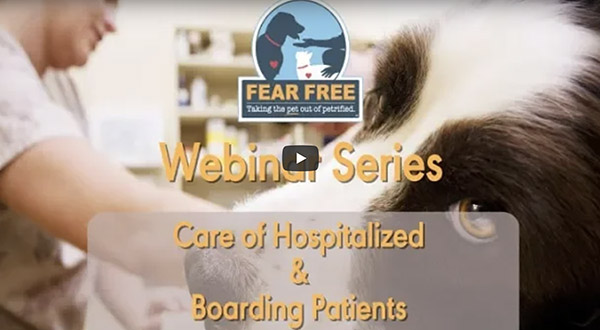
Care of Hospitalized and Boarding Patients

Dr. Rachel Abrams

Join Fear Free Practice Certification Manager Dr. Rachel Abrams for an overview of the path to practice certification and a discussion about preventing and alleviating FAS in your hospitalized and boarding patients.

|

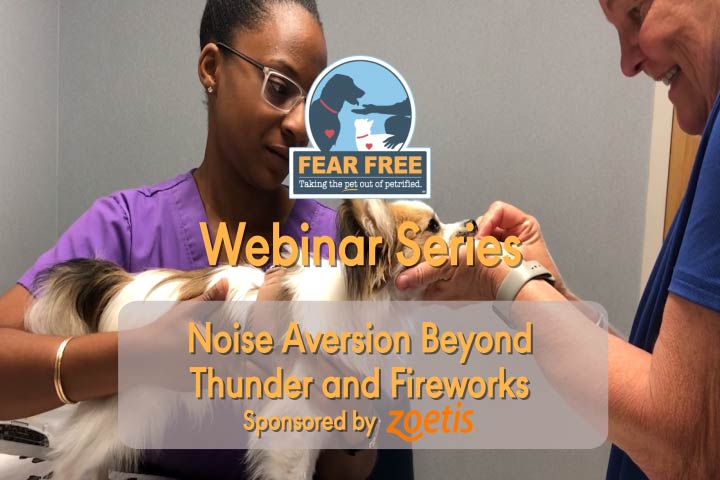
Do You Hear What I Hear? Noise Aversion Beyond Thunder and Fireworks

Noise aversion isn’t only about thunder and fireworks. Many of your patients are suffering daily from noise aversion to everyday environmental events.

What can the veterinary professional do? In this webinar, sponsored by Zoetis, board certified veterinary behaviorist and Fear Free Executive Council member Dr. Lisa Radosta discusses a variety of treatments that can help patients with noise aversion live happier lives.

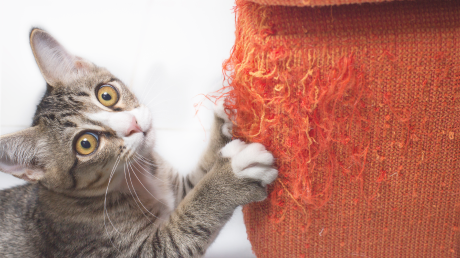
In this one-hour module, you will learn what natural functions scratching serves for cats; common owner responses to scratching and the problems associated with them; and the potential fallout from declawing cats. Most importantly, you’ll come away with several safe and effective alternative solutions to the problem of unwanted scratching, and a made-for-owners handout to help guide them in the right direction.

This module is open to all professionals that are already signed up for the certification program, and is RACE approved for 1 hours in the category of Scientific.

    Feline Destructive Scratching is divided into five lessons:

  • Lesson 1: Feline Scratching Defined (The Good)
  • Lesson 2: Scratching as a Problem for Owners (The Bad)
  • Lesson 3: Common Responses (The Ugly)
  • Lesson 4: Why Not Surgically Declaw Cats?
  • Lesson 5: Safe, Effective Alternatives to Declawing
While Fear Free can often seem as though it’s only about animals’ emotional wellbeing, Fear Free is passionate about the science of animal care as well. Gary Landsberg, DVM, DACVB, DECAWBM (CA), Head of Research at Fear Free, brings you behind the scenes to tell you how Fear Free is advancing research in the field of veterinary medicine.

Many of those not familiar with Fear Free think it’s all about the treats. Rachel Abrams, DVM (Practice Certification Manager, Fear Free), shows us that while treats are an effective tool for veterinary professionals, they’re just the beginning of ways that Fear Free can help improve your treatment of patients.

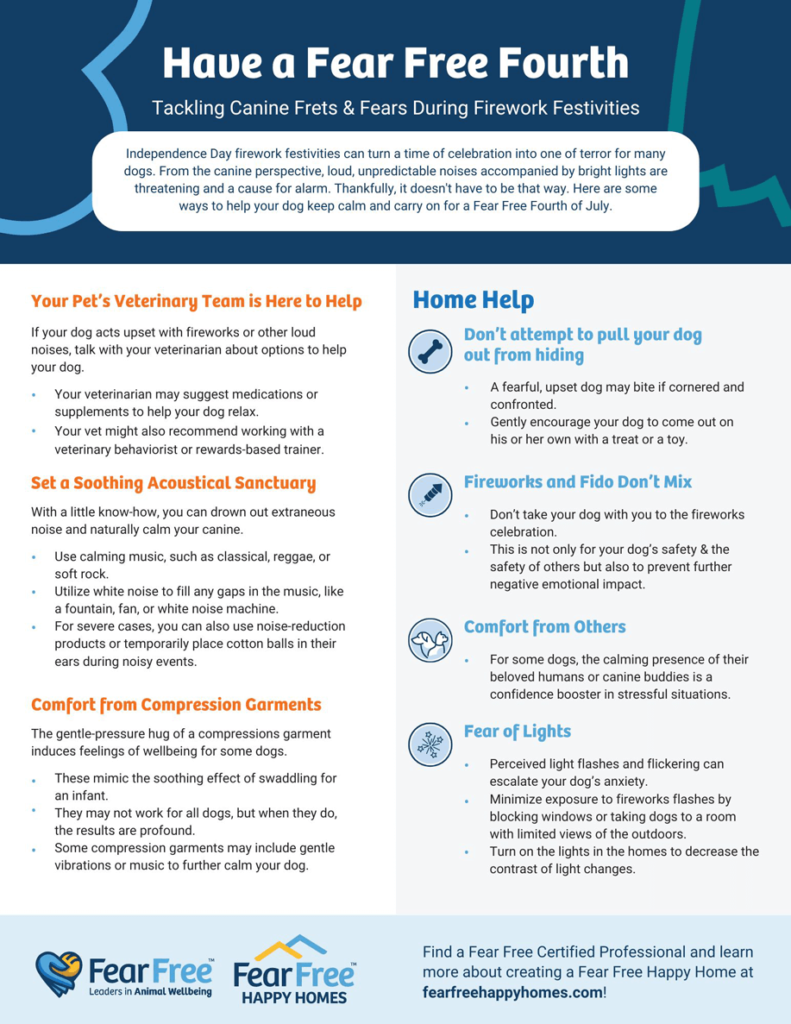
Fourth of July Pet Safety Infographic

Educate your clients on Fourth of July safety with this infographic

Image format: .pdf(Better for printing)

Image format: .jpg (Better for social media)

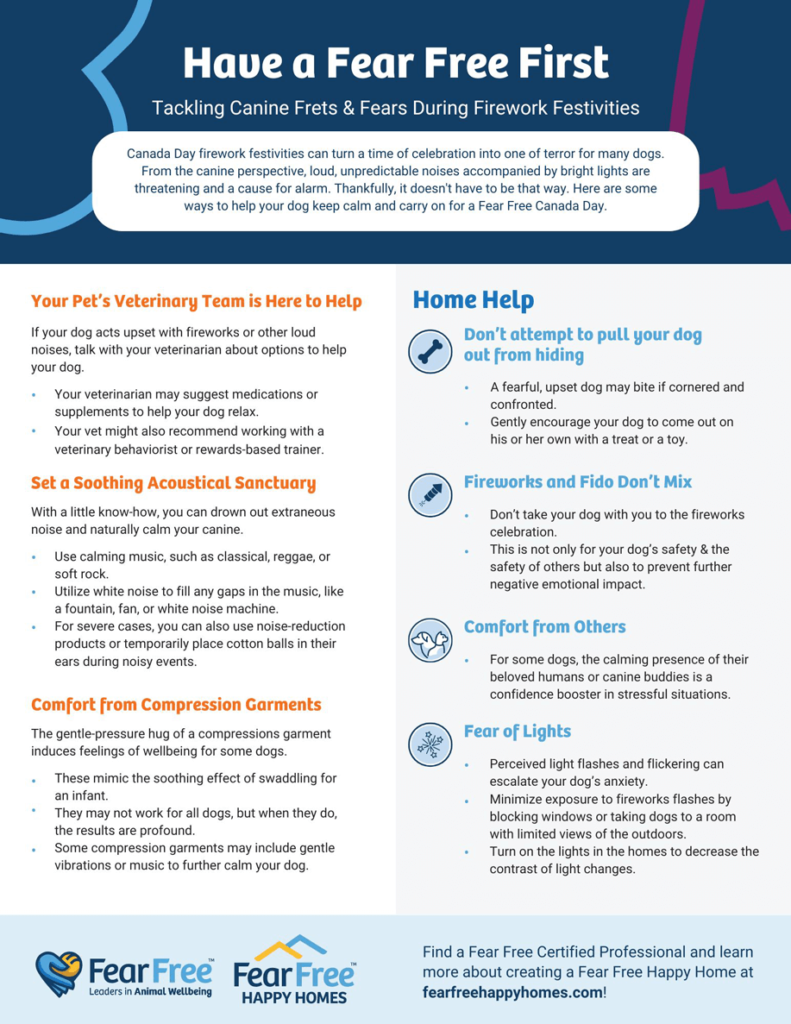
Canada Day Pet Safety Infographic

Educate your clients on Canada Day safety with this infographic

Image format: .pdf(Better for printing)

Image format: .jpg (Better for social media)

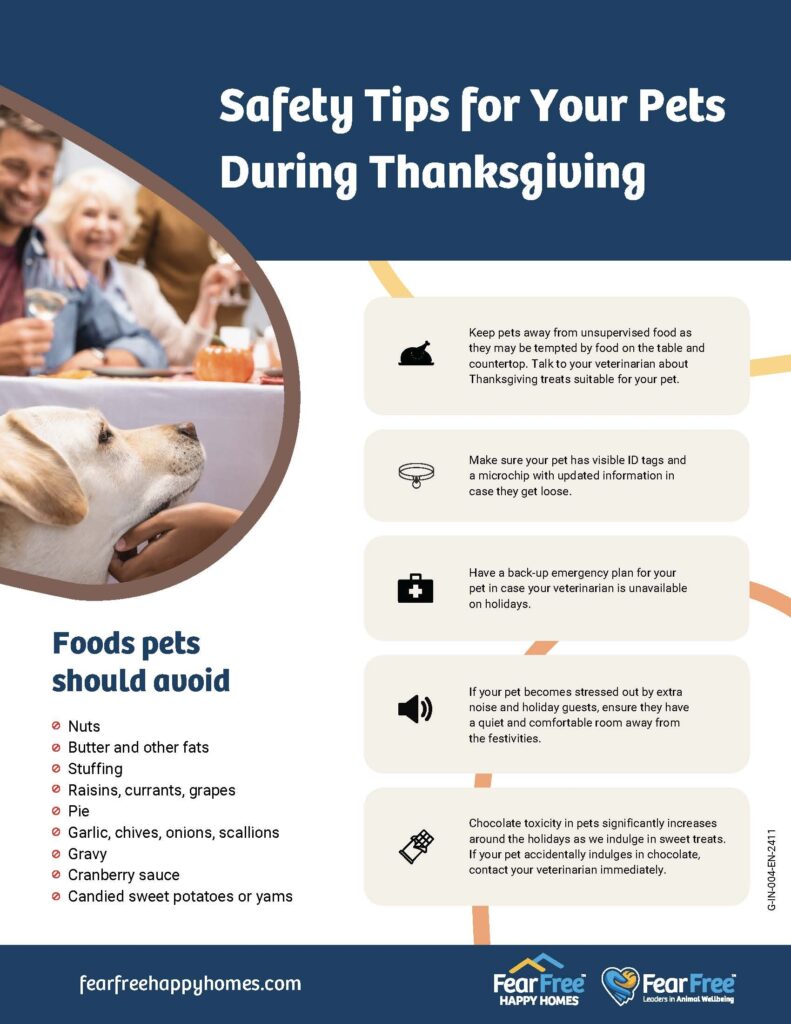
Thanksgiving Pet Safety Tips

Use this infographic courtesy of Trupanion™ to educate your clients on safety during Thanksgiving.

Image format: .pdf(Better for printing)

Image format: .jpg (Better for social media)

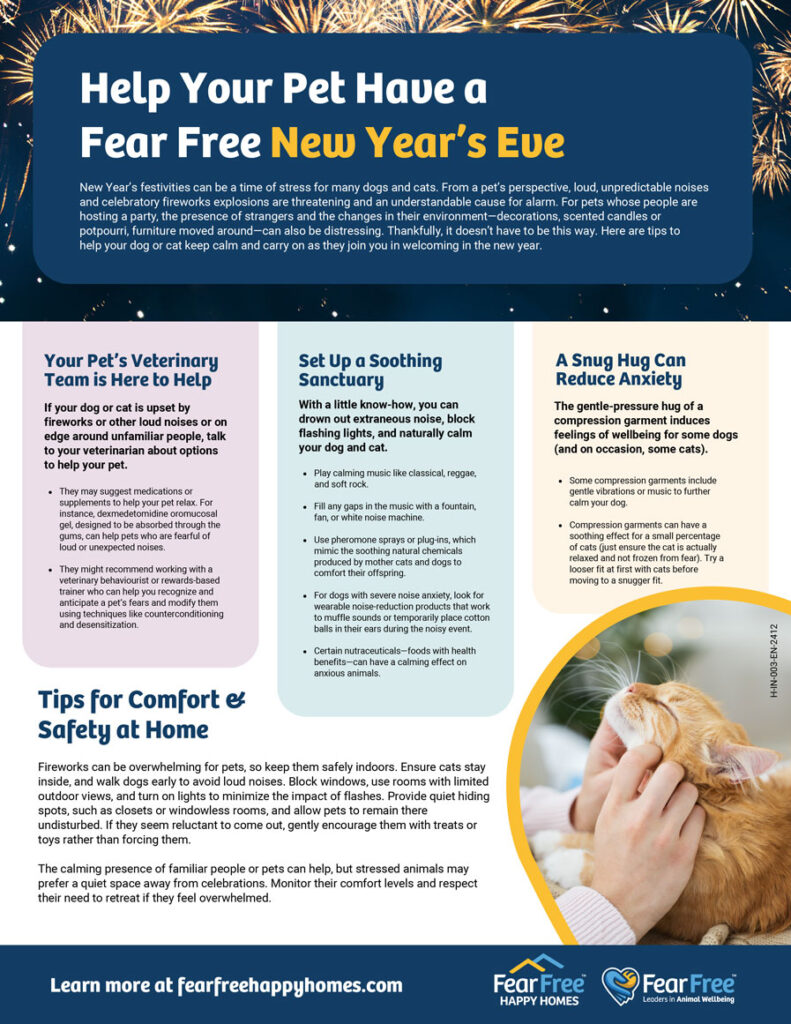
New Year’s Pet Safety Infographic

Use this infographic to educate your clients about the dangers of New Year’s celebrations and pets.

Image format: .pdf(Better for printing)

Image format: .jpg (Better for social media)

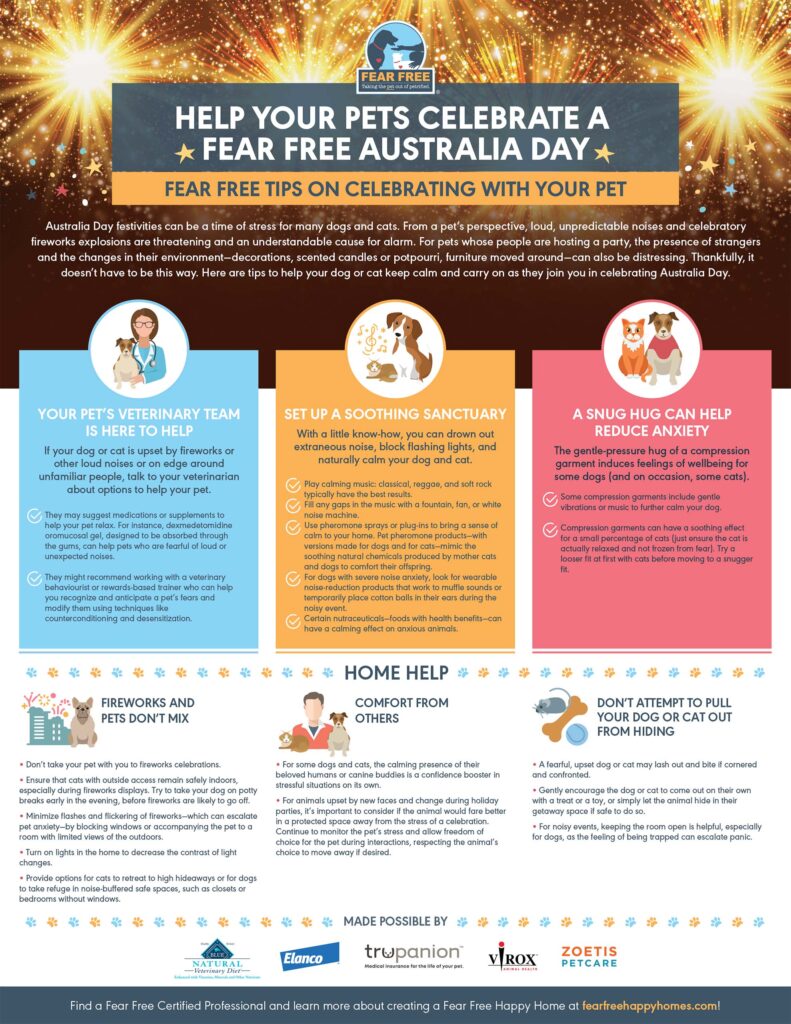
Australia Day Pet Safety Infographic

Educate your clients on Australia Day safety with this infographic

Image format: .pdf(Better for printing)

Image format: .jpg (Better for social media)

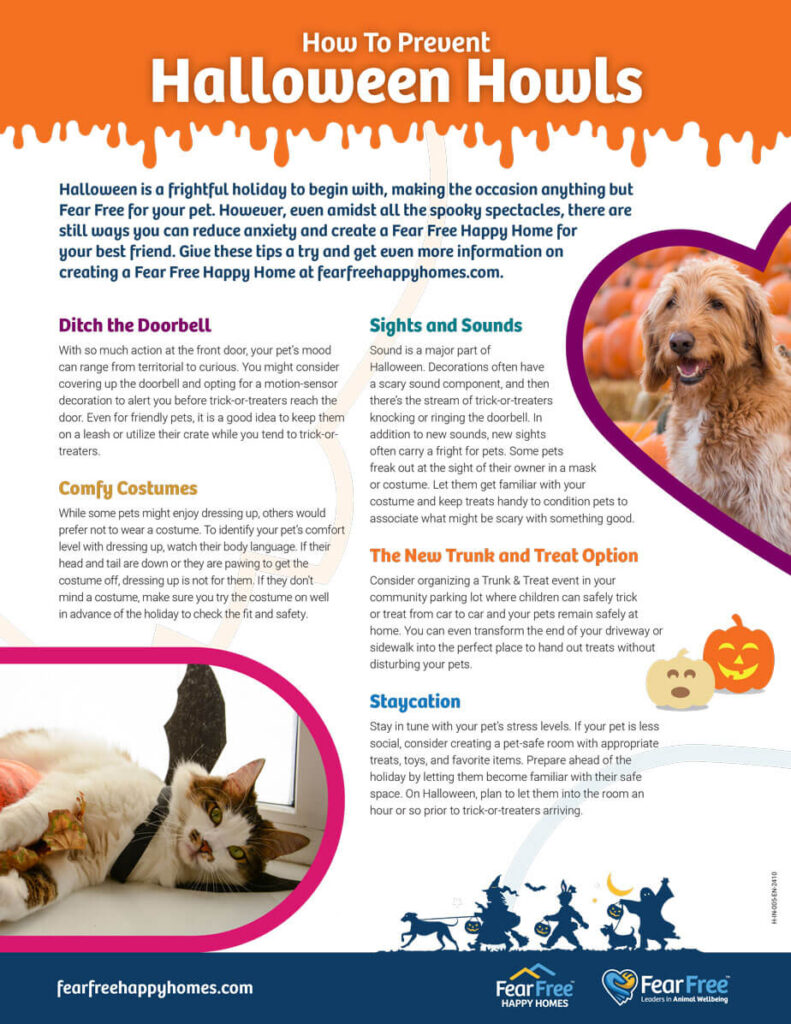
Halloween Pet Safety Infographic

Educate your clients on Halloween safety with this infographic

Image format: .pdf(Better for printing)

Image format: .jpg (Better for social media)

When dogs with sociable natures are not able to interact with other dogs or people as freely as they wish, they can feel frustrated. Use this handout to help educate your clients on ways to alleviate leash reactivity.