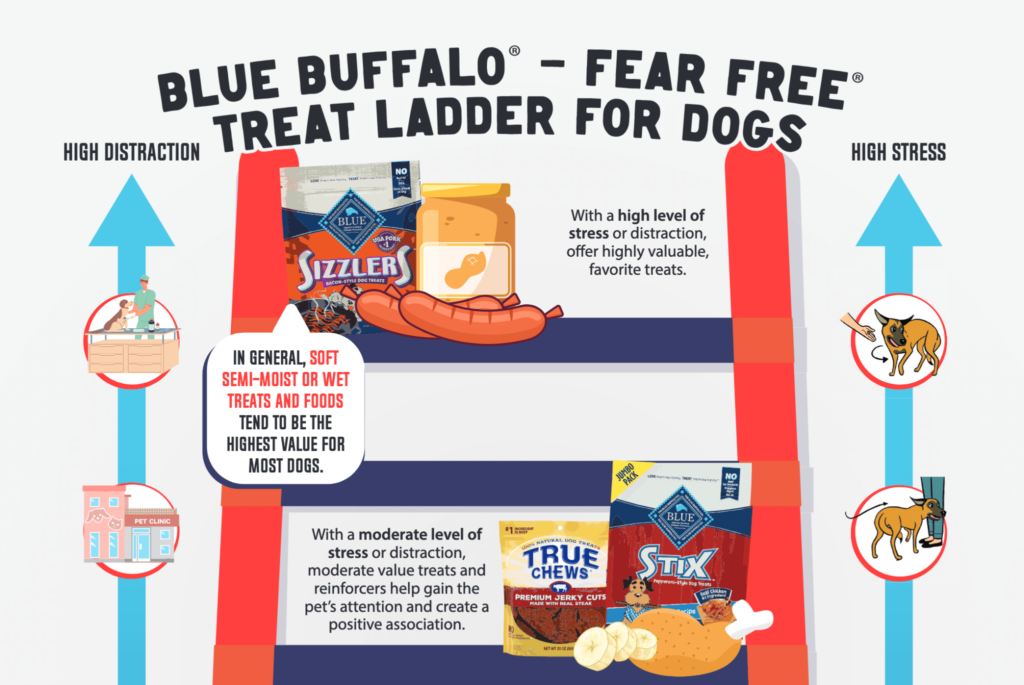
Download this handy treat ladder guide from Blue Buffalo and Fear Free.
Download this handy treat ladder guide from Blue Buffalo and Fear Free.
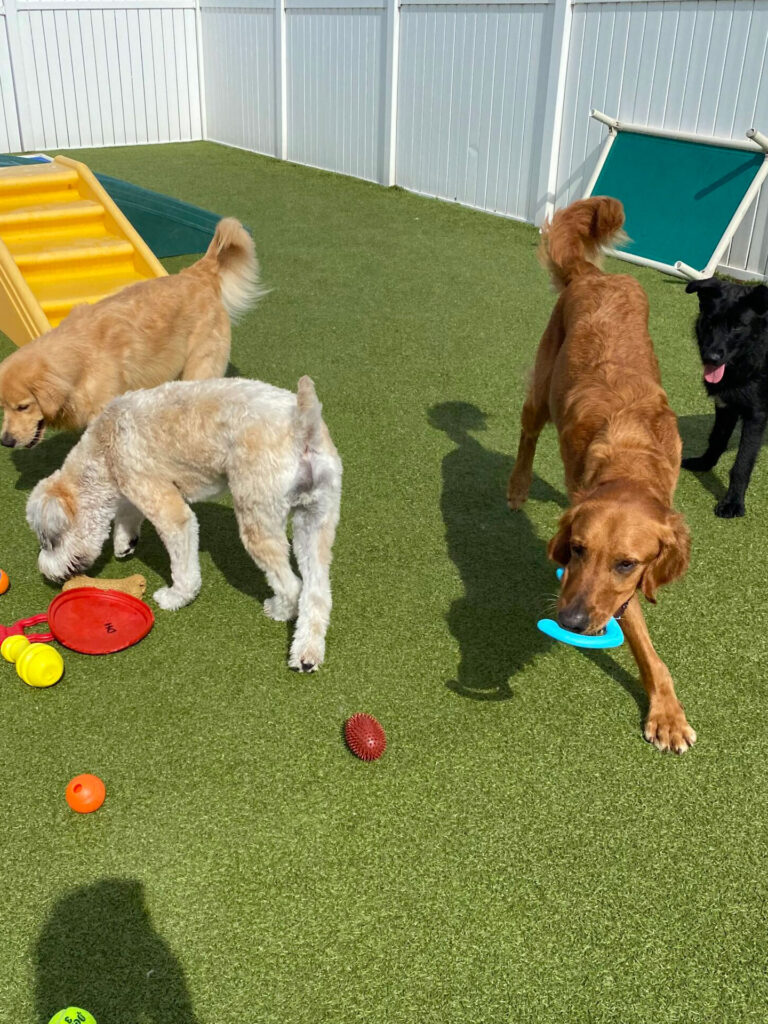
Boarding and daycare environments are often fraught with potential stressors for dogs and cats. Pets are away from home, their family is gone, unfamiliar people and animals surround them, and their daily sleep/wake schedule is thrown off. But there are several steps you can take, from setting up the environment itself to adjusting the way in which you interact with dogs and cats, that can help reduce stress and increase calm and safety for both pets and staff.
The Fear Free Boarding and Daycare Individual Certification Program will help you ensure you are thoughtful in every interaction with boarding and daycare pets—from greetings to kennel introductions to overexuberance or shyness. You’ll learn what a Fear Free boarding and daycare environment looks like, feels like, sounds like, and smells like. And you’ll get practical advice on what to do in the moment if a dog or cat struggles when you try to give them needed medications or care, drags you into the play yard, or refuses to enter or leave their kennel.
The purchase of the Fear Free Boarding and Daycare Individual Certification Program provides you with a Fear Free membership, which requires an annual renewal fee and completion of additional annual CE to maintain your membership.
The Fear Free Boarding & Daycare Individual Certification Program is a wonderful educational addition to the pet care service industry. Boarding & daycare facilities will immediately see value in this certification program as staff learns to identify and mitigate fear, anxiety, and stress in pets. The pet owner will be assured that their pets are in the care of professionals who are knowledgeable about the physical and emotional needs of each individual pet. Boarding & daycare facilities will be proud to be considered as “best in care” providers as they promote the wellbeing of their staff and the pets in their care. IBPSA is proud to be part of the Fear Free programs. —Carmen Rustenbeck, CEO and Founder, International Boarding & Pet Services Association
This course was reviewed by the IBPSA (International Boarding & Pet Services Association) and PACCC (Professional Animal Care Certification Council).
Bath time is scary for many animals—whether it’s the sound of the water, the feel of it on their skin, being restrained, or the tub itself. This one-hour module will teach you how to break down the bathing process into individual components that can be worked on separately to allow for calmer, safer bathing experiences. We will provide step-by-step desensitization and counterconditioning plans for every component—introducing the shampoo bottle, entering the tub, introducing water, and introducing the sound and feel of the dryer. You’ll also learn what you can do to modify the bathing environment to make it more inviting and less stressful for animals.
There are three lessons in this course:
Lesson 1: Overview of Fear Free Bathing and Positive Reinforcement
Lesson 2: Introduction to the Tub
Lesson 3: Modifying the Environment for Success
This one-hour course was designed for Fear Free groomers but is also open to our veterinary professional and trainer members. It was written by Terrie Hayward, M.Ed., KPA Faculty Member, CPDT-KA, CSAT, co-author of the book Grooming Without Stress, and is approved for one hour of RACE CE.

True enrichment goes way beyond simply providing dogs with food puzzles each day. For instance, a comprehensive enrichment strategy incorporates all types of enrichment: social, occupational, physical, nutritional, and sensory. This course will show you how to engage all the senses, as well as how to thoughtfully determine which enrichment activities are most appropriate for individual dogs, how to enrich the lives of dogs in a veterinary clinic, and those who are recovering from an injury and on restricted exercise.
This course, approved for 1 RACE-approved CE hour, was written by Laura Ryder, CPDT-KA, KPA CTP, IMDT.
This course consists of four lessons:

Are you the only person in your clinic who has a passion for Fear Free? It’s easy to get discouraged and frustrated when we are surrounded by obstacles. This course provides tools to achieve your Fear Free goals even when you feel like you are all alone in your work. Learn how to get buy-in, implement strategies from the ground up, and encourage your colleagues to join your heart’s work of protecting the emotional welfare of our treasured animal patients.
This course, approved for 1 RACE CE hour, was written by Monique Feyrecilde BA, LVT, VTS (Behavior).
This course consists of five lessons:
Now You’re Here, Now You’re Not: Preparing Your Pet for Yet Another Change
First our pets had to get used to their humans being around more than usual as people sheltered in place. For many pets, this was a positive change, but even positive changes can be stressful. They’ll face upheaval again when pandemic precautions relax and people go back to their normal routines. In this webinar, Valarie V. Tynes, DVM, DACVB, DACAW, will help you determine which patients may be at an elevated risk of increased anxiety and stress due to changes in routine, and offer practical, straightforward tips that you can share with your clients for preparing these pets for a return to “normal.”
Brought to you by Ceva.
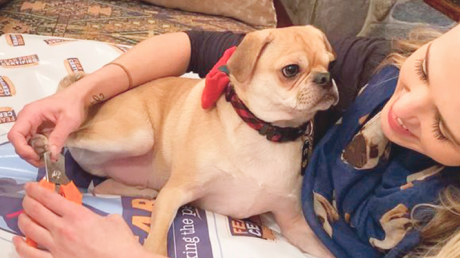
For humans, nail trims are mundane experiences. But for pets, nail care can cause stress by imposing on their personal space, restricting their freedom to move, and sometimes causing discomfort or even pain.
Successful nail care encompasses more than just being able to physically maintain nails. True success is found in gaining calm participation and trust from the animals you’re working with.
This course will teach you to:
This one-hour course is open to all professionals who are signed up for a Fear Free certification program and is approved for 1 RACE CE hour and one hour of CEUs from CCPDT, IAABC and KPA
This course consists of four lessons:

Of course, many cats will do anything for tuna. And dogs love those hot dogs. Those statements won’t stop the pet press.
However, veterinarians and veterinary technicians can also think outside the treat box. Sometimes, just because it’s novel, a treat may be more enticing. Also, at home these items might be used for training or for animals needing a bit of an appetite boost (always only with veterinary approval).
Who knew, for example, that many cats have a thing for olives (no pits please) or marshmallows. Or that dogs, and not necessarily Australian Cattle Dogs, love Vegemite, an Australian food spread made from leftover brewers’ yeast extract with various vegetables and spices. Most Americans disdain Vegemite, but many dogs love the stuff.
With Fear Free founder Dr. Marty Becker contributing, here’s a list of 20 surprising treats:
Remember to keep portion sizes small, appropriate for the size of the pet. You don’t want to send him home with a tummy ache!
This article was reviewed/edited by board-certified veterinary behaviorist Dr. Kenneth Martin and/or veterinary technician specialist in behavior Debbie Martin, LVT.
Although animal trainers can typically recognize the external signs of an animal in serious pain or distress, they are not necessarily aware of what’s going on inside the animal’s body and how it can affect their behavior. This module will discuss common conditions as well as take an in-depth look at pain management strategies and the effects of pain and stress on an animal.
This module has been approved for 1 RACE CEU and 1 CEU from CCPDT, IAABC and KPA.
This module is divided into three lessons.
In this module, we will review the signs and risk factors associated with infectious diseases in dogs and cats. We will cover how to minimize disease risk when training pets as well as how to properly disinfect and manage the training environment.
This module has been approved for 1.5 RACE CEU and 1 CEU from CCPDT, IAABC and KPA.
The one-hour course is only for trainers with renewal credits and costs 1 credit.
Lesson One: Common infectious diseases of dogs and cats
After completing this lesson, you will be able to:
Lesson Two: Minimizing disease risk when training
At the end of this lesson, you will be able to: