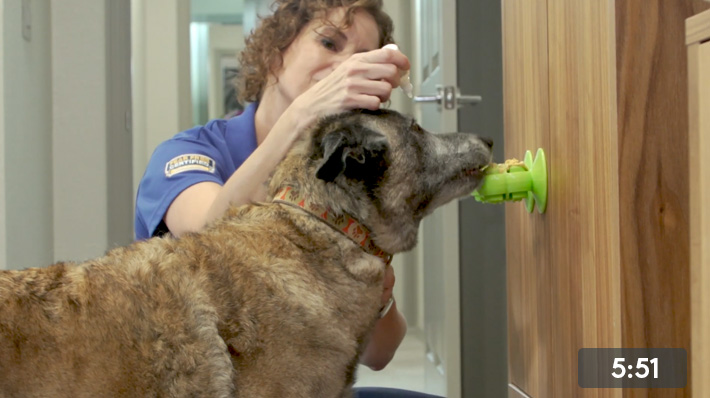
Mikkel Becker, CBCC-KA, KPA CTP, CDBC, CPDT-KA, CTC and Debbie Martin RVT, CPDT-KA, KPA CTP, VTS (Behavior) show how you can make needed eye treatments safe and Fear Free for your pet.
Mikkel Becker, CBCC-KA, KPA CTP, CDBC, CPDT-KA, CTC and Debbie Martin RVT, CPDT-KA, KPA CTP, VTS (Behavior) show how you can make needed eye treatments safe and Fear Free for your pet.
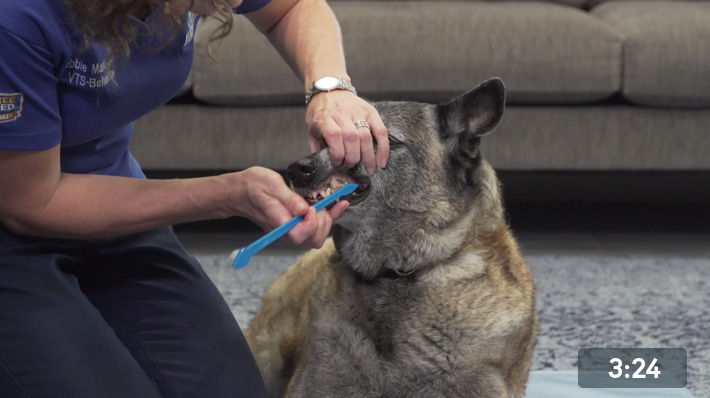
Mikkel Becker, CBCC-KA, KPA CTP, CDBC, CPDT-KA, CTC, and Debbie Martin RVT, CPDT-KA, KPA CTP, VTS (Behavior), explain how you can take the stressful task of brushing your pet’s teeth into something Fear Free for both of you.
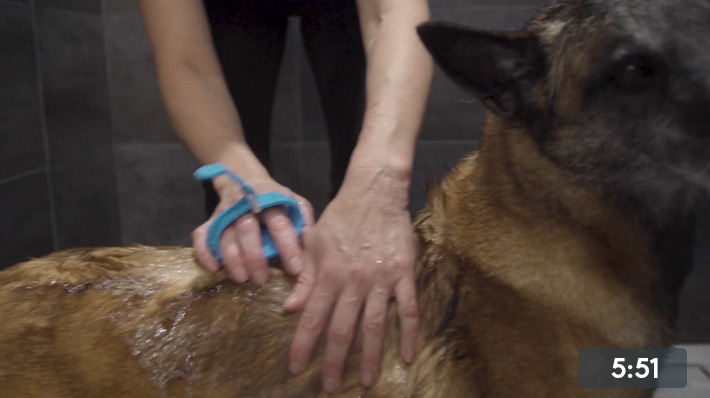
When just the word “bath” can set off your dog, you know something is wrong. Mikkel Becker, CBCC-KA, KPA CTP, CDBC, CPDT-KA, CTC and Debbie Martin RVT, CPDT-KA, KPA CTP, VTS (Behavior) show you how you can make bath time a rewarding and Fear Free experience for your pet.
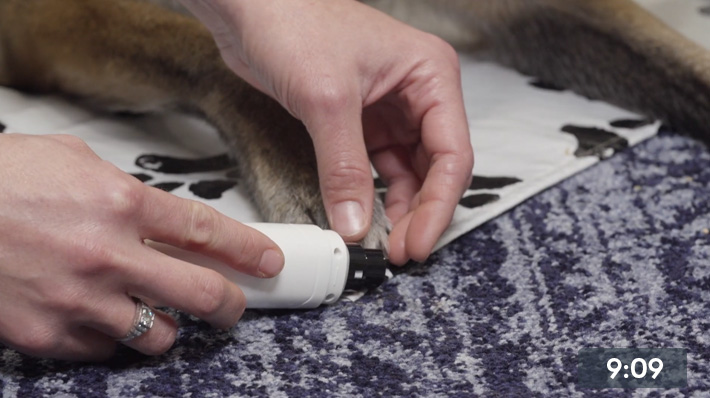
Mikkel Becker, CBCC-KA, KPA CTP, CDBC, CPDT-KA, CTC and Debbie Martin RVT, CPDT-KA, KPA CTP, VTS (Behavior) explain how Fear Free principles can be used to create a comfortable and safe nail trim experience for you and your pet.
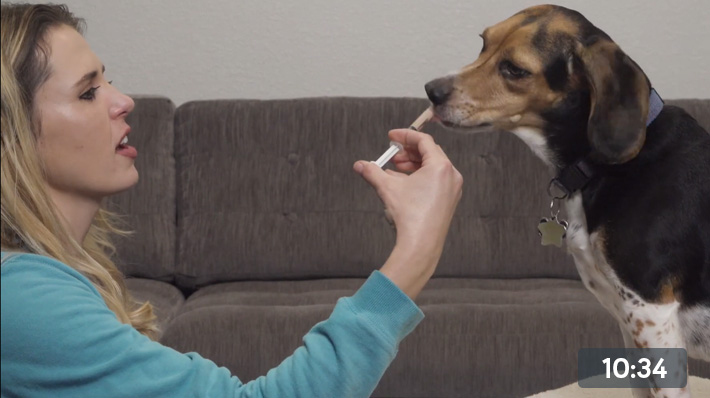
Just the idea of medicating your pet can send both of you running for the hills. Mikkel Becker, CBCC-KA, KPA CTP, CDBC, CPDT-KA, CTC and Debbie Martin RVT, CPDT-KA, KPA CTP, VTS (Behavior) explain how you can make this stressful task rewarding and Fear Free for both you and your pet.
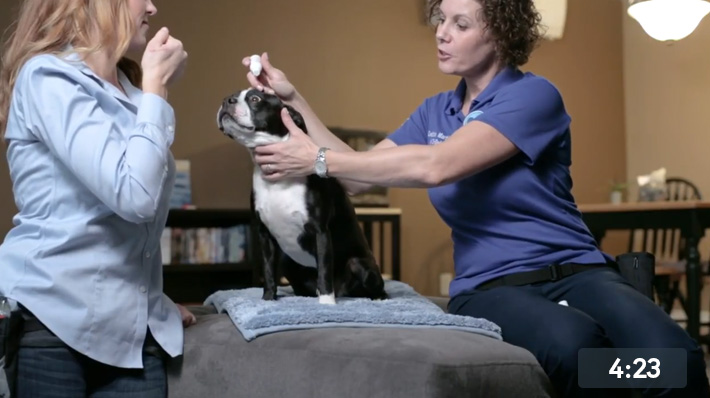
Creating a Fear Free Treat-Ment station can help you and your pet make needed procedures such as nail trims, injections, and grooming easier. Mikkel Becker, CBCC-KA, KPA CTP, CDBC, CPDT-KA, CTC, and Debbie Martin RVT, CPDT-KA, KPA CTP, VTS (Behavior), will show you how to put the “treat” in treatment!

I have been doing nail trims and anal sac expressions in my neighborhood for the last three years. Recently, one of my neighbors had asked on our community Facebook page if someone in the veterinary field could answer a question. Her dog was limping, and she didn’t know what to do. One of the neighbors offered her some doggy aspirin she had bought at the pet store. I quickly advised against giving unprescribed medications to her pet.
The conversation turned into a bullying session. One of my neighbors told me I shouldn’t try to act like a veterinarian. I have never felt so disrespected in the 15 years I have been in this career.
I shut down.
The next thing I knew, I was in my closet, crying, repeating to myself, “I don’t care, I don’t care anymore. Why should I care about others’ pets if I am going to be treated like crap? I’m done.”
I may have been improving with burnout, but I had just hit a whole new level of compassion fatigue.
I had a full weekend’s worth of nail trims to do and was going to make a little more than $200 in five hours. I didn’t care about the extra money anymore and canceled all appointments for the foreseeable future.
In tears, I explained to my husband why I had given up making extra money on the side. It was clear he wanted to help but didn’t know what to say or do. I knew I needed professional help.
Now I’m in the process of finding a therapist I can connect with. Until then, my family and I have adopted the following tools to help reduce stress:
–Simple Habit, a meditation app. My son uses it to fall asleep and settle down. He will ask to meditate to go to sleep now.
–A “coming home” routine: The spouse who is home first allows the second spouse to “finish coming home.” This gives them some quiet transition time to put their bags down, change clothes, and relax. When they’re ready to engage with the other spouse to prepare for the evening, they come out of the bedroom or wherever they choose to decompress.
–Boundaries with kids: I explain to my son that I need time to talk with his dad and ask him to sit quietly and watch a short show or play ABCmouse, a reading app. I also set timers in the house called, “Time to get ready for bed,” “Time for bed,” and “Quiet time is over.”
–Communication: When I start to feel like I’m getting anxious, I communicate how I am feeling and what I need to be able to come back down to earth.
Most of all, we continue to remind each other to slow down, be present, engage, and take time to listen to one another. My husband and I are working to improve our communication with our 3-year-old son so we can help him become an emotionally intelligent person, something his dad and I still work on ourselves.
We make time to have difficult conversations, and when we get into arguments, we try to make it a conversation, being mindful of raised voices, body language, and facial expressions. When necessary, we call each other out in a respectful way, in the moment, to help the other become aware of what they are doing.
The Fear Free way of thinking has helped me in so many aspects of my life. I use the techniques with my own son when he has doctor appointments as well as in everyday life. I communicate with him, making sure he knows what is coming up next, where we are going, what the doctor will do next. He is better behaved and calmer when things are explained to him, in most settings. I think that most children would respond to situations in a calmer manner when a Fear Free or Considerate Approach is taken.
In a work setting, my current team is emotionally intelligent, and all know the battle that I am fighting, which helps. Openly discussing things with your team can not only help you to become stronger but also to be seen with more respect and empathy than if you suffer in silence to spare everyone else’s feelings. Maybe someone on your team is suffering as well and doesn’t have the courage to speak up. Sharing your battles may give them strength to seek help for theirs. I wish more practice managers and owners would spend a day, at least, in a Fear Free certified hospital.
The most important message I want to send is that the battle of burnout is ongoing, and it’s not one you can win on your own. It doesn’t fix itself overnight or with a couple of therapy sessions.
Here is a quote I read frequently from Rachel Ashwell’s book “Painted Stories”:
“There is a time for taking action and creating work, and there is also a time for rest and seeking new ideas. Learning when you need space will help you to build a more sustainable creative practice.”
Check out our Fear Free on the House page for resources on wellness, quick tips, and more!
This article was reviewed/edited by board-certified veterinary behaviorist Dr. Kenneth Martin and/or veterinary technician specialist in behavior Debbie Martin, LVT.

The chin rest is a valuable cooperative care behavior that allows for a hands-off, consensual way to keep an animal still for veterinary exams, husbandry care, grooming, and other procedures. A chin rest serves as an indication from the animal that he is ready to engage in a handling or care procedure. By giving him a choice to “opt out,” even for a few seconds, chin rest empowers the animal to have a voice and greatly reduces his FAS.
In this course, you will learn the steps for training a solid chin rest behavior to an advanced level and discover its many practical, on-the-job applications.
This course includes three lessons:
This course was written by Mikkel Becker, CTC, KPA CTP, CBCC-KA, CPDT-KA, CDBC.
Helping Our Feline Friends Feel Fear Free with Dr. Tony Buffington
In this webinar, Tony Buffington, DVM, PhD, Clinical Professor UC Davis School of Veterinary Medicine, will remind participants “who cats are” and why they are particularly prone to fear in confined situations (i.e., hospitals, shelters, homes, etc.) After defining fear and stress in cats, Dr. Buffington will explain what people can do to minimize their fear, particularly in caged contexts—including how to enrich the cat’s surroundings, both inside and outside of the cage, and how to recognize both red and green flags by “asking” the cat. Resources for training staff and where to learn more about effective environmental enrichment for cats will also be provided.
After this presentation, attendees will be able to:
1. Recognize fear in confined cats
2. Identify threats that may be causing the fear response
3. Reduce fear by making changes in the cat’s environment
Brought to you by our friends at Virox, makers of Rescue disinfectants
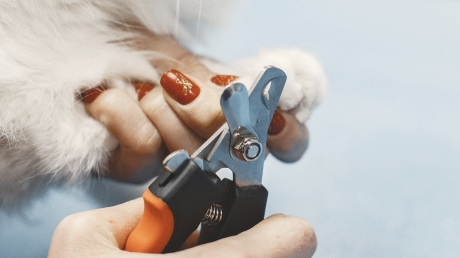
This course builds upon the foundational concepts covered in the Fear Free Nail Trims: Trimming Away the Terror course, which included finessed use of distractions, desensitization and counter-conditioning methods, and finely tuned choice of nail care tools.
An understanding of these foundational nail care concepts is recommended before starting this more advanced course. Cooperative care techniques taught in this course are useful both as preventive strategies to improve ease of nail care and as an interventional approach to address already existing FAS with nail care.
Since there is no “one size fits all” approach to nail care training that will work for every animal every time, this course aims to empower you with many options to choose from, depending on the animal you are working with at the time.
There are six short lessons in this course:
This course was written by Mikkel Becker, CTC, KPA CTP, CBCC-KA, CPDT-KA, CDBC.