Blog Archives


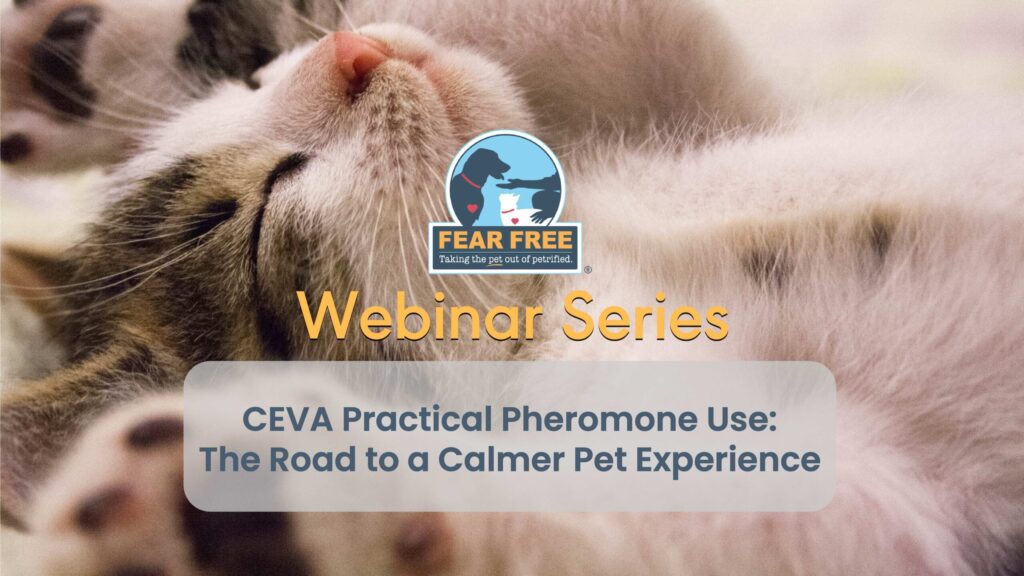
CEVA Practical Pheromone Use: The Road to a Calmer Pet Experience
Did you know the smells in an environment can affect the stress and anxiety levels of pets? Join Dr. Natalie Marks as she discusses the prevalence of fear, anxiety, and stress (FAS) in pets, how these can create unwanted behaviors, and methods to alleviate this stress for a calmer experience. FAS leads to a stressful experience in the clinic, grooming, or boarding and daycare environments, as well as in a pet and pet parent’s day-to-day lives. Pheromones are a successful tool to help alleviate stress and anxiety in pets. By combining the use of pheromones with the calm clinic approach, you can help create a calmer experience for pets and pet parents.
Brought to you by our friends at Ceva.

Improving the Emotional Experience via Science of the Senses: Smell
This program will focus on the olfactory experience of canine and feline patients during the veterinary visit and the important role that it plays in the pet’s emotional health and physical health when under veterinary care. Join Jacqui Neilson, DVM, DACVB as she discusses the importance of protection against respiratory pathogens using Fear Free vaccination strategies.

Conoceremos en que consiste el programa Fear Free, sus pilares fundamentales. Revisaremos las características de la especie felina, como percibe el mundo, sus necesidades y como se comunica permanentemente. El comprender y reconocer estos puntos será clave para desarrollar una practica Fear Free. Determinar si nuestros pacientes presentan miedo, ansiedad y estrés será un punto clave para trabajar de una manera acorde, pero fundamentalmente prevenirlas. Nuestras clínicas y hospitales, pueden beneficiarse ampliamente incorporando estas prácticas, sin tener que realizar grandes inversiones ni cambios edilicios.

Increase Team Efficiency: Workflow Tips & Technology Integrations
Life in pet professional settings has had challenges over the last few years, including adapting to no contact orders, parking lot check in, new technology processes, and even Telehealth. During this presentation, we will explore ways to use technology to help alleviate some of this stress for both pet parents and their pets. Because animals are so in tune with human feelings, anything we can do to help the parent benefits the pet. Using Fear Free techniques along with new technology supports in increasing our overall client satisfaction and the pet experience.

Psychological Safety for Veterinary Teams
Psychological safety is the most important aspect of successful teams. Our ability to feel safe to share ideas, to grow from failure, and to be honest with empathy allows our team to bypass the “interpersonal mush” that can exist otherwise. A sense of belonging, ability to be vulnerable, and strong interpersonal relationships are the initial ingredients to create this environment. We can assess psychological safety in a team using different tools. If psychological safety is lacking, we can help foster it using specific interventions, including civility and growth mindset work.

Improve Practice Efficiency with Shepherd Veterinary Software’s Fear Free Integration
Join Directory of Veterinary Affairs, Dr. Jennifer Merlo, and Shepherd Veterinary Software’s Christine Hinds – Senior Product Advisor as they discuss how Shepherd’s new Fear Free integration can improve efficiency within your hospital.

Course Overview
In this webinar course, Tony Buffington, DVM, PhD, Clinical Professor at UC Davis School of Veterinary Medicine, will remind participants “who cats are” and why they are particularly prone to fear in confined situations (i.e., hospitals, shelters, homes, etc.) After defining fear and stress in cats, Dr. Buffington will explain what people can do to minimize their fear, particularly in caged contexts—including how to enrich the cat’s surroundings, both inside and outside of the cage, and how to recognize both red and green flags by “asking” the cat. Resources for training staff and where to learn more about effective environmental enrichment for cats will also be provided.
This course is approved for one hour of RACE CE. In order to obtain the CE and certificate, you must enroll in and complete the course quiz with a score of 80% or better.
Brought to you by our friends at Virox
Course Overview
Decreasing fear, anxiety, stress (FAS), and pain leads to safer anesthesia by allowing a lower dose of sedative and anesthetic drugs needed for anesthesia premedication, induction, maintenance, and recovery. Lower drug dosages are especially critical in complicated patients with underlying disease and physiologic compromise. In this discussion, Tamara Grubb DVM, PhD, DACVAA, will explore the role of Fear Free principles in anesthetic safety, especially in the compromised/complicated patient.
This course is approved for one hour of RACE CE
Brought to you by our friends at Zoetis