Blog Archives

[wcm_restrict plans=”level-1-group-leader, certified-practice, groomer-certification, animal-trainer, student, sitter-certification-program, boarding-daycare-certification-program”]

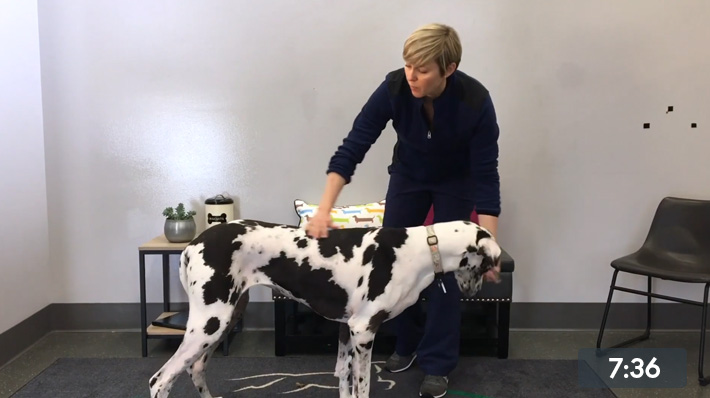
Kristin Kirkby Shaw, DVM, MS, PhD, DACVS-SA, shows you how to perform a one-minute orthopedic exam on a dog utilizing Fear Free principles. For a more detailed exam, you can view an extended video here.

[/wcm_restrict]

[wcm_nonmember plans=”level-1-group-leader, certified-practice, groomer-certification, animal-trainer, student, sitter-certification-program, boarding-daycare-certification-program”]

You must be a Fear Free member and logged in to view this webinar

[/wcm_nonmember]

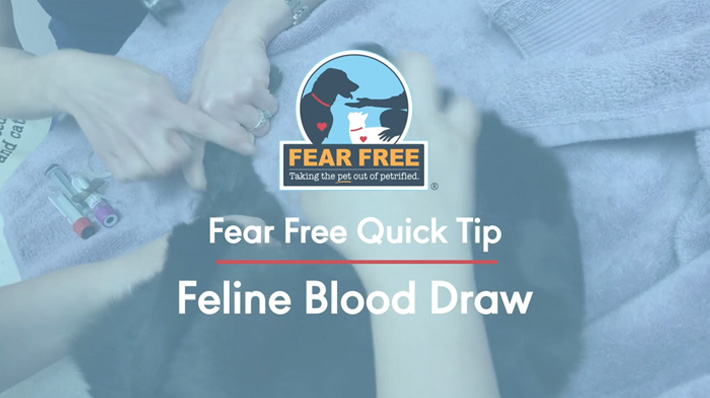
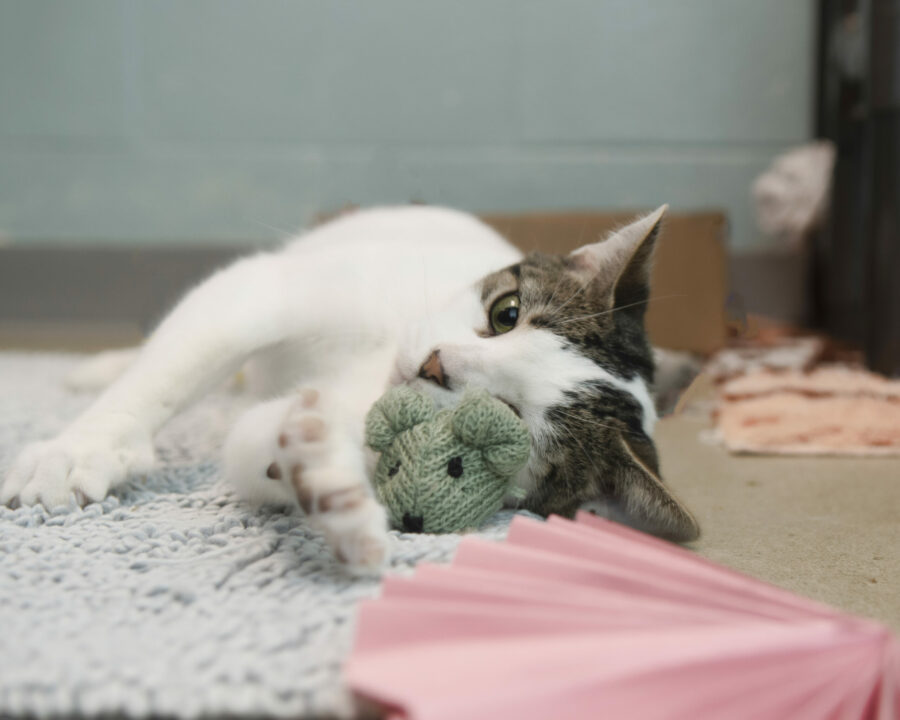
Feline blood draws are often stressful for the professional, and even more so for the patient. Veterinary technician/trainer Tabitha Kucera, CCBC, RVT, KPA-CTP, shows how you can get a blood draw done on a feline patient quickly, easily, and, most importantly, Fear Free.

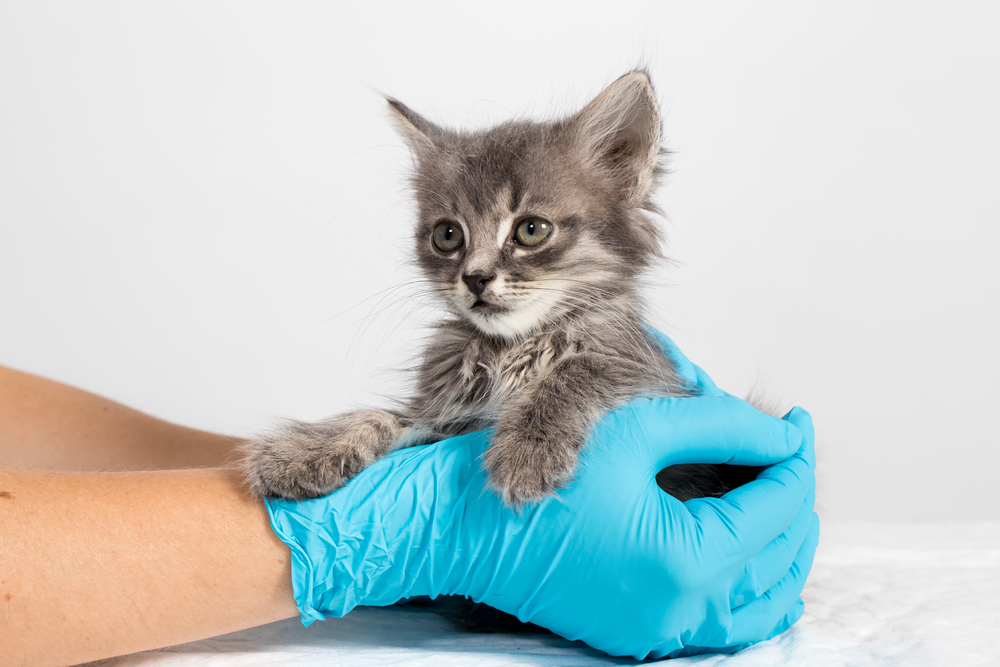
By Kim Campbell ThorntonTwo infectious retroviral diseases are often thought of as a death sentence for cats, but they don’t have to be. One is feline leukemia virus, and the other is feline immunodeficiency virus.

Apprehension about transmission and preconceptions about how they can affect a cat’s quality of life or adoption potential often leads to routine euthanasia for shelter cats who test positive for either disease. And some veterinarians may recommend against adopting a cat with FeLV or FIV particularly if clients have other cats in the household.

Life-saving protocols and good guidelines for adopters make those concerns outmoded, however. Cats with FeLV or FIV can live normal lives without being a hazard to other cats. With preventive healthcare strategies and prompt identification and treatment of illness, both diseases can be managed effectively and their spread limited. Moreover, the Association of Shelter Veterinarians and the American Association of Feline Practitioners do not support euthanasia based solely on a cat’s infection status.

FeLV

Approximately three to four percent of cats in the United States test positive each year for feline leukemia virus, according to the 2020 AAFP Feline Retrovirus Testing and Management Guidelines. The diagnosis affects an estimated 60,000 cats in animal shelters annually.

It’s important to know that the disease, which suppresses a cat’s immune system, does not run a straight course, says Julie Levy, DVM, PhD, DACVIM, DABVP (Shelter Medicine). It affects different cats in different ways and at different times. Levels may change over time depending on a cat’s immune status. Some cats live with the disease with little problem. It may flare up if the cat is stressed or has a comorbidity such as an upper respiratory infection and then subside. It’s not possible to run a test once and then expect the cat to remain the same throughout life.

More important, people are willing to adopt cats with FeLV and give them the care they need.

There is a high national demand for a lifesaving option for cats diagnosed with FeLV, and more and more shelters are working to place FeLV-positive cats in homes. Programs include Chicago’s Tree House Humane Society, Philadelphia Animal Welfare Society, Operation Kindness in Carrollton, Texas, and Austin Pets Alive!

A cat with FeLV can live for many years without illness and without spreading the disease to other cats if they are adopted into single-cat homes or with other FeLV+ cats. This has made a difference for cats in several ways. One is that recommended options for testing have been pared down to a small menu of the most accurate and cost-effective tests. A long-running study has allowed researchers to determine the most reliable tests as well as to evaluate how the status of cats with the disease changes over time. Using a new quantitative PCR test, shelters can now identify whether a tested cat is likely to be a long-term survivor or develop disease and mortality early.

Preventing FeLV

The advisory panel of the AAFP recommends that kittens be vaccinated for FeLV starting as early as 8 weeks of age with two vaccines given three to four weeks apart and then boosted when they are a year old. Vaccination of cats for FeLV during kittenhood, followed by a single booster vaccination at one year of age, is the best way to prevent spread of the disease and reduce its incidence.

While it does not consider FeLV a core vaccine for adult cats, the AAFP recommends that adult cats should be vaccinated annually for FeLV if they are at risk. Risk factors include spending time outdoors, living with cats known to be infected with FeLV, or interacting with cats of unknown disease status.

Ask clients or adopters about the lifestyle and vaccination status of other cats in the home. While vaccination doesn’t help cats already infected with FeLV, it is important for uninfected cats who may have access to the outdoors or potential contact with infected cats. It’s not uncommon for indoor cats to accidentally get out of the house or to experience a change in lifestyle leading to time spent outdoors on a regular or full-time basis.

Elanco’s range of vaccines against FeLV are designed to give feline patients a more comfortable vaccine experience. The ½ mL vaccine—containing half the volume of traditional 1 mL vaccines decreases administration time, increasing the comfort of the vaccination. It is also highly purified, using PureFil technology, designed to reduce adverse reactions associated with extraneous proteins and cellular debris. The vaccine line is available in a variety of combinations, including the only 1/2mL FVRCP+FeLV vaccine, to reduce the number of injections that may be needed.

FIV

Along with FeLV, feline immunodeficiency virus is one of the most common causes of infectious disease in cats worldwide. Cats typically acquire FIV through bite wounds when they fight with FIV-infected cats. A cat’s FIV status should be determined at the time of adoption or if the cat later becomes ill or has any risk of exposure.

But an FIV-positive test does not make a cat unadoptable. While the possibility of transmission is there, exposure to an infected cat is not as risky to uninfected cats as previously thought. FIV-positive cats living amicably with disease-free cats do not appear to pass on the disease. Nor do FIV-positive queens pass on the disease to their kittens. Casual contact, such as allogrooming or sharing water bowls, has not been found to be a common or efficient route of transmission. And while FIV is contagious among cats, it’s not transmissible to humans.

FIV infection can have three phases: acute, asymptomatic, and progressive. In the acute phase, occurring one to three months after infection, cats may have mild signs or no signs. It is followed by an asymptomatic, or latent, phase, which can continue for months or years. They may or may not progress to symptomatic disease.

With good care, some infected cats can live for many years with good quality of life. Some cats show no signs at all, although they remain infectious. However, because FIV affects the immune system, cats with the disease can be more prone to respiratory, dental, eye, or skin infections. Other signs associated with FIV include fever, lethargy, chronic diarrhea, and weight loss.

Clients or adopters caring for cats with FIV should protect them from injuries or wounds that could lead to secondary bacterial infections, as well as from other viruses and parasites that could cause illness. Best management practice is for these cats to live indoors, where they are protected from exposure to potential injuries and infections and prevented from spreading the disease to other cats.

A vaccination for FIV is not commercially available in the U. S., nor is it recommended by any veterinary organizations or schools of veterinary medicine. Its use can complicate diagnosis of FIV infections. Vaccinated cats produce antibodies indistinguishable from antibodies induced by natural infection, making test results unclear if a cat’s vaccination history is unknown. Cats vaccinated for FIV should have a microchip or tag indicating their vaccination status.

The bottom line is that cats with FeLV or FIV are often young, healthy in the moment, enjoying life, and can make great companions. With good care protocols, they can live happy lives with people and other cats.

Click-thru URLS

Fear Free         https://fearfreepets.com/

Blog                 https://fearfreepets.com/blog/

Elanco Animal Health https://www.elanco.us/

American Association of Feline Practitioners 2020 AAFP Feline Retrovirus Testing and Management Guidelines (sagepub.com)

This post is brought to you by our sponsor, Elanco, the maker of TruFel Ultra Vaccines.

TruFel, Ultra, Purefil, Elanco, and the diagonal bar logo are trademarks of Elanco or its affiliates.

©2022 Elanco or its affiliates. PM-US-22-1068
|
Alyson Evans, RVT, CVT, Elite FFCP, CCFPSix months ago, I wrote about my experience with burnout. I thought then that I had reached my lowest low, but I was wrong. Here’s what has been happening since then.

I have been doing nail trims and anal sac expressions in my neighborhood for the last three years.  Recently, one of my neighbors had asked on our community Facebook page if someone in the veterinary field could answer a question. Her dog was limping, and she didn’t know what to do.  One of the neighbors offered her some doggy aspirin she had bought at the pet store. I quickly advised against giving unprescribed medications to her pet.

The conversation turned into a bullying session. One of my neighbors told me I shouldn’t try to act like a veterinarian. I have never felt so disrespected in the 15 years I have been in this career.

I shut down.

The next thing I knew, I was in my closet, crying, repeating to myself, “I don’t care, I don’t care anymore. Why should I care about others’ pets if I am going to be treated like crap? I’m done.”

I may have been improving with burnout, but I had just hit a whole new level of compassion fatigue.

I had a full weekend’s worth of nail trims to do and was going to make a little more than $200 in five hours. I didn’t care about the extra money anymore and canceled all appointments for the foreseeable future.

In tears, I explained to my husband why I had given up making extra money on the side. It was clear he wanted to help but didn’t know what to say or do. I knew I needed professional help.

Now I’m in the process of finding a therapist I can connect with. Until then, my family and I have adopted the following tools to help reduce stress:

–Simple Habit, a meditation app. My son uses it to fall asleep and settle down. He will ask to meditate to go to sleep now.

–A “coming home” routine: The spouse who is home first allows the second spouse to “finish coming home.” This gives them some quiet transition time to put their bags down, change clothes, and relax. When they’re ready to engage with the other spouse to prepare for the evening, they come out of the bedroom or wherever they choose to decompress.

–Boundaries with kids: I explain to my son that I need time to talk with his dad and ask him to sit quietly and watch a short show or play ABCmouse, a reading app. I also set timers in the house called, “Time to get ready for bed,” “Time for bed,” and “Quiet time is over.”

–Communication: When I start to feel like I’m getting anxious, I communicate how I am feeling and what I need to be able to come back down to earth.

Most of all, we continue to remind each other to slow down, be present, engage, and take time to listen to one another. My husband and I are working to improve our communication with our 3-year-old son so we can help him become an emotionally intelligent person, something his dad and I still work on ourselves.

We make time to have difficult conversations, and when we get into arguments, we try to make it a conversation, being mindful of raised voices, body language, and facial expressions. When necessary, we call each other out in a respectful way, in the moment, to help the other become aware of what they are doing.

The Fear Free way of thinking has helped me in so many aspects of my life. I use the techniques with my own son when he has doctor appointments as well as in everyday life. I communicate with him, making sure he knows what is coming up next, where we are going, what the doctor will do next. He is better behaved and calmer when things are explained to him, in most settings. I think that most children would respond to situations in a calmer manner when a Fear Free or Considerate Approach is taken.

In a work setting, my current team is emotionally intelligent, and all know the battle that I am fighting, which helps. Openly discussing things with your team can not only help you to become stronger but also to be seen with more respect and empathy than if you suffer in silence to spare everyone else’s feelings. Maybe someone on your team is suffering as well and doesn’t have the courage to speak up. Sharing your battles may give them strength to seek help for theirs. I wish more practice managers and owners would spend a day, at least, in a Fear Free certified hospital.

The most important message I want to send is that the battle of burnout is ongoing, and it’s not one you can win on your own. It doesn’t fix itself overnight or with a couple of therapy sessions.

Here is a quote I read frequently from Rachel Ashwell’s book “Painted Stories”:

“There is a time for taking action and creating work, and there is also a time for rest and seeking new ideas. Learning when you need space will help you to build a more sustainable creative practice.”

Check out our Fear Free on the House page for resources on wellness, quick tips, and more!

This article was reviewed/edited by board-certified veterinary behaviorist Dr. Kenneth Martin and/or veterinary technician specialist in behavior Debbie Martin, LVT.

 
|
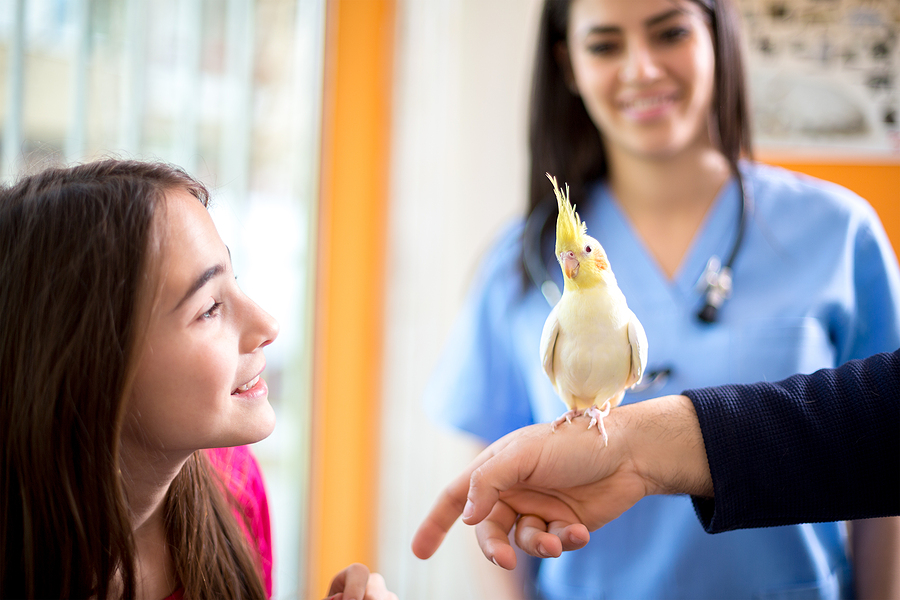
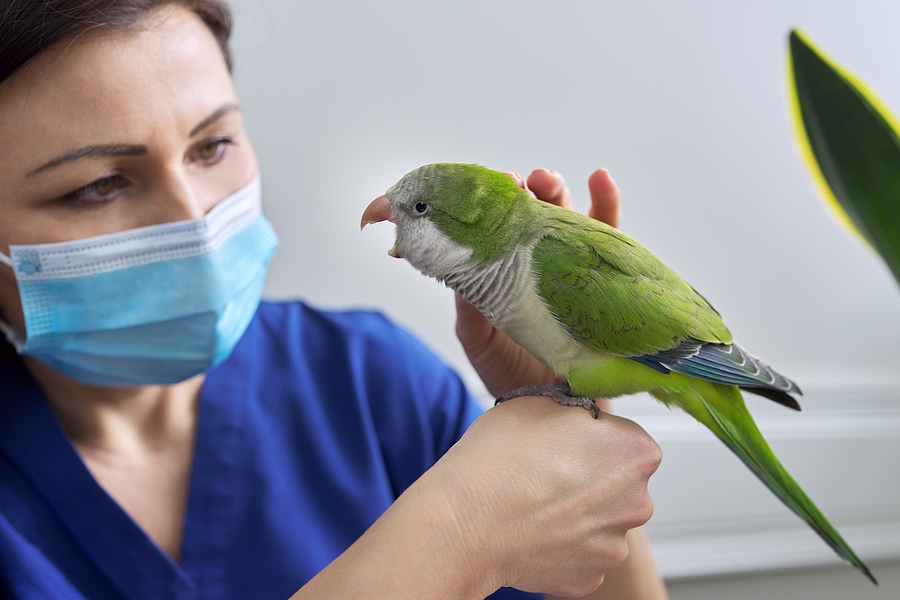
Rachel Lees, RVT, KPA CTP, VTS (Behavior)Behavior problems are a common cause of relinquishment and euthanasia in most domesticated species, including parrots. When obtaining a new pet, clients have specific expectations and ideas about what normal behavior looks like for each species. Whether they have a dog, cat, bird, or guinea pig, these choices are most likely made from a positive experience the client had in the past.

But what happens when things do not go as planned? What if expectations are too high and the pet obtained is unable to live up to the client’s expectations? Biting, screaming, and feather picking are parrot behaviors that many new owners are not prepared for when they acquire their pet. In the avian world, euthanasia is much less likely as most veterinarians are hesitant to end a bird’s life due to the client’s convenience, but this makes it more likely that the bird will be rehomed multiple times.

What if we were able to prepare our avian clients for behavioral problems before they start? What if avian rescues could work to teach birds specific cued behaviors to help eliminate aggression in some of these pets?

Psittacine preparatory programs or avian prep programs can be life-changing for birds and a great resource for owners to understand normal bird behavior, create realistic long-term expectations, and work toward creating an environment that is mentally and behaviorally enriching. They also help teach cued foundation behaviors used to eliminate and replace unwanted behaviors (just as we do with dogs and cats). Avian prep programs can help to strengthen the human-animal bond, keep birds in a home long-term, and increase the bond between client, bird, and clinic. Bonus: offering such programs also increases revenue through fees and the sale of products and treats.

Creating the Course

Who will teach the courses? What are the most important topics to teach? What foundation behaviors are most important and why? These are all great questions and we will break them down below:

Educator/Instructor:  An avian veterinarian or veterinary technician with a special interest in birds should instruct this course. The individual should be knowledgeable in avian communication, body language, forms of enrichment, and use of positive reinforcement for training. An exotic-animal trainer may be an ideal instructor if one is in your area. This trainer should use and recommend positive reinforcement. Avoid use of aversive training techniques, which can increase fear, stress, and anxiety in all species.

Curriculum Breakdown

I recommend creating a four-week course. The first two weeks can be taught virtually or in person without the client’s bird present. The goal in the first two weeks will be to review the basics of avian communication, enrichment and environmental set up, learning theory and use of positive reinforcement (with a marker), and answer client questions. The third and fourth classes will focus on teaching cued behaviors with the birds present in the hospital. (See the chart below)

To prevent potential disease transmission or other risks for birds brought to class, take the following measures:

  • Waiver (indicating risk to client, bird, etc.)
  • One owner per bird
  • Clients should bring their own equipment and reinforcers (carriers, towels, etc.)
  • Birds will need to have a current examination by a veterinarian, complete blood cell count, and Chlamydophila screening in the past year.
    • Old World parrots such as African greys, lovebirds, and cockatiels must have a negative test for circovirus
  • All unwanted behaviors (feather picking, etc) should have been medically worked up prior to working solely on behavior.
Class Topic and Discussion Points
Class One (Humans Only) ·       Introduction and Client Problem Behavior Discussion (Why are they here and what are they seeing at home?)·       Avian Communication

·       Environmental Enrichment/Management

Class Two (Humans Only) ·       Environmental Enrichment/Management (cont.)·       Learning Theory and Using Marker Training

·       Marker Mechanics and Preparing for Birds in Class

Class Three (Humans and Birds) Break down into 5- to 10-minute training sessions with short breaks in between.·       Name Orientation

·       Target

·       Step to Me

·       Off

·       Station Training

Class Four (Humans and Birds) Break down into 5- to 10-minute training sessions with short breaks in between.·       Name Orientation

·       Target

·       Step to Me

·       Off

·       Station Training

Foundation Behaviors to Teach

The following behaviors can be useful to have trained and generalized prior to problem behaviors starting. Response Substitution is a term used when we want to replace an unwanted behavior with a new behavior. Teaching and creating strong cued behaviors can help to eliminate and give alternative responses in situations involving attention-seeking or aggression.

Name Orientation: Teaching birds their name can help with obtaining their attention to interrupt unwanted behaviors and ask them to offer a different behavior.

Target Training:  This behavior can be used to teach the bird to move from one place to another by teaching them to place their beak near the target.

Step to Me:  Cue a bird to move to handler’s arm or hand to be transported from one place to another.

Off:  Cue bird to move off of handler during periods where conflict may occur.

Station Training:  Teach bird to go to a specific location on cue. This can be used as an alternative behavior.

Avian prep programs and training classes are currently scarce but ideally courses like this will become as routine as dog training classes. Pet birds deserve just as much of a chance to be successful in the home environment as dogs or cats. If you or others you know are teaching a course like this, please update us on the Fear Free for Professionals Facebook Group. We would love to see your photos and ideas for these courses as well as your feedback!

Resources 

Luescher, Andrew. Manual of Parrot Behavior. Blackwell Publishing. 2006

Shaw, Julie K. and Martin, Debbie. Canine and Feline Behavior for Veterinary Technicians and Nurses. Wiley & Sons, Inc. 2015.

This article was reviewed/edited by board-certified veterinary behaviorist Dr. Kenneth Martin and/or veterinary technician specialist in behavior Debbie Martin, LVT.

Rachel Lees, an Elite Fear Free Certified Professional, is a veterinary technician specialist in behavior, a KPA certified training partner, and veterinary behavior technician at the University of Tennessee College of Veterinary Medicine. She loves helping people create and maintain a strong human-animal bond.
 
Sandra ToneyHanover Veterinary Hospital in Cedar Lake, Indiana, has the distinction of being the first veterinary hospital in the Northwest Indiana region to become Fear Free Practice certified.

Lindsay Pollard, FFCP (Veterinary), the hospital’s practice manager, says they began trying out some Fear Free methods after hearing about the concept. “A few of our staff members obtained individual certifications,” Pollard says. “After learning more and attending a few conferences where Fear Free was highlighted, we decided to go all the way.” Hanover Veterinary Hospital completed the program to become Fear Free certified in December 2018.

When deciding to become a Fear Free Practice, the biggest difference has been in the way he interacts with the animals after certification, says owner Jeremiah Bieszczak, DVM. “The biggest change has been reading body language and emotional state/stress level and addressing that instead of pushing through it. We are better able to read pets and have more tools and knowledge to deal with these situations.”

Many long-term clients are delighted with the constructive visits they’ve had with Fear Free, and new clients are thrilled with the difference between them and their previous veterinarian, says Pollard. Oftentimes they mention the care and compassion used when handling their pets. Pollard feels they’ve made much progress with many of the patients since becoming Fear Free certified.

Fear Free helps all pets, but scared pets often need Fear Free much more to turn their lives around. Pollard has one patient in particular whom she’ll always remember and says Fear Free methods changed everything for this dog.

The pet was a 14-year-old female shepherd mix. Sally, who has since passed away, desperately needed help. “Prior to our Fear Free certification, both Sally and her owner, Sara Zilz, dreaded coming to the vet. She also had some fear aggression and anxiety issues at home. She had a very high FAS and was fearful to the point of aggression,” says Pollard. “Our exams with her were very limited at best and it took several staff members to accomplish anything with her at all.”

Sally had been adopted by Zilz from the humane society when she was 9 weeks old. She didn’t notice any problems with Sally until she took her for training and Sally became spooked by large signs in the store hanging over her head. Then she began showing other fearful behaviors. Zilz says Sally disliked smoke from the grill and even hated when someone blew out a candle. She started having food-guarding issues and was even afraid of shadows on walks.

Zilz says she never thought about potential problems at the veterinarian’s office. “I had her boarded at Hanover. Dr. Bieszczak came out when I picked her up and nicely said something along the lines of ‘She needs to be medicated before we will take her for another boarding.’ This broke my heart. I did not realize she was that bad.”

A veterinary technician named Bobbi became Sally’s best friend when she was boarded. Bobbi would sit in her kennel with her and try to get her to come out. She wouldn’t even go outside to potty.  Bobbi called Zilz several times and asked if she could do some things to help her. After that, Bobbi became Sally’s veterinary technician of choice.

After they became Fear Free certified, Bieszczak started Sally on fluoxetine, an anti-depressant. This medication was a game-changer for her. Pollard says they also started doing happy visits with Sally, using treats with her during exams and treatment, and including calming pheromone products during her happy visits and exams/treatment.  They also tried to keep the same staff member working with her all the time, and kept detailed notes on her likes and triggers, constantly adapting their plan and approach to better suit Sally individually.

“She made more progress with each happy visit and regular visit until eventually she was happy to see several staff members,” Pollard says, “and she was happy coming into the building. Sally would readily accept most treatment from us with the help of some treat distractors and enforcers.”

“At one point, I felt everyone wanted to give up on Sally. Once I saw the Hanover Veterinary Hospital staff was not giving up on her, I knew things would be okay,” says Zilz.

This article was reviewed/edited by board-certified veterinary behaviorist Dr. Kenneth Martin and/or veterinary technician specialist in behavior Debbie Martin, LVT.

Sandra Toney has been writing about cats for over 25 years and is an award-winning member of Cat Writers Association and Dog Writers Association of America. She has written for many print and online magazines about cat health and behavior as well as authoring eight books. She lives in northern Indiana with her cat, Angel.
 
 
|
Rachel Lees, RVT, KPA CTP, VTS (Behavior)To successfully identify behavior concerns and recommend a treatment plan, a veterinary professional should be proficient in collecting a thorough behavioral history. It’s essential to gather information on daily routine, environment, training history, and other lifestyle and behavior facts.

With feathered companions, this is especially important, as many avian behavioral issues may be related to lack of environmental stimuli; specific relationships with members of the household; the owner’s behavior; and daily schedule and routine, to mention a few key pieces of behavioral history taking. Most veterinary behaviorists require a client to complete a behavioral questionnaire prior to the pet’s appointment, but even with this information, they must act as detectives, sifting through the information and asking further questions in the examination room.

This article will discuss four aspects of collecting an avian behavioral history. Having a thorough understanding of the situation can help the veterinary team reach a diagnosis.

Gaining Client Trust

This first step is an important factor in taking a history, even though it doesn’t relate to the bird’s behavior. Veterinary professionals should present themselves in a way that promotes and creates an open and honest relationship with the pet owner. If the client feels judged, the history obtained may not be accurate history, leading to misdiagnosis.

Humans communicate visually and verbally. Actively listening and appearing open, sympathetic, and relaxed are important when entering the room to evaluate the patient and meet the owner.  When in an exam room with clients, I mention specific behaviors that may be challenging to ignore and tell the client that everyone makes mistakes and we all lose our tempers. I evaluate the client’s nonverbal body language and based on that, I may state that there is zero judgment in this space and that we are a safe zone. We support owners and understand that they are in the office to help their pet. It is not our job to judge, but to help the owner and pet move forward.

Abnormal vs. Normal Behavior

Clients who obtain parrots may or may not fully understand normal parrot behavior. Many clients bring their bird in for behavioral evaluation only to learn that the behavior is normal for that species. Parrots, for instance, are inherently loud, destructive, and messy. The parrot walking into the consultation is going to be the same parrot walking out. Giving the client clear expectations can be informative for clients and help them understand long-term goals for modification of unwanted behaviors. Communicating that some of these behaviors are normal can educate the client and lead to a discussion on how to manage the behavior moving forward.

Observing Behavior

This can be the most challenging part of obtaining the behavior history. It is important for the veterinary professional to witness typical behavior for the bird. With birds, the majority of behavior is going to be displayed in their home environment where they feel most comfortable. Most birds will alter their behavior in the presence of unfamiliar people. While using video to evaluate the behavior is valuable, it may add new, potentially “scary” stimuli to the situation, and this may influence the bird’s behavior.

To help to counteract this, have the client bring the camera or tripod into the environment a few days prior to collecting video and data. This should help the bird habituate to the camera and reduce or eliminate behavior changes. In the text Manual of Parrot Behavior, edited by Andrew Luescher, DACVB, it is recommended that clients film the following prior to the consultation:

  • Interactions with each household member (or members of the home who routinely interact with the bird)
  • Interactions with owner during:
    • Meals/eating
    • Playing
    • Snuggling
  • Routine behavior in the cage (with owner in the room)
  • Routine behavior in the cage (without the owner present)
  • Film a “Bird View” video of what the bird sees from the cage
    • Full circle view

The goal of these videos is to give the veterinary professional insight to how the bird interacts at home. The veterinary team can then read and understand the animal’s body language as it is displayed during each circumstance or situation. Caution the client against purposefully eliciting aggressive behavior or frightening the bird. The goal is for the videos to provide a glimpse of the bird’s everyday behavior and comfort level with interactions and surroundings.

Evaluating Physical Environment

The bird’s environment can play a large role in normal or abnormal behavior patterns. This can become a concern when diagnosing a behavior condition. When evaluating the pet’s physical environment, look at the following:

  • The bird’s cage
    • Size
    • Construction
    • Cleanliness: A dirty cage space can cause increased stress and anxiety
    • Location: Where is the cage located? In the common room with the family and or owners? Is it in an isolated space away from human interaction? Is it in the center of the room? Certain locations can increase stress and anxiety.
    • Stimuli and surroundings near the cage: The cage is where the bird spends a large amount of time. Since parrots are a prey species, certain sounds, objects, or conditions may be more concerning to them, causing increased fear, stress, and anxiety. Specific objects such as clocks or portraits may increase stress and anxiety (“Why is the scary portrait staring at me?”). Loud sounds, cigarette smoke, and air quality are other factors that can make the parrot uncomfortable.
  • Toys and enrichment:
    • Are perches and play gyms present in a social gathering space? This may suggest that the bird is able to loosely and comfortably play and interact with the equipment in the presence of people and other unknown stimuli.
    • Assess the type of toy, size, construction materials, and suitability. Toys that are too challenging become uninteresting. Each toy should match the preference of the bird. Variation and rotating toys can be a useful tactic to keep toys as “fun” as possible. Some birds may not know how to play with toys, and for this reason may be more dependent on and bonded to the owner.

Veterinary professionals may also request that the client submit a video tour of the home. This can aid them in knowing what the pet may be experiencing based on human movement, placement of items, and daily routine.

These are just a few of the considerations to take into account when obtaining an avian behavioral history. Other areas to assess and discuss are the patient’s signalment, breed, developmental history, prior environmental information, and grooming. We will dive into other aspects of taking an avian history in a future blog post.

Reference: 

Luescher, Andrew. Manual of Parrot Behavior. Blackwell Publishing. 2006

This article was reviewed/edited by board-certified veterinary behaviorist Dr. Kenneth Martin and/or veterinary technician specialist in behavior Debbie Martin, LVT.

Rachel Lees, an Elite Fear Free Certified Professional, is a veterinary technician specialist in behavior, a KPA certified training partner, and veterinary behavior technician at the University of Tennessee College of Veterinary Medicine. She loves helping people create and maintain a strong human-animal bond.
 
|
Dr. Marty BeckerOne of my first memories as a child was of my father, R.J. Becker, walking slowly back into our southern Idaho farmhouse, supported by my mother, Virginia. He slowly turned his head and looked at me and I didn’t see my dad.

R.J. was a farmer, rancher, and dairyman. Why all three? He broke the back of our 160-acre farm to make farm payments, pay loans for seed and fertilizer, make repairs to aged farm equipment, and have enough for necessities and a few niceties. He was strong of build. There are black-and-white photos of my older brother, Bob Jr, and I holding onto his Popeye biceps as if they were chin-up bars. Athletic, he could make a baseball smoke, throw a football 50 yards, and do Herculean feats of lifting. He could carry a 100-pound haybale in each hand. Folks in our Castleford, Idaho, community nicknamed him Charles Atlas (look it up). But everyone also knew dad was weak. Weak of mind.

They knew because there were many times when he was so depressed, he couldn’t get out of bed for months at a time. My brother and I milked the cows before and after school. Neighbors pitched in to help us harvest our crops and take our steers to market. Then the switch would flip, and Dad would be manic. Mania meant excessive drinking, philandering, gambling, wanting to sell the ranch, and constant threats of splitting up our family through divorce. I remember a pastor cautioning that Dad might take his life with depression but would ruin his life with mania.

Back to when dad looked at me. When he turned his head, I could see where the hair had been cut short on the sides of his head and I could see circles burned into his scalp. I only learned later in life that he’d had shock treatments to try and jump-start his brain out of depression. To get out of the darkness, he was willing to fry his brain (this isn’t much of an exaggeration as the shock treatments of the day were not microdoses and were not done under anesthesia like they are today).

The treatments turned Dad into sort of a zombie. No short-term memory, no joy, a 1000-yard stare. Manic depression is hereditary. Dad’s father, brother, and sister all committed suicide. So did Dad. I’ve had suicidal thoughts as well. My Mom’s genetics gave me a Mensa brain, photographic memory, creativity, and a can-do spirit. Mom’s seemed to define me until my 40s when the “dark clouds,” as Dad used to call them came rolling in.

I’ve always felt that God has played favorites with me. I’ve been married for 43 years to the love of my life, Teresa. I have a great family. I love where I live, love what I do, and feel blessed. But I also have manic depression. My lows aren’t as low as Dad’s; I’ve never been bedridden or had to have shock treatments. Nor are my highs. No excessive drinking, gambling, or risky behavior; just a propensity to spend too much money or give too much money away. In some ways, mania has been a great blessing.

Mania allows you to think that nothing is impossible, and creative ideas can come at you like a summer hailstorm. I know that Fear Free came out of mania. I knew it was something that had to be successful because it helped all stakeholders. The only “no” I knew was “no problem.”

People in our community growing up were either heartbroken for R.J. Becker or scared of him. They didn’t want to see the strongman weak. They also didn’t want to see the strongman intoxicated and angry. Dad? He hated himself, even during the periods when he wasn’t depressed or manic. He was embarrassed. Felt weak and worthless. Even though through his efforts he put all four of his children through college; a physician, an attorney, and a veterinarian. His suffering and shame ended when he mouthed a shotgun just after his 80th birthday.

I’ve taken a different route. Dad wouldn’t take his medication because he didn’t need it. I always take mine because I know I have to have it. Dad would only talk about his problems with a minister. I trust boarded psychologists and therapists. Dad covered up his mental illness. I share mine with the world because I know that I can help others be successful in treating their mental illness.

I can’t tell you how many times I’ve had people say, “You have depression? You have everything!” Yes, I’ve got a successful relationship with God, Teresa, my family, my friends and neighbors. Yes, I’ve had a very successful career by all measures. Yes, I’ve seen the world (89 countries) and live in a beautiful log home on a drop-dead gorgeous horse ranch in the mountains of northern Idaho. Yes, I’m part of something that’s changing the world for animals, literally and figuratively, with Fear Free. I do have everything. Except for the right brain chemicals to be happy, healthy, and alive.

In 2020, at age 66, I had my first serious suicidal thought. It was right at the start of COVID, and as I drove home from the airport in Spokane, Washington, to our ranch in Bonners Ferry, Idaho, I looked over at a frozen lake I’d driven by hundreds of times and thought, “I think I’ll just drive over the railroad tracks, onto the thin ice of the lake, and sink.” Blessedly, because of my faith, family, and the mental strength I’ve developed from therapy, my next action after this sinking feeling was to stop the pickup, call my doctor, and make an appointment.

I hope that this message serves to let you know that if you’re depressed, anxious, or suffer any other mental health issue, you’re not alone. To let you know that there are dozens of crazy-happy people you know who are so sad and depressed inside. To paraphrase an old drug message, “Just Say Know.”

If you are in the U.S. and suffer from depression or suicidal thoughts of any sort, please call the National Suicide Prevention Lifeline (800-273TALK800-273-8255suicidepreventionlifeline.org). It’s available 24 hours a day, seven days a week. No matter what problems you are dealing with, people on the other end of the line will help you find a reason to keep living. You can find resources outside the U.S. here.(https://www.drmartybecker.com/this-and-that/merry-christmas-and-support-for-those-who-arent-merry/)

This article was reviewed/edited by board-certified veterinary behaviorist Dr. Kenneth Martin and/or veterinary technician specialist in behavior Debbie Martin, LVT.

Dr. Marty Becker, “America’s Veterinarian,” is the founder of Fear Free, which works to prevent and alleviate fear, anxiety, and stress in pets by inspiring and educating the people who care for them. This includes veterinary and other pet professionals as well as pet parents through FearFreeHappyHomes.com and animal shelter and rescue group staff and volunteers through FearFreeShelters.com.
 
|
Sandra Toney
Animal shelters are probably one of the places that cause the most anxiety for a pet. They are confused and scared in the unfamiliar surroundings. More and more shelters are using the skills they learned from the Fear Free program for dealing with distraught and frightened animals. The more that shelter staff use what they learn from the Fear Free program, the more animals they can help to become happy and adoptable pets.

“The Animal Welfare League of Alexandria (AWLA) has always strived to provide the best care to the animals in our facility, and by having all of our staff undergo Fear Free training, we are expanding the way we can help animals be healthier and more comfortable,” says executive director Stella Hanly. “I’ve been so excited to see how our staff has expanded upon these core principles to engage with each animal individually and help them on these next steps of their journeys.”

The Virginia-based nonprofit shelter has been a refuge for homeless pets since 1946. The shelter cares for more than 2,000 animals per year: everything from cats and dogs to iguanas and chinchillas. Five hundred volunteers provide a much-needed boost to day-to-day staff.

Gina Hardter, director of marketing and communications, first became aware of the Fear Free program several years ago when she was looking for a course on dog behavior.

After looking into the program, shelter management decided the entire staff would benefit from Fear Free certification. “We are always looking for ways to advance the level of care we can give to our animals, to keep them happy and healthy,” Hardter says. “The Fear Free approach provided structured guidance that could be used consistently by all of our teams.”

Becoming Fear Free certified gave the team direction in practices they had been considering, says adoptions manager Sean Furmage. “It was a good way for all of us to be working from the same set of information, especially about animal body language, as well as great advice on how to reduce stress in our interactions.”

The personal victories with certain animals have been another benefit of Fear Free certification. Furmage recalls a young terrier mix named Buddie, who was shy and appeared frightened of the men on staff.  Furmage spent several weeks simply walking by and tossing her treats, not forcing an interaction, and eventually began to sit with her while attempting to take her outside the kennel. When two male adopters came to meet her, he explained to them what they might see with her.

“During their first meeting, she mostly just watched them from a distance. But then they came back a second time and a third time, and that time, she let them pet her and you could see in her body that she wasn’t as scared,” says Furmage. “We offered them the chance to foster her so they could get to know her even better, and I actually drove her to their house so she felt more comfortable.  A week later, they adopted her and have sent us the cutest photos of how well she’s doing with them now.”

Julian Carter, animal care and behavior associate, says becoming Fear Free certified has made a difference in his awareness of animals’ boundaries and how respecting those boundaries can help each animal be more comfortable and less anxious.

“We’re lucky because we can give animals the time and space they need to feel comfortable and, by observing their behavior and reading body language, it helps to cut down on stress and injuries or actions that may result from it.”

Carter had his victory moment with a young, energetic dog named Juice. “He pulled a lot on his leash, was reactive in his kennel, and he didn’t really have any manners. We realized that he needed time to feel comfortable with people, and the consistency of a training plan so that everyone who was working with him was doing the same thing.  It helped him to build expectations, which made him more comfortable around people as well as learning manners and tricks that would be helpful when he went to his new home.”

Several trained staff and volunteers worked with Juice. They took him outside so he could burn off excess energy, making his training fun. Soon, it was wonderful for staff and volunteers to see how far he had come from those days of barking and growling in his kennel. Carter says, “Juice actually just went home earlier this week because of the Fear Free treatment and training approach, which helped get him ready for a home environment.” While ultimately that home was not the right fit for Juice, the team at AWLA continues to work with the dog on his training plan to help him grow and be ready to meet his future family.

Working with sick and injured animals is certainly more challenging than healthy ones. Arianne Killen, senior manager of veterinary and foster care, has worked at AWLA for nearly four years. She says when she’s examining animals and performing standard care, she thinks more about the animal’s stress levels and what she can do to keep their anxiety levels down.

Whenever she’s in the veterinary suite, she remembers her Fear Free training. “They are already in pain and probably very stressed,” Killen says, “but by keeping calm, quiet, and moving slowly and predictably, I can help prevent that stress level from rising, which could make them feel even worse.”

A cat named Church came to the AWLA shelter after being at another shelter for about six months and not getting much attention from potential adopters. He hid under his bed when people came around.

“He was also a little shy about people being around his head because of previous medical treatments,” Killen says. “I realized he was the kind of cat that you just needed to follow his lead. If I put my finger out, he would slowly come up and sniff it, then rub his head against it.  Once I did that, he was so much more comfortable with me, and then I could work with him much more reliably to provide medical attention.”

Hardter recalls an older Cocker Spaniel who came into the shelter. His leg had been amputated after an injury, and he would yelp or scream whenever anyone touched him, or even if he thought they were going to touch him.

“We could tell he was beyond stressed but did not know how to help,” she says. “We followed his lead by giving him space to be with us without forcing an interaction and soon found he was following close behind us, even though he still didn’t want to be touched. One evening when our office was empty, I just sat on the ground near his bed and started talking to him. I wasn’t looking at him but just chatting in a calm, even voice.”

She started reading him her emails because she didn’t know what else to say. Suddenly, she felt something on her arm. To her surprise, he had approached her on his own and leaned gently against her.

“Because of his location, I was able to pet him on his neck – and he didn’t scream.  We sat that way for 20 minutes,” Hardter says. “He still had a way to go before he was ready to find his family, but that was our first sign that he was ready to start that journey and, because we followed his lead, I think he learned that he could trust that people were safe to be around and just wanted to help him.”

This article was reviewed/edited by board-certified veterinary behaviorist Dr. Kenneth Martin and/or veterinary technician specialist in behavior Debbie Martin, LVT.

Sandra Toney has been writing about cats for over 25 years and is an award-winning member of Cat Writers Association and Dog Writers Association of America. She has written for many print and online magazines about cat health and behavior as well as authoring eight books. She lives in northern Indiana with her cat, Angel.
Top photo: Cupcake, courtesy DeSilva Studios; Cooper (rabbit), courtesy Dirty Paw Photography
 
|||
Steve DaleWhile rabbits can be wonderful pets, they’re often acquired without much forethought or concern for their needs. The following information can help curious clients decide if a bunny is right for their family and provide the proper care these special animals need.

  1. Rabbits are often an impulse purchase made for young children, but in reality they are an 8- to 12-year commitment and better suited to adults or to families with older children. Research beforehand can help ensure that they are the right pet at the right time for a family.
  2. Rabbits have special health needs and require regular veterinary checks and wellness exams. Be prepared to refer clients to an exotic companion mammal specialist or, if one isn’t available in your area, to educate yourself about their needs.
  3. House rabbits should be spayed or neutered. Uterine cancer rates are high among female rabbits. If the cancer hasn’t metastasized, there’s a high curative rate, but if it has, which is common as rabbits age, the outlook is not good. Females can be spayed when they are six months old. Male rabbits can be neutered when 8 to 12 weeks old. Neutering can help to prevent potential hormone-related behaviors in bunnies. That’s important, because those behaviors are often a reason rabbits are relinquished to shelters. Clients should be prepared to seek the advice of a rabbit behavior expert in case their rabbit exhibits behaviors they don’t understand. Putting a house rabbit outdoors to fend for himself is a death sentence.
  4. Pet rabbits aren’t Bugs Bunny. People think rabbits like to eat carrots, and they’re right about that. However, carrots, apples, and other fruits high in sugar should be offered only as small occasional treats. A rabbit’s diet should consist of high-quality pellets and daily fresh hay (timothy hay, oat hay, and other grass hays). Access to fresh hay is essential to rabbit health. Note: rabbits can be great companions for vegetarians in search of a non-meat-eating pet.
  5. Rabbits are often purchased for young children, but the two aren’t a good match. Young children are hard-wired to hug, cuddle, pick up, and carry rabbits. “Rabbits are prey animals by nature; the only time they’re picked up is if they are about to be dinner,” says Anne Martin, executive director of the House Rabbit Society. “They’re usually very fearful of being held and snuggled. Adults and older children are better aware of rabbit body language and respond to what the rabbit is ‘saying.’”
  6. Rabbits don’t like being held, lifted up, or hugged. They may squirm when picked up, Martin says, and are easily injured if dropped.
  7. Rabbits are easy to litter box train. They need a litter box that is large enough to give them plenty of space to move around. Advise clients to fill the box with rabbit-safe litter and fresh hay.
  8. Rabbits are social and love having friends. Before bunny play dates are arranged, though, each bunny should be spayed or neutered and have a clean bill of health. Rabbits can be picky about who their friends are. Clients should place them side by side in cages at first to test compatibility.
  9. Bunnies prefer predictability and aren’t fond of turmoil. They need a place where they can retreat from commotion.
  10. Rabbits should live indoors. Rabbits kept outdoors are at risk from lawn herbicides and pesticides; predators, including neighborhood dogs; and inclement weather. They are happier, healthier, and safer living indoors.

This article was reviewed/edited by board-certified veterinary behaviorist Dr. Kenneth Martin and/or veterinary technician specialist in behavior Debbie Martin, LVT.

Steve Dale, CABC (certified animal behavior consultant) has written and contributed to many books about pets; hosts three radio shows; contributes to Veterinary Practice News, CATSTER and others; is on the Board of Directors of the Human Animal Bond Association and Winn Feline Foundation, and is chief correspondent for Fear Free Happy Homes. He speaks at conferences worldwide. His blog: www.stevedale.tv