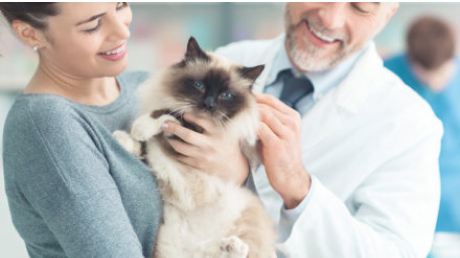
The Fear Free Veterinary Certification Program Level 3 teaches veterinary healthcare professionals Advanced animal handling techniques, and Feline & canine development.
The Fear Free Veterinary Certification Program Level 3 teaches veterinary healthcare professionals Advanced animal handling techniques, and Feline & canine development.
Featuring two renowned veterinary anesthesiologists—Tamara Grubb DVM, PhD, Diplomate ACVAA and Ralph C. Harvey DVM, MS, DACVAA—we talk about how pre-anesthesia practices and procedures play a role in creating Fear Free veterinary visits and how new research suggests that in many cases, we should be taking a different approach than what was once the norm. It’s been a long-held practice that when it comes to feeding vs. fasting before going under, fasting was the hands down way to go. But that’s changing.
The fields and practices of emergency, critical care, and internal medicine are a vital part of the profession, and referral practices are often in a world of their own when it comes to many day-to-day practices. Things moves fast, patients are often in extreme amounts of pain and distress, and clients are often overwhelmed. Many professionals across all veterinary fields might ask how Fear Free can help address some of those issues. The answer is—a lot. In this podcast, we talk with us two of the most renowned board certified veterinarians in these respective fields—Dr. Alice M. Wolf, who is board certified in Internal Medicine. and Dr. Tony Johnson, a board certified veterinarian in Emergency and Critical Care—to help elaborate on the role Fear Free can play in these life-saving specialties.

The Fear Free Veterinary Certification Program Level 2 teaches veterinary healthcare professionals advanced animal handling techniques, In-hospital care, and client communication.

Completing the Fear Free Animal Trainer Program allows trainers to work in partnership with veterinary teams to prevent and alleviate fear, anxiety, and stress and improve an animal’s emotional wellbeing during veterinary care and home care. This certification program is designed to give qualified animal trainers the knowledge and tools required to begin implementing Fear Free techniques with their clients’ pets at the veterinary hospital, through in-clinic training classes for puppies and kittens, and in day-to-day training of animals in the home.
Trainers who complete the Fear Free Animal Trainer Certification Program will acquire the skills to manage and handle dogs and cats alongside the veterinary team during veterinary visits and care to ease the pet’s apprehension regarding exams, procedures, and other care. The techniques may also be used in a home setting for carrying out or administering specific veterinarian-prescribed care plans or routine care like grooming. Most important, the Fear Free animal trainer is equipped to prepare pets for what to expect at the veterinary clinic so they have an enjoyable, stress-free experience.
By collaborating with and complementing the veterinary team’s efforts, the trainer can better provide preventive services and partner with the veterinary team to address training and behavior concerns, working from a whole health concept and with the oversight of the pet’s vet. In doing so, the pet and pet parents have a higher quality, unified team providing quality, complete care.
The purchase of the Fear Free Animal Trainer Certification Program provides you with an annual membership for the program, which requires an annual renewal fee and completion of additional annual CE to maintain your membership.
The Fear Free Veterinary Certification Program teaches veterinary healthcare professionals how to eliminate fear, anxiety, and stress for happier patients, more compliant clients, and safer veterinary healthcare teams.