Blog Archives

Course Overview

This short course will cover a novel technique for minimizing stress to birds while also comparing this technique to past concepts covered in the original Fear Free Veterinary Certification Program – Avian. We will teach you an alternative, advanced approach to reinforcing desired behavior in avian patients displaying fear or aggression that are not responding to other Fear Free training techniques. We’ll also provide several examples of using a Constructional Approach to teach useful behaviors and recommendations associated with the client and team communication surrounding the use of Fierce/Fearful to Friendly (F2F).

This course includes three lessons:

  • Lesson 1: Using the Constructional Approach to change responses from Fierce or Fearful to Friendly (F2F)
  • Lesson 2: Case Studies
  • Lesson 3: Practical Implementation

This course was written by Barbara Heidenreich and Alicia McLaughlin, DVM, CertAqVet and is approved for 1 hour of RACE CE.

Course Overview

The chin rest is a valuable cooperative care behavior that allows for a hands-off, consensual way to keep an animal still for veterinary exams, husbandry care, grooming, and other procedures. A chin rest serves as an indication from the animal that he is ready to engage in a handling or care procedure. By giving him a choice to “opt out,” even for a few seconds, chin rest empowers the animal to have a voice and greatly reduces his FAS.

In this course, you will learn the steps for training a solid chin rest behavior to an advanced level and discover its many practical, on-the-job applications.

This course includes three lessons:

  • Lesson 1: Strategies and Equipment
  • Lesson 2: Training and Problem Solving
  • Lesson 3: Taking it to the Next Level

This course was written by Mikkel Becker, CTC, KPA CTP, CBCC-KA, CPDT-KA, CDBC.

Course Overview

This course builds upon the foundational concepts covered in the Fear Free Nail Trims: Trimming Away the Terror course, which included finessed use of distractions, desensitization and counter-conditioning methods, and finely tuned choice of nail care tools.

An understanding of these foundational nail care concepts is recommended before starting this more advanced course. Cooperative care techniques taught in this course are useful both as preventive strategies to improve ease of nail care and as an interventional approach to address already existing FAS with nail care.

Since there is no “one size fits all” approach to nail care training that will work for every animal every time, this course aims to empower you with many options to choose from, depending on the animal you are working with at the time.

There are six short lessons in this course:

  • Lesson 1: Communication & Consent Cues
  • Lesson 2: Treat-Ment Stations
  • Lesson 3: Chin Rest and Bucket Game
  • Lesson 4: Offering Paws and Zen Down
  • Lesson 5: Scratch Board Training
  • Lesson 6: Problem Solving and Coaching Clients

This course was written by Mikkel Becker, CTC, KPA CTP, CBCC-KA, CPDT-KA, CDBC.

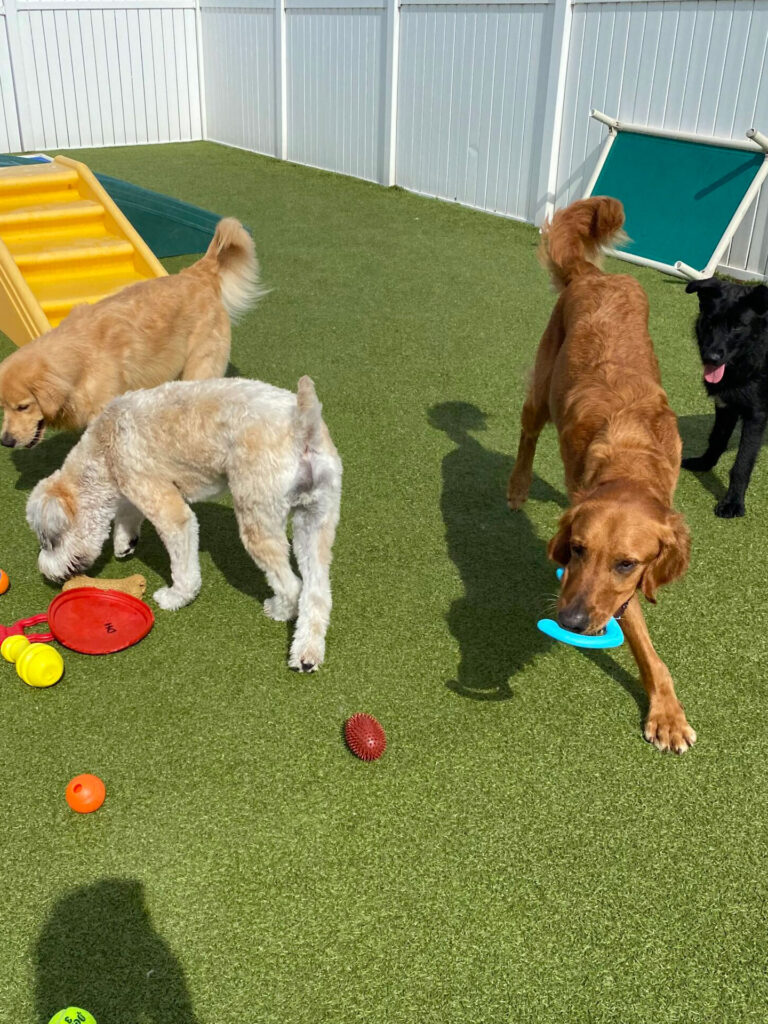
Boarding and daycare environments are often fraught with potential stressors for dogs and cats. Pets are away from home, their family is gone, unfamiliar people and animals surround them, and their daily sleep/wake schedule is thrown off. But there are several steps you can take, from setting up the environment itself to adjusting the way in which you interact with dogs and cats, that can help reduce stress and increase calm and safety for both pets and staff.

The Fear Free Boarding and Daycare Individual Certification Program will help you ensure you are thoughtful in every interaction with boarding and daycare pets—from greetings to kennel introductions to overexuberance or shyness. You’ll learn what a Fear Free boarding and daycare environment looks like, feels like, sounds like, and smells like. And you’ll get practical advice on what to do in the moment if a dog or cat struggles when you try to give them needed medications or care, drags you into the play yard, or refuses to enter or leave their kennel.

The purchase of the Fear Free Boarding and Daycare Individual Certification Program provides you with a Fear Free membership, which requires an annual renewal fee and completion of additional annual CE to maintain your membership.

The Fear Free Boarding & Daycare Individual Certification Program is a wonderful educational addition to the pet care service industry. Boarding & daycare facilities will immediately see value in this certification program as staff learns to identify and mitigate fear, anxiety, and stress in pets. The pet owner will be assured that their pets are in the care of professionals who are knowledgeable about the physical and emotional needs of each individual pet. Boarding & daycare facilities will be proud to be considered as “best in care” providers as they promote the wellbeing of their staff and the pets in their care. IBPSA is proud to be part of the Fear Free programs. —Carmen Rustenbeck, CEO and Founder, International Boarding & Pet Services Association

This course was reviewed by the IBPSA (International Boarding & Pet Services Association) and PACCC (Professional Animal Care Certification Council).


Unlike any other pet professional, pet sitters spend an extended period of time with the animals they care for, giving them an intimate and unique glimpse into animals’ home lives. Because of this, pet sitters can readily identify opportunities for improvement and spot emerging behavior concerns, enrichment opportunities, and other areas that might otherwise go unnoticed.

This course will equip pet sitters with a scientifically sound knowledge base in animal body language, dog walking, behavior and training basics, enrichment, home life, travel, administering medications, and more so that they can offer top-level Fear Free care to pets and provide owners with basic support and advice. The Fear Free Certified® pet sitter will be empowered to help educate pet owners on reading dog and cat body language and provide ideas for how enrichment and training can be incorporated into the pet’s environment and routine, promoting not only a calmer pet-sitting stay but also a richer, more fulfilling life. We’ll cover everything from the very first greeting of a pet to creating calmer leash walks to delivering medications in a Fear Free manner and much more!

This course was reviewed by PSI (Pet Sitters International) and NAPPS (National Association of Professional Pet Sitters).

Course Overview

Bath time is scary for many animalswhether it’s the sound of the water, the feel of it on their skin, being restrained, or the tub itself. This one-hour module will teach you how to break down the bathing process into individual components that can be worked on separately to allow for calmer, safer bathing experiences. We will provide step-by-step desensitization and counterconditioning plans for every componentintroducing the shampoo bottle, entering the tub, introducing water, and introducing the sound and feel of the dryer. You’ll also learn what you can do to modify the bathing environment to make it more inviting and less stressful for animals.

There are three lessons in this course:

Lesson 1: Overview of Fear Free Bathing and Positive Reinforcement
Lesson 2: Introduction to the Tub
Lesson 3: Modifying the Environment for Success

This one-hour course was designed for Fear Free groomers but is also open to our veterinary professional and trainer members. It was written by Terrie Hayward, M.Ed., KPA Faculty Member, CPDT-KA, CSAT, co-author of the book Grooming Without Stress, and is approved for one hour of RACE CE.

Course Overview

The CSR is the client’s first point of contact with the veterinary clinic. They play an important role in communicating the Fear Free concept and helping the client prepare their pet for a Fear Free vet visit. This module will help CSRs better understand how to “Speak Fear Free” to clients. It will provide sample scripts and tips. It will also provide them with a better understanding of the FAS scale, an awareness of their surroundings, the knowledge of what steps to take to ensure a positive experience for each pet, and more.

This course was written by Louise Dunn.

This course consists of three lessons:

  • Lesson 1: The CSRs Role for the Pre-Visit
  • Lesson 2: Creating the Fear Free Environment
  • Lesson 3: How to “Speak Fear Free” to Clients

Course Overview

True enrichment goes way beyond simply providing dogs with food puzzles each day. For instance, a comprehensive enrichment strategy incorporates all types of enrichment: social, occupational, physical, nutritional, and sensory. This course will show you how to engage all the senses, as well as how to thoughtfully determine which enrichment activities are most appropriate for individual dogs, how to enrich the lives of dogs in a veterinary clinic, and those who are recovering from an injury and on restricted exercise.

This course, approved for 1 RACE-approved CE hour, was written by Laura Ryder, CPDT-KA, KPA CTP, IMDT.

This course consists of four lessons:

  • Lesson 1: Exploring enrichment using all the senses
  • Lesson 2: Identifying the right balance
  • Lesson 3: Enrichment for dogs in the vet clinic
  • Lesson 4: Enrichment for dogs on restricted exercise or cage rest

Course Overview

Are you the only person in your clinic who has a passion for Fear Free? It’s easy to get discouraged and frustrated when we are surrounded by obstacles. This course provides tools to achieve your Fear Free goals even when you feel like you are all alone in your work. Learn how to get buy-in, implement strategies from the ground up, and encourage your colleagues to join your heart’s work of protecting the emotional welfare of our treasured animal patients.

This course, approved for 1 RACE CE hour, was written by Monique Feyrecilde BA, LVT, VTS (Behavior).

This course consists of five lessons:

  • Lesson 1: The essence and importance of Fear Free Practice
  • Lesson 2: Understanding the dynamics of change
  • Lesson 3: Implementing change within your practice
  • Lesson 4: Addressing common push-back topics
  • Lesson 5: Thrive where you’re planted, or transplant to a new garden