Any pet owner or veterinary professional that has ever had to treat an animal for an illness or injury knows that giving or applying medications can often be the most stressful part of the healing process, and eyes are certainly no different. An incoming bottle of eyedrops or tube of ointment can be intimidating for many pets, making administration of eye medications particularly difficult. Minimizing the number of medications, application frequency and utilizing Fear Free methods can help to streamline the treatment process for both veterinary staff and pet owners.

Overcoming Sensitivity and Threat Perception

Directly approaching an animal and attempting to immediately apply eye drops can unintentionally trigger defensive behaviors, causing them to think of eye medications as something frightening to be avoided. To reduce this threat perception, both veterinary staff and pet owners may find the following strategies helpful:

  • Sit near the pet with the body angled slightly away, avoiding direct eye contact
  • Allow the pet to approach on their own—forced restraint may result in long-term aversion to certain types of treatments
  • Turn medication time into treat time—medicating can be easier if associated with a positive reward such as a high-value treat, playtime or verbal praise
  • Proceed slowly and in small, progressive steps to allow the pet time to adjust to the new routine. Here’s an example:
    1. Gentle touch near the eye → treat
    2. Hold bottle up to pet’s face → treat
    3. Touch outer corner of the eye/lift eyelid (if pet is comfortable) → treat
    4. Bring bottle up to the eye and simulate a drop → treat
    5. Gently tip the pet’s head up and instill the actual drop → high value reward!
  • Do not attempt to instill ophthalmic medications if the pet is already stressed, anxious or visibly uncomfortable as it can create an unwanted negative correlation
  • Gently tipping the head up and back utilizes gravity to assist with application
  • If the first attempt goes poorly, owners should wait until the pet is relaxed before trying again—never force the process
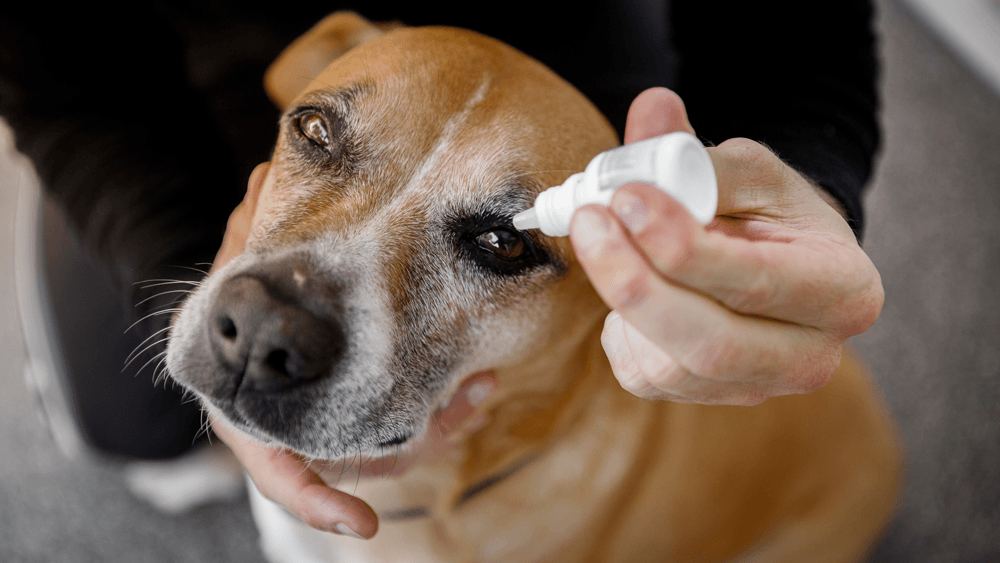
dog receiving eye drops
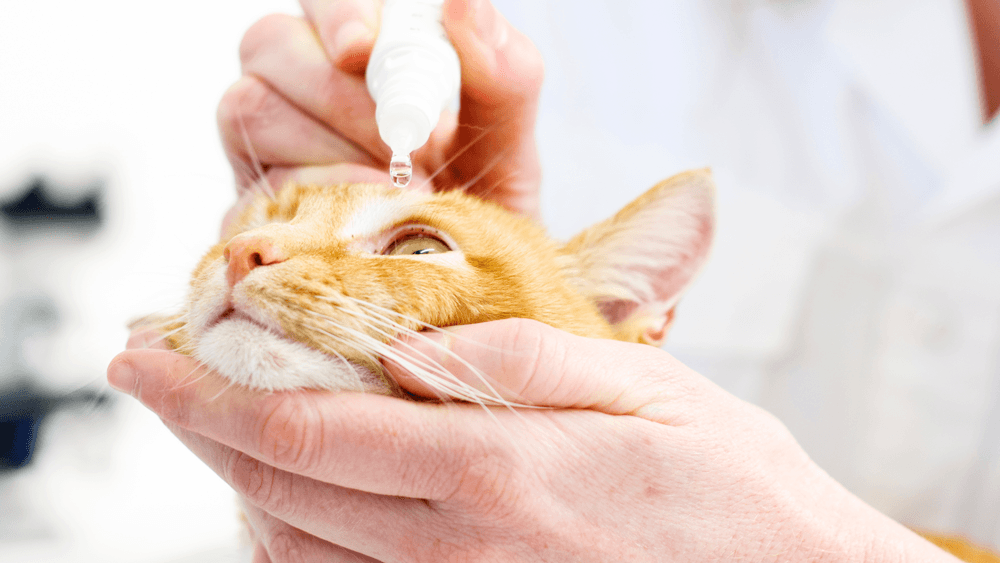
cat receiving eye drops

A different approach often needs to be taken with feline patients—cats can be wrapped gently in a towel (preferably one that has been sprayed with calming pheromones) while another person offers a high-value treat such as a Churu®. The handler should calmly approach, gently tip the cat’s head backwards, and instill the medication without forcing the interaction.

Minimizing Drops Matters

Many eye conditions require frequent treatments with multiple medications, which can complicate the process and increase stress for both owners and pets. Utilizing medications (when appropriate) that are long-acting or can safely be combined with other medications (like Dômes Pharma’s Oculenis™ Corneal Repair Gel) can simplify the process and reduce stress for owners and pets.

Oculenis™ is a long-lasting hyaluronic acid gel that utilizes BioHance’s unique cross-linking technology to last longer on the eye, which means fewer drops and applications than similar products on the market.  Oculenis only needs to be applied twice daily and can be safely used in conjunction with other ophthalmic medications, making it an ideal choice for a Fear Free eye experience.

Soothing Drops Make for a Pleasant Experience

Although most ophthalmic medications are not necessarily irritating, they can be when the underlying disease is also painful. Ending eye medication routines with an eye drop that is soothing and comfortable will optimize the experience for the pet. Additionally, long-lasting gels can provide surface protection and comfort after applying more irritating antibiotics. When treating pets’ eyes at home or in the clinic, reach for Dômes Pharma’s range of BioHance™ products, including Oculenis™ and Ocunovis™ ProCare. Whether it’s corneal ulcers or chronic dry eye, Dômes Pharma aims to improve the lives of pets, their owners, and those who treat them by providing effective and long-lasting ophthalmic solutions.

Learn more about Domes Pharma’s Fear Free Preferred products here: https://domespharma.us/fear-free/

Domes Pharma

Written by Dr. Allie Trippe, DVM, PGCert, FFCP—Technical Services Veterinarian at Dômes Pharma

Reviewed by Dr. Kate Myrna, DVM, MS, DACVO—Associate Professor, Small Animal Medicine & Surgery, Ophthalmology Service, University of Georgia College of Veterinary Medicine Veterinary Teaching Hospital
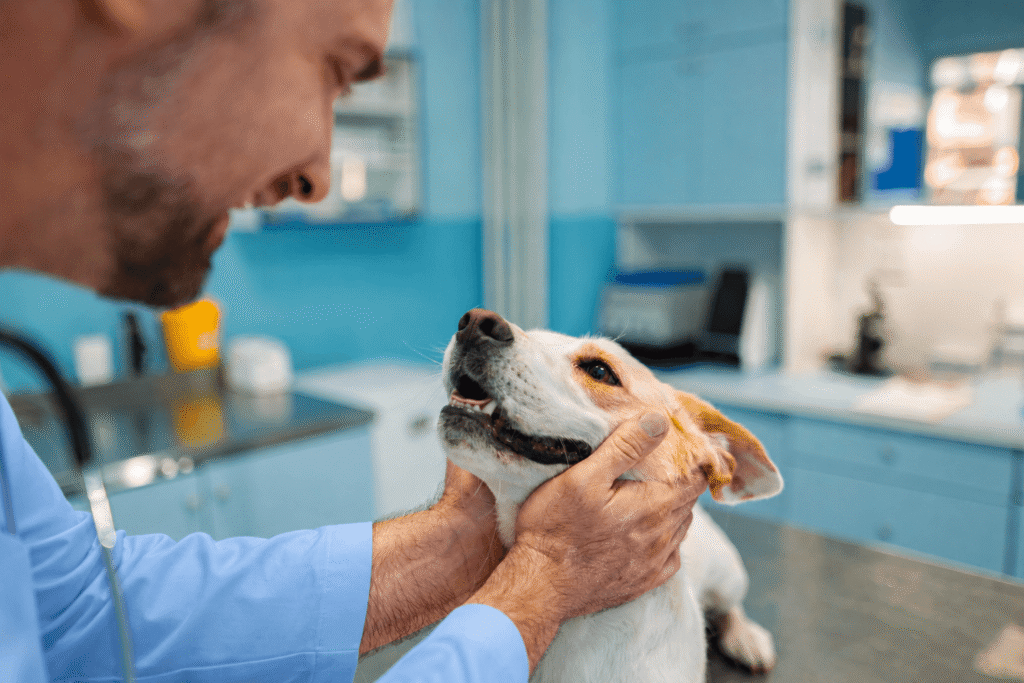

vet with dog

In addition to clinical expertise, pet parents are also looking for reassurance that their pet will feel comfortable during a veterinary visit. 

From trembling in the waiting room to hesitating at the clinic door, veterinary visits can be stressful for many pets. That experience can influence not only patient wellbeing, but also client satisfaction, retention, and willingness to return for care. 

While many factors contribute to that experience, one often-overlooked element is the sensory environment—particularly how a clinic smells. 

The Role of Scent in the Veterinary Setting 

Dogs experience the world primarily through scent. When entering a clinic, they are not simply seeing a new space, but processing layers of smells left behind by other animals, people, and previous experiences. 

Cats, while different in behavior, are also highly sensitive to changes in their environment, including scent. 

Within a clinical setting, pets may encounter: 

  • Strong or unfamiliar chemical odors   
  • Residual scent signals from previous patients   
  • Lingering biological odors   

For many animals, this combination can feel overwhelming and may contribute to fear, anxiety, and stress (FAS). 

What Pet Parents Are Looking For 

Pet parents today are thinking beyond clinical outcomes. They are increasingly aware of how their pet experiences a visit and are asking: 

  • Will their pet feel safe and comfortable?   
  • Will the visit be calm and supportive?   
  • Does the clinic prioritize the pet’s emotional wellbeing?   

These perceptions play an important role in how clients choose and remain loyal to a veterinary practice. 

Why the Environment Matters 

Fear Free principles emphasize that reducing fear, anxiety, and stress is not the result of a single action, but rather the combination of many thoughtful decisions. 

This includes: 

  • Handling and restraint techniques   
  • Communication with pet parents   
  • Clinic layout and workflow   
  • The overall sensory environment   

Pets interact with the clinic environment differently than people do. They move through the space with direct contact to floors and surfaces, while continuously processing scent cues throughout their visit. 

Because of this, environmental factors—including cleaning protocols—can influence how a patient responds from the moment they enter the clinic. 

The Role of Disinfectant Selection 

In addition to infection control, disinfectants contribute to the sensory experience within a clinic. 

Thoughtful product selection can help: 

  • Reduce lingering odors that may contribute to stress   
  • Avoid introducing strong or overwhelming fragrances   
  • Support a cleaner environment without adding unnecessary sensory inputs   

Some veterinary practices incorporate products such as Rescue® disinfectants, a Fear Free Preferred Product, as part of their broader approach to creating a more comfortable environment. These products are designed to: 

  • Help break down odor-causing compounds   
  • Be free of added fragrances   
  • Be appropriate for use on surfaces pets frequently contact   
Rescue Disinfectants

When combined with other Fear Free strategies, these choices can help reduce environmental contributors to FAS and support a more positive experience for patients. 

Communicating a Commitment to Comfort 

Many of the steps taken to reduce stress happen behind the scenes. Communicating these efforts can help build trust with pet parents. 

For example, practices may share messaging such as: 

“Products and protocols are selected to reduce common sources of stress, including strong smells and lingering odors, helping create a more comfortable experience for patients.” 

This type of communication reinforces that patient comfort is an intentional part of care, not an afterthought. 

Three Ways to Reinforce a More Comfortable Experience 

1. Focus on the Experience  

Rather than emphasizing specific products, practices can frame their approach around what it means for the patient experience. Highlighting efforts to reduce stress—particularly when aligned with Fear Free principles—demonstrates a commitment to patient comfort. 

2. Recognize and Reduce Fear, Anxiety, and Stress   

Not all pets respond to veterinary visits in the same way. Recognizing early signs of discomfort and taking steps to reduce them is a key component of Fear Free care. Clear communication around this approach helps build confidence with pet parents. 

3. Make the Invisible Visible   

Many aspects of a lower-stress environment are not immediately obvious. Sharing information about how pets experience the clinic environment, steps taken to reduce stress, and what makes the practice different can help strengthen trust and reinforce value. 

A More Thoughtful Approach to Care 

Training, handling, and clinical expertise all play an essential role in veterinary care. At the same time, the environment patients experience can influence how a visit begins and how it progresses. 

By taking a thoughtful approach to the full experience—including how a clinic looks, feels, and smells—veterinary practices can help create an environment where pets feel more comfortable and better able to receive care. 

For many practices, this includes selecting products such as Rescue® disinfectants, which are fragrance-free and designed to help reduce odor-related stressors as part of a broader strategy to support patient comfort. 

Learn More about Rescue® Disinfectants.

Rescue Disinfectants

In today’s veterinary environment, technical skill alone is not enough to build a thriving, high-performing team. The most effective clinics are those where team members feel safe to speak up, ask questions, admit mistakes, and support one another without fear of judgment or blame. This is known as psychological safety, and it is a foundational element of both team well-being and patient care.

What Is Psychological Safety?

Psychological safety, a concept popularized by Amy Edmondson, refers to a shared belief that a team is safe for interpersonal risk-taking. In a psychologically safe clinic, team members feel confident that they will not be embarrassed, punished, or dismissed for speaking up.

This does not mean lowering standards or avoiding accountability. Instead, it creates an environment where individuals can contribute fully, learn openly, and collaborate effectively.

Why It Matters in Veterinary Medicine  

Veterinary teams operate in fast-paced, emotionally charged environments where communication and trust directly impact outcomes. When psychological safety is present:

  • Team members are more likely to share observations about patient behavior early, allowing for proactive adjustments that support reduced stress handling
  • Mistakes are discussed openly, leading to learning and continuous improvement
  • Staff feel more supported, reducing burnout and turnover
  • Collaboration improves across roles, from reception to technicians to veterinarians

Ultimately, psychological safety supports better experiences for both people and pets.

Signs Your Clinic May Be Lacking Psychological Safety 

Even the most well-intentioned teams can struggle in this area. Some common indicators include:

  • Hesitation to ask questions or clarify instructions
  • Fear of speaking up about patient concerns
  • Blame-focused responses when things go wrong
  • Limited participation in team discussions
  • High levels of stress, frustration, or disengagement

Recognizing these signs is the first step toward meaningful change.

How to Build Psychological Safety in Your Clinic

Creating psychological safety is an ongoing process that requires intention, consistency, and leadership at every level of the team.

1. Model Open and Respectful Communication

Leaders set the tone. When managers and veterinarians openly ask for input, admit when they do not have all the answers, and respond respectfully to feedback, it signals that others can do the same.

Simple phrases like:

  • “What are you seeing?”
  • “Does anyone have a different perspective?”
  • “I may be missing something, what do you think?”

can make a powerful difference.

2. Normalize Questions and Learning

Encourage curiosity by framing questions as a strength, not a weakness. In a clinical setting, asking questions can prevent errors and improve patient care.

Celebrate moments of learning, whether it is a new technique, a better communication strategy, or an improved approach to supporting reduced stress experiences.

3. Respond to Mistakes with Curiosity, Not Blame

Mistakes happen in every clinic. How they are handled determines whether team members feel safe to speak up in the future.

Shift from:

  • “Who made this mistake?”

to:

  • “What led to this, and how can we prevent it next time?”

This approach fosters accountability while maintaining trust.

4. Encourage Inclusive Participation 

Create space for every voice, not just the most experienced or outspoken. This includes:

  • Inviting input from all roles during case discussions
  • Checking in with quieter team members
  • Rotating opportunities for team members to lead discussions or share insights

Diverse perspectives strengthen decision-making and improve patient outcomes.

5. Provide Clear Expectations and Support

Psychological safety does not mean ambiguity. In fact, clarity builds confidence.

Ensure team members understand:

  • Their roles and responsibilities
  • Clinic protocols and expectations
  • Where to go for help or clarification

When expectations are clear, team members can engage more fully without fear of “getting it wrong.”

6. Recognize and Reinforce Positive Behaviors

Acknowledge when team members speak up, support one another, or contribute ideas. Recognition reinforces the behaviors that create a safe and collaborative culture.

This can be as simple as:

  • “I appreciate you bringing that up”
  • “That was a great observation about the patient’s behavior”
  • “Thanks for asking that question, it helped clarify things for everyone”

The Connection to Reduced Stress Care

Psychological safety within the team directly impacts how care is delivered. When team members feel supported and confident:

  • They are more attuned to early signs of stress in patients
  • They are more likely to advocate for adjustments in handling or environment
  • They communicate more effectively with clients, building trust and compliance

A calm, cohesive team creates a calmer experience for pets and the people who care for them.

Moving Forward

Creating psychological safety is not a one-time initiative. It is a culture that is built over time through daily interactions, intentional leadership, and shared commitment.

Start small. Choose one or two strategies to implement this week, and build from there. Over time, these efforts will create a clinic environment where team members feel valued, supported, and empowered to do their best work.

And when your team thrives, your patients benefit, your clients feel the difference, and your entire practice becomes stronger.