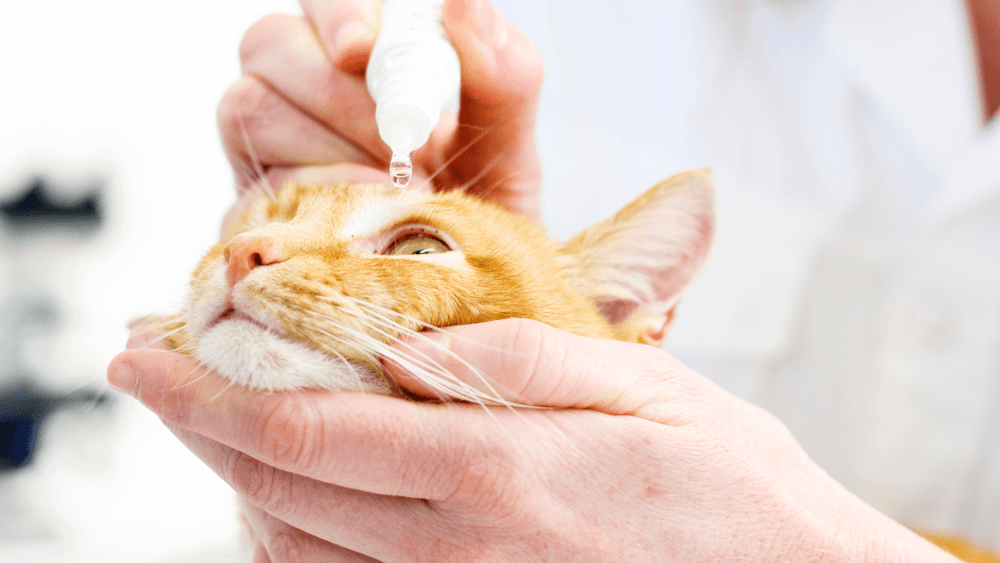
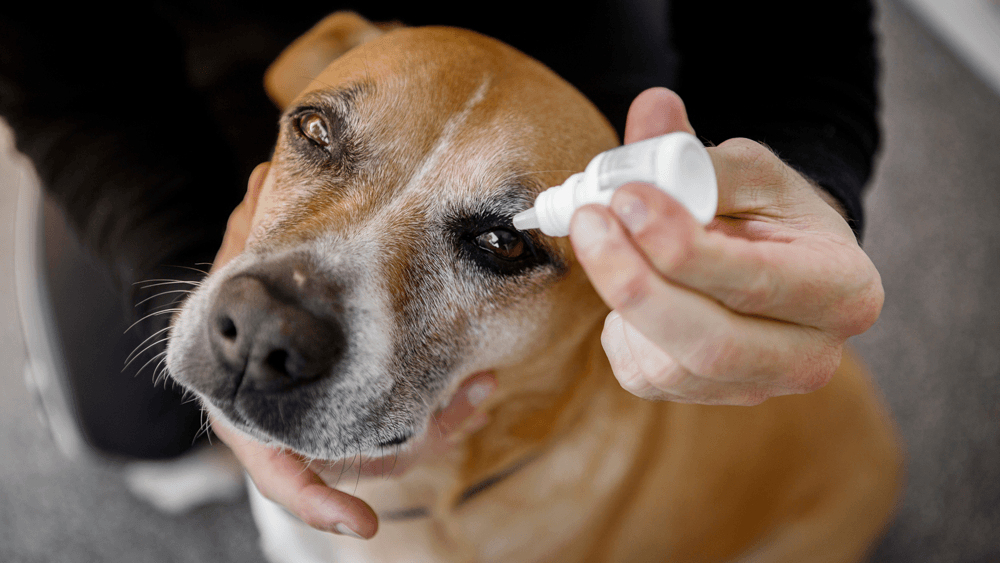
Any pet owner or veterinary professional that has ever had to treat an animal for an illness or injury knows that giving or applying medications can often be the most stressful part of the healing process, and eyes are certainly no different. An incoming bottle of eyedrops or tube of ointment can be intimidating for many pets, making administration of eye medications particularly difficult. Minimizing the number of medications, application frequency and utilizing Fear Free methods can help to streamline the treatment process for both veterinary staff and pet owners.
Overcoming Sensitivity and Threat Perception
Directly approaching an animal and attempting to immediately apply eye drops can unintentionally trigger defensive behaviors, causing them to think of eye medications as something frightening to be avoided. To reduce this threat perception, both veterinary staff and pet owners may find the following strategies helpful:
- Sit near the pet with the body angled slightly away, avoiding direct eye contact
- Allow the pet to approach on their own—forced restraint may result in long-term aversion to certain types of treatments
- Turn medication time into treat time—medicating can be easier if associated with a positive reward such as a high-value treat, playtime or verbal praise
- Proceed slowly and in small, progressive steps to allow the pet time to adjust to the new routine. Here’s an example:
- Gentle touch near the eye → treat
- Hold bottle up to pet’s face → treat
- Touch outer corner of the eye/lift eyelid (if pet is comfortable) → treat
- Bring bottle up to the eye and simulate a drop → treat
- Gently tip the pet’s head up and instill the actual drop → high value reward!
- Do not attempt to instill ophthalmic medications if the pet is already stressed, anxious or visibly uncomfortable as it can create an unwanted negative correlation
- Gently tipping the head up and back utilizes gravity to assist with application
- If the first attempt goes poorly, owners should wait until the pet is relaxed before trying again—never force the process

A different approach often needs to be taken with feline patients—cats can be wrapped gently in a towel (preferably one that has been sprayed with calming pheromones) while another person offers a high-value treat such as a Churu®. The handler should calmly approach, gently tip the cat’s head backwards, and instill the medication without forcing the interaction.
Minimizing Drops Matters
Many eye conditions require frequent treatments with multiple medications, which can complicate the process and increase stress for both owners and pets. Utilizing medications (when appropriate) that are long-acting or can safely be combined with other medications (like Dômes Pharma’s Oculenis™ Corneal Repair Gel) can simplify the process and reduce stress for owners and pets.
Oculenis™ is a long-lasting hyaluronic acid gel that utilizes BioHance’s unique cross-linking technology to last longer on the eye, which means fewer drops and applications than similar products on the market. Oculenis only needs to be applied twice daily and can be safely used in conjunction with other ophthalmic medications, making it an ideal choice for a Fear Free eye experience.
Soothing Drops Make for a Pleasant Experience
Although most ophthalmic medications are not necessarily irritating, they can be when the underlying disease is also painful. Ending eye medication routines with an eye drop that is soothing and comfortable will optimize the experience for the pet. Additionally, long-lasting gels can provide surface protection and comfort after applying more irritating antibiotics. When treating pets’ eyes at home or in the clinic, reach for Dômes Pharma’s range of BioHance™ products, including Oculenis™ and Ocunovis™ ProCare. Whether it’s corneal ulcers or chronic dry eye, Dômes Pharma aims to improve the lives of pets, their owners, and those who treat them by providing effective and long-lasting ophthalmic solutions.
Learn more about Domes Pharma’s Fear Free Preferred products here: https://domespharma.us/fear-free/

Written by Dr. Allie Trippe, DVM, PGCert, FFCP—Technical Services Veterinarian at Dômes Pharma
Reviewed by Dr. Kate Myrna, DVM, MS, DACVO—Associate Professor, Small Animal Medicine & Surgery, Ophthalmology Service, University of Georgia College of Veterinary Medicine Veterinary Teaching Hospital