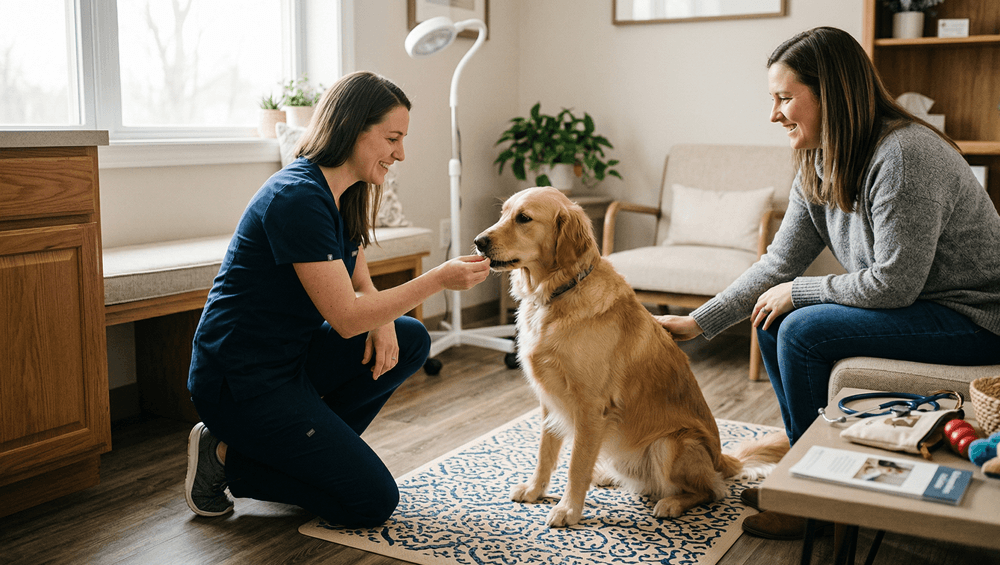
Preventive care is one of the most powerful ways we can support lifelong health in pets. From routine exams and diagnostics to dental care and parasite prevention, these proactive steps help us catch concerns early and improve outcomes.
But for many pets, “preventive care” does not feel preventive at all. It can feel stressful, unfamiliar, and even frightening.
What if we could change that?
At Fear Free, we believe prevention should not just protect physical health, it should also support emotional wellbeing. When done thoughtfully, preventive care can feel safe, positive, and even rewarding for pets, clients, and veterinary teams alike.
Start Before the Visit Even Begins
A Fear Free approach to prevention starts at home. Preparing pets before they ever enter the clinic can dramatically reduce fear, anxiety, and stress.
Encourage pet parents to:
- Use positive reinforcement to build comfort with carriers, car rides, and handling
- Practice gentle exam-like interactions, such as looking at ears, paws, and mouth
- Consider pre-visit pharmaceuticals or calming aids when appropriate
- Bring familiar items like blankets, toys, or treats to the appointment
When pets arrive already feeling more secure, the entire experience shifts
Create a Calm and Predictable Experience
Inside the clinic, small adjustments can make a big difference.
Preventive visits should prioritize:
- Non-slip surfaces and comfortable positioning
- Minimal restraint and gentle handling techniques
- Quiet spaces and reduced wait times whenever possible
- Reading body language and allowing breaks when needed
When pets feel a sense of control and safety, they are far more likely to cooperate and recover quickly from the experience.
Pair Care with Positive Experiences
Preventive care often includes procedures that can be uncomfortable or unfamiliar, such as blood draws, nail trims, or imaging.
A Fear Free approach means:
- Breaking procedures into smaller, manageable steps
- Using cooperative care techniques to build participation
- Adjusting timing or approach based on the pet’s emotional state
- Prioritizing emotional safety alongside medical goals and determining “needs” vs. “wants” – what must happen today for the health and safety of the pet compared to what we would like to accomplish (a diagnostic radiograph vs. a nail trim)
Sometimes, slowing down actually leads to better outcomes, both medically and behaviorally.
Support the Human-Animal Bond
When pets have positive preventive care experiences, it does more than reduce stress in the moment. It strengthens trust.
Pet parents feel more confident bringing their pets in for care. Veterinary teams can perform more thorough exams. And pets learn that handling and treatment do not have to be scary.
This creates a ripple effect that supports long-term health, compliance, and overall wellbeing.
Prevention, Reimagined
Preventive care is not just about avoiding disease, it is about creating a foundation for a lifetime of positive experiences.
By integrating Fear Free principles into every step of the process, we can transform prevention from something pets endure into something they can comfortably navigate.
Because when prevention feels like a treat, everyone benefits.